
Chef Takumi
Aji Fry (アジフライ, panko-fried horse mackerel)
Aji fry is weeknight fish with no mystery: fresh horse mackerel opened cleanly, breaded lightly, and fried until the panko crackles while the flesh stays sweet.
A cooking platform built around craft, culture, and the stories behind what we eat.
Created by
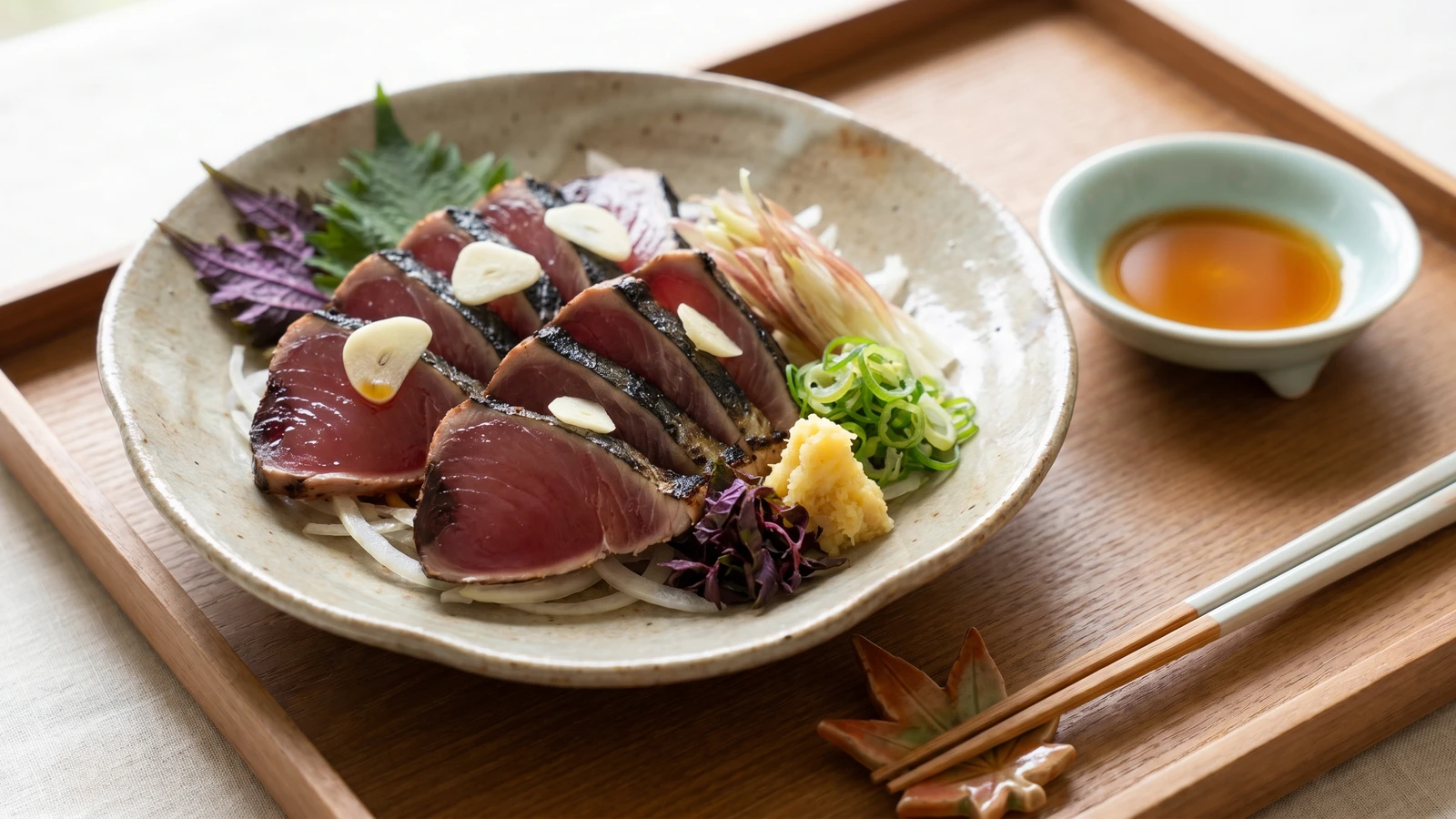
Bonito needs courage for only one minute: fierce heat outside, cool flesh within, then thick slices under garlic, ginger, herbs, and ponzu. The flame does less than you fear.
Katsuo is a fish with two good seasons. In spring, hatsu-gatsuo runs lean and clean as it moves north; in autumn, modori-gatsuo returns richer, carrying fat from cold water. Either can make tataki, but only if it is glistening fresh and fit to eat raw. Sourcing first, always. The flame is there to honor good fish, not rescue tired fish.
People make warayaki, straw searing, sound like a ceremony guarded by smoke and brave eyebrows. It isn't. The first secret is violence kept brief: a fierce straw flame, or the hottest grill you can manage, catches the skin and warms the surface before the center has time to cook. Straw burns fast and clean, leaving a grassy sweetness. At home, a charcoal grill or broiler is a sensible stand-in, but the rule remains the same: mark the outside, protect the cool red heart.
Then let the knife do the quiet work. Slice thick, not thin, because tataki needs the contrast of singed edge and raw center in one bite. Garlic, ginger, scallion, myōga, and ponzu are not a mask; they sharpen the fish and then get out of the way. On a Japanese table this sits as the main seafood dish beside rice, soup, and a small simmered thing. Leave it room, and serve it while the cut faces still shine.
Katsuo no tataki is most closely identified with Tosa, the old name of present-day Kōchi Prefecture on Shikoku, where skipjack tuna has long been landed along the Pacific coast. Straw searing, called warayaki, is prized there because rice straw burns in a sudden high flame that chars the skin and perfumes the surface before the flesh cooks through. A common local origin story says Tosa domain authorities under Yamauchi Kazutoyo discouraged raw bonito in the early seventeenth century after illness, and cooks seared the outside so it could pass as cooked; historians treat it as one explanation, not settled fact.
Quantity
450g
skin-on loin, suitable for eating raw, kept chilled
Quantity
1 teaspoon
Quantity
1/4 cup
Quantity
3 tablespoons
or fresh lemon juice
Quantity
1 tablespoon
Quantity
1 tablespoon
Quantity
1 tablespoon
Quantity
1 small piece (about 5g)
Quantity
5g
Quantity
1/2 small
very thinly sliced
Quantity
2
very thinly sliced
Quantity
1 tablespoon
finely grated
Quantity
2
thinly sliced
Quantity
1
thinly sliced
Quantity
4
thinly sliced
Quantity
as needed
| Ingredient | Quantity |
|---|---|
| katsuo (skipjack tuna or bonito)skin-on loin, suitable for eating raw, kept chilled | 450g |
| fine sea salt | 1 teaspoon |
| koikuchi shōyu (Japanese dark soy sauce) | 1/4 cup |
| fresh yuzu or sudachi juiceor fresh lemon juice | 3 tablespoons |
| mirin | 1 tablespoon |
| sake | 1 tablespoon |
| rice vinegar (optional) | 1 tablespoon |
| konbu | 1 small piece (about 5g) |
| katsuobushi (bonito flakes) | 5g |
| sweet onionvery thinly sliced | 1/2 small |
| garlic clovesvery thinly sliced | 2 |
| fresh gingerfinely grated | 1 tablespoon |
| scallionsthinly sliced | 2 |
| myōga bud (optional)thinly sliced | 1 |
| shiso leaves (optional)thinly sliced | 4 |
| clean food-grade rice straw (optional) | as needed |
Put the mirin and sake in a small pan and bring them to a brief simmer for 30 seconds, then take the pan off the heat and let it cool for 5 minutes. Stir in the shōyu, citrus juice, and rice vinegar if using, then add the konbu and katsuobushi. Steep for 20 minutes and strain without pressing. Heating the mirin and sake removes their raw edge; adding the citrus off the heat keeps its fragrance; leaving the flakes alone keeps the sauce clean.
Soak the sliced onion in cold water for 5 minutes, then drain and pat it very dry. Slice the garlic, scallions, myōga, and shiso thinly, and grate the ginger just before serving. Thin cuts matter here because raw aromatics can bully the fish if they're left thick. They should scent each slice, not sit on it like a lecture.
Keep the katsuo cold until the fire is ready. It should smell clean and faintly of the sea, with glossy flesh and no sour or sharp odor. Pat it dry all over and salt it lightly. A dry surface catches the flame quickly; a wet surface turns gray before it marks. If the fish smells strong, stop here and cook it through in another dish. Nothing hidden.
For warayaki, light a charcoal grill outdoors and set a handful of clean food-grade rice straw over the hot coals when you are ready to sear. It will flare fast, so use long tongs and keep the fish close to the flame but under control. If you don't have straw, heat a grill, broiler, or dry cast-iron pan until fiercely hot. That is a stand-in, not the same fragrance, but it keeps the spirit of the method.
Lay the katsuo skin-side to the hottest heat first. With straw or grill flame, sear the skin for 20 to 30 seconds, then each cut side for 8 to 10 seconds. Under a broiler, use a preheated rack and turn the fish once; in cast iron, touch each surface to the pan and lift quickly. Stop when the skin is charred in patches and only the first millimeter of flesh has turned pale. More time gives you grilled fish, which is good, but not this dish.
Set the katsuo on a rack for 2 minutes. Do not soak it for this Tosa-style version. Water dulls the straw aroma and softens the seared surface you just made. If your kitchen is very warm, chill the fish for 5 minutes uncovered, just long enough to steady it for slicing.
Use a yanagiba, or the longest sharp slicing knife you own, and cut the katsuo into slices about 1cm thick. Draw the knife through in one clean pull and wipe the blade between cuts. Thick slices carry both parts of the dish in one bite: singed edge and cool center. Sawing bruises the flesh. Let the knife do the seasoning.
Spread the drained onion in a loose line on a shallow plate and arrange the katsuo over it, slightly overlapping, with room left bare. Set garlic slices, grated ginger, scallion, myōga, and shiso over the fish. Spoon ponzu over and around, then press the aromatics lightly against the slices with clean fingertips or the back of a spoon. That gentle tapping belongs to tataki: enough to bring fish, herb, and sauce together, not enough to crush anything. Serve immediately, with extra ponzu beside it.
1 serving (about 145g)
Culinary guides, cultural storytelling, and the editorial depth that makes cooking meaningful.
Discover Culinary ExplorerChef Takumi
Aji fry is weeknight fish with no mystery: fresh horse mackerel opened cleanly, breaded lightly, and fried until the panko crackles while the flesh stays sweet.
Chef Takumi
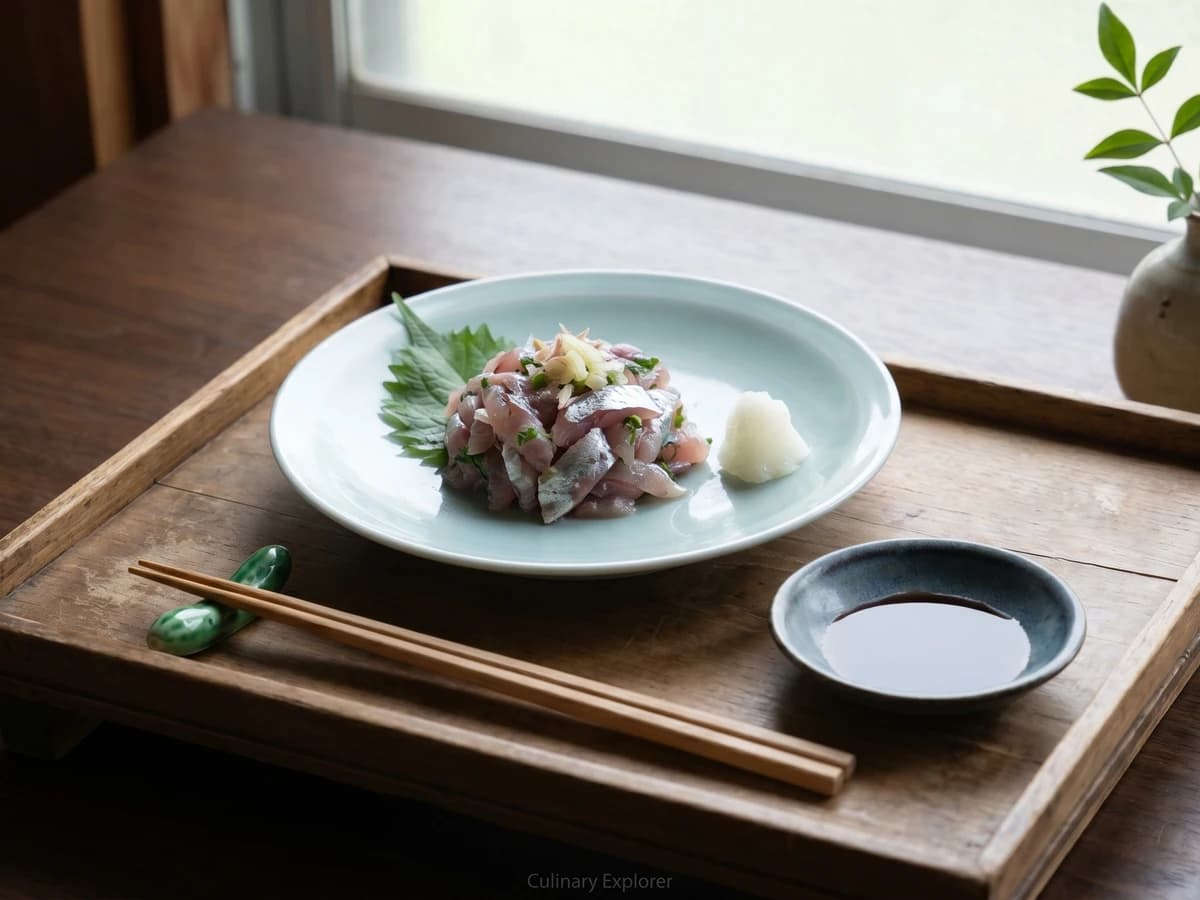
Summer horse mackerel, chopped just enough to catch ginger and scallion, becomes a cool, clean main dish with rice. The secret is fresh fish and a knife that does not bruise it.
Chef Takumi
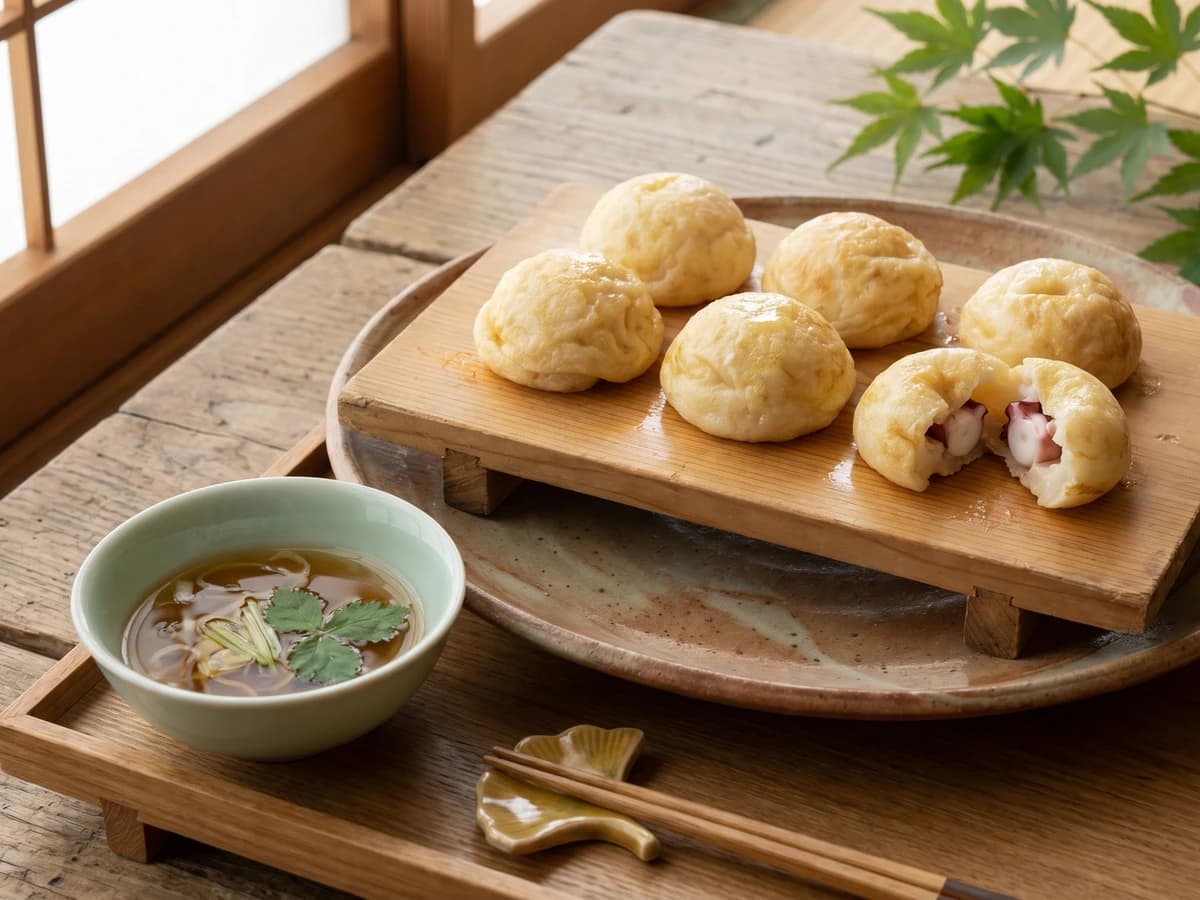
Akashi-yaki is not sauced takoyaki. It is egg-rich batter, tender octopus, and clear dashi, cooked pale and soft so each ball can be dipped like a small custard dumpling.

Chef Takumi
A whole anago looks like a test of nerve. It is mostly good sourcing, a dry skin, cold batter, and oil hot enough to leave the eel sweet under its lace.