
Chef Takumi
Ago Dashi (あごだし, grilled flying fish stock)
Ago dashi is quiet luxury: roasted flying fish, konbu, and patient water. Steep it slowly and you get a clear stock that tastes sweet, clean, and full without heaviness.
A cooking platform built around craft, culture, and the stories behind what we eat.

Created by
A pickle bed doesn't ask for mystery. Salt steadies it, koji sweetens it, rice feeds it, and the vegetables you bury inside come out seasoned all the way through.
The numbers are the recipe. Three, five, eight: salt, koji, steamed rice. Sango-hachi doko looks like the sort of old kitchen knowledge that should arrive with warnings and a stern aunt standing nearby. It isn't. Mix the bed well, let it settle, and feed it good vegetables when their season comes.
The one detail that decides it is balance. Too much salt and the bed cures harshly. Too little and it turns loose and unsafe before the koji has done its quiet work. Koji, rice inoculated with Aspergillus oryzae, brings sweetness and depth as its enzymes work on the starch. The rice gives the bed body. The salt keeps order. A tidy arrangement, like Bach, but edible and less likely to frighten the neighbors.
In Tōhoku, this is food for the cold edge of the year, when daikon, carrot, cucumber, and turnip are put down to keep the table alive beside rice and soup. Use vegetables at their prime, scrubbed clean and cut so the seasoning can reach the center. There is nothing hidden here, only time doing what time is good at.
Sango-hachi-zuke is associated with the snowy northeastern region of Tōhoku, especially Fukushima, Yamagata, and Akita, where preserved vegetables have long helped carry households through winter. The name comes from the remembered proportion of salt, koji, and steamed rice: three, five, and eight. Modern home versions often reduce the salt from the older ratio, but the structure remains the same: a koji-rich bed that seasons vegetables by slow contact rather than heavy sauce.
Quantity
300g
Quantity
500g
broken apart by hand
Quantity
800g
warm but not hot
Quantity
1/2 cup
use only as needed
Quantity
1 small piece (about 5g)
wiped clean
Quantity
as needed
washed, dried, and cut for pickling
| Ingredient | Quantity |
|---|---|
| fine sea salt | 300g |
| rice kojibroken apart by hand | 500g |
| freshly steamed short-grain ricewarm but not hot | 800g |
| lukewarm wateruse only as needed | 1/2 cup |
| dried konbu (optional)wiped clean | 1 small piece (about 5g) |
| seasonal vegetableswashed, dried, and cut for pickling | as needed |
Cook the short-grain rice a little firmer than table rice and let it cool until warm to the touch, not hot. Hot rice can weaken the koji's enzymes, and cold rice refuses to mix cleanly. You want the grains soft enough to bind the bed but still separate enough to work through with your fingers.
Put the rice koji in a wide bowl and crumble it gently until no hard clumps remain. This is not ceremony. Breaking it up spreads the koji evenly through the bed, so every handful seasons the same way.
Add the salt to the koji and rub them together, then fold in the warm rice. Work with clean hands until the mixture feels evenly damp and heavy, like coarse miso before it has settled. If it feels dry and sandy, add lukewarm water a spoonful at a time. Too much water makes a loose bed, and a loose bed spoils more easily.
Pack the mixture into a clean ceramic crock, glass jar, or enamel container, pressing out air pockets as you go. Slip in the konbu if using. Cover the surface with clean parchment or plastic wrap pressed directly against it, then set on a lid. Leave at cool room temperature for 24 hours so the salt can draw moisture through the rice and koji.
After the first day, stir the bed from bottom to top with a clean spoon or hand. It should smell gently sweet, salty, and rice-like, never sharp or rotten. Move it to the refrigerator for slower keeping, or keep it in a very cool place if your kitchen is winter-cold.
Wash the vegetables, dry them well, and cut them into pieces the seasoning can reach: cucumber halves, daikon sticks, carrot batons, or small turnips split in two. Bury them completely in the bed. Thin cucumber may be ready in 6 to 12 hours, while daikon and carrot usually need 1 to 2 days. Salt pulls water from the vegetable while koji rounds the edge, so the pickle becomes seasoned inside, not merely coated.
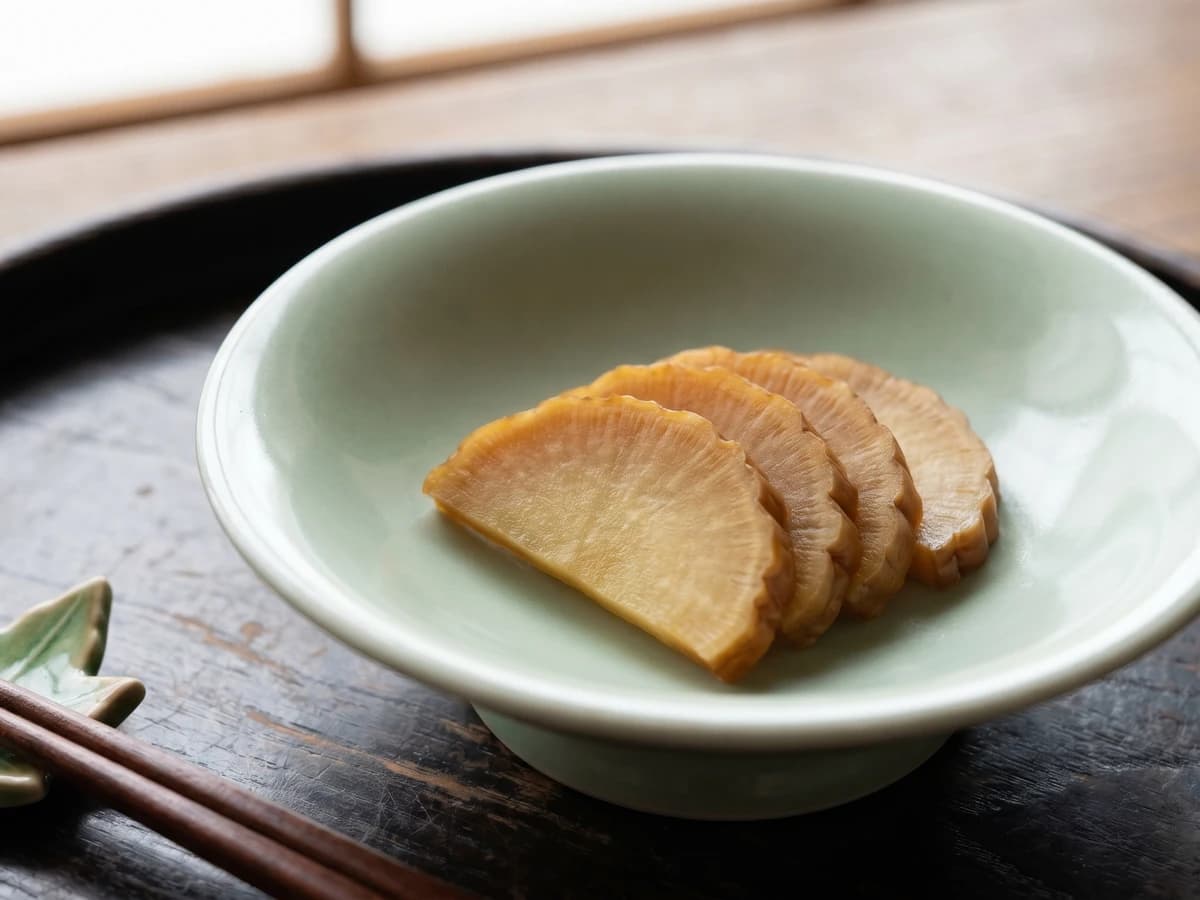
Lift out only what you plan to serve, wipe off the clinging doko, and slice neatly. Do not rinse unless the pickle tastes too salty, because rinsing washes away the koji fragrance you waited for. Arrange a few pieces in a small dish with room around them. Pickles are a companion to rice, not a mountain to climb.
1 serving (about 30g)
Culinary guides, cultural storytelling, and the editorial depth that makes cooking meaningful.
Discover Culinary ExplorerChef Takumi
Ago dashi is quiet luxury: roasted flying fish, konbu, and patient water. Steep it slowly and you get a clear stock that tastes sweet, clean, and full without heaviness.
Chef Takumi
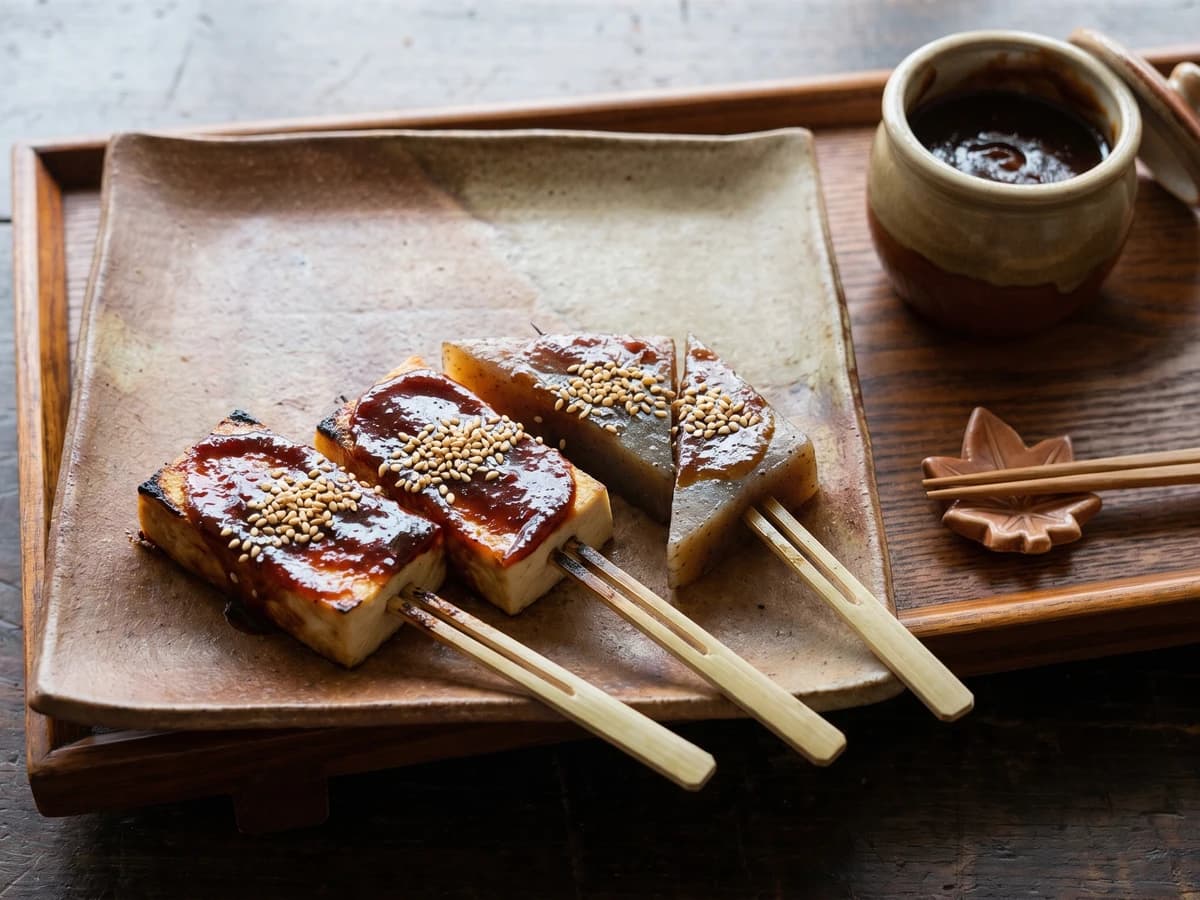
Akamiso dengaku-miso is plain work: bean miso, sweetness, sake, and patient stirring until the glaze turns dark, glossy, and thick enough to cling to the grill.
Chef Takumi
Snow-country takuan begins with smoke. Hang the daikon, dry it gently, then let rice bran, salt, and time turn it into Akita's amber pickle.

Chef Takumi
Aso takanazuke is spring caught in salt: sharp mustard greens pressed until they soften, fermented until their edge turns round, then fried briefly with sesame for rice.