
Chef Takumi
Aji Fry (アジフライ, panko-fried horse mackerel)
Aji fry is weeknight fish with no mystery: fresh horse mackerel opened cleanly, breaded lightly, and fried until the panko crackles while the flesh stays sweet.
A cooking platform built around craft, culture, and the stories behind what we eat.
Created by
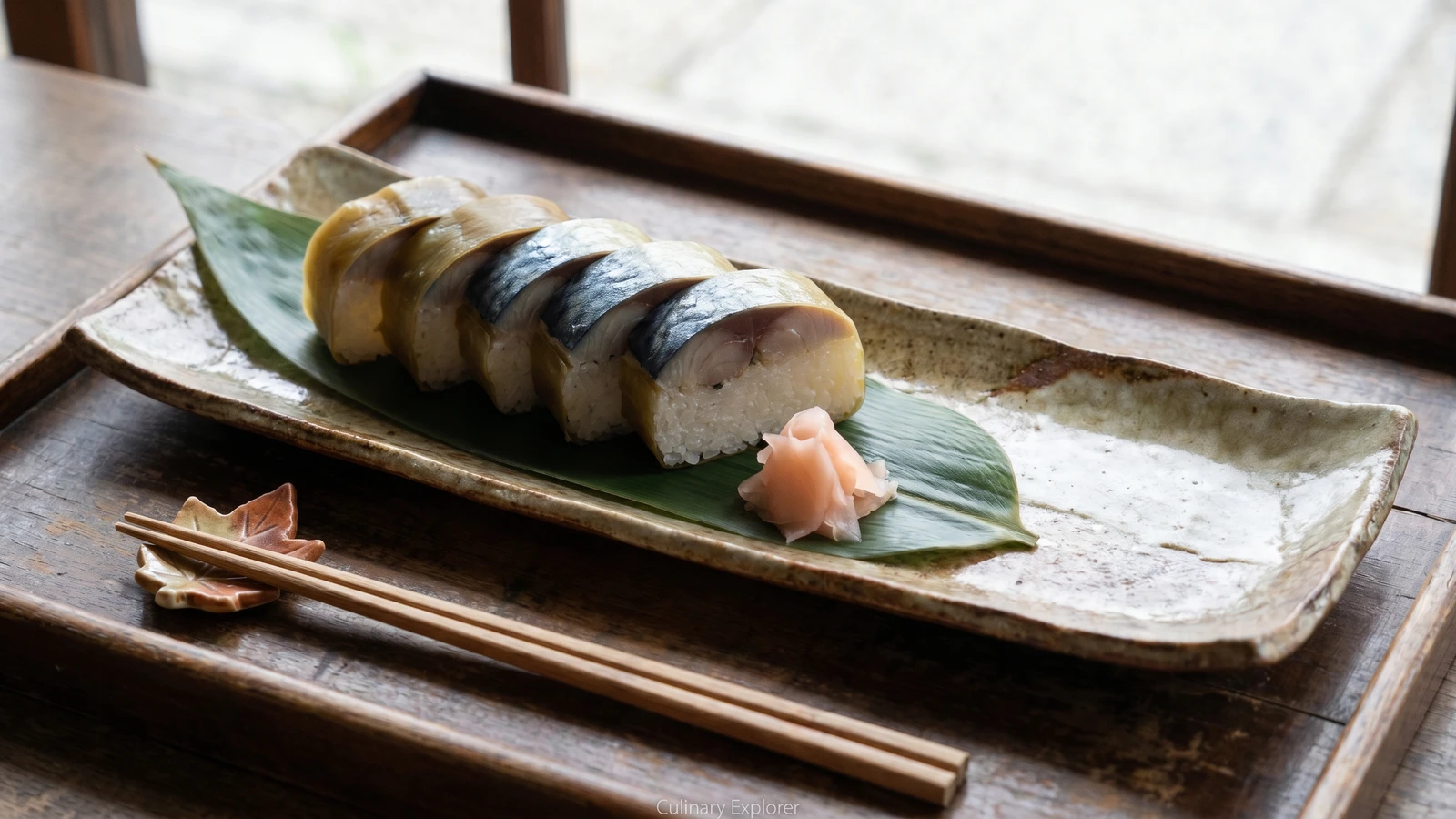
Kyoto's festival sushi is only fearsome until you see the order: salt the mackerel, wake it with vinegar, press it with rice, then let time finish the seasoning.
Mackerel makes people nervous, and good. Saba is rich, quick to spoil, and completely unforgiving when it is tired. That doesn't make saba-zushi difficult. It only tells you where the work begins: buy fish that is glistening fresh, handled for raw curing, and don't ask vinegar to perform miracles. Nothing hidden.
The one detail that decides the dish is the cure. Salt first draws out water and tightens the flesh, so the vinegar can season cleanly instead of soaking into a wet fish. Vinegar second brightens the fat and sets the surface, but it should not turn the fillet chalky all the way through. When the edge is pale and the center still has a quiet rose color, stop. That is the line.
Then it becomes almost calm: seasoned rice, a thin konbu sheet, a bamboo mat, and steady pressure. We shape it as bō-zushi, a log, because the fish and rice need time in contact. Resting is not delay; it's the final seasoning. This is honmono, festival and picnic food made ahead and sliced thick, with the silver saba showing under the kelp. Leave the plate room, and the dish tells you exactly what it is.
The Saba Kaidō, or Mackerel Road, linked Wakasa Bay, especially Obama in present-day Fukui Prefecture, with Kyoto, an inland capital that depended on salted sea fish from the north. In the Edo period, mackerel was salted before the journey over the mountains; by the time it reached Kyoto, the cure had tightened the flesh and made it suitable for sushi. Kyoto bō-zushi is shaped as a long log on a bamboo mat, while Osaka's battera is pressed in a box, a small regional distinction that matters to people who eat both.
Quantity
2 (350-450g total)
very fresh, previously frozen for raw preparation
Quantity
3 tablespoons
for curing
Quantity
1 cup
for curing the mackerel
Quantity
1 tablespoon
for the vinegar cure
Quantity
1 small piece (about 5cm)
for the vinegar cure
Quantity
2 rice-cooker cups (360ml)
Quantity
390ml
or to the sushi-rice line of a rice cooker
Quantity
5 tablespoons
for sushi vinegar
Quantity
2 tablespoons
for sushi vinegar
Quantity
1 1/2 teaspoons
for sushi vinegar
Quantity
2 thin sheets (about 18 x 12cm each)
softened if dry
Quantity
1 tablespoon each
mixed, for hands and knife
Quantity
for serving
| Ingredient | Quantity |
|---|---|
| skin-on mackerel filletsvery fresh, previously frozen for raw preparation | 2 (350-450g total) |
| fine sea saltfor curing | 3 tablespoons |
| rice vinegarfor curing the mackerel | 1 cup |
| sugarfor the vinegar cure | 1 tablespoon |
| konbufor the vinegar cure | 1 small piece (about 5cm) |
| Japanese short-grain rice | 2 rice-cooker cups (360ml) |
| wateror to the sushi-rice line of a rice cooker | 390ml |
| rice vinegarfor sushi vinegar | 5 tablespoons |
| sugarfor sushi vinegar | 2 tablespoons |
| fine sea saltfor sushi vinegar | 1 1/2 teaspoons |
| shiroita konbu or battera konbu sheetssoftened if dry | 2 thin sheets (about 18 x 12cm each) |
| rice vinegar and watermixed, for hands and knife | 1 tablespoon each |
| sweet pickled ginger (gari) (optional) | for serving |
Buy the mackerel the day you cure it. The skin should shine, the flesh should spring back, and the smell should be clean and faint, not loud. Ask for fish handled for raw preparation and previously frozen for parasite control, then keep it cold over ice until the salt goes on. Salt and vinegar make the fish delicious; they don't make tired fish safe.
Set a rack over a tray and lay the fillets skin-side down. Sprinkle the salt over both sides, a little more heavily on the flesh, and refrigerate uncovered for 1 1/2 to 2 hours. The salt pulls water from the fish and tightens the flesh, so the vinegar can season cleanly instead of soaking into something watery and dull.
While the salt does its work, rinse the rice in several changes of water until the water runs almost clear. Wash it twice, wash it thrice, then drain it for 20 minutes. Cook with the measured water, then let it rest covered for 10 minutes. Washing removes loose surface starch, which is what keeps the finished rice glossy and separate instead of pasty.
Warm the 5 tablespoons rice vinegar, 2 tablespoons sugar, and 1 1/2 teaspoons salt just until dissolved. Turn the hot rice into a hangiri, or a wide shallow bowl, and sprinkle the vinegar over it. Fold with a cutting motion while fanning until the grains shine and the rice is warm rather than hot. Hot rice drinks the vinegar; mashing it only breaks the grains. Cover with a damp cloth.
Rinse the salted mackerel quickly under cold running water, then pat it very dry. Run your fingertips down the center line and pull any pin bones with tweezers. Do not soak the fish now. Water would put back what the salt just drew out, and a wet surface weakens the vinegar cure.
Stir the 1 cup rice vinegar with 1 tablespoon sugar until the sugar dissolves, then add the small piece of konbu. Lay the fillets in a shallow tray, flesh-side down, and cover the surface with the vinegar. If the liquid does not cover them, lay a paper towel over the top and wet it with the cure. Refrigerate for 30 to 45 minutes, until the edges turn pale and the center still keeps a quiet rose color.
Lift the clear outer membrane at the head end with the tip of a knife and peel it toward the tail in strips, leaving the silver-blue skin beneath. Trim any ragged belly edge and keep the trimmings for patching the narrow tail end of the log. The membrane is tough under the teeth, and removing it lets the knife pass cleanly later.
Brush or wipe the shiroita konbu sheets with the vinegar-water mixture and leave them for 5 to 10 minutes, just until pliable. If your sheets are already seasoned and supple, use them as they are. Dry konbu cracks under the mat; a softened sheet hugs the saba and gives the log its quiet sea fragrance.
Lay a makisu, the bamboo rolling mat, on the counter and cover it with plastic wrap. Set one konbu sheet on the wrap, then lay one mackerel fillet skin-side down on the konbu, flesh facing up. With damp hands, mound half the sushi rice along the fish and shape it into an even oval, using small trimmings to fill the narrow tail end if needed. Fold the mat over and press from the top and sides into a firm log. Repeat with the second fillet.
Wrap each log tightly, set it seam-side down, and rest it in the refrigerator under a light board or tray for 3 to 6 hours. Bring it out 20 minutes before slicing so the rice loses its hard chill. Unwrap and cut each log into 8 thick pieces with a long damp knife, wiping the blade between cuts. Serve with gari. The sushi is already seasoned, so let the saba, rice, and konbu speak without drowning them.
1 serving (about 65g)
Culinary guides, cultural storytelling, and the editorial depth that makes cooking meaningful.
Discover Culinary ExplorerChef Takumi
Aji fry is weeknight fish with no mystery: fresh horse mackerel opened cleanly, breaded lightly, and fried until the panko crackles while the flesh stays sweet.
Chef Takumi
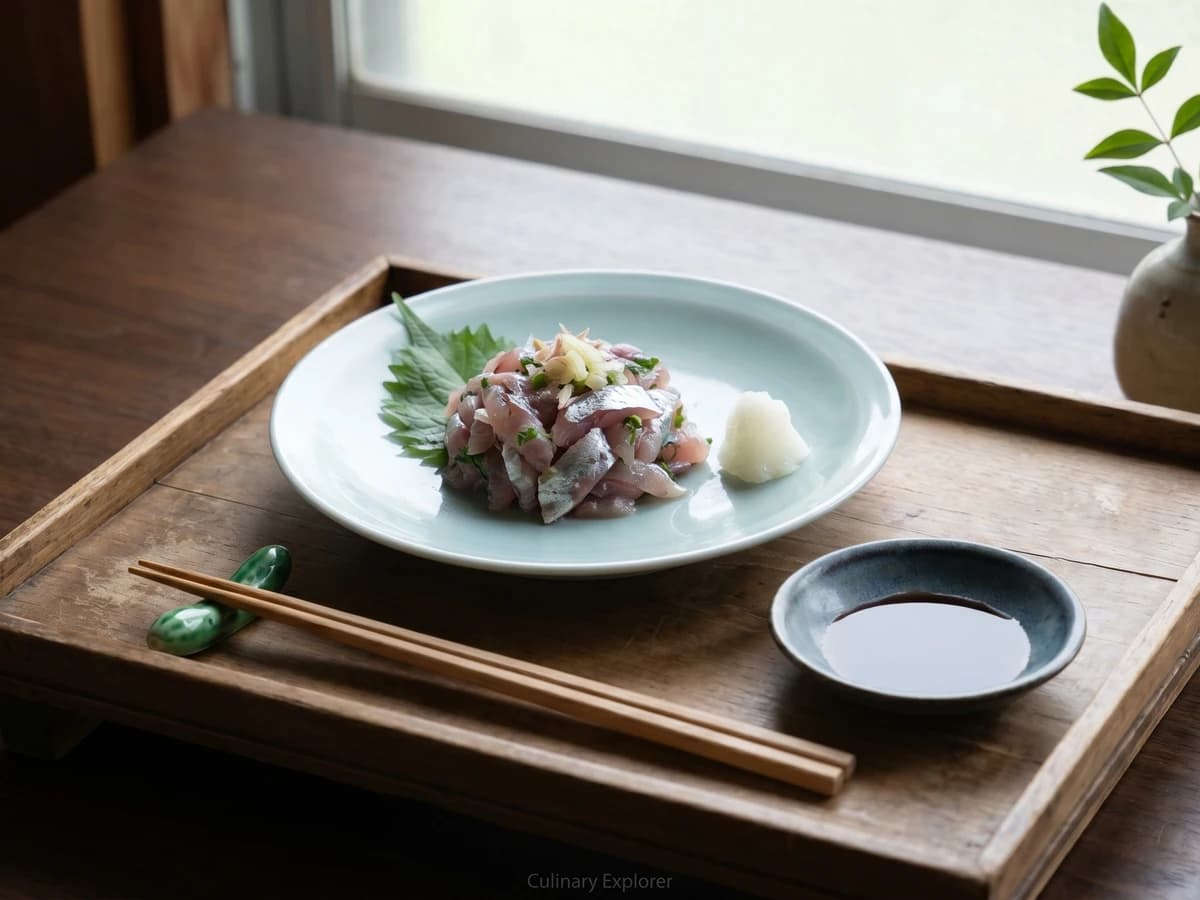
Summer horse mackerel, chopped just enough to catch ginger and scallion, becomes a cool, clean main dish with rice. The secret is fresh fish and a knife that does not bruise it.
Chef Takumi
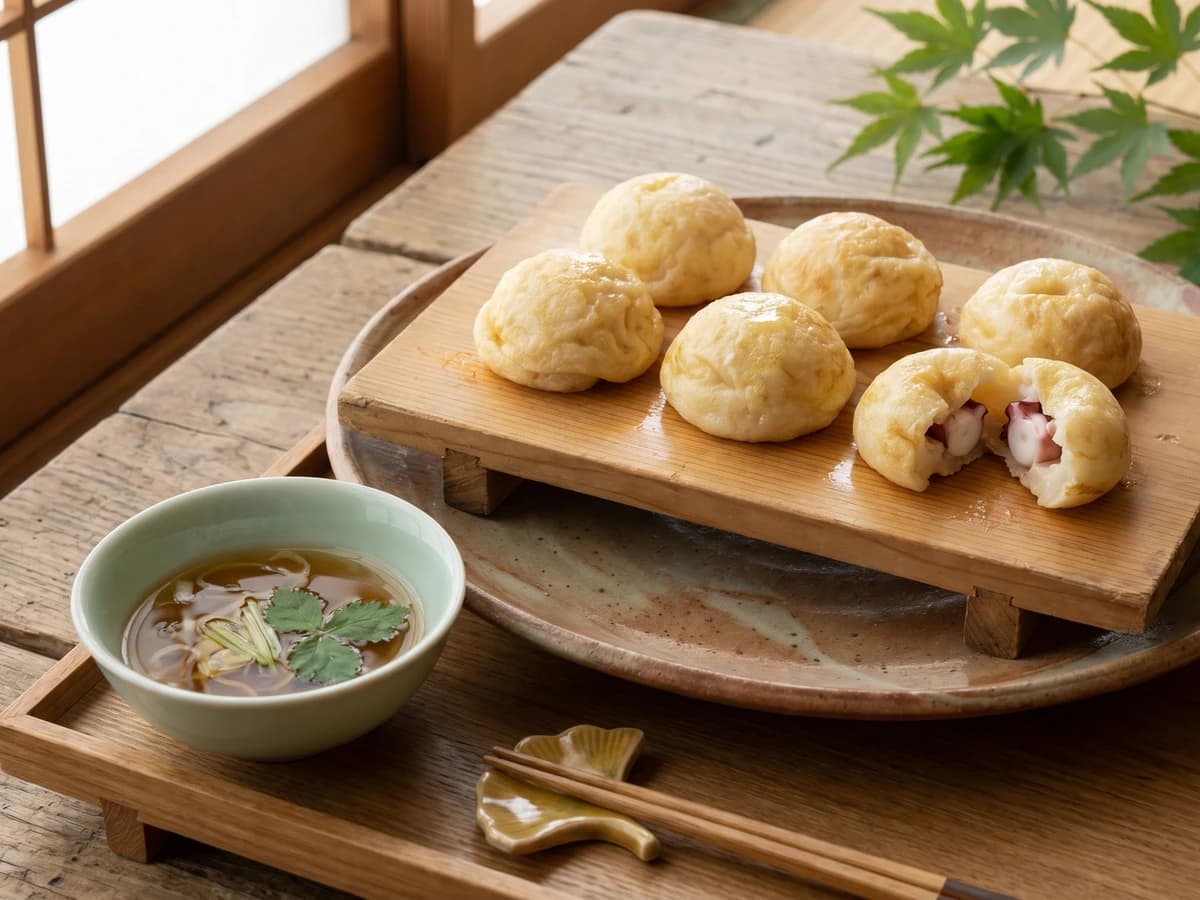
Akashi-yaki is not sauced takoyaki. It is egg-rich batter, tender octopus, and clear dashi, cooked pale and soft so each ball can be dipped like a small custard dumpling.

Chef Takumi
A whole anago looks like a test of nerve. It is mostly good sourcing, a dry skin, cold batter, and oil hot enough to leave the eel sweet under its lace.