
Chef Freja
Aeggesalat med Karse
Hard-boiled eggs folded into curry-spiked mayonnaise, heaped onto buttered rugbrod, and crowned with freshly snipped garden cress. The piece of smorrebrod that Easter lunch cannot be without.
A cooking platform built around craft, culture, and the stories behind what we eat.
Created by Chef Freja
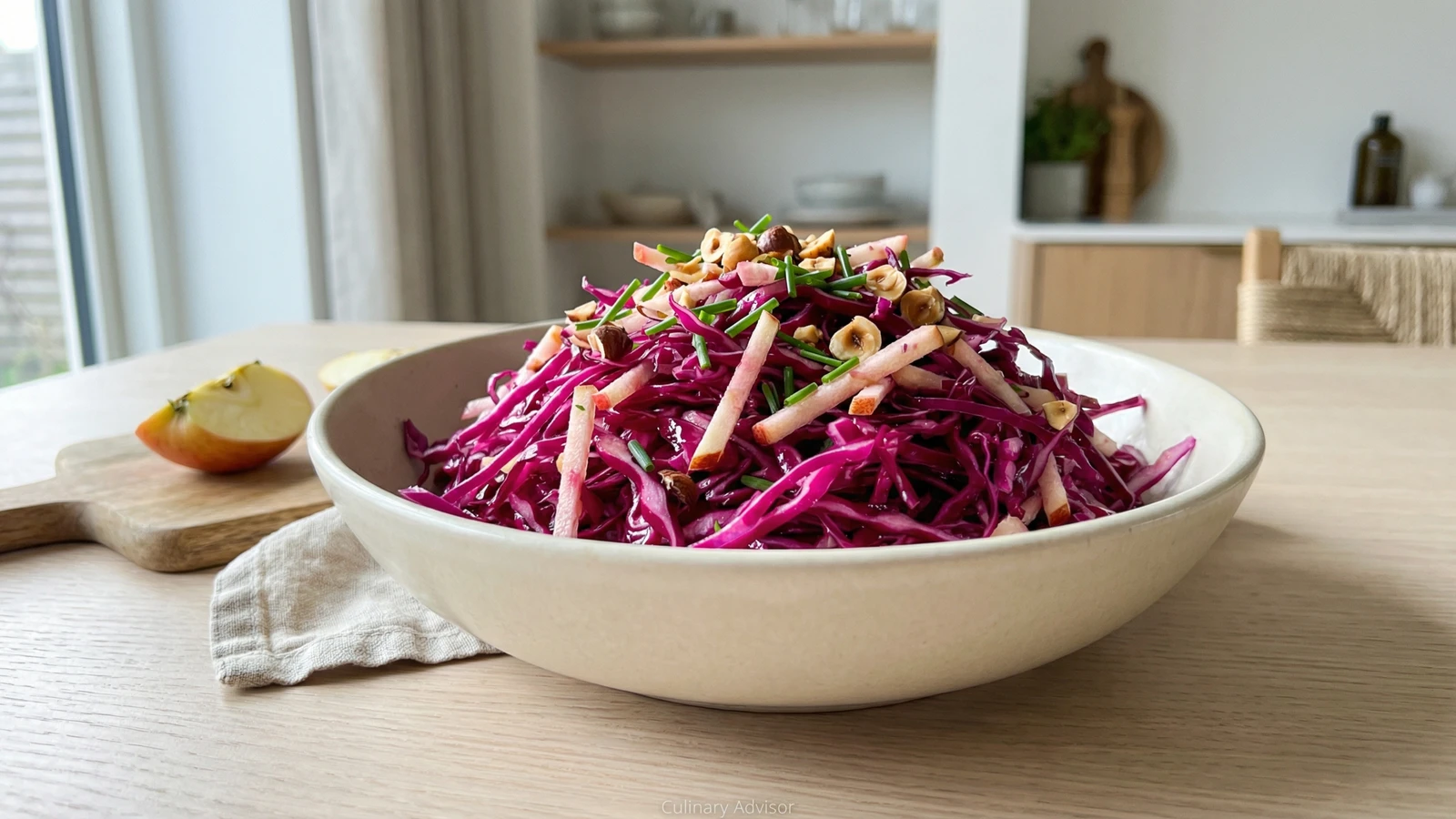
Finely shredded raw red cabbage and crisp apple in a sweet-sour rapeseed vinaigrette. The fresh, bright counterpart to the slow-braised Christmas rodkaal, and the salad that earns its place at the Danish winter table.
Red cabbage is a winter vegetable in Denmark. It comes into the markets in October, sits heavy and cold in its crates, and stays with us until the last of the winter light lifts in March. Most people know it as the long-simmered rodkaal that shows up beside the Christmas duck, cooked for hours with vinegar and sugar and juniper until it goes dark and glossy and almost jam-like. That version has its place, and I love it dearly. But it isn't the only way Danes eat red cabbage.
Rodkaalssalat is the other half of the story. Raw, shredded fine, dressed while it's still crisp, served cold. It's what you make when the braised version would be too heavy, when you want the cabbage to taste like cabbage, when the table needs a jolt of color and acidity to wake up everything around it. It belongs next to frikadeller on a Tuesday, next to cold cuts on a lunch platter, next to the Christmas roast when the rodkaal is already on the stove and you still want something fresh. The season decides when you make it; winter decides that you should.
The thing to pay attention to is the salt step. You salt the cabbage, wait fifteen minutes, and let it soften before the dressing ever touches it. Raw red cabbage without that step is a jaw workout. Raw red cabbage with it is tender and yielding, the way a proper slaw should be, while keeping every bit of its crunch. I'll walk you through the whole thing, and when it's done you'll have a salad you can make in twenty minutes that holds in the fridge for days and only gets better. That's a generous dish. Tak for mad.
Red cabbage reached Denmark from central Europe in the 1600s and quickly became a winter staple in a country where fresh vegetables were scarce from November to April. While the long-braised rodkaal that accompanies Christmas dinner is the better-known version abroad, raw rodkaalssalat has an equally deep place in the Danish kitchen, particularly in the western regions of Jutland, where home cooks valued any vegetable that could be served fresh in the dark months. The combination with apple is a quiet piece of Danish ingenuity: the two ingredients store through the winter in the same cold cellar, and they belong together on the plate for the same reason they belonged together in the larder.
Quantity
600g
outer leaves removed
Quantity
1 teaspoon
Quantity
1
Ingrid Marie, Cox, or another firm variety
Quantity
3 tablespoons
Quantity
1 tablespoon
Quantity
2 tablespoons
Quantity
3 tablespoons
Quantity
1 teaspoon
Quantity
half
zest and juice
Quantity
freshly ground, to taste
Quantity
small handful
snipped
Quantity
2 tablespoons
roughly chopped
| Ingredient | Quantity |
|---|---|
| red cabbageouter leaves removed | 600g |
| fine sea salt | 1 teaspoon |
| crisp eating appleIngrid Marie, Cox, or another firm variety | 1 |
| apple cider vinegar | 3 tablespoons |
| white wine vinegar | 1 tablespoon |
| mild honey | 2 tablespoons |
| cold-pressed rapeseed oil | 3 tablespoons |
| Dijon mustard | 1 teaspoon |
| unwaxed lemonzest and juice | half |
| black pepper | freshly ground, to taste |
| chivessnipped | small handful |
| toasted hazelnuts (optional)roughly chopped | 2 tablespoons |
Quarter the cabbage and cut out the hard white core from each piece. Slice the quarters as thinly as you can, either with a sharp knife or, better, on a mandoline. You want shreds that are almost translucent at the edges. Thick shreds stay stubborn and chewy no matter how long you dress them. Fine shreds soften into something that folds around the fork.
Put the shredded cabbage in a large bowl and scatter the salt over it. Work the salt through with your hands for a minute or two, squeezing gently. You'll feel the cabbage start to give way and release its water. This is the step that turns raw cabbage from a chore into a pleasure. Skip it and the salad stays tough. Let it sit for fifteen minutes while you make the dressing.
In a small bowl, whisk together both vinegars, the honey, the mustard, the lemon zest and juice, and a good grind of black pepper. Whisk in the rapeseed oil in a slow stream until the dressing comes together. Taste it. It should be sharp first, sweet underneath, with the peppery warmth of the rapeseed oil holding everything in place. If it's too sharp, add a little more honey. The balance is yours to set.
Quarter and core the apple. Leave the skin on. The skin is where half the color and texture live, and peeling it is a waste of a good apple. Cut the quarters into matchsticks as fine as you can manage. Toss them immediately into the dressing so the vinegar keeps them from browning.
The cabbage will have released a little water by now. Drain off anything that's pooled at the bottom of the bowl, but don't rinse. You want the seasoning the salt has given it. Pour the dressing and apple over the cabbage and turn everything together with your hands. The cabbage will go from a deep violet to an almost electric pink as the vinegar hits it. That's the acid waking up the pigments. Let the salad rest for at least fifteen minutes before serving. Half an hour is better. The flavors need time to find each other.
Taste once more before serving. Adjust with salt, pepper, or a few more drops of vinegar if it needs lifting. Scatter the chives over the top and, if you're using them, the toasted hazelnuts. Serve in a shallow bowl so the color does its work. You'll know when it's right. The cabbage should be tender but still crunchy, the apple sweet against the vinegar, the whole thing bright enough to cut through anything you serve beside it.
1 serving (about 155g)
Culinary guides, cultural storytelling, and the editorial depth that makes cooking meaningful.
Discover Culinary ExplorerChef Freja
Hard-boiled eggs folded into curry-spiked mayonnaise, heaped onto buttered rugbrod, and crowned with freshly snipped garden cress. The piece of smorrebrod that Easter lunch cannot be without.

Chef Freja
The sweet-sour Danish cucumber salad that turns up next to stegt flaesk, frikadeller, and anything off the summer grill. Paper-thin slices, a vinegar brine with dill and peppercorns, the side that makes the plate make sense.

Chef Freja
Poached chicken, white asparagus, and mushrooms folded through a gentle curry cream, piled high on buttered rugbrod and crowned with crisp bacon. The smorrebrod that arrives at every Danish Easter lunch.

Chef Freja
Danish white cabbage slaw softened with salt and dressed in vinegar, cream, and crushed caraway. The cool, crunchy counterweight to frikadeller, pork roasts, and anything coming off the summer grill.