
Chef Freja
Aeggesalat med Karse
Hard-boiled eggs folded into curry-spiked mayonnaise, heaped onto buttered rugbrod, and crowned with freshly snipped garden cress. The piece of smorrebrod that Easter lunch cannot be without.
A cooking platform built around craft, culture, and the stories behind what we eat.
Created by Chef Freja
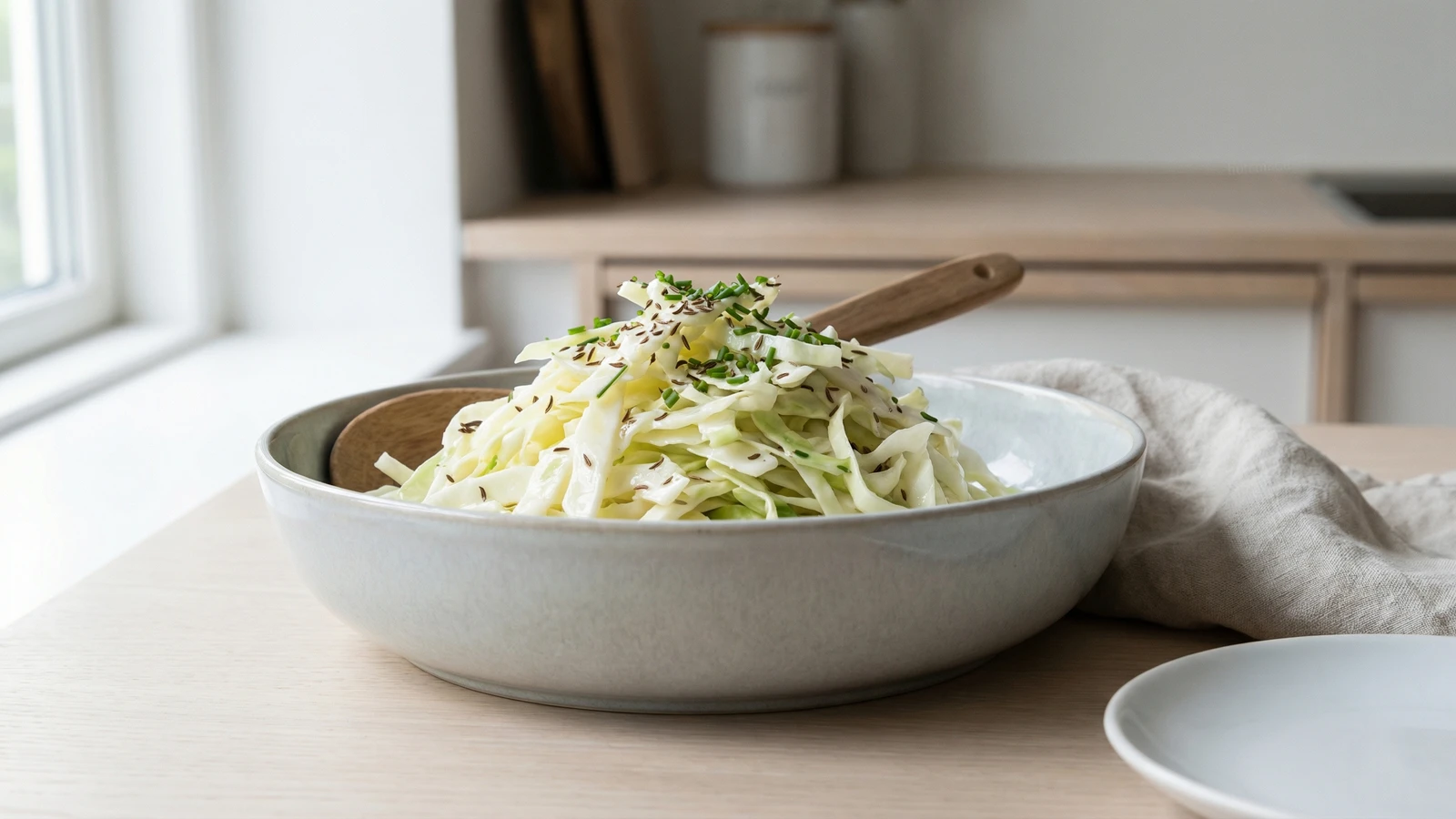
Danish white cabbage slaw softened with salt and dressed in vinegar, cream, and crushed caraway. The cool, crunchy counterweight to frikadeller, pork roasts, and anything coming off the summer grill.
White cabbage is the Danish vegetable you don't notice until it's missing. It sits in the cellar through winter and in the corner of the summer fridge, patient and plain, waiting to become something. Hvidkaalssalat is the first thing it becomes when you know what you're doing.
This is the slaw that goes alongside frikadeller on a Tuesday night and next to a pork roast on Sunday. In July it sits on the grill table with sausages and new potatoes and whatever the garden gave you that morning. The flavor is clean and honest: raw cabbage softened with salt, a sharp cream dressing laced with caraway, enough acid to wake everything up. Nothing hidden, nothing fussy, nothing trying to be more than it is.
The technique is simple but there's one thing that matters more than the others: you have to let the cabbage rest with the salt before you dress it. Ten minutes is enough. That small pause breaks the cell walls just enough to keep the crunch but lose the squeak, and it's the difference between a slaw that drinks the dressing and a slaw that fights it. You'll know when it's right because the cabbage will feel softer in your hand but still snap cleanly when you bite it.
White cabbage has been cultivated in Denmark since the Middle Ages, when it was a cellar crop that carried coastal and inland families through the dark months between autumn harvest and spring greens. Caraway, kommen in Danish, travelled north with the Hanseatic trade and rooted itself so deeply in the Scandinavian kitchen that it now tastes native. The cream-and-vinegar dressing belongs to a strand of 19th century Danish home cooking where a little dairy was used to tame raw vegetables without masking them, a technique the smorrebrodsjomfruer of the old Copenhagen lunch restaurants also used when building the cold salads that accompanied the herring and the roasts.
Quantity
1 small head, about 800g
Quantity
1 teaspoon
Quantity
100ml
Quantity
2 tablespoons
Quantity
1½ teaspoons
lightly crushed
Quantity
150ml
Quantity
1 teaspoon
Quantity
to taste
Quantity
to taste
Quantity
small bunch
snipped
| Ingredient | Quantity |
|---|---|
| white cabbage (hvidkaal) | 1 small head, about 800g |
| fine sea salt (for the cabbage) | 1 teaspoon |
| white wine vinegar | 100ml |
| caster sugar | 2 tablespoons |
| caraway seedslightly crushed | 1½ teaspoons |
| double cream | 150ml |
| Dijon mustard (optional) | 1 teaspoon |
| fine sea salt | to taste |
| white pepper | to taste |
| chivessnipped | small bunch |
Halve the cabbage, cut out the hard core at the base, and slice each half into fine ribbons with a sharp knife. About the width of a coin, no thinner. A sharp knife, not a box grater. The grater tears the cells and leaves you with something that weeps and bruises before you've even dressed it. A knife keeps the ribbons clean and the structure intact, and structure is what a good slaw is built on.
Tip the shredded cabbage into a large bowl and scatter over the teaspoon of sea salt. Rub it through with your hands for a minute, then leave it to rest for ten minutes. The salt draws moisture out of the cell walls and softens the cabbage just enough to lose its raw squeak, but not enough to cook it. You want it relaxed, not limp. After ten minutes, press down on the cabbage with your hands and tip off any water that has pooled at the bottom. Don't wring it dry. You only need to lose the puddle.
In a separate bowl, combine the vinegar, sugar, Dijon mustard if using, and the lightly crushed caraway seeds. Crushing the seeds is the step most people skip, and it's the one that matters. Whole caraway looks right but tastes of almost nothing. The flavor is locked inside until you crack the shell open. Stir until the sugar has dissolved, then whisk in the cream. The dressing will be loose and pourable, faintly sweet, faintly sharp, with the caraway suspended throughout.
Pour the dressing over the cabbage and toss everything together with your hands or two large spoons until every ribbon is coated. Taste and adjust with fine sea salt and white pepper. Cover the bowl and rest the slaw in the fridge for at least thirty minutes, ideally an hour. This is the joy of waiting. The flavors marry, the cabbage drinks the dressing, and what starts as two separate things becomes one. If you serve it straight away, you're eating cabbage and sauce. If you let it rest, you're eating hvidkaalssalat.
Just before the slaw goes to the table, taste it one last time. Cold food always needs a little more seasoning than you think. Adjust the salt, add a crack of white pepper, scatter the snipped chives across the top. Bring the bowl out with whatever warm and rich thing it belongs next to: frikadeller on a Tuesday, a pork roast on Sunday, sausages from the grill on a long July evening. The cool crunch is the counterweight. That's the whole point of this dish. Tak for mad.
1 serving (about 220g)
Culinary guides, cultural storytelling, and the editorial depth that makes cooking meaningful.
Discover Culinary ExplorerChef Freja
Hard-boiled eggs folded into curry-spiked mayonnaise, heaped onto buttered rugbrod, and crowned with freshly snipped garden cress. The piece of smorrebrod that Easter lunch cannot be without.

Chef Freja
The sweet-sour Danish cucumber salad that turns up next to stegt flaesk, frikadeller, and anything off the summer grill. Paper-thin slices, a vinegar brine with dill and peppercorns, the side that makes the plate make sense.

Chef Freja
Poached chicken, white asparagus, and mushrooms folded through a gentle curry cream, piled high on buttered rugbrod and crowned with crisp bacon. The smorrebrod that arrives at every Danish Easter lunch.
Chef Freja
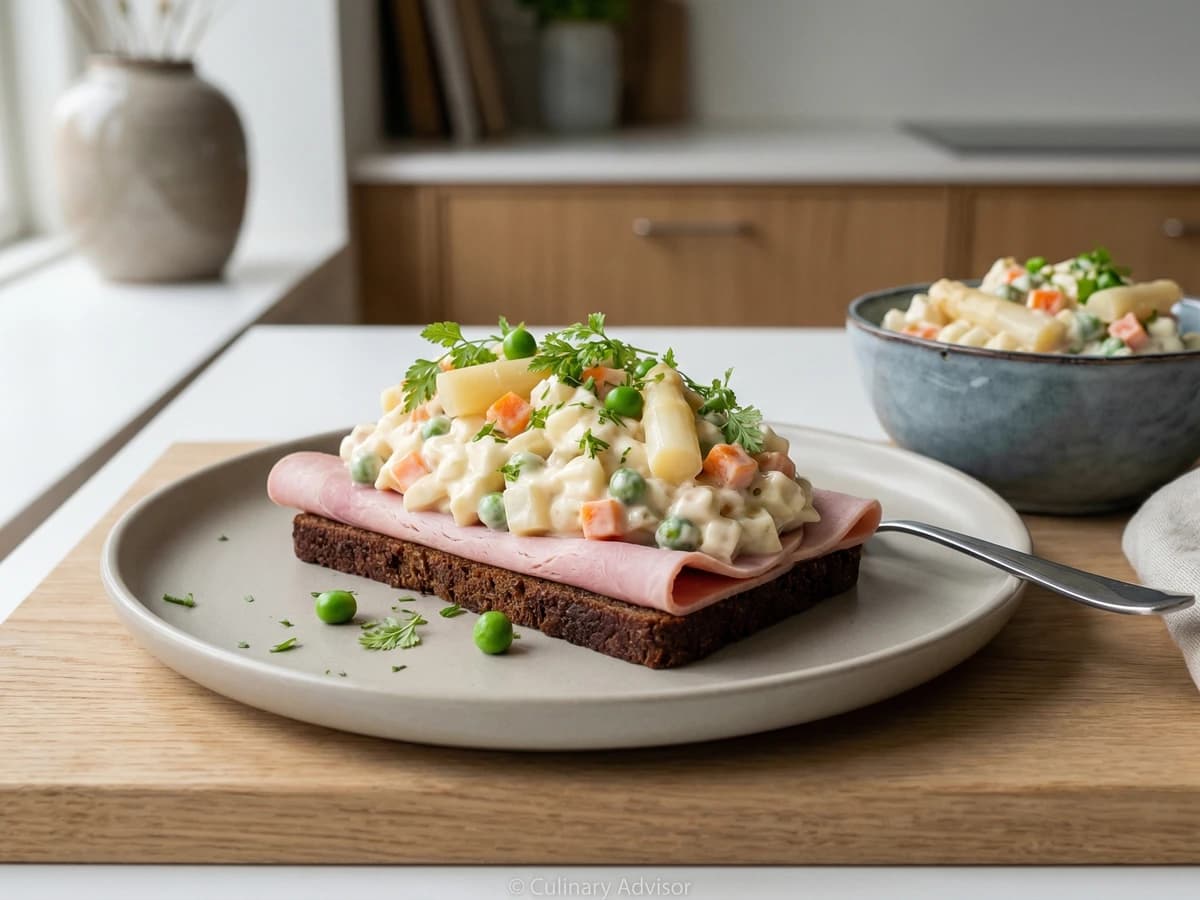
The Danish cold kitchen classic of diced carrots, peas, and white asparagus bound in thick mayonnaise. The salad that belongs on ham and rye, and the one that proves nothing in Danish food is as simple as it looks.