
Chef Freja
Aeggesalat med Karse
Hard-boiled eggs folded into curry-spiked mayonnaise, heaped onto buttered rugbrod, and crowned with freshly snipped garden cress. The piece of smorrebrod that Easter lunch cannot be without.
A cooking platform built around craft, culture, and the stories behind what we eat.
Created by Chef Freja
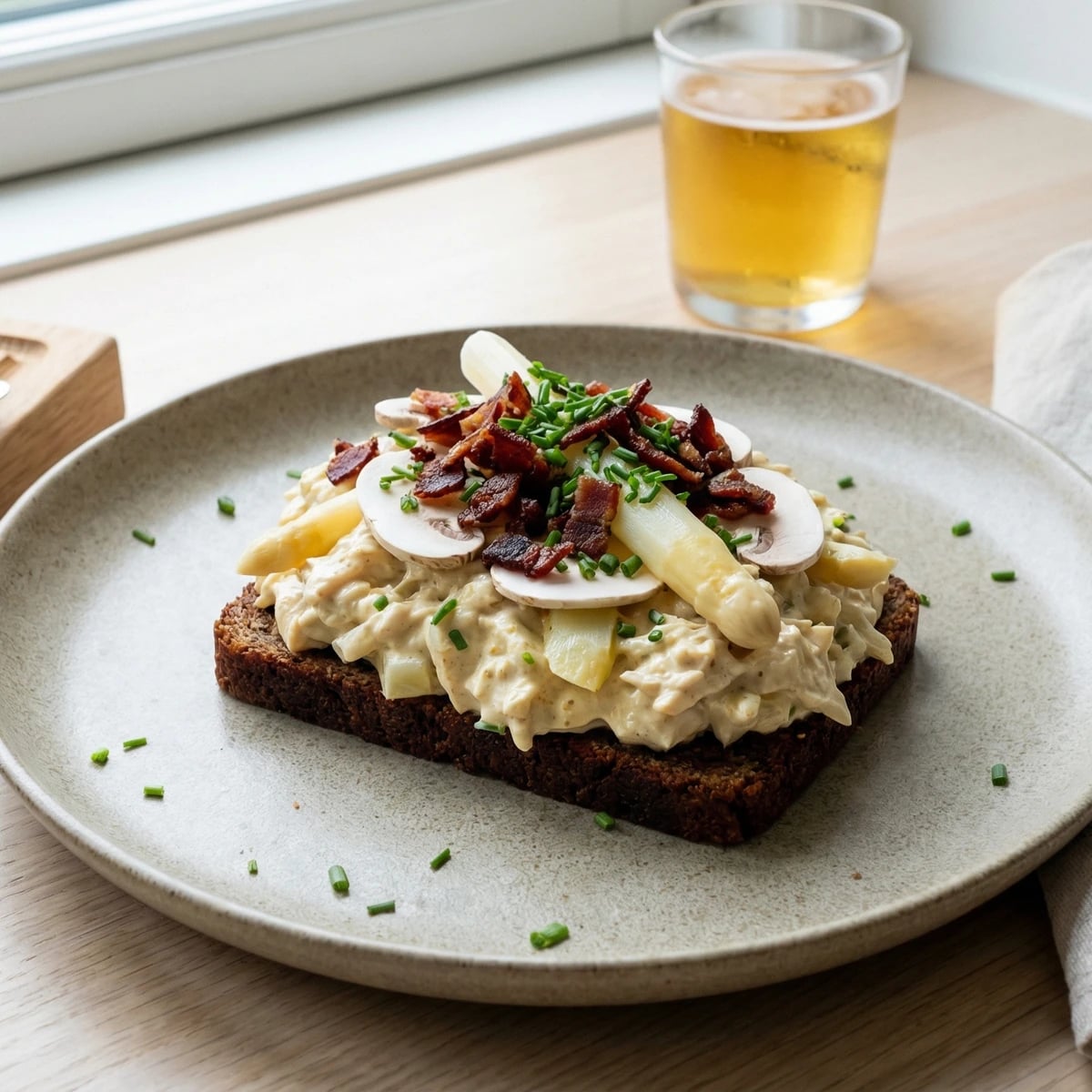
Poached chicken, white asparagus, and mushrooms folded through a gentle curry cream, piled high on buttered rugbrod and crowned with crisp bacon. The smorrebrod that arrives at every Danish Easter lunch.
White asparagus begins in late April, just as Easter comes around and the Danish kitchen starts looking for spring. For a few short weeks the market stalls fill with pale, pencil-thick spears, and every cook in the country starts thinking about what to do with them. Honsesalat is one of the first answers. It has been a fixture of the Easter lunch table for generations, the kind of dish you make on Holy Saturday and pile onto rugbrod on Easter Sunday while the family arrives in waves.
The idea is straightforward. You poach chicken gently until the meat is silky. You fold it through a light curry cream with white asparagus and thin-sliced raw mushrooms. You chill it. You pile it onto buttered dark rye and finish with crisp bacon and chives. Every element has a job, and I'll walk you through each one so you understand why the chicken starts in cold water, why the mushrooms meet lemon before they meet cream, why the bacon begins in a cold pan.
What matters most is restraint with the curry. Danish curry is a whisper, not a shout. A single teaspoon of mild curry powder, rested in the cream until it blooms, is enough to warm the whole salad without overtaking the chicken. The season decides the rest. Fresh Danish white asparagus in late spring is the gift this dish was built around, and when you can get it, the salad tastes the way it was meant to taste. Jarred asparagus will carry you through the rest of the year honestly, and no one at a Copenhagen lunch table will think less of you for it.
Honsesalat belongs to the golden age of the Copenhagen lunch restaurant, when the smorrebrodsjomfru, the formally trained women of the cold kitchen, were codifying the grammar of the open sandwich in the 1880s and 1890s. Curry powder had reached Denmark through British and Dutch trading routes earlier in the century, and Danish cold cuisine adopted it with unusual enthusiasm, putting it into pickled herring, egg salads, and this chicken salad, where it became a quiet national signature. The crisp bacon on top is a later refinement from the mid-twentieth century, when Danish home cooks borrowed the gesture from the cafe tradition and made it their own at the Easter table.
Quantity
2, about 600g total
skin on and bone in
Quantity
1 small
halved
Quantity
1 small
roughly chopped
Quantity
1
Quantity
6
Quantity
to taste
Quantity
250g
fresh in season, or good-quality jarred
Quantity
200g
thinly sliced
Quantity
1 tablespoon
Quantity
150g
Quantity
100g
Quantity
1 teaspoon
Quantity
to taste
Quantity
4 rashers
Quantity
4 thick slices
Quantity
softened, for the bread
Quantity
small bunch
finely snipped
| Ingredient | Quantity |
|---|---|
| chicken breastsskin on and bone in | 2, about 600g total |
| onionhalved | 1 small |
| carrotroughly chopped | 1 small |
| bay leaf | 1 |
| black peppercorns | 6 |
| fine sea salt | to taste |
| white asparagusfresh in season, or good-quality jarred | 250g |
| white champignon mushroomsthinly sliced | 200g |
| lemon juice | 1 tablespoon |
| good-quality mayonnaise | 150g |
| creme fraiche | 100g |
| mild curry powder | 1 teaspoon |
| white pepper | to taste |
| streaky bacon | 4 rashers |
| dark rugbrod | 4 thick slices |
| unsalted butter | softened, for the bread |
| chivesfinely snipped | small bunch |
Place the chicken breasts in a snug saucepan and cover with cold water by a finger's width. Add the onion, carrot, bay leaf, peppercorns, and a generous pinch of salt. Bring slowly to the barest simmer. You want the surface trembling, not bubbling. Cook for fifteen to eighteen minutes, then take the pot off the heat and leave the chicken to rest in the hot liquid for another ten minutes. Starting in cold water and resting in the broth is what keeps the meat moist. A hard boil tightens the fibers and you lose the silkiness that makes this salad worth eating.
If you have fresh white asparagus, peel the stems carefully from just below the tip all the way to the base. White asparagus skin is tough and bitter, and you must peel it or the whole salad will taste of it. Bring a pot of salted water to a gentle simmer and cook the spears for five to seven minutes, until a knife slides through the thickest part with no resistance. Drain and cool in iced water to stop the cooking, then pat dry. If you're using jarred, simply drain and press gently on kitchen paper to remove the brine.
Toss the sliced raw mushrooms with the lemon juice and a small pinch of salt. The lemon does two things at once: it keeps the mushrooms pale instead of going grey, and it seasons them from the inside out as they sit. Leave them for five minutes while you make the dressing.
In a bowl large enough to hold everything, whisk the mayonnaise with the creme fraiche until smooth. Add the curry powder and whisk it through. Let the dressing sit for at least ten minutes before you use it. Curry powder is raw spice, and it needs time to bloom in the cream. If you skip the rest, it tastes dusty. If you wait, it tastes rounded and warm.
Lift the chicken from its broth and pull the skin away. Take the meat off the bone and cut it into bite-sized pieces, about two centimetres. Cut the asparagus into similar lengths, keeping the tips whole because they are the prettiest part. Add the chicken, asparagus, and seasoned mushrooms to the curry cream and fold everything together gently with a spatula. You are folding, not stirring. Stirring crushes the asparagus and turns the salad into paste. Taste, and season with salt and white pepper until it is exactly right. Cover and chill for at least thirty minutes. The salad needs this time for the flavors to settle into each other.
Lay the bacon rashers in a cold, dry frying pan and set it over medium heat. Starting the bacon cold lets the fat render slowly, which is how you get bacon that is properly crisp all the way through rather than chewy in the middle. Turn once when the underside is deep golden, and cook until both sides are dark and brittle. Drain on kitchen paper and, when cool enough to handle, crumble into rough pieces.
Spread each slice of rugbrod with a thin layer of soft butter, going right to the edges. The butter is not a flavor choice. It's a barrier that keeps the bread from going soggy under the salad. Pile the honsesalat generously onto each slice, leaving a narrow border of dark bread visible around the edge. Scatter the crumbled bacon across the top and finish with a shower of snipped chives. Serve at once with a cold beer or a glass of dry white wine. Tak for mad.
1 serving (about 340g)
Culinary guides, cultural storytelling, and the editorial depth that makes cooking meaningful.
Discover Culinary Explorer
Chef Freja
Hard-boiled eggs folded into curry-spiked mayonnaise, heaped onto buttered rugbrod, and crowned with freshly snipped garden cress. The piece of smorrebrod that Easter lunch cannot be without.

Chef Freja
The sweet-sour Danish cucumber salad that turns up next to stegt flaesk, frikadeller, and anything off the summer grill. Paper-thin slices, a vinegar brine with dill and peppercorns, the side that makes the plate make sense.

Chef Freja
Danish white cabbage slaw softened with salt and dressed in vinegar, cream, and crushed caraway. The cool, crunchy counterweight to frikadeller, pork roasts, and anything coming off the summer grill.

Chef Freja
The Danish cold kitchen classic of diced carrots, peas, and white asparagus bound in thick mayonnaise. The salad that belongs on ham and rye, and the one that proves nothing in Danish food is as simple as it looks.