
Chef Freja
Aeggesalat med Karse
Hard-boiled eggs folded into curry-spiked mayonnaise, heaped onto buttered rugbrod, and crowned with freshly snipped garden cress. The piece of smorrebrod that Easter lunch cannot be without.
A cooking platform built around craft, culture, and the stories behind what we eat.
Created by Chef Freja
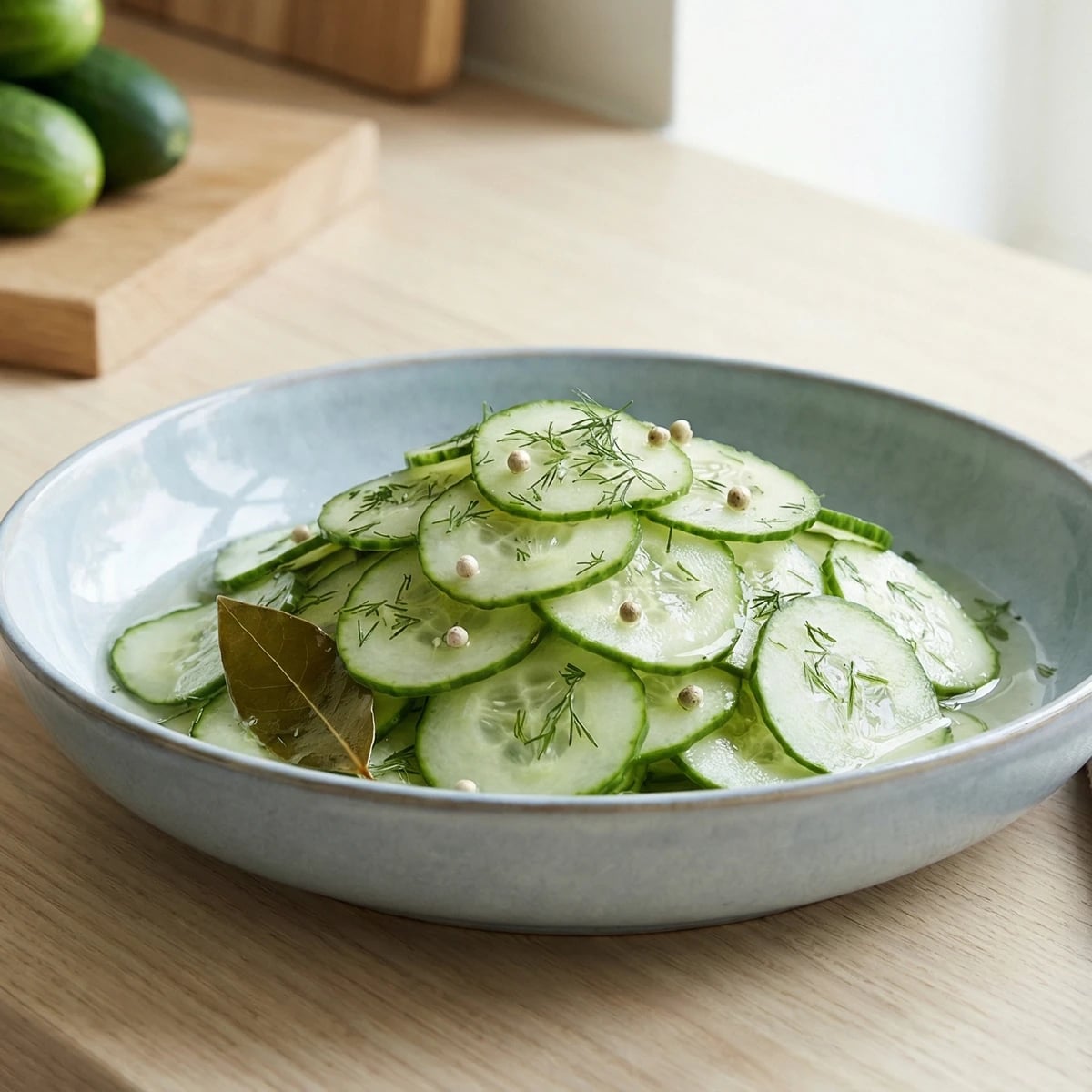
The sweet-sour Danish cucumber salad that turns up next to stegt flaesk, frikadeller, and anything off the summer grill. Paper-thin slices, a vinegar brine with dill and peppercorns, the side that makes the plate make sense.
There's a moment in early July when the cucumbers at the market suddenly taste like something. Not the year-round hothouse version that's mostly water and crunch, but real summer cucumbers, pale green and cool and faintly grassy. This is when agurkesalat belongs on the table.
Agurkesalat is the side that makes half the Danish summer repertoire work. Stegt flaesk, the crackling pork belly that's been voted the national dish, would be unbearably rich without it. Frikadeller need its sharpness to cut through the butter. Anything off the grill, sausages, chicken, a piece of fish, finds its balance next to a spoonful of these cool, tangy slices. It's not trying to be the star. It's trying to make the star shine, and it does that better than almost anything else in the Danish kitchen.
The method is simple, but every step has a reason, and I'll walk you through each one. You salt the cucumbers first to pull out their water, because unsalted cucumbers turn the brine pale within an hour. You warm the vinegar to dissolve the sugar, but you don't boil it hard, because hard boiling drives off the sharpness. You let the whole thing rest so the flavors settle into each other. Do these three things and you'll make an agurkesalat that tastes the way it's supposed to taste: bright, sweet-sour, dill-scented, the kind of side dish that makes a picnic feel chosen. Tak for mad.
Agurkesalat belongs to the broader Danish tradition of syltede gronsager, lightly pickled vegetables that served as both preservation and palate-sharpener in a cuisine heavy on pork and butter. The technique traces back to the 1800s, when Danish households preserved summer cucumbers for the colder months and discovered that a quick sweet-sour brine produced something too good to reserve for storage. By the early 20th century, agurkesalat had moved from pantry to table as a fresh side dish, and it became inseparable from stegt flaesk med persillesovs, the dish Danes voted their national favorite in a 2014 public ballot organized by the Ministry of Food.
Quantity
2 large
very thinly sliced
Quantity
1 tablespoon
for drawing out water
Quantity
200ml
Quantity
100g
Quantity
100ml
Quantity
1 teaspoon
Quantity
1
Quantity
small bunch
fronds roughly chopped
Quantity
freshly ground, to finish
| Ingredient | Quantity |
|---|---|
| cucumbersvery thinly sliced | 2 large |
| fine sea saltfor drawing out water | 1 tablespoon |
| white wine vinegar | 200ml |
| caster sugar | 100g |
| cold water | 100ml |
| whole white peppercorns | 1 teaspoon |
| bay leaf | 1 |
| fresh dillfronds roughly chopped | small bunch |
| black pepper | freshly ground, to finish |
Slice the cucumbers as thinly as you can, almost translucent. A mandoline is the right tool here. Thick slices stay watery and crunchy in the wrong way, while paper-thin slices soften just enough to drink in the brine while still keeping their bite. Don't peel them. The green skin holds the color of the salad and tells the eye what it's eating.
Lay the slices in a colander set over a bowl and toss them with the salt. Let them sit for thirty minutes. You'll see water beading on the surface and pooling underneath. That's the point. Cucumbers are mostly water, and if you skip this step the brine turns pale and dilute within an hour. The salt pulls the water out so the vinegar can move in.
While the cucumbers drain, combine the vinegar, sugar, water, peppercorns, and bay leaf in a small saucepan. Bring to a gentle simmer over medium heat and stir until the sugar has fully dissolved. This takes about three minutes. Don't let it boil hard. You're making a brine, not a syrup, and hard boiling drives off the sharpness of the vinegar that the salad depends on. Take it off the heat and let it cool until it's just warm.
Rinse the salted cucumber slices briefly under cold water to wash off the excess salt. Then gather handfuls of slices and squeeze them gently between your palms to press out the remaining water. Be firm but not violent. You want to feel the slices give up their water without tearing. The cucumbers will look a little limp and almost translucent. That's exactly right.
Put the pressed cucumbers into a shallow bowl or wide glass jar. Pour the warm brine over the top, making sure the slices are fully submerged. Add half the chopped dill and stir gently. Cover and let the salad rest for at least thirty minutes at room temperature, or longer in the fridge. The flavor deepens as it sits, and an hour is better than thirty minutes, and a few hours is better than an hour. The season decides how impatient you are.
Just before serving, lift the cucumbers from the brine with a slotted spoon, letting the excess liquid drip back into the bowl. Pile them in a shallow serving dish, scatter the rest of the dill over the top, and finish with a grind of black pepper. The cucumbers should be glossy, cool, and faintly translucent. You'll know when it's right because the whole thing smells like summer and vinegar at the same time.
1 serving (about 130g)
Culinary guides, cultural storytelling, and the editorial depth that makes cooking meaningful.
Discover Culinary Explorer
Chef Freja
Hard-boiled eggs folded into curry-spiked mayonnaise, heaped onto buttered rugbrod, and crowned with freshly snipped garden cress. The piece of smorrebrod that Easter lunch cannot be without.

Chef Freja
Poached chicken, white asparagus, and mushrooms folded through a gentle curry cream, piled high on buttered rugbrod and crowned with crisp bacon. The smorrebrod that arrives at every Danish Easter lunch.

Chef Freja
Danish white cabbage slaw softened with salt and dressed in vinegar, cream, and crushed caraway. The cool, crunchy counterweight to frikadeller, pork roasts, and anything coming off the summer grill.

Chef Freja
The Danish cold kitchen classic of diced carrots, peas, and white asparagus bound in thick mayonnaise. The salad that belongs on ham and rye, and the one that proves nothing in Danish food is as simple as it looks.