
Chef Lupita
Almendrado Oaxaqueño con Pollo
Oaxaca's eighth mole, the silky, almond-and-cinnamon almendrado, served over poached chicken. Mild, sweet, restrained, and a quiet rebuttal to anyone who thinks Mexican food has to be hot to be Mexican.
A cooking platform built around craft, culture, and the stories behind what we eat.
Created by
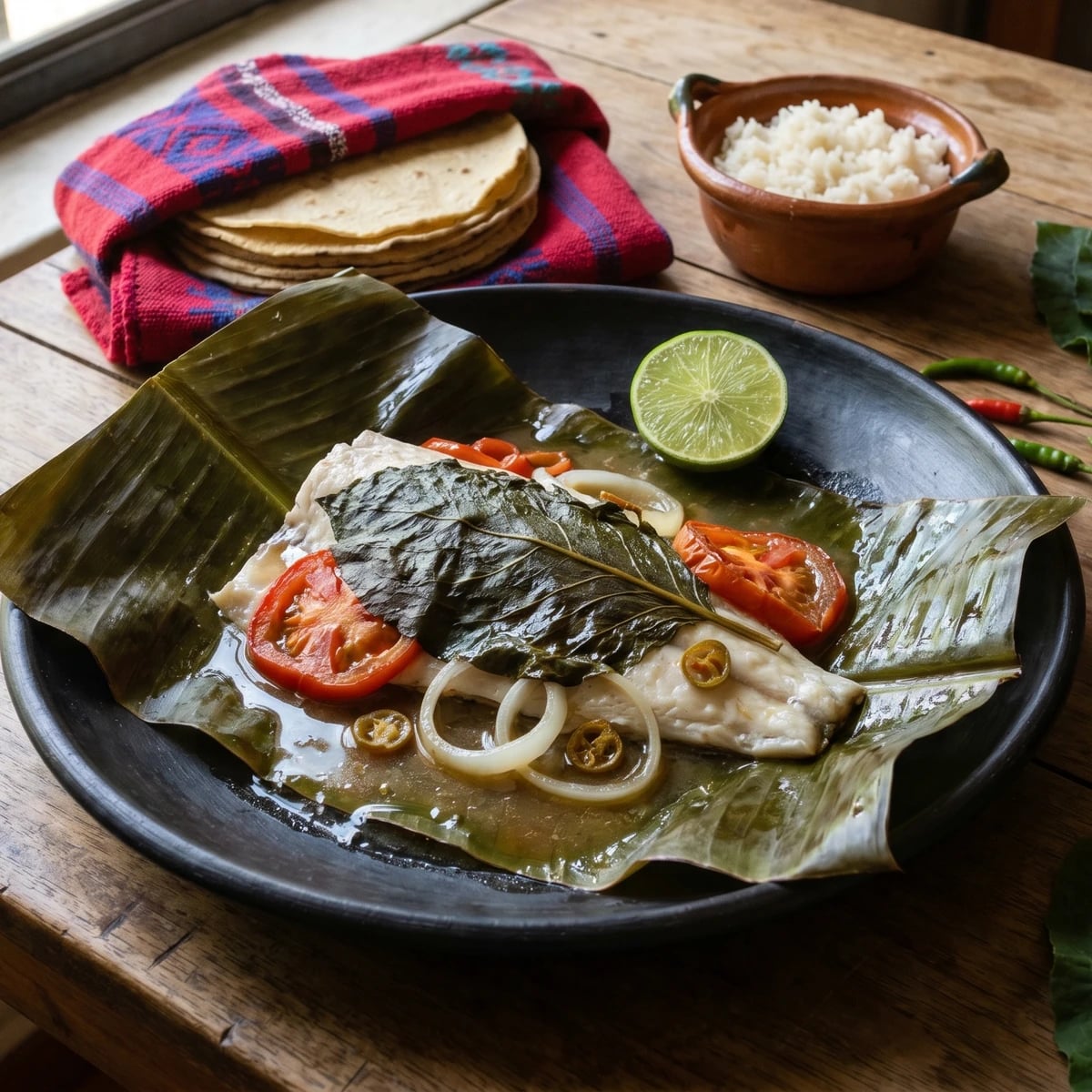
The Isthmus of Tehuantepec on a plate: snook wrapped between two hoja santa leaves and a banana leaf, then steamed until the package smells of anise and root beer. Zapotec cooking, direct and unornamented.
This dish is from the Isthmus of Tehuantepec, the narrow Zapotec belt of Oaxaca where the Pacific almost meets the Gulf and the cooking belongs to the women of Juchitan and Tehuantepec who run the markets and the kitchens with equal authority. Robalo is the fish of those brackish lagoons. Hoja santa grows wild in the courtyards. The banana leaf comes off the same plants that shade the patios. Three ingredients of the same place, cooked together. That is what a regional dish actually is.
Hoja santa, the sacred leaf, is the soul of this empapelado. It tastes of anise, sassafras, root beer, and something green you cannot quite name. It is not a substitute for anything else and nothing else substitutes for it. If you cannot find it fresh, do not make this dish today. Make it the week the leaves arrive. Mexican grandmothers cook with what the mercado is selling, not with what looks good on a Pinterest board.
The technique is empapelado, wrapped in paper, except the paper is leaf. The banana leaf seals in the steam and gives a faint smokiness. The hoja santa lays directly on the fish and perfumes it from both sides. There is no sauce. There is no fancy cut. There is robalo, leaf, tomato, onion, garlic, chile, lard, salt. The discipline of the dish is the absence of clutter. Cada estado, su propia cocina, and the Isthmus does not need to dress this fish up.
My mother never cooked Isthmus food. She was from Jalisco. But I sat in the kitchen of a senora in Juchitan named Dona Felisa for four afternoons in 2014, watching her wrap empapelados for the lunchtime rush at the market, and I copied what she did into the same notebook my mother left me. Dona Felisa did not measure. She sized the hoja santa to the fish with her hand and tied the package with a strip of leaf in three seconds flat. Saber cocinar es saber vivir. She lived this.
Hoja santa (Piper auritum), known in Nahuatl as tlanepa and in Zapotec as guie' chachi, has been used in Mesoamerican cooking since pre-Columbian times, with archaeobotanical evidence of its presence in southern Mexico for at least two thousand years. The empapelado technique, wrapping food in leaves to steam over a fire, predates Spanish contact and was the dominant cooking method for fish in the lagoon-rich Isthmus of Tehuantepec long before any European pan arrived. The Zapotec women's market culture of Juchitan, where female vendors have controlled the regional fish, leaf, and produce trade for centuries, preserved this dish as everyday food rather than ceremonial cuisine, which is why robalo empapelado remains a market lunch and not a banquet centerpiece.
Quantity
4, about 6 ounces each
Quantity
8 large
stems removed
Quantity
1 large
cut into 4 squares roughly 12 by 12 inches, plus extra strips for ties
Quantity
3 medium
sliced into thin rounds
Quantity
1 medium
sliced into thin rings
Quantity
4
thinly sliced
Quantity
2
thinly sliced
Quantity
1
halved
Quantity
3 tablespoons
softened
Quantity
1 1/2 teaspoons
Quantity
1/2 teaspoon
Quantity
1 teaspoon
preferably Oaxacan
Quantity
for serving
Quantity
for serving
| Ingredient | Quantity |
|---|---|
| robalo (snook) fillets, skin on | 4, about 6 ounces each |
| fresh hoja santa leavesstems removed | 8 large |
| banana leafcut into 4 squares roughly 12 by 12 inches, plus extra strips for ties | 1 large |
| ripe Roma tomatoessliced into thin rounds | 3 medium |
| white onionsliced into thin rings | 1 medium |
| garlic clovesthinly sliced | 4 |
| fresh chile chiltepe or chile serranothinly sliced | 2 |
| limehalved | 1 |
| manteca de cerdo (pork lard)softened | 3 tablespoons |
| sea salt | 1 1/2 teaspoons |
| freshly ground black pepper | 1/2 teaspoon |
| dried Mexican oreganopreferably Oaxacan | 1 teaspoon |
| lime wedges (optional) | for serving |
| arroz blanco or hand-pressed corn tortillas (optional) | for serving |
Cut the banana leaf into four squares about twelve inches across, plus a few thin strips to use as ties. Pass each square briefly over an open gas flame or across a hot comal, just a few seconds per side, until the green deepens and turns glossy and the leaf goes pliable. This is not optional. A raw banana leaf cracks when you fold it. A wilted one wraps the fish like cloth. The Zapotec cooks of the Isthmus do this without thinking. Now you do too.
Pat the robalo fillets dry on both sides. Squeeze half a lime over them and rub them with the salt, pepper, and oregano. Let them sit for ten minutes while you prepare the rest. Robalo is a clean, firm white fish from the brackish waters of the Isthmus. It does not need to be marinated for hours. The salt and lime are enough to wake it up.
Lay a banana leaf square shiny side down on the counter. Place one hoja santa leaf in the center, vein side up, large enough to cradle the fillet. Smear a teaspoon of softened lard across the hoja santa. La manteca es el sabor, even with fish. Lay the robalo fillet on top of the leaf, skin side down. Cover the fillet with a few slices of tomato, a small mound of onion rings, sliced garlic, a few rounds of chile, and a second hoja santa leaf draped over the top like a blanket. The fish should be sandwiched between two leaves so the aroma works on it from both sides.
Fold the bottom edge of the banana leaf up and over the fish. Fold the top edge down to meet it. Fold in the two side flaps to make a closed rectangular package. Tie it with a thin strip of banana leaf or kitchen twine, two crossed ties so the package holds during steaming. The wrap should be snug but not strained. Repeat with the remaining three fillets.
Set a steamer basket inside a wide pot over an inch or two of simmering water. Lay the banana leaf packages seam side down in a single layer. Cover and steam for fifteen to eighteen minutes for fillets about an inch thick. The fish is done when it flakes cleanly under gentle pressure through the leaf and the package smells of anise and root beer from the hoja santa working in the heat. That smell is the dish. If you do not smell it, the leaves are not fresh enough.
Lift each package onto a plate with the seam side up and let your guest open it. The first wave of aroma when the leaf is unfolded is half the meal. Serve with arroz blanco or warm corn tortillas and a wedge of lime. Do not eat the hoja santa whole, eat it in slivers with the fish. The leaf gives more flavor than it gives texture. Asi se hace y punto.
1 serving (about 270g)
Culinary guides, cultural storytelling, and the editorial depth that makes cooking meaningful.
Discover Culinary Explorer
Chef Lupita
Oaxaca's eighth mole, the silky, almond-and-cinnamon almendrado, served over poached chicken. Mild, sweet, restrained, and a quiet rebuttal to anyone who thinks Mexican food has to be hot to be Mexican.

Chef Lupita
Oaxaca's everyday rice, fried in lard and steamed with chepil, the wild legume herb that grows in the Sierra and shows up in the markets only when the rains come.

Chef Lupita
Oaxaca's Sunday barbacoa from the Tlacolula valley, goat rubbed in chilhuacle and guajillo, wrapped in maguey leaves, and slow-cooked for eight hours over a pot of garbanzos and rice that becomes the consome.

Chef Lupita
Oaxaca's everyday squash stew, calabacita and sweet corn cooked down with tomato and epazote, finished with quesillo melted into the pot in long stringy ribbons. The weeknight dinner of the Valles Centrales.