
Chef Joost
Acar Ketimun (Indo-Dutch Cucumber Pickle)
Acar means pickle, ketimun means cucumber, and this little bowl of sweet vinegar, chilli, and crunch is the cool note that lets an Indo-Dutch rijsttafel keep its balance.
A cooking platform built around craft, culture, and the stories behind what we eat.
Created by
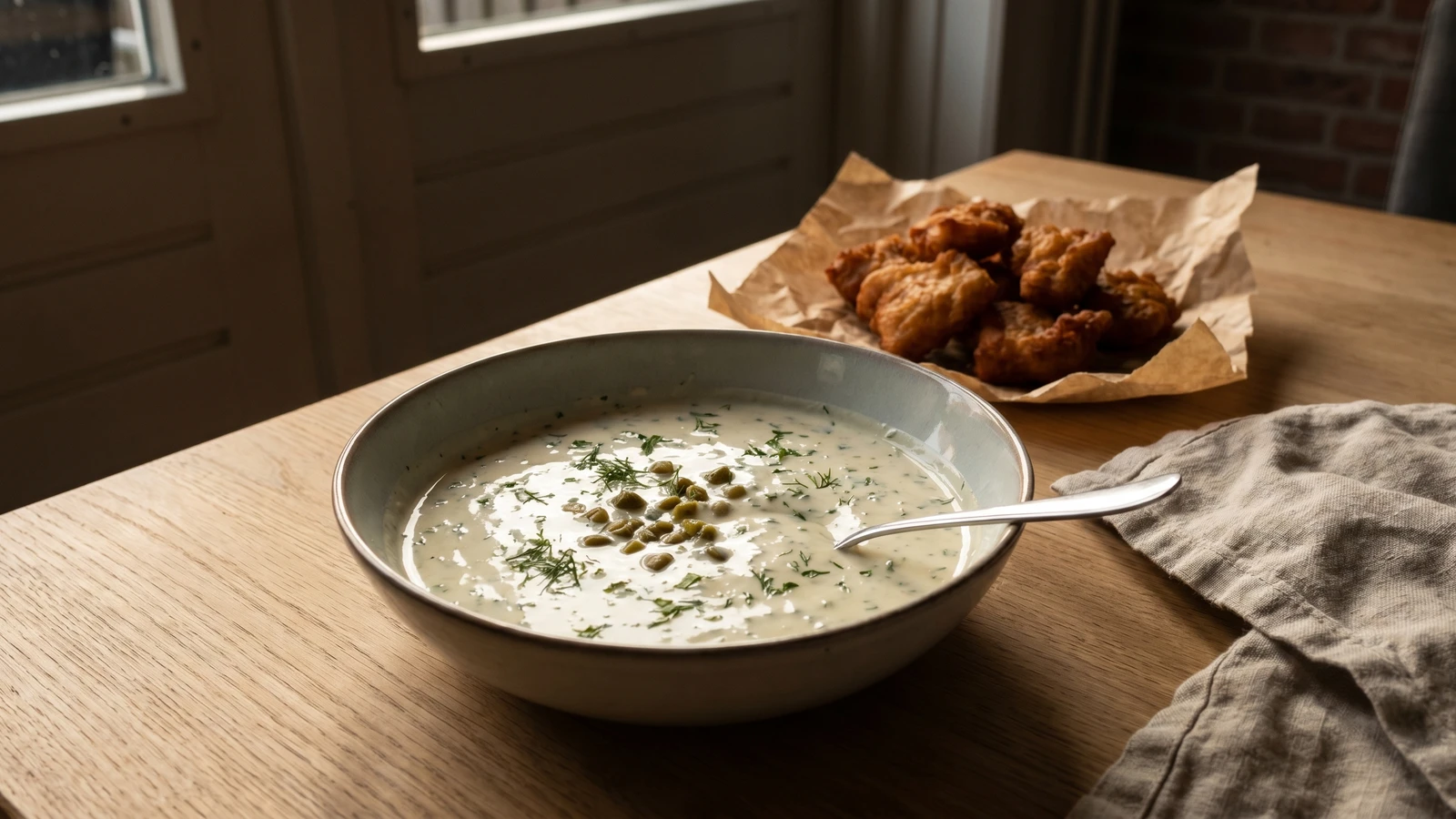
Mayonnaise becomes properly Dutch at the fish stall: sharpened with mustard, brightened by augurk and caper, then handed across the counter to make fried fish taste of the quay.
At a Dutch fish stall, the sauce tells you where you are before the fish does. The paper tray of kibbeling, battered white fish cut into hot little pieces, is only half the transaction. The other half is the cold spoonful in the corner: pale, sharp, freckled with augurk (gherkin) and caper, waiting to make the fryer behave itself.
But let me tell you a secret. Remouladesaus wears a French name, but at the viskraam (fish stall) it speaks excellent Dutch. The old French remoulade carried mustard, vinegar, herbs, capers, and the bite of pungent roots before mayonnaise softened the whole business into something more sociable. The Dutch version kept the useful part: acid, salt, and mustard to cut through fried fish so the cod, haddock, or whiting tastes of the quay rather than merely of batter.
There is no grandeur here, for obvious reasons. You chop, you stir, you wait half an hour. Hou het altijd simpel, always keep it simple. The only real rule is this: keep texture in the sauce. Chop the pickle and capers finely, but don't turn them to paste, because the little crunch against the fish is the point. A dish without its story is half a meal, and sometimes the story fits in a bowl small enough to pass across the table.
The name remoulade comes through French cookery, where the sauce was associated with mustard, vinegar, capers, herbs, and pungent grated roots before the modern mayonnaise-based form became common. In the Netherlands its most familiar popular home is the twentieth-century viskraam (fish stall), where cold remouladesaus is served with kibbeling, once made from cod cheeks and trimmings and now usually battered pieces of cod or other white fish. The useful lesson is that the sauce is not decoration: its acid, salt, and mustard are what make fried North Sea fish taste clean.
Quantity
200g
Quantity
1 tablespoon
Quantity
50g
finely chopped
Quantity
1 tablespoon
rinsed and chopped
Quantity
1 small
very finely minced
Quantity
1 tablespoon
finely chopped
Quantity
1 tablespoon
finely chopped
Quantity
1 teaspoon
Quantity
1 teaspoon
Quantity
1/2 teaspoon
Quantity
to taste
Quantity
only if needed
| Ingredient | Quantity |
|---|---|
| good mayonnaise | 200g |
| Zaanse or Dijon mustard | 1 tablespoon |
| pickled gherkins (augurken)finely chopped | 50g |
| capersrinsed and chopped | 1 tablespoon |
| shallotvery finely minced | 1 small |
| flat-leaf parsleyfinely chopped | 1 tablespoon |
| fresh dillfinely chopped | 1 tablespoon |
| lemon juice | 1 teaspoon |
| gherkin brine | 1 teaspoon |
| sugar (optional) | 1/2 teaspoon |
| white pepper | to taste |
| fine sea salt (optional) | only if needed |
Chop the augurken, capers, shallot, parsley, and dill by hand, as small as patience allows. The sauce should have little bright interruptions, not great lumps that fall off a piece of kibbeling before it reaches your mouth.
In a small bowl, stir the mayonnaise with the mustard, lemon juice, gherkin brine, white pepper, and the optional sugar. Taste it now. It should be creamy first, then sharp, with the mustard arriving after the lemon.
Fold in the chopped gherkins, capers, shallot, parsley, and dill. Do this with a spoon, not a blender. A blender makes a pale green paste, and remouladesaus should still show you what is inside it.
Cover and chill the sauce for at least thirty minutes. This is not fussing; the mustard and pickle need time to settle into the fat of the mayonnaise. Taste again before serving, and add salt only if the gherkins and capers have not already done the work for you.
1 serving (about 80g)
Culinary guides, cultural storytelling, and the editorial depth that makes cooking meaningful.
Discover Culinary ExplorerChef Joost
Acar means pickle, ketimun means cucumber, and this little bowl of sweet vinegar, chilli, and crunch is the cool note that lets an Indo-Dutch rijsttafel keep its balance.

Chef Joost
Appelcompote is the apple left with its dignity: soft enough to spoon beside pork or potatoes, still chunky enough to remind you autumn did the real work.

Chef Joost
The little bowl beside the plate is never decoration: appelmoes is the Dutch treaty between sweet and savoury, spooned beside sausage, potatoes, pancakes, and childhood itself.

Chef Joost
Appelstroop is the orchard made patient: apples, pears, and beet syrup boiled down until morning bread, farmhouse cheese, and zuurvlees taste of Limburg in autumn.