
Chef Takumi
Ago Dashi (あごだし, grilled flying fish stock)
Ago dashi is quiet luxury: roasted flying fish, konbu, and patient water. Steep it slowly and you get a clear stock that tastes sweet, clean, and full without heaviness.
A cooking platform built around craft, culture, and the stories behind what we eat.
Created by
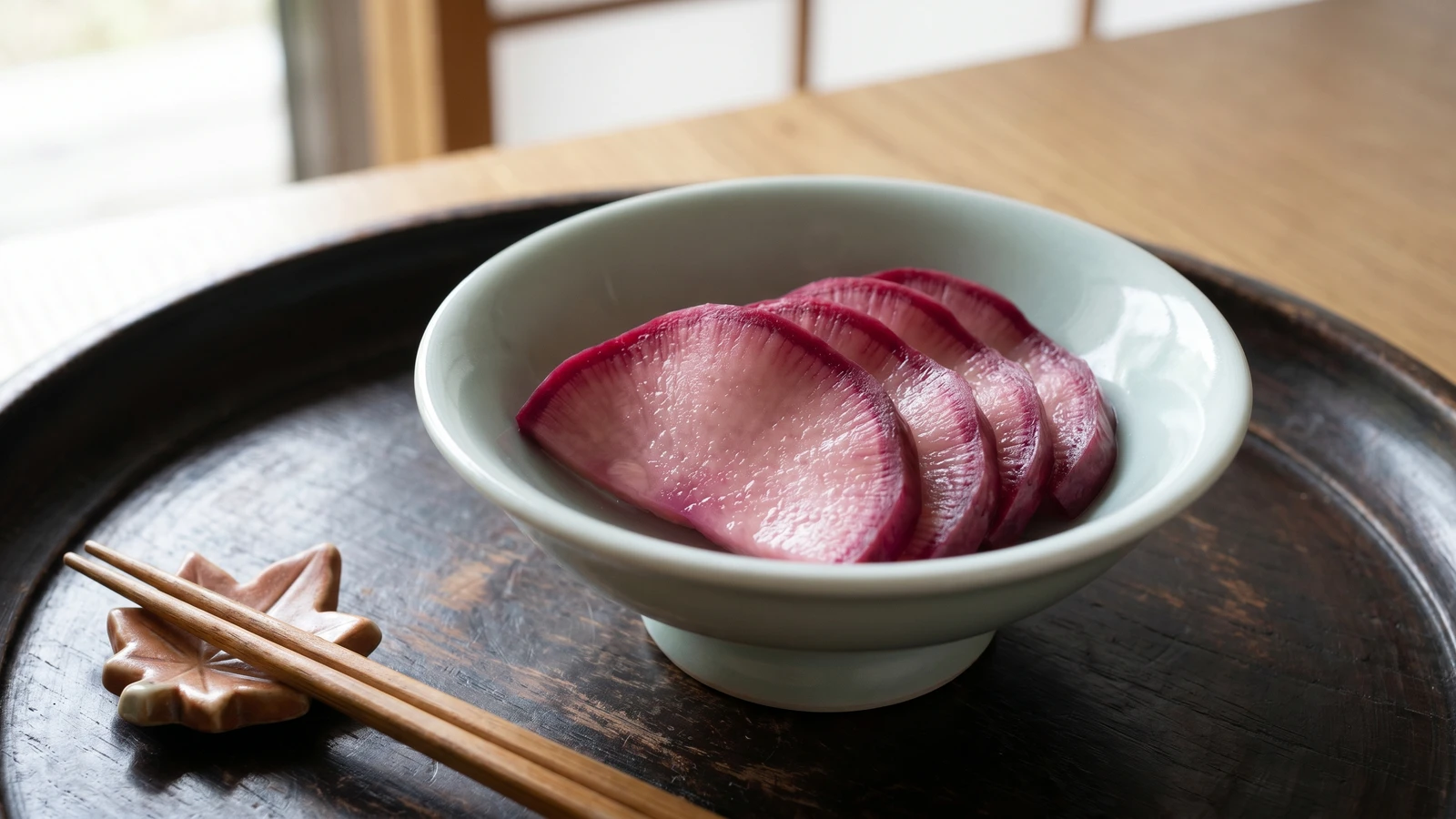
A winter pickle of salt, vinegar, and patience: red turnip skin gives its color slowly, turning the flesh bright and clean without dye, trickery, or fuss.
Ared turnip looks as if it has already done half the work. The skin carries the color, the flesh holds the crunch, and winter gives it the sweetness that makes pickling worth doing. This is shun, the ingredient at its prime, and for akakabuzuke it matters more than clever hands.
The method is plain. Salt first, vinegar and sugar second. Salt pulls out water and firms the turnip, so the slices keep their bite instead of turning limp in the jar. Then the sweet vinegar moves in slowly, and the red skin bleeds its color through the white flesh. No dye. No heavy seasoning. Nothing hidden.
The one detail that decides the dish is thickness. Cut too thick and the pickle stays hard at the center; cut too thin and it loses the small snap that makes tsukemono useful beside rice. Aim for half-moons about 3 millimeters thick, enough body to crunch, thin enough to color cleanly.
On the table, this is not a large dish. A few magenta slices in a small bowl can wake a whole meal, especially beside rice, miso soup, and something simmered. Leave it room. Pickles are small, but they speak sharply.
Akakabuzuke is especially associated with snowy mountain regions such as Hida in Gifu and the Shōnai area of Yamagata, where red turnips were preserved for winter when fresh vegetables were scarce. In Yamagata, Atsumi-kabu red turnips have long been grown on mountain slopes by yakihata, a controlled burn-field method recorded in local agricultural practice. The vivid color of the pickle comes from anthocyanin pigments in the turnip skin, which turn bright in the acidic vinegar brine.
Quantity
1kg
scrubbed clean, greens trimmed to 1cm
Quantity
30g
Quantity
1/2 cup
Quantity
80g
Quantity
1 tablespoon
Quantity
1 small piece, about 5cm
wiped clean
Quantity
1
seeds removed
| Ingredient | Quantity |
|---|---|
| small red turnipsscrubbed clean, greens trimmed to 1cm | 1kg |
| fine sea salt | 30g |
| rice vinegar | 1/2 cup |
| sugar | 80g |
| mirin | 1 tablespoon |
| konbu (dried kelp)wiped clean | 1 small piece, about 5cm |
| dried red chile (optional)seeds removed | 1 |
Scrub the turnips well, but don't peel them. The red skin is the color of the pickle, and peeling it away would be like throwing out the ink before writing the letter. Trim the greens, leaving about 1cm of stem if the tops are clean and fresh.
Cut the turnips into half-moons about 3mm thick, keeping a little red skin on each piece. Even slices pickle at the same pace, so one piece doesn't stay raw while the next turns slack. If the turnips are very small, quarter them instead.
Toss the sliced turnips with the salt until every surface glistens. Pack them into a bowl or pickle press, cover with a plate or inner lid, and weight them for 4 to 6 hours. The salt draws out water and firms the flesh, which is why the finished pickle stays crisp instead of watery.
Pour off the liquid that has collected. Taste one slice. It should be pleasantly salty, not punishing. If it tastes harsh, rinse the slices briefly under cold water and squeeze them gently in handfuls. Don't wring them dry; a little moisture keeps the texture lively.
Stir the rice vinegar, sugar, and mirin until the sugar dissolves. Add the konbu and chile if using. The vinegar brightens the red pigment in the skin, while the sugar rounds the sharpness without turning the pickle into candy. The konbu gives a quiet depth, not a seaweed taste.
Pack the drained turnips into a clean jar or pickle press and pour the brine over them. Press the slices down so they sit under the liquid, then cover and refrigerate. Turn the jar once or twice during the first day so the color moves evenly through the slices.
Begin tasting after 24 hours, but give the pickle 2 to 3 days for the best color and balance. The flesh should be crisp, sweet-sour, and stained deep pink to magenta. Serve a small mound in a kobachi, with a little space around it. Tsukemono is a bright note, not a heap.
1 serving (about 130g)
Culinary guides, cultural storytelling, and the editorial depth that makes cooking meaningful.
Discover Culinary ExplorerChef Takumi
Ago dashi is quiet luxury: roasted flying fish, konbu, and patient water. Steep it slowly and you get a clear stock that tastes sweet, clean, and full without heaviness.
Chef Takumi
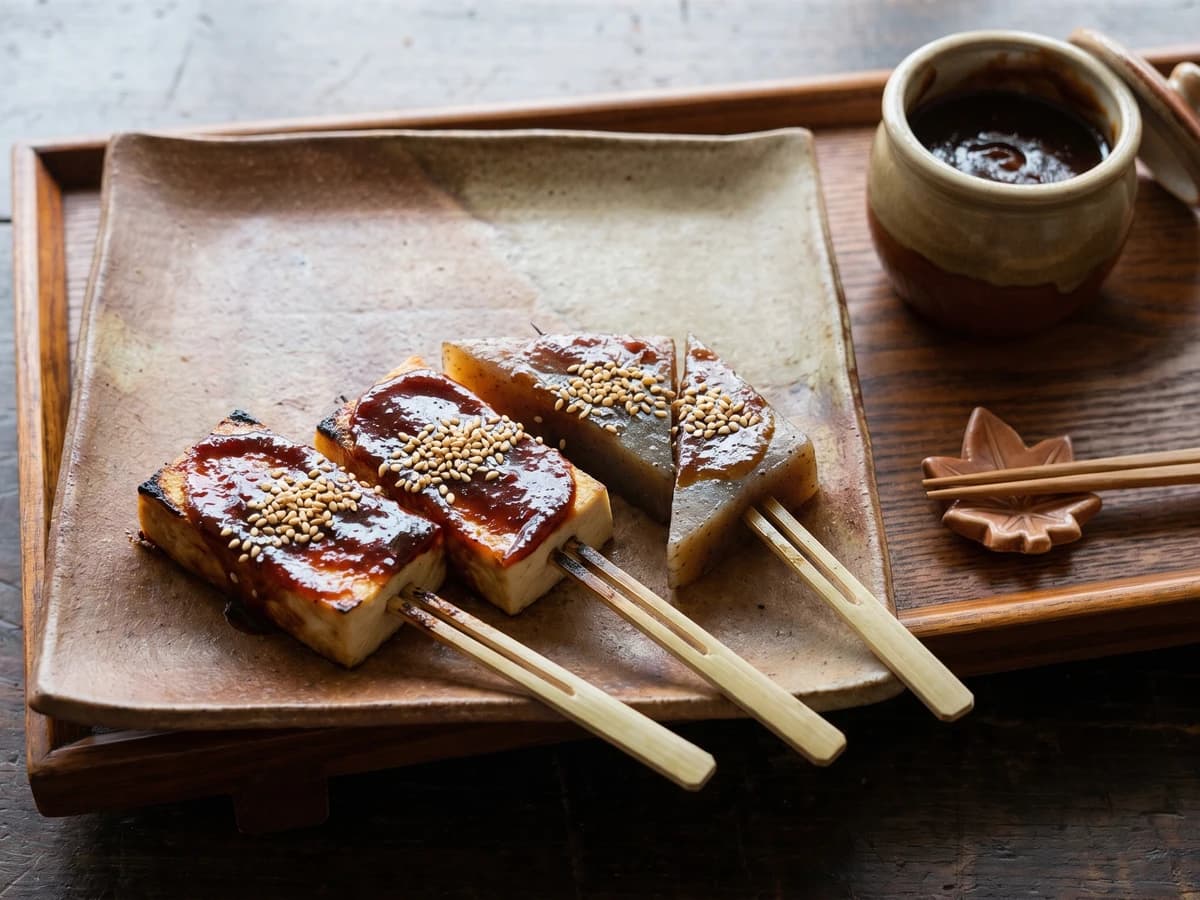
Akamiso dengaku-miso is plain work: bean miso, sweetness, sake, and patient stirring until the glaze turns dark, glossy, and thick enough to cling to the grill.
Chef Takumi
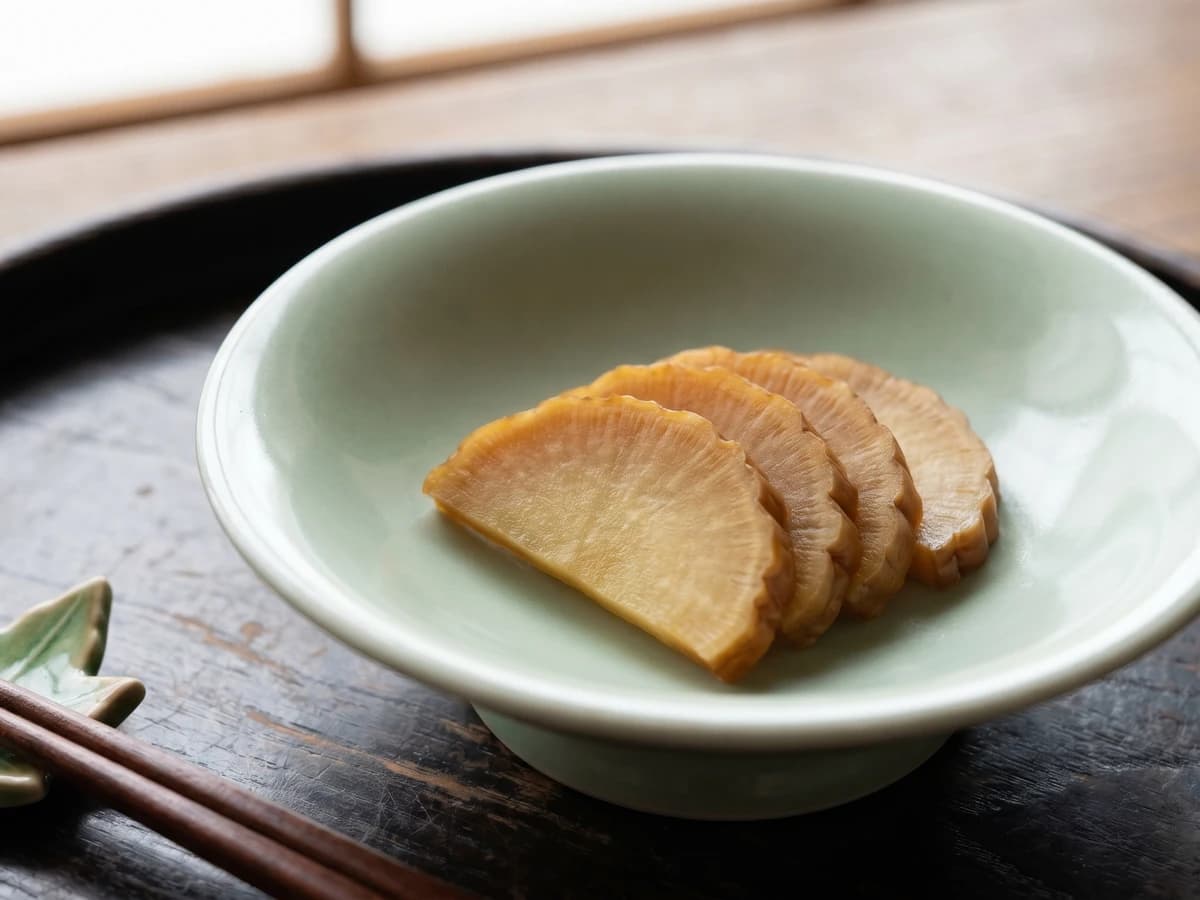
Snow-country takuan begins with smoke. Hang the daikon, dry it gently, then let rice bran, salt, and time turn it into Akita's amber pickle.

Chef Takumi
Aso takanazuke is spring caught in salt: sharp mustard greens pressed until they soften, fermented until their edge turns round, then fried briefly with sesame for rice.