
Chef Juliette
Smelt (Éperlans)
Tiny éperlans, lightly floured and fried until their tails stand crisp, arrive in a generous heap on a napkin with fried parsley and grooved lemon, a weeknight lesson in heat and restraint.
A cooking platform built around craft, culture, and the stories behind what we eat.
Created by
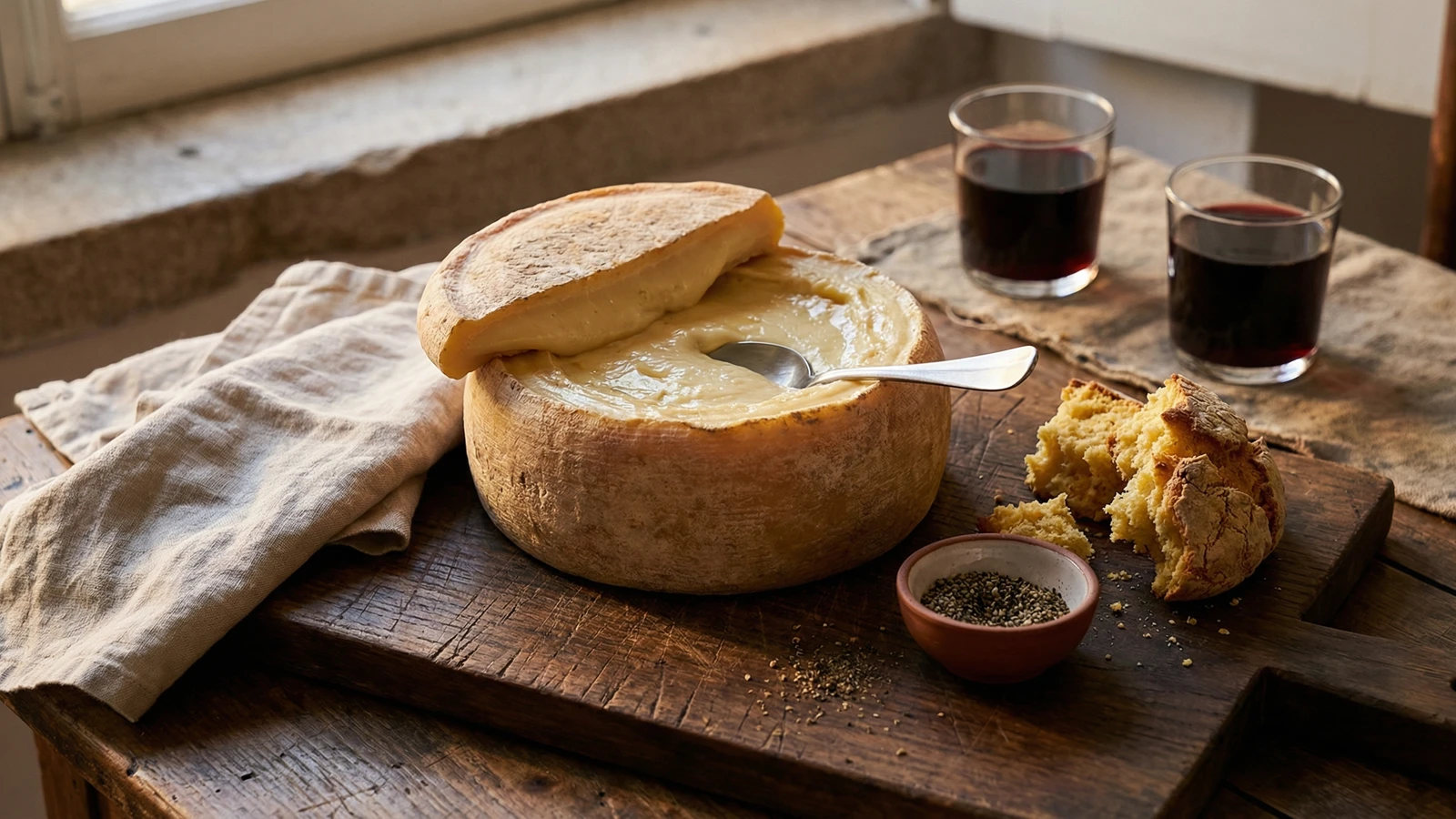
Portugal's most treasured cheese, brought to the table at its moment of perfection. Cut the top, dip your bread, and understand why the shepherds of Serra da Estrela have guarded this tradition for centuries.
There are dishes you cook, and there are dishes you honor. Queijo da Serra belongs to the second category.
This cheese doesn't need your intervention. It needs your patience, your respect, and your understanding of what it took to arrive at your table. Shepherds in the Serra da Estrela mountains have been making this cheese for at least eight hundred years, using raw sheep's milk and wild thistle to curdle it. The same method, the same mountains, the same breed of sheep. When you cut into a wheel of Serra at its peak, you're tasting something older than Portugal itself.
Amanteigado means buttery, and that's exactly what happens when Serra da Estrela reaches its moment. The interior transforms from firm paste to flowing gold. So soft you need a spoon. So rich it coats your mouth and lingers. The flavor is complex: grassy, slightly acidic, with that distinctive lanolin quality that comes from sheep's milk cheese. Some people find it challenging. Those people haven't learned to appreciate it yet.
At Mesa da Avó, I serve this cheese as a centerpiece. Bread piled high. Wine poured generously. The cheese opened at the table so everyone can experience that first moment when the lid comes off and the aroma fills the room. This is communal eating at its most ancient. No plates. No utensils beyond a spoon and your fingers. Just bread, cheese, and the people you love.
Queijo Serra da Estrela received Portugal's first Protected Designation of Origin in 1996, though its history stretches back to at least the 12th century. The cheese can only be made in designated municipalities using milk from Bordaleira and Churra Mondegueira sheep, coagulated with wild thistle (Cynara cardunculus) gathered from the mountains. This thistle coagulation, rare in European cheesemaking, gives Serra its distinctive flavor and texture.
Quantity
1 whole (about 1 kg)
well-aged, amanteigado stage
Quantity
1 loaf
for serving
Quantity
to taste
freshly ground
| Ingredient | Quantity |
|---|---|
| Queijo Serra da Estrela DOPwell-aged, amanteigado stage | 1 whole (about 1 kg) |
| crusty breadfor serving | 1 loaf |
| black pepper (optional)freshly ground | to taste |
Finding true Queijo Serra da Estrela is the real work here. Look for the DOP certification, the official stamp that guarantees it comes from the Serra da Estrela region and was made with raw sheep's milk coagulated with thistle. The cheese should feel slightly soft when you press the top gently. If it's rock-hard, it's not ready. If it caves in completely, it may be past its prime. You want that moment in between: firm enough to hold its shape, soft enough to promise creaminess within.
Remove the cheese from the refrigerator at least 2 hours before serving. This is not optional. Cold cheese cannot express itself. The interior needs time to soften, to become that flowing, almost liquid consistency that gives amanteigado its name. Place it on your serving board and let it rest, unwrapped, in a cool room. The rind will develop a slight sheen as the cheese warms. This is good. This means it's waking up.
Using a sharp knife, cut a circle around the top of the cheese, about 2 centimeters from the edge. Cut at a slight angle so the lid can rest back in place. Lift off the top carefully and set it aside. Beneath, you should find a golden, flowing interior. The aroma will hit you immediately: earthy, lanolin-rich, slightly funky in the best way. This is the smell of the Serra da Estrela mountains, of sheep grazing on wild herbs, of centuries of cheesemaking tradition.
Place the opened cheese in the center of your table with plenty of crusty bread torn into pieces. Provide spoons or let guests use chunks of bread to scoop directly from the wheel. The bread should be sturdy enough to hold its shape when loaded with cheese. Eat slowly. Talk. Drink wine. This is not a dish to rush. When you're finished, or taking a break, replace the lid to keep the interior from drying out. A properly enjoyed Serra can last an evening of conversation.
1 serving (about 180g)
Culinary guides, cultural storytelling, and the editorial depth that makes cooking meaningful.
Discover Culinary ExplorerChef Juliette
Tiny éperlans, lightly floured and fried until their tails stand crisp, arrive in a generous heap on a napkin with fried parsley and grooved lemon, a weeknight lesson in heat and restraint.

Chef Juliette
Brandade de Morue turns salt cod, warm olive oil, and milk into a pale, silky emulsion: keep everything warm and add the oil slowly, then crown the generous dome with butter-fried bread.

Chef Juliette
Salt cod worked warm with cream, one patient spoonful at a time, until the rough flakes become a glossy Nîmes paste, domed generously and ringed with butter-fried croutons for the table.

Chef Juliette
Wine-poached char packed in its earthenware crock beneath butter gold: a make-ahead first course that turns careful cooling, thorough boning, and one unbroken seal into quiet abundance.