Chef Lupita
Acúmara Tatemada al Comal
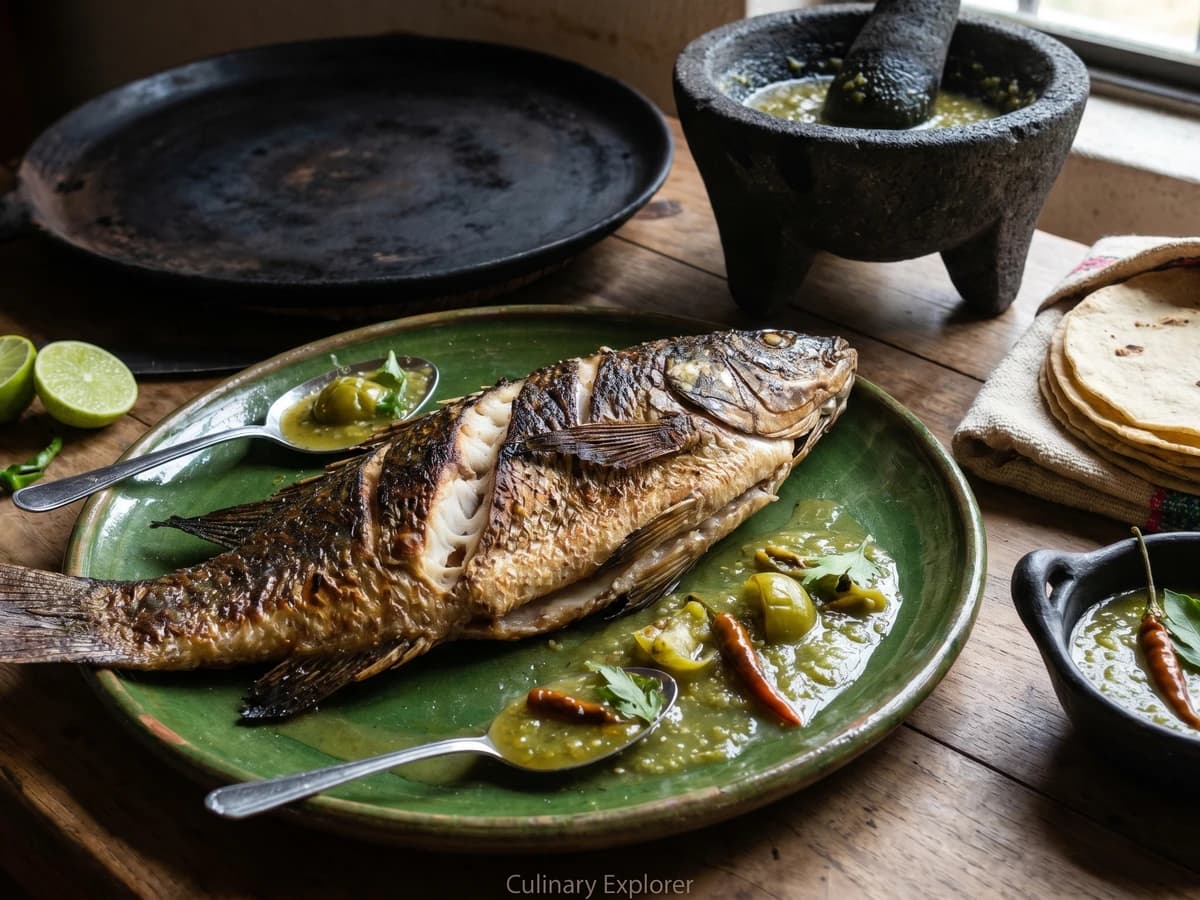
Michoacán's Lake Pátzcuaro acúmara, a whole kurucha from the lago tatemada on a comal de leña and served with chile perón atápakua, corn tortillas, and P'urhépecha discipline.
A cooking platform built around craft, culture, and the stories behind what we eat.

Created by
Oaxaca's Pacific coast octopus, scared three times and simmered tender, then dressed warm with tomato, white onion, chile serrano, and Mexican lime. The salsa and the octopus fall in love at the table.
This is a Oaxacan dish, but not the Oaxaca most people picture. Forget the high valleys, the seven moles, the markets of the city center for a moment. This pulpo comes from the other Oaxaca, the Pacific coast: Puerto Ángel, Puerto Escondido, Mazunte, Salina Cruz. The fishing villages where the boats come in at dawn and the catch is on the table by noon.
The technique is simple and the technique is everything. You scare the octopus, asustar el pulpo, by dipping the tentacles three times into boiling salted broth before you lower the whole animal in. The skin sets, the tentacles curl, the meat stays attached to the bone. Then you simmer it gently, never at a hard boil, until a knife slides in without resistance. Skip the scaring and the skin will slide off in shreds. Boil it hard and the meat turns to rubber. Cada estado, su propia cocina, and on the Oaxacan coast, this is how it is done.
The name is what tells you the rest. Enamorado, enamored. The warm octopus is folded into a salsa of chopped tomato, raw white onion, chile serrano, cilantro, lime, and good olive oil, and the two are left to sit together for ten minutes before they are served. The lime opens the meat. The oil carries the chile into every cut. The octopus and the salsa fall in love at the table, not in the kitchen. That is the dish. That is the name.
My mother never made pulpo. She was from Jalisco and the seafood she trusted came from the Pacific, but she did not work with octopus. I learned this one from a woman named Doña Lucina who runs a comedor under a palm roof in Mazunte, where she has been cooking pulpo this way since 1972. She told me three things and I will tell you the same three. Buy the octopus from someone who knows when the boat came in. Do not boil it hard. Eat it warm or at room temperature, never cold from the refrigerator. Saber cocinar es saber vivir, and saber pulpo is saber Oaxaca's other coast.
The Oaxacan Pacific coast, particularly the Istmo de Tehuantepec and the Costa Chica, has a fishing tradition that long predates Spanish contact, with the indigenous Huave (Ikoots) and Zapotec peoples of Salina Cruz and San Mateo del Mar harvesting octopus, shrimp, and shark from the Pacific lagoons for centuries. The technique of asustar el pulpo, the triple-dip that sets the skin and curls the tentacles, is widely shared between Mediterranean Spanish cooking and the Mexican Pacific, and likely arrived in Oaxaca during the colonial period through Manila Galleon trade and Spanish settlement on the Pacific coast. The naming convention enamorado, enamorada, applied to dishes where a protein is dressed in a fresh acidic salsa and allowed to marinate briefly, is specific to coastal Oaxacan and Guerrero cooking and rarely appears north of Acapulco.
Quantity
1 (3 to 4 pounds)
cleaned, beak and ink sac removed
Quantity
1 medium
halved
Quantity
1
halved crosswise
Quantity
2
Quantity
1 tablespoon
Quantity
1 tablespoon, plus more to taste
Quantity
1
traditional Oaxacan trick to keep the meat tender
Quantity
3 medium
finely diced
Quantity
1 small
finely diced
Quantity
2 to 3
stemmed and finely minced, seeds in or out to taste
Quantity
1/2 cup
chopped
Quantity
1/3 cup (about 6 to 8 limes)
Quantity
1/4 cup
Quantity
1 tablespoon
crumbled between the palms
Quantity
to taste
or kosher salt
Quantity
1
sliced
Quantity
for serving
Quantity
for serving
Quantity
for serving
| Ingredient | Quantity |
|---|---|
| whole fresh octopuscleaned, beak and ink sac removed | 1 (3 to 4 pounds) |
| white onion (for the broth)halved | 1 medium |
| head of garlichalved crosswise | 1 |
| bay leaves | 2 |
| dried Mexican oregano (for the broth) | 1 tablespoon |
| kosher salt | 1 tablespoon, plus more to taste |
| wine cork (optional)traditional Oaxacan trick to keep the meat tender | 1 |
| ripe Roma tomatoesfinely diced | 3 medium |
| white onion (for the dressing)finely diced | 1 small |
| fresh chile serranostemmed and finely minced, seeds in or out to taste | 2 to 3 |
| fresh cilantro leaves and tender stemschopped | 1/2 cup |
| fresh Mexican lime juice | 1/3 cup (about 6 to 8 limes) |
| extra-virgin olive oil | 1/4 cup |
| dried Mexican oregano (for finishing)crumbled between the palms | 1 tablespoon |
| flaky sea salt from Salina Cruzor kosher salt | to taste |
| ripe Hass avocado (optional)sliced | 1 |
| hand-pressed corn tostadas (optional) | for serving |
| Mexican lime halves (optional) | for serving |
| salsa de chile de árbol (optional) | for serving |
If your fishmonger has not already done it, turn the head inside out and remove the ink sac and the small organs at the top. Find the beak in the center of the tentacles and push it out. Rinse the octopus under cold running water. Run your fingers down each tentacle to make sure no sand is hiding in the suckers. The cooks at the Mercado de Mariscos in Salina Cruz do this without thinking. Now you do it too.
Bring a large pot of water to a rolling boil with the halved onion, garlic, bay leaves, oregano, salt, and the wine cork if you are using one. Hold the octopus by the head and dip the tentacles into the boiling water for about five seconds. Lift it out. Wait fifteen seconds. Dip again. Wait. Dip a third time. The tentacles will curl into perfect spirals and the skin will set. This is called asustar el pulpo, scaring the octopus. Skip this and the skin slides off in the pot and the tentacles cook unevenly. No me vengas con atajos.
Lower the whole octopus into the pot. Reduce the heat until you see lazy bubbles, never a hard boil. Hard boiling makes octopus rubbery. Cover partially and cook for 45 minutes to an hour, depending on size. The octopus is ready when a paring knife slides into the thickest part of a tentacle, just below the head, with no resistance. Do not overcook it. The line between tender and rubbery is about ten minutes wide.
Turn off the heat and let the octopus rest in its broth for fifteen minutes. This is not optional. The meat reabsorbs liquid and finishes relaxing. Pull it from the pot and set it on a cutting board. Save a cup of the broth in case you need to moisten the dish later.
Slice each tentacle on a slight diagonal into bite-sized pieces, about three-quarters of an inch thick. Cut the head into similar-sized pieces if you are using it; many Oaxacan cooks reserve the head for soup the next day. The pieces should still be warm when you dress them. The warmth opens the meat to the lime and oil.
In a wide bowl, combine the diced tomato, diced white onion, minced chile serrano, chopped cilantro, lime juice, olive oil, and crumbled oregano. Stir gently. Taste. The dressing should be bright, herbaceous, with the chile humming underneath. If it tastes shy, add another pinch of salt and another half of a chile. This is called salsa enamorada, the loving salsa, and the dish is named for it.
Add the warm octopus pieces to the bowl with the dressing. Fold gently so every piece is coated. Let it sit for ten minutes at room temperature so the octopus drinks up the lime and the oil. This is why the dish is called enamorada. The octopus and the salsa fall in love at the table, not in the kitchen. Taste again. Adjust salt. Add a final scattering of cilantro and a pinch of flaky sea salt from Salina Cruz if you have it.
Spoon the pulpo and all of its juices into a wide barro negro platter or a shallow Oaxacan ceramic bowl. Surround with sliced avocado, hand-pressed corn tostadas, lime halves, and a small molcajete of salsa de árbol for those who want more heat. Eat warm or at room temperature, never refrigerator-cold. Each guest builds their own tostada at the table. Asi se hace y punto.
1 serving (about 315g)
Culinary guides, cultural storytelling, and the editorial depth that makes cooking meaningful.
Discover Culinary ExplorerChef Lupita
Michoacán's Lake Pátzcuaro acúmara, a whole kurucha from the lago tatemada on a comal de leña and served with chile perón atápakua, corn tortillas, and P'urhépecha discipline.

Chef Lupita
Puebla's weekday adobo of pork shoulder braised in a thick guajillo and ancho sauce sharpened with vinegar, cumin, and clove. The deep red of a market spice stall, the dish a poblana cooks without thinking.

Chef Lupita
Loreto's pit-roasted clams, planted hinge-up in beach sand and tatemadas under a fast fire of dried romerillo brush, the resinous Baja desert shrub that gives this dish its smoke.

Chef Lupita
Oaxaca's eighth mole, the silky, almond-and-cinnamon almendrado, served over poached chicken. Mild, sweet, restrained, and a quiet rebuttal to anyone who thinks Mexican food has to be hot to be Mexican.