
Chef Margarida
Azeitonas Temperadas
The marinated olives that sit on every tasca table in Portugal, swimming in garlic, herbs, and enough azeite to make you reach for bread before you've even ordered. This is how we begin.
A cooking platform built around craft, culture, and the stories behind what we eat.

Created by
Two ingredients. That's all. Presunto from Alentejo's black pigs, melon at the peak of summer ripeness, and the understanding that the best cooking often means doing almost nothing at all.
There's a moment every summer when the melons finally arrive. Sweet, fragrant, heavy with juice. And every summer, I think of my grandmother's kitchen in Évora, the shutters closed against the afternoon heat, a plate of presunto and melon on the table. Nothing else. Just this.
Presunto com melão is not a recipe. It's an act of trust. Trust in the farmer who raised the pig. Trust in the artisan who cured the ham for months, sometimes years. Trust in the sun that ripened the melon. Your job is simply to bring these things together and stay out of the way.
The presunto must be good. Real presunto from Alentejo, from porco preto if you can find it. These black pigs roam the cork oak forests, eating acorns, living as pigs should live. The fat is sweet, almost nutty. The meat melts on your tongue. This is not the same as Spanish jamón, though they're cousins. Presunto has its own character, a little leaner, a little earthier. It tastes like the land it comes from.
At Mesa da Avó, I serve this at the start of summer dinners. People reach for it before they've even sat down. The sweet and the salty, the soft and the silky. It's the dish that proves peasant wisdom: when the ingredients are perfect, the cook's job is to do as little as possible.
The pairing of cured ham with melon dates back centuries in the Iberian Peninsula, likely influenced by Moorish traditions of combining sweet fruits with savory meats. In Alentejo, where presunto production has been documented since at least the 15th century, this combination became the quintessential summer petisco. The presunto from porco preto (black Iberian pig) is protected by DOP status, with the finest examples cured for 24 months or more in the dry Alentejo air.
Quantity
200g
sliced paper-thin
Quantity
1 (about 1 kg)
Quantity
to taste
freshly ground
Quantity
for drizzling
| Ingredient | Quantity |
|---|---|
| presunto (Portuguese dry-cured ham)sliced paper-thin | 200g |
| ripe cantaloupe or orange-fleshed melon | 1 (about 1 kg) |
| black pepper (optional)freshly ground | to taste |
| extra virgin olive oil (optional) | for drizzling |
This dish lives or dies by the ripeness of your melon. Press gently at the stem end. It should give slightly and smell sweet, almost perfumed. If it smells like nothing, it will taste like nothing. Wait another day or find a better melon. There is no technique that fixes unripe fruit.
Halve the melon and scoop out the seeds. Cut into wedges about 2 centimeters thick, then slice off the rind. You want pieces that are easy to pick up and eat in one or two bites. Some families serve it in crescents with the rind still on. Either way is correct.
Lay the presunto slices loosely over and around the melon wedges. Don't flatten them or press them down. You want folds and ruffles, a bit of air between the layers. The presunto should look like it fell there naturally, not like it was arranged by someone trying too hard. Drape, don't place.
If you like, add a few grinds of black pepper or a thin drizzle of your best azeite. Both are optional. The dish is complete without them. Serve immediately at room temperature. Never cold. Cold presunto loses its silkiness, and cold melon mutes the sweetness. This is food for eating now, with your hands, while you talk and drink and let the evening stretch.
1 serving (about 180g)
Culinary guides, cultural storytelling, and the editorial depth that makes cooking meaningful.
Discover Culinary ExplorerChef Margarida
The marinated olives that sit on every tasca table in Portugal, swimming in garlic, herbs, and enough azeite to make you reach for bread before you've even ordered. This is how we begin.
Chef Margarida
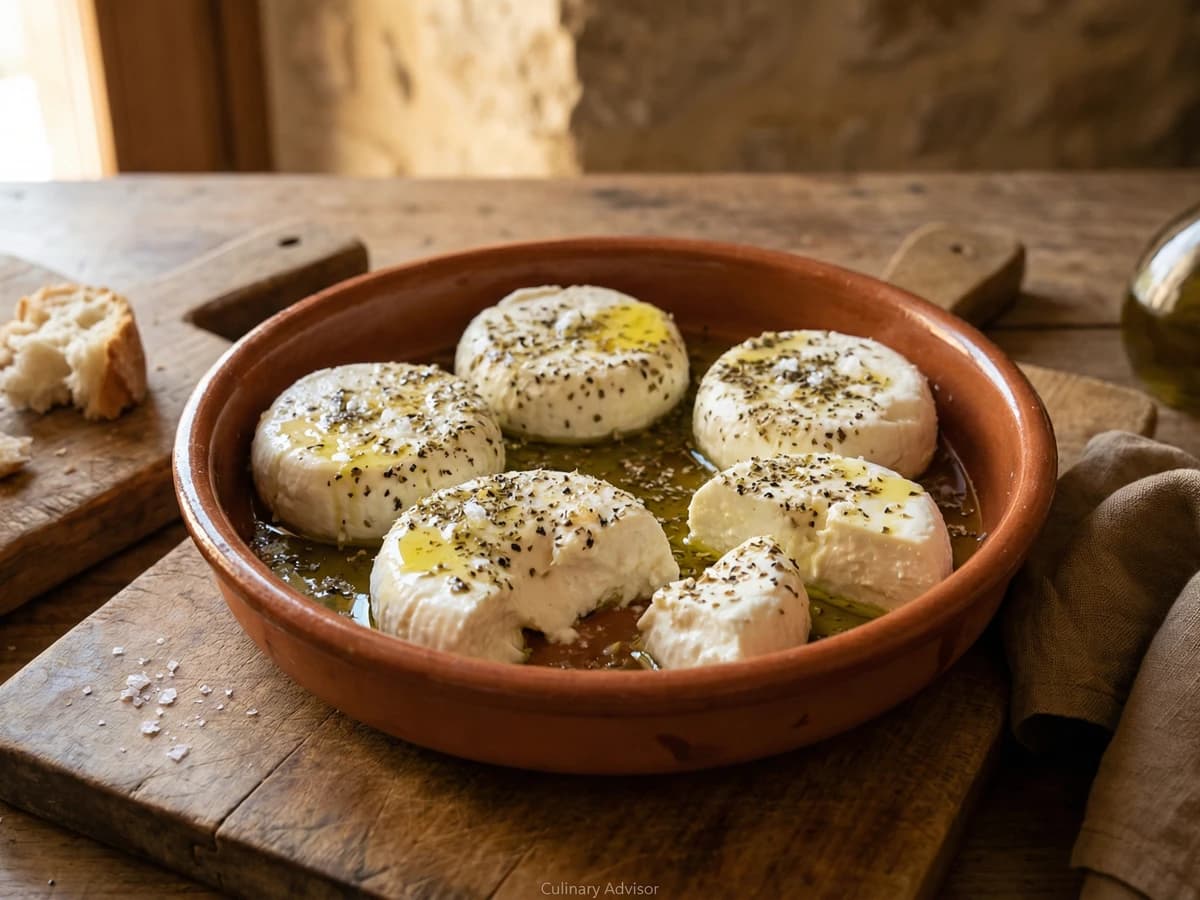
Fresh cheese curds from Alentejo dressed the way shepherds have done it for centuries: good oil, cracked pepper, dried herbs, and nothing to prove. The first thing on the table and the last thing you stop reaching for.

Chef Juliette
Tiny éperlans, lightly floured and fried until their tails stand crisp, arrive in a generous heap on a napkin with fried parsley and grooved lemon, a weeknight lesson in heat and restraint.

Chef Juliette
Brandade de Morue turns salt cod, warm olive oil, and milk into a pale, silky emulsion: keep everything warm and add the oil slowly, then crown the generous dome with butter-fried bread.