
Chef Takumi
Ago Dashi (あごだし, grilled flying fish stock)
Ago dashi is quiet luxury: roasted flying fish, konbu, and patient water. Steep it slowly and you get a clear stock that tastes sweet, clean, and full without heaviness.
A cooking platform built around craft, culture, and the stories behind what we eat.
Created by
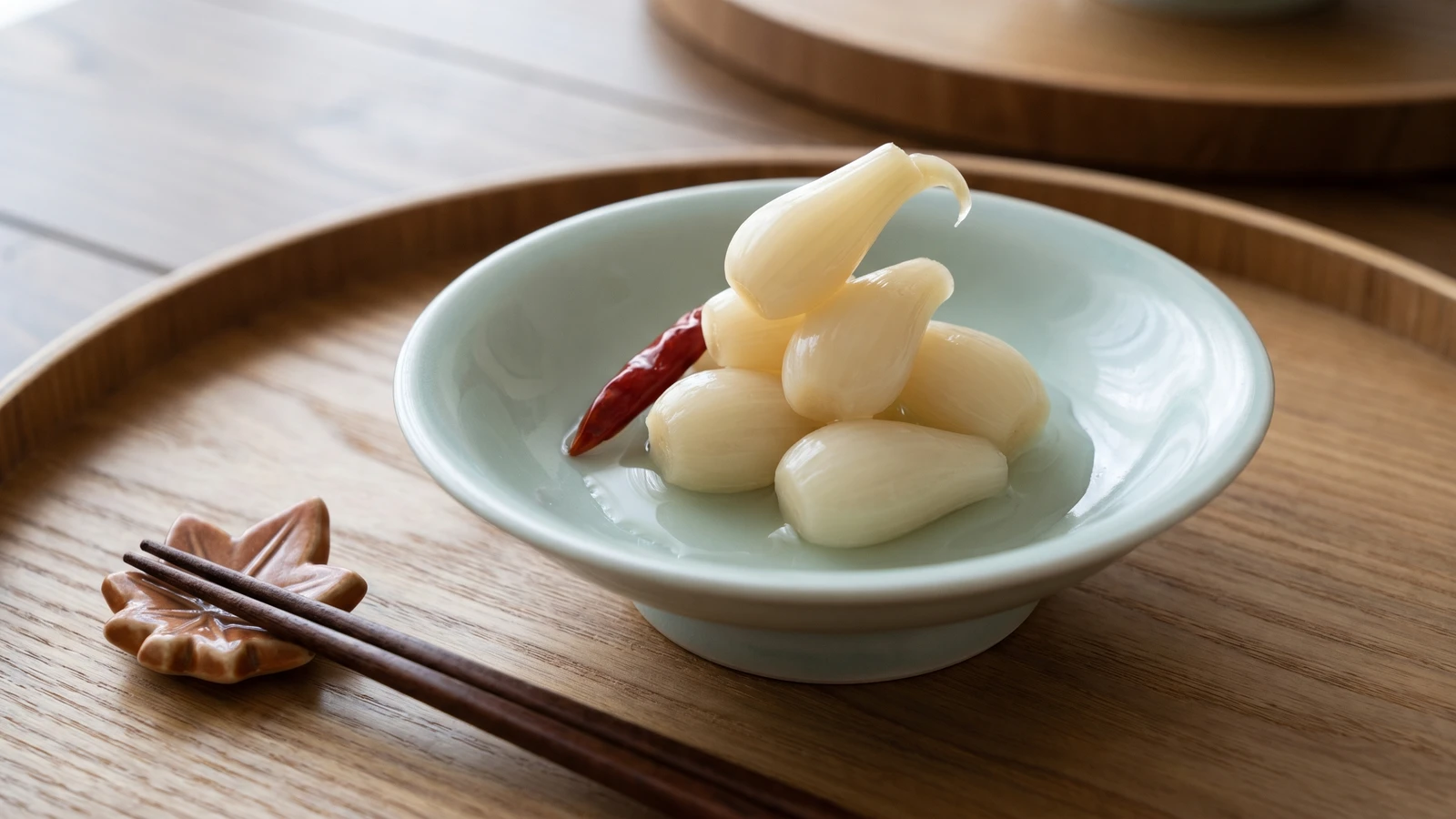
Rakkyozuke is not difficult pickle work. It is clean bulbs, enough salt, patient vinegar, and one plain decision: keep the rakkyo crisp from the start.
Rakkyo arrive in early summer looking more like a chore than a pleasure: small white bulbs, papery skins, roots still clinging. This is the hesitation the dish gives you. The work is in the cleaning, not in any cleverness after that. Once the bulbs are trimmed, peeled, and salted, the pickle almost makes itself.
The first secret is firmness. Salt draws water from the rakkyo before the vinegar goes in, so the bulbs stay crisp instead of turning watery and dull. Rinse away the harsh salt, dry them well, then cover them with amazu, a sweet vinegar brine. The vinegar sharpens, the sugar rounds it, and the rakkyo keeps its bite. Nothing hidden. Just a small bulb made clean, bright, and useful.
We eat these beside curry rice as often as fukujinzuke, and that pairing tells you what the pickle is for. Curry is warm, deep, and soft-edged; rakkyozuke answers with crunch and sourness. Make a jar when rakkyo are at their shun, then let time do the quiet work. The hard part is not opening the jar too soon.
Rakkyo, Allium chinense, has been grown in Japan for centuries, first valued as a medicinal allium before becoming a common pickle. Tottori Prefecture is especially known for sand-dune rakkyo, where the loose, well-drained soil produces small, firm bulbs suited to pickling. Its modern place beside Japanese curry developed with the spread of curry rice in the late nineteenth and early twentieth centuries, where sour-sweet pickles balanced the rich sauce.
Quantity
1kg
trimmed, peeled, and cleaned
Quantity
80g
for brining
Quantity
1 tablespoon
for the first wash
Quantity
4 cups
Quantity
2 cups
Quantity
250g
Quantity
1 teaspoon
for the sweet vinegar
Quantity
2
| Ingredient | Quantity |
|---|---|
| fresh rakkyo bulbstrimmed, peeled, and cleaned | 1kg |
| sea saltfor brining | 80g |
| sea saltfor the first wash | 1 tablespoon |
| water | 4 cups |
| rice vinegar | 2 cups |
| sugar | 250g |
| sea saltfor the sweet vinegar | 1 teaspoon |
| dried red chiles (optional) | 2 |
Trim the roots and the green tips from the rakkyo, then rub off the papery outer skins. Wash them in a bowl with 1 tablespoon salt, rubbing gently with your hands until the surface feels clean and slick. The salt helps loosen soil and skin without soaking the bulbs too long, because waterlogged rakkyo never pickle with a good snap.
Drain the cleaned rakkyo well and toss them with 80g sea salt. Pack them into a clean nonreactive bowl or jar, cover, and refrigerate for 24 hours, turning once or twice if you remember. The salt pulls out raw moisture and tightens the flesh, which is why the finished pickle stays crisp.
Rinse the rakkyo under cool running water until the surface no longer tastes sharply salty. Drain thoroughly, then spread the bulbs on a clean towel for 30 minutes. Drying matters because extra water thins the vinegar brine and leaves the pickle flat.
Combine the water, rice vinegar, sugar, and 1 teaspoon salt in a small pot. Warm just until the sugar dissolves, stirring once or twice, then take it off the heat. You are not cooking the vinegar into submission; you are only making a clear sweet-sour brine.
Pack the dried rakkyo into sterilized glass jars, leaving a little space at the top. Add the dried chiles if using. Pour the warm sweet vinegar over the bulbs until they are completely covered, then tap the jars gently to release trapped air. Anything left above the brine will soften and discolor, so keep every bulb submerged.
Cool the jars, cover tightly, and refrigerate. The rakkyo are edible after one week, better after two, and rounder after a month. Serve a few bulbs at a time in a small dish, with room around them. They are a pickle, not a mountain.
1 serving (about 30g)
Culinary guides, cultural storytelling, and the editorial depth that makes cooking meaningful.
Discover Culinary ExplorerChef Takumi
Ago dashi is quiet luxury: roasted flying fish, konbu, and patient water. Steep it slowly and you get a clear stock that tastes sweet, clean, and full without heaviness.
Chef Takumi
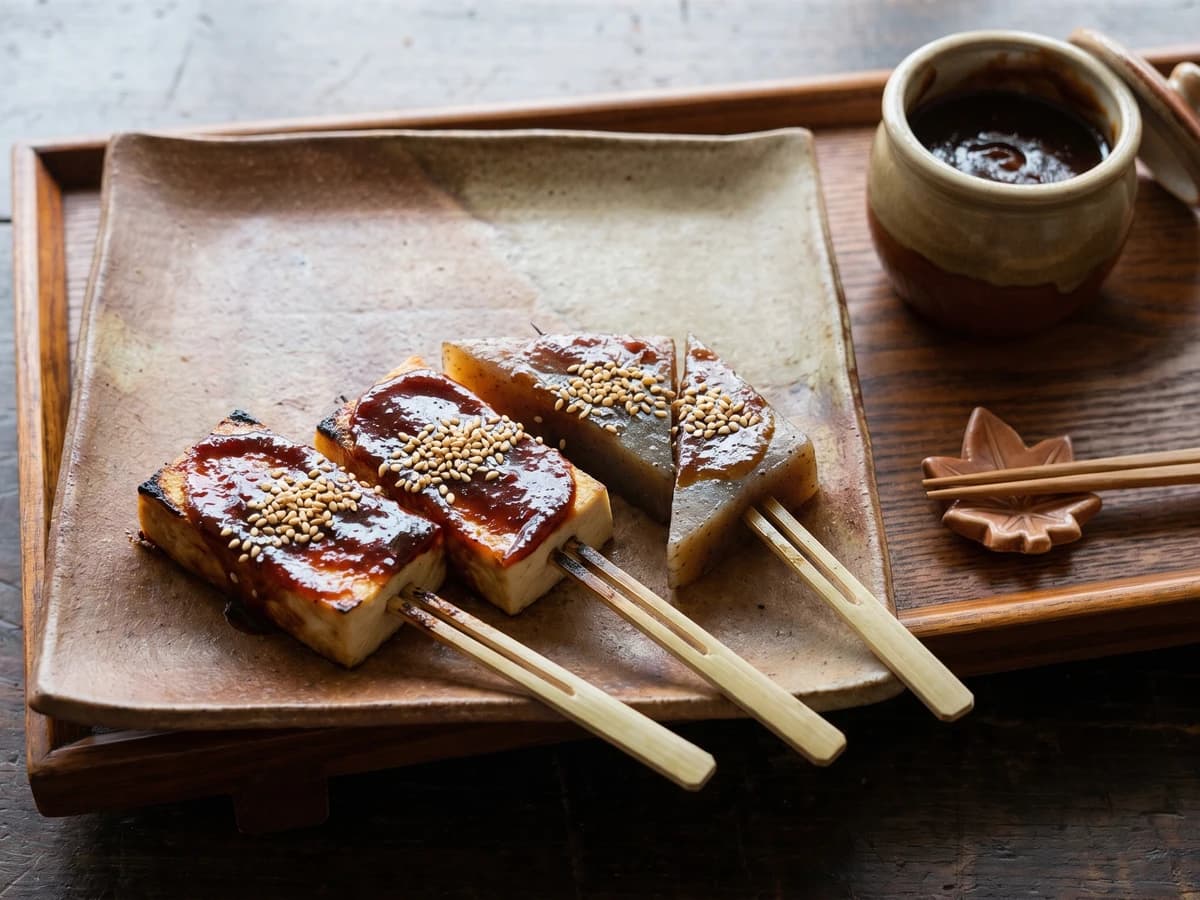
Akamiso dengaku-miso is plain work: bean miso, sweetness, sake, and patient stirring until the glaze turns dark, glossy, and thick enough to cling to the grill.
Chef Takumi
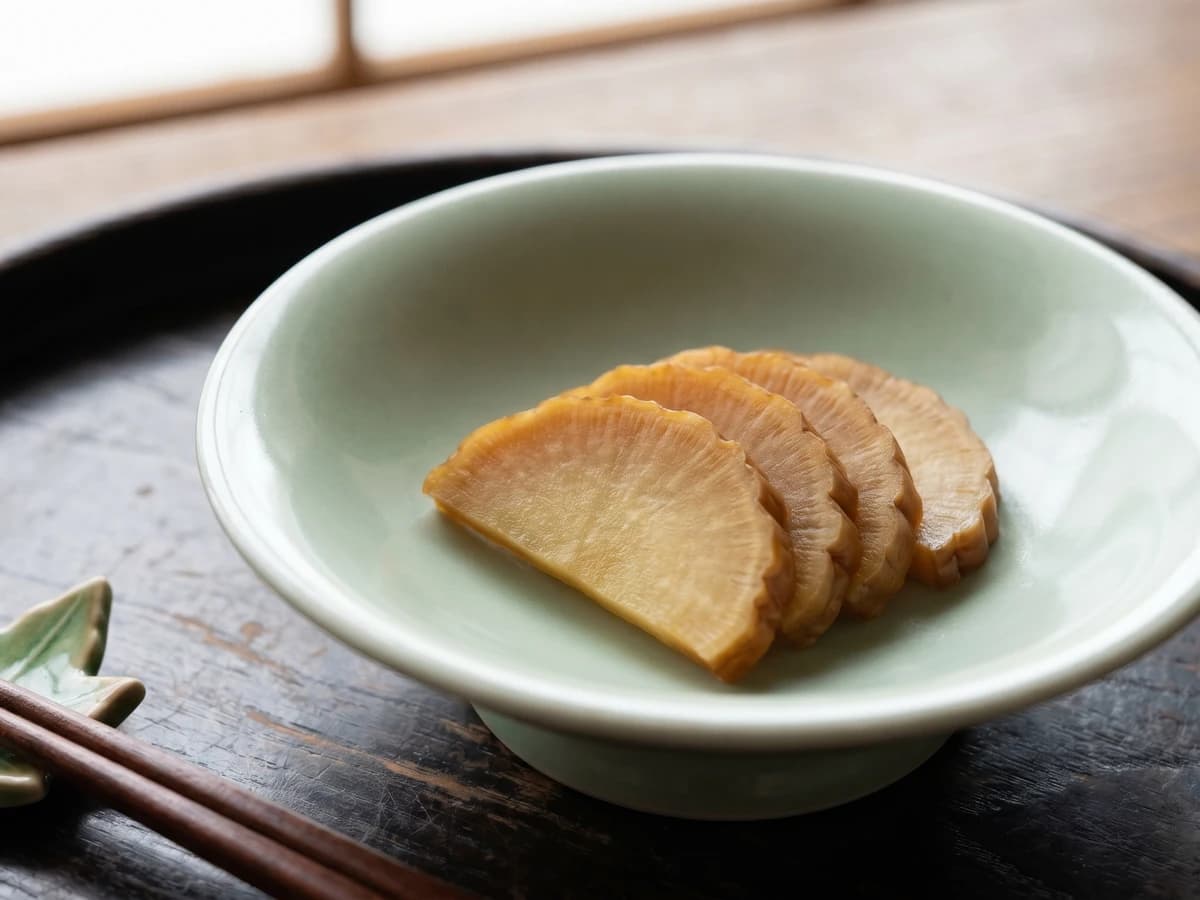
Snow-country takuan begins with smoke. Hang the daikon, dry it gently, then let rice bran, salt, and time turn it into Akita's amber pickle.

Chef Takumi
Aso takanazuke is spring caught in salt: sharp mustard greens pressed until they soften, fermented until their edge turns round, then fried briefly with sesame for rice.