
Chef Margarida
Caracóis à Portuguesa
Há caracóis! The signs appear in May and all of Lisbon knows summer has arrived. Tiny snails in spiced broth, sucked from shells at plastic tables, washed down with imperial after imperial.
A cooking platform built around craft, culture, and the stories behind what we eat.

Created by
The spread that arrives before every meal in every tasca in Portugal. Sardines, cream, lemon, five minutes of work, and suddenly you're sitting in Alfama with a glass of wine and nowhere to be.
Before the meal comes, this arrives. A small bowl of something creamy and briny, a basket of bread, a dish of olives. In every tasca from Lisbon to Porto, this is how you begin. You tear the bread, you spread, you drink, you talk. The meal might take two hours. Nobody's rushing.
Patê de sardinhas is peasant genius in a bowl. Canned sardines transformed into something that tastes like you made an effort, when really you just opened a tin and reached for a fork. The Portuguese canning industry turned preservation into an art form. Those little tins with their beautiful vintage labels? They're not just packaging. They're a century of tradition, of sardines pulled from the Atlantic and preserved at the peak of their flavor.
Avó Leonor didn't make this exact patê. In Alentejo, she was more likely to serve sardines straight from the grill during the Santos Populares, smoke filling the street, everyone eating with their hands. But when I started Mesa da Avó, I learned this spread from the tascas of Alfama, from grandmothers who ran tiny restaurants where this patê had been on the menu since their own grandmothers' time.
This is what I love about Portuguese food: something this simple, this cheap, this quick to make, and it belongs on any table. Budget friendly doesn't mean boring. It means smart. It means knowing that good ingredients don't need much help.
Portugal's sardine canning industry began in the 1880s and quickly became one of the country's most important exports. By the early 20th century, Portuguese conservas were prized across Europe for their quality. Sardine patê evolved in the tascas of Lisbon as a way to serve these preserved fish as a spread, transforming a pantry staple into an elegant petisco.
Quantity
2 cans (about 240g total)
drained
Quantity
100g
softened
Quantity
2 tablespoons
softened
Quantity
1 small
minced
Quantity
1 clove
minced
Quantity
2 tablespoons
Quantity
1 tablespoon, plus more for drizzling
Quantity
1 teaspoon
Quantity
2 tablespoons
finely chopped
Quantity
freshly ground, to taste
Quantity
pinch
Quantity
to taste
| Ingredient | Quantity |
|---|---|
| Portuguese sardines in olive oildrained | 2 cans (about 240g total) |
| cream cheesesoftened | 100g |
| unsalted buttersoftened | 2 tablespoons |
| shallotminced | 1 small |
| garlicminced | 1 clove |
| fresh lemon juice | 2 tablespoons |
| extra virgin olive oil | 1 tablespoon, plus more for drizzling |
| Dijon mustard | 1 teaspoon |
| fresh parsleyfinely chopped | 2 tablespoons |
| black pepper | freshly ground, to taste |
| piri-piri or cayenne (optional) | pinch |
| flaky sea salt | to taste |
Drain the sardines well, reserving a tablespoon of the oil if it's good quality. Remove any large bones if you prefer, though they're soft enough to eat and full of calcium. Place the sardines in a bowl and break them apart with a fork. You want pieces, not mush. The texture matters.
Add the softened cream cheese and butter to the sardines. Mash everything together with a fork, keeping some texture. Don't use a blender unless you want baby food. The patê should have character: creamy in parts, with visible flakes of fish throughout.
Fold in the minced shallot, garlic, lemon juice, olive oil, and mustard. The shallot stays raw, adding a gentle bite that cuts through the richness. Add most of the parsley, saving some for garnish. Season with black pepper and a pinch of piri-piri if you like a little heat. Taste before adding salt. The sardines bring their own brininess.
Transfer to a small bowl or terracotta dish. Cover and refrigerate for at least 30 minutes. This lets the flavors marry, lets the shallot soften slightly into the cream. Before serving, bring it to cool room temperature. Drizzle with your best olive oil, scatter the remaining parsley, and serve with crusty bread. Pão torrado if you have it. Olives alongside. A glass of vinho verde. Now you're in a tasca.
1 serving (about 65g)
Culinary guides, cultural storytelling, and the editorial depth that makes cooking meaningful.
Discover Culinary ExplorerChef Margarida
Há caracóis! The signs appear in May and all of Lisbon knows summer has arrived. Tiny snails in spiced broth, sucked from shells at plastic tables, washed down with imperial after imperial.

Chef Margarida
Crispy triangles of spiced meat wrapped in golden pastry, carrying the flavors of Goa across the ocean to every Portuguese tasca and family gathering. Colonial history you can eat.
Chef Margarida
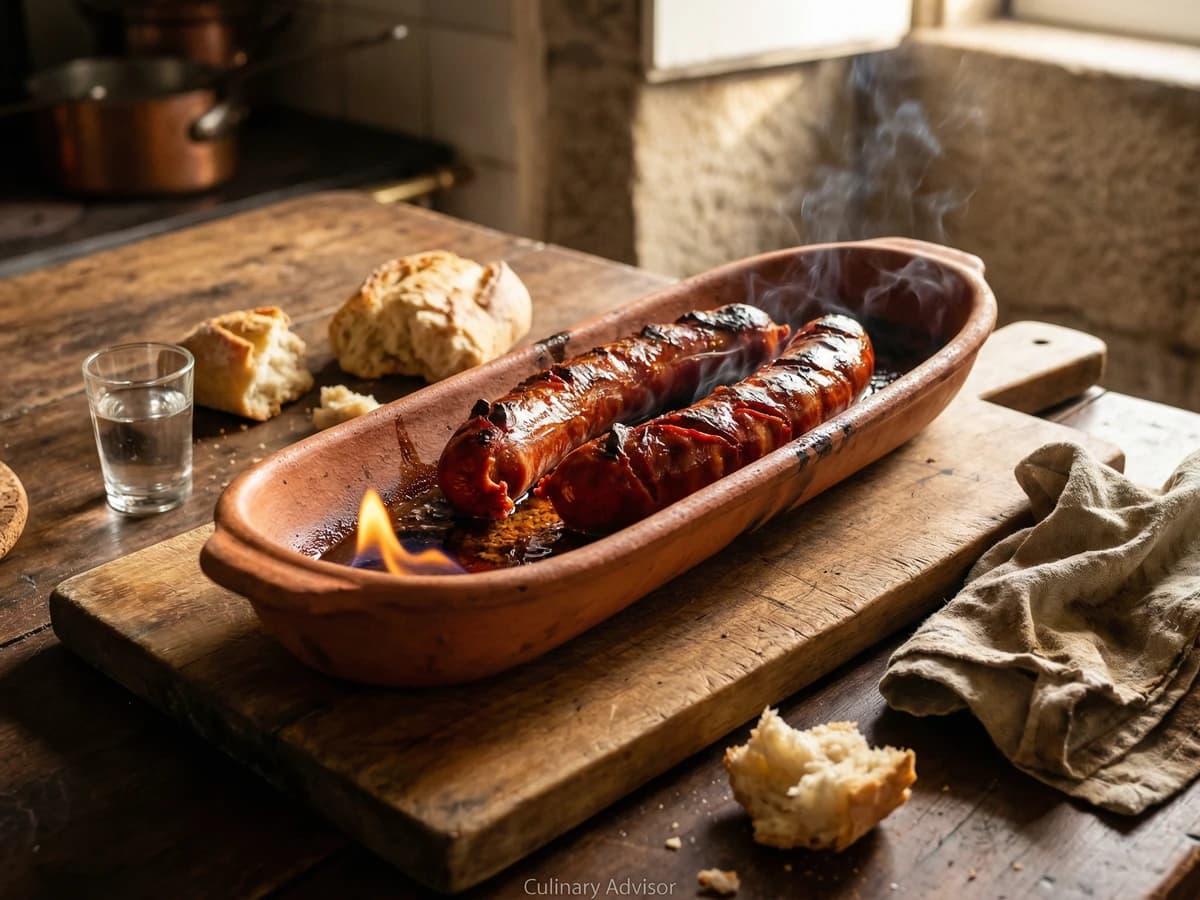
The theater of the tasca: chouriço set ablaze in its clay vessel, aguardente flames dancing blue and orange until the casing splits and the smoky fat runs. This is how we gather.

Chef Margarida
Mushrooms stuffed with chouriço and baked until the cheese bubbles and browns, the kind of petisco that disappears from the table before you've finished pouring the wine. Tasca food for your home.