Chef Lupita
Acúmara Tatemada al Comal
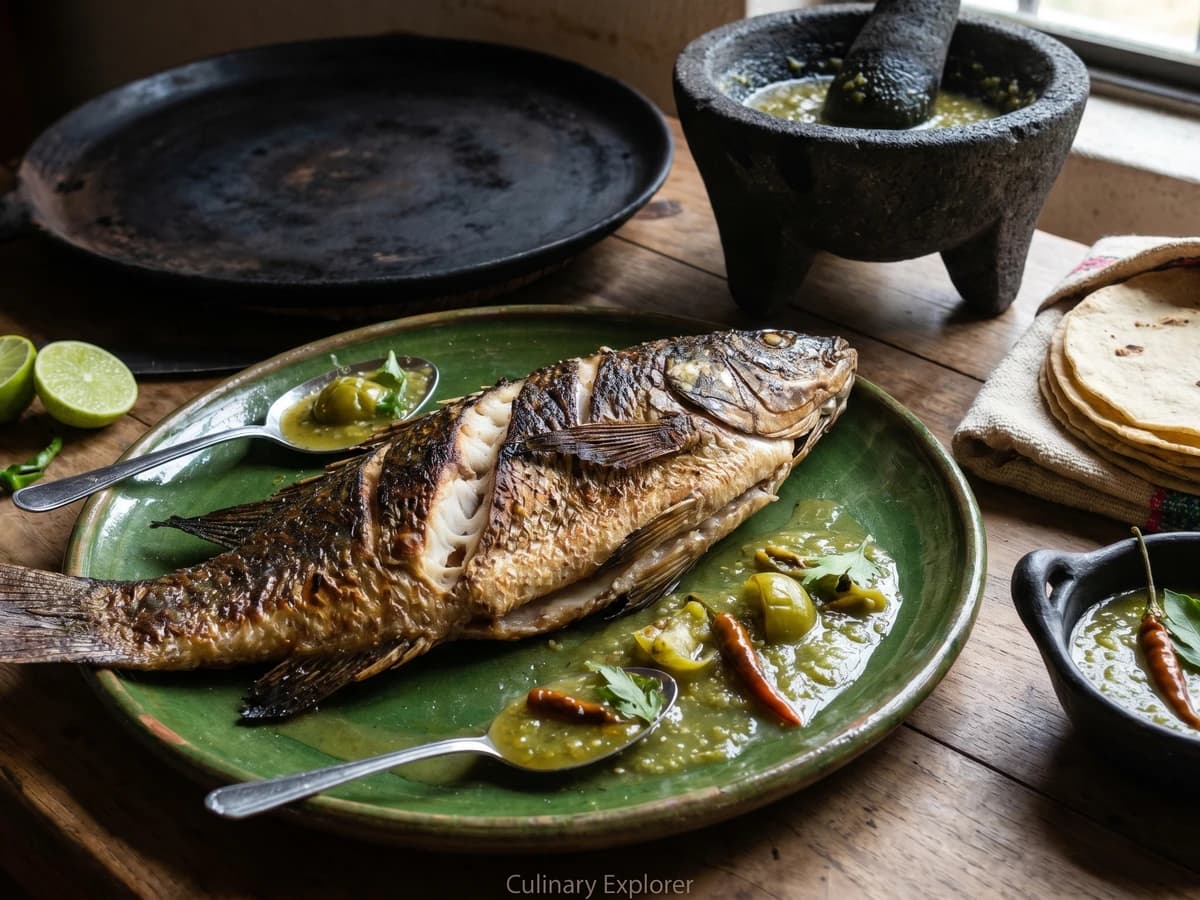
Michoacán's Lake Pátzcuaro acúmara, a whole kurucha from the lago tatemada on a comal de leña and served with chile perón atápakua, corn tortillas, and P'urhépecha discipline.
A cooking platform built around craft, culture, and the stories behind what we eat.

Created by
Oaxaca's Pasillo de Humo on the table at home: salt-cured tasajo, adobo cecina enchilada, and chorizo over mesquite charcoal, with tlayudas, quesillo, asiento, and grilled cebollitas.
This is from Oaxaca. Specifically from the Pasillo de Humo inside the Mercado 20 de Noviembre in the capital, where the women who run the meat stalls hand you raw sheets of tasajo and cecina enchilada and you carry them, dripping adobo, to the charcoal grills at the back of the corridor. The smoke is so thick you walk out of there smelling like a campfire. That smoke is the recipe.
This is not Mexican barbecue and it is not a generic mixed grill. Esto no es comida de un solo Mexico. Tasajo is beef cured in salt and air, sliced into thin sheets the way only the carniceros of the Valles Centrales know how to slice it. Cecina enchilada is pork in red adobo, a different cut, a different cure, a different chile. Oaxacan chorizo is leaner and earthier than the chorizo from Toluca, with chile guajillo and chipotle and a different hand with the spices. You grill all three over hardwood and you serve them on tlayudas spread with asiento and refried black beans. The components are not interchangeable. Each one is its own tradition.
My notebook from the second Oaxaca trip in 2009 has a sentence underlined twice: 'No tlayuda sin asiento.' The asiento is the brown lard that settles to the bottom of the carnitas pot, with bits of crackling still in it. It is the smear under the beans, the ingredient most home cooks outside Oaxaca have never tasted. If you cannot get asiento, use more beans and accept the compromise. But find a Oaxacan butcher first, because the parrillada starts at the meat counter, not at the grill. Si no conoces el mercado, no conoces la cocina.
This is a dish to feed a table. Eight people, ten people, a backyard full of family on a Sunday afternoon. The smoke, the chile, the tearing of meat with the hands, the cebollitas charred and dressed with lime, the quesillo pulled apart in ribbons. La cocina no es decoracion, es trabajo. And this is the work of an entire region, set down on one platter. Asi se hace y punto.
Oaxaca's tradition of salt-curing and air-drying beef into tasajo predates the colonial period in technique, with indigenous Zapotec and Mixtec preservation methods later adapted to the cattle that the Spanish introduced in the 16th century. The Pasillo de Humo, formally the Mercado 20 de Noviembre's interior grilling corridor, was institutionalized in its current form when the market was rebuilt in the 1970s, but the practice of selling raw cured meats for diners to grill on communal charcoal predates the building. Oaxacan chorizo differs from its central Mexican counterparts in its use of chile guajillo and chipotle rather than the paprika-heavy seasoning of Toluca-style chorizo, and quesillo, often miscalled 'Oaxaca cheese' in English, originated in the town of Etla in the 1880s when a young cheesemaker named Leobarda Castellanos Garcia accidentally over-acidified the milk and learned to stretch the curds into ribbons.
Quantity
1 1/2 pounds
about 1/8-inch thick
Quantity
1 1/2 pounds
Quantity
1 pound
in links
Quantity
6
stemmed and seeded
Quantity
3
stemmed and seeded
Quantity
1
stemmed
Quantity
4
unpeeled
Quantity
1 teaspoon
Quantity
1/2 teaspoon
Quantity
2
Quantity
2 tablespoons
Quantity
1 tablespoon, plus more for the tasajo
Quantity
3 tablespoons
melted, for brushing the grill
Quantity
8 large
Quantity
1 pound
pulled into ribbons
Quantity
1 cup
or substitute additional refried black beans
Quantity
2 cups
Quantity
4
sliced
Quantity
1
sliced into thick rounds
Quantity
8
Quantity
4
slit lengthwise
Quantity
for serving
halved
Quantity
for serving
Quantity
for serving
Quantity
for serving
| Ingredient | Quantity |
|---|---|
| beef tasajo (thin salt-cured beef sheets)about 1/8-inch thick | 1 1/2 pounds |
| pork cecina enchilada (thin pork in red adobo) | 1 1/2 pounds |
| Oaxacan chorizoin links | 1 pound |
| dried chile guajillostemmed and seeded | 6 |
| dried chile anchostemmed and seeded | 3 |
| dried chile chipotle mecostemmed | 1 |
| garlic clovesunpeeled | 4 |
| dried Mexican oregano (preferably oregano de monte) | 1 teaspoon |
| cumin seeds | 1/2 teaspoon |
| whole cloves | 2 |
| apple cider vinegar | 2 tablespoons |
| kosher salt | 1 tablespoon, plus more for the tasajo |
| pork lard (manteca de cerdo)melted, for brushing the grill | 3 tablespoons |
| tlayudas (thin Oaxacan corn tortillas, 12 inches across) | 8 large |
| quesillo (Oaxacan string cheese)pulled into ribbons | 1 pound |
| asiento (toasted pork lard with cracklings)or substitute additional refried black beans | 1 cup |
| refried black beans with avocado leaf | 2 cups |
| ripe Hass avocadossliced | 4 |
| large white onionsliced into thick rounds | 1 |
| spring onions (cebollitas) with tops | 8 |
| fresh chile de agua or jalapenoslit lengthwise | 4 |
| limeshalved | for serving |
| salsa de chile pasilla mixe | for serving |
| salsa verde cruda | for serving |
| fresh chapulines (optional) | for serving |
Light a chimney of hardwood charcoal, mesquite if you can find it, and let it burn until the coals are gray and glowing red underneath. Spread the coals so you have a hot zone for the meat and a cooler zone for the cebollitas and chiles. Set the grate four inches above the coals. This is grilling, not roasting. The meat is thin and it cooks in seconds. The fire has to be ready before the meat hits the grate.
If your butcher gave you cecina already enchilada, skip this step. If you are working with thin pork sheets and adobo-ing them yourself, toast the guajillo, ancho, and chipotle meco on a dry comal for about 30 seconds per side. The skin should puff and turn fragrant. Toast the unpeeled garlic on the same comal until the skins blacken in spots and the garlic softens, about 8 minutes. Soak the chiles in hot, not boiling, water for 20 minutes. Peel the garlic. Blend the chiles, garlic, oregano, cumin, cloves, vinegar, salt, and a half cup of the soaking liquid until smooth. Strain through a fine-mesh sieve. The adobo should be thick enough to coat the back of a spoon.
Lay the pork sheets on a sheet pan and brush both sides with the adobo. A thin coat. The chile is there to season the meat, not to drown it. Let the cecina sit at room temperature while the fire finishes coming up, at least 20 minutes. If you bought the cecina enchilada from a Oaxacan butcher, it is already cured and ready to go. No me vengas con atajos that skip the adobo, but trust the butcher who already did the work.
Tasajo arrives already salt-cured. Pat the sheets dry with a clean cloth. If they look dry, brush them lightly with melted lard before they hit the grill. Tasajo cooks in seconds because it is thin and partly cured. The lard keeps the meat from sticking and gives the edges a clean sear. Lay the sheets out flat at room temperature for 15 minutes before grilling. Cold meat tightens on the grate.
Brush the spring onions and slit chiles with a little lard and lay them over the cooler zone of the fire. Turn them every minute or two until the bulbs of the cebollitas soften and char and the chiles blister and collapse. About 8 to 10 minutes. Move them to a platter and sprinkle with salt and a squeeze of lime. They go to the table while you finish the meat.
Place the chorizo links over the cooler side of the fire. Oaxacan chorizo is leaner and drier than the chorizo from Toluca, and it does not flame up. Turn the links every two minutes until they are firm to the touch and the casings have darkened, about 10 minutes total. Move them to a cutting board to rest while you grill the rest. Slice on the bias just before serving.
Brush the grate with melted lard. Lay the tasajo sheets flat over the hot zone. Do not crowd. Listen for the hiss. Forty-five seconds on the first side, until the bottom is dark and you see the edges curl. Flip with tongs and grill another 30 seconds. That is all. Tasajo overcooked is jerky. Move the sheets to a warm platter and tent loosely with a clean cloth.
The adobo will color quickly, so move fast. Lay the cecina sheets over the hot zone. The chile paste will sizzle and the edges will darken in under a minute. Flip after 45 seconds. Cook another 30 seconds on the second side. The adobo should look caramelized and slightly crisp at the edges, never blackened. Stack the cecina alongside the tasajo on the warm platter.
While the meat rests, warm each tlayuda over the cooler zone of the fire for 30 seconds per side, just until pliable and lightly toasted. Spread one side with a generous smear of asiento, then a layer of refried black beans, then a handful of pulled quesillo. Top with avocado slices. The tlayuda is the bed and the canvas. In Oaxaca it is sometimes folded over and grilled until crisp, sometimes served open. Serve open with a parrillada this generous. The diner builds the bite.
Bring the platter of tasajo, cecina, and chorizo to the table together with the dressed tlayudas, the grilled cebollitas and chiles, the limes, the salsa de chile pasilla mixe, the salsa verde, and the chapulines if you have them. This is family-style. Each person tears off pieces of meat with their hands or a fork, lays them on a tlayuda or in a fresh tortilla, and dresses the bite with what they want. Cada estado, su propia cocina. This one belongs to Oaxaca.
1 serving (about 620g)
Culinary guides, cultural storytelling, and the editorial depth that makes cooking meaningful.
Discover Culinary ExplorerChef Lupita
Michoacán's Lake Pátzcuaro acúmara, a whole kurucha from the lago tatemada on a comal de leña and served with chile perón atápakua, corn tortillas, and P'urhépecha discipline.

Chef Lupita
Puebla's weekday adobo of pork shoulder braised in a thick guajillo and ancho sauce sharpened with vinegar, cumin, and clove. The deep red of a market spice stall, the dish a poblana cooks without thinking.

Chef Lupita
Loreto's pit-roasted clams, planted hinge-up in beach sand and tatemadas under a fast fire of dried romerillo brush, the resinous Baja desert shrub that gives this dish its smoke.

Chef Lupita
Oaxaca's eighth mole, the silky, almond-and-cinnamon almendrado, served over poached chicken. Mild, sweet, restrained, and a quiet rebuttal to anyone who thinks Mexican food has to be hot to be Mexican.