Culinary Explorer

A cooking platform built around craft, culture, and the stories behind what we eat.
Discover Culinary Explorer
Panyanky (панянки, painted figure cookies)

Panyanky (панянки, painted figure cookies)

Created by

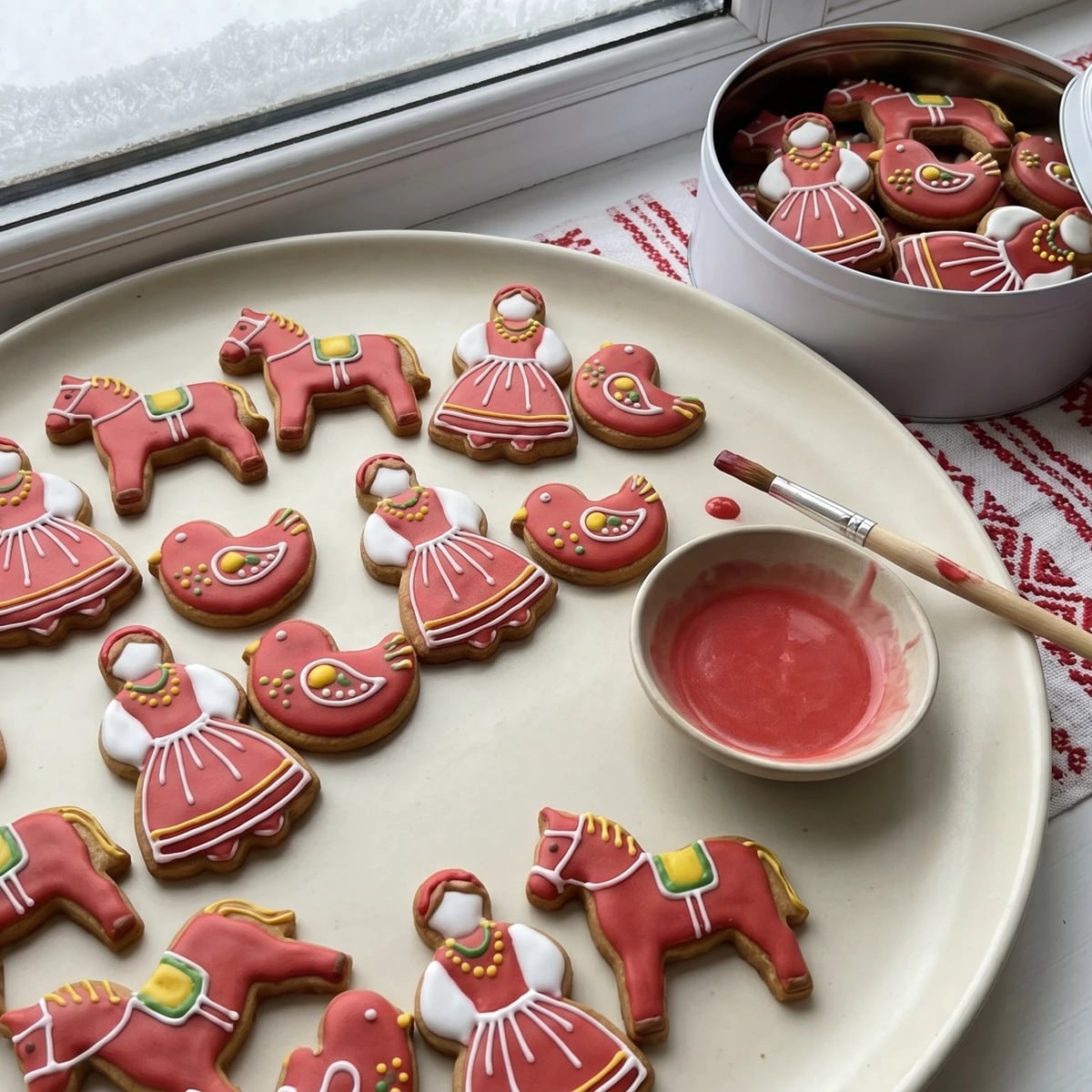
The red comes first: a bright Christmas coat over lean honey-spice dough, cut into little ladies, horses and birds, then painted with white dots like someone dressed the cookies for visiting.

Pastries & Cookies
Ukrainian
Christmas
Holiday
Make Ahead
1 hr 15 min
Active Time
15 min cook12 hr 30 min total
Yield24 to 30 cookies

The red arrives before the spice. These Poltava panyanky are lean Christmas-fast pryanyky, spiced honey cookies, cut into little ladies, horses, birds, sometimes riders, then brushed with a bright red sugar coat and painted in white, yellow, and green. They look like toys until you bite one: firm at the edge, honeyed in the middle, smelling of cinnamon, clove, and a kitchen that made them early because the holidays are coming whether your oven is ready or not.

Poltava is not my Kherson steppe, and that matters. I learned these with the respect every regional kitchen deserves: ask who makes them, what the children are allowed to steal, and which part cannot be hurried. Here it is the syrup and the resting. Warm honey-sugar syrup takes the flour differently from cold water, giving a smooth, sturdy dough that keeps the figures sharp enough for painting. Let it rest until it stops feeling grainy under your hand. My Aunt Nadia's letters trained me for this kind of instruction, all 'until the smell changes' and 'until it sounds right', maddening until your own hands begin to understand.

Make more than you think. Panyanky are not one neat biscuit with coffee; they are a little red procession for the holiday table, tucked into tins, carried to children, set out for koliadnyky, carol singers, and eaten long after the icing has dried hard. If a horse loses its proud neck or a bird grows too round, never mind. The cookie remembers the hand that made it.

Panyanky are a Poltava-region branch of malovani pryanyky, painted ritual honey cookies made during Sviatky, the winter holy days from Christmas to Epiphany, often as gifts for children and koliadnyky, carol singers. The name comes from panianka, a young lady, but the cutters also make horses, birds, riders, and stars, older calendar signs of movement, luck, and household protection folded into Christian holiday practice. The tradition of preparing and decorating these red painted cookies in Poltava oblast is recorded in Ukraine's National Inventory of Intangible Cultural Heritage, which matters because Soviet-era food writing rarely gave village ritual sweets this kind of regional name.

The technique, the tradition, and the story behind every dish.

Discover Culinary Explorer

Ingredients

runny honey

Quantity

250g

granulated sugar

Quantity

200g

water

Quantity

120ml

mild sunflower oil

Quantity

60ml, plus a little more

for the dough and your hands

ground cinnamon

Quantity

1 teaspoon

ground ginger

Quantity

1/2 teaspoon

ground cloves

Quantity

1/4 teaspoon

ground allspice

Quantity

1/4 teaspoon

baking soda

Quantity

1 teaspoon

fine sea salt

Quantity

1/2 teaspoon

plain flour

Quantity

600g, plus up to 50g more

for adjusting and rolling

icing sugar

Quantity

220g

sifted, for the red glaze

beetroot juice, cranberry juice, or water

Quantity

2 to 3 tablespoons

for the red glaze

red gel food colouring or beetroot powder

Quantity

as needed, or 1 tablespoon beetroot powder

for the red glaze

icing sugar

Quantity

120g

sifted, for the painting icing

aquafaba (chickpea brine) or water

Quantity

2 tablespoons, plus more drop by drop

lemon juice

Quantity

1 teaspoon

yellow and green food colouring (optional)

Quantity

a few drops

for painting

Equipment Needed

  • A medium saucepan for the honey syrup
  • A wide mixing bowl and wooden spoon
  • Rolling pin and parchment-lined sheet pans
  • Paper templates or cookie cutters
  • Small brushes, piping bags, or a toothpick for painting

Instructions

  1. 1

    Warm the syrup

    Put the honey, sugar, water, spices, and salt in a saucepan over low heat. Warm gently, stirring, until the sugar has melted and the smell changes from sharp spice to round honey cake. Do not let it boil angrily; a few lazy bubbles at the edge are enough. Take it off the heat, stir in the sunflower oil, then the baking soda. It will foam and sigh. Let it cool until warm to the touch.

    If the syrup is hot enough to sting your finger, wait. Hot syrup grabs flour into lumps, and these cookies need a smooth face for painting.
  2. 2

    Mix the dough

    Tip 600g flour into a wide bowl and pour in the warm syrup. Stir with a wooden spoon until shaggy, then knead by hand, adding only enough extra flour to make a smooth dough that feels like soft clay. It should be warm, slightly shiny, and willing to hold a fingerprint without sticking to you.

    Flour is the step that forgives least if you panic. A softer dough can rest into shape; a dry one cracks when you cut the ladies' skirts and birds' wings.
  3. 3

    Rest the dough

    Oil the dough lightly, wrap it, and leave it at cool room temperature for at least 4 hours, or overnight in the fridge. If it has chilled hard, give it time on the counter before rolling. When it is ready, the graininess will be gone and a small piece rolled between your palms will smooth out instead of splitting. This rest is not decoration. It lets the syrup hydrate the flour so the figures keep their outlines in the oven.

  4. 4

    Cut the figures

    Heat the oven to 180C and line two trays with parchment. Roll the dough 5 to 6mm thick on a lightly floured surface, then cut little ladies, horses, birds, riders, stars, or whatever your household will recognize as festive. Lift the shapes with a palette knife and set them on the trays with a little room between them.

    No special cutters are required. Cut paper templates from a cereal box, lay them on the dough, and trace around them with a small knife dipped in flour.
  5. 5

    Bake gently

    Bake one tray at a time until the tops turn matte, the edges feel set, and the underside is pale golden, 9 to 12 minutes for small shapes and a few minutes more for large ones. Pull them before they brown deeply. The red coat brings the color; the cookie underneath should stay honey-gold and tender-firm. Cool completely on a rack.

  6. 6

    Glaze them red

    Sift 220g icing sugar into a bowl and stir in 2 tablespoons beetroot juice, cranberry juice, or water, plus enough red colour to make a clear festive red. The glaze should run off the spoon in a ribbon, not splash like water. Brush a thin coat over the cooled cookies, tops and edges, and let them dry until the shine dulls to satin.

    Two thin coats are better than one puddle. Beetroot powder gives a softer brick red; gel colouring gives the bright village-fair red many people remember now.
  7. 7

    Paint and dry

    Mix the remaining icing sugar with aquafaba or water and the lemon juice until it holds a line. Divide a little into bowls if you want yellow and green details. Pipe or paint collars, braids, bridles, wings, dots, and cuffs over the dry red glaze. Let the cookies dry uncovered for at least 3 hours, or overnight, before stacking them in a tin.

    A piping bag is useful, but a toothpick and a small clean brush will do the work. Panyanky are hand cookies. They should look touched by a person.

Chef Tips

  • The red can be practical. Gel colouring gives the bright holiday colour people expect now; beetroot powder gives a softer, earthier red. Both keep the tradition working in a modern kitchen.
  • Stop adding flour before the dough feels dry. It should feel like soft clay, not shortbread. Rest will firm it more than you think.
  • For Christmas-fast baking, use aquafaba or water for the icing, not egg white. Egg-white royal icing sets harder and is a bit more modern here, useful if you are sending the cookies by post.
  • Cutters are lovely, but templates are enough. The old logic is figure, color, gift, not perfect factory edges.
  • Store the dried cookies in a tin for 3 to 4 weeks. If they go harder than you like, tuck in a strip of apple peel overnight, then remove it before it makes anything damp.

Advance Preparation

  • The dough is best after an overnight rest, and it can sit wrapped in the fridge for up to 2 days before rolling.
  • The unpainted cookies can be baked 1 to 2 weeks ahead and kept in a tin, then glazed and painted closer to the holiday.
  • Painted panyanky need several hours to dry before stacking. Once dry, they keep 3 to 4 weeks in a tin at cool room temperature.

Frequently Asked Questions

Nutrition Information

1 serving (about 55g)

Calories
210 calories
Total Fat
2 g
Saturated Fat
0 g
Trans Fat
0 g
Unsaturated Fat
2 g
Cholesterol
0 mg
Sodium
90 mg
Total Carbohydrates
46 g
Dietary Fiber
1 g
Sugars
28 g
Protein
2 g

Note: Chef personas and recipes are created with AI assistance. Cook with care: follow safe food-handling practices, check doneness with a thermometer when needed, and adapt for allergies and your kitchen.

Where cooking meets culture.

Culinary guides, cultural storytelling, and the editorial depth that makes cooking meaningful.

Discover Culinary Explorer

More from Makivnyk, Medivnyk & Verguny

Browse the full collection