Chef Makoa
ʻOtai (Tongan Watermelon and Coconut Drink)
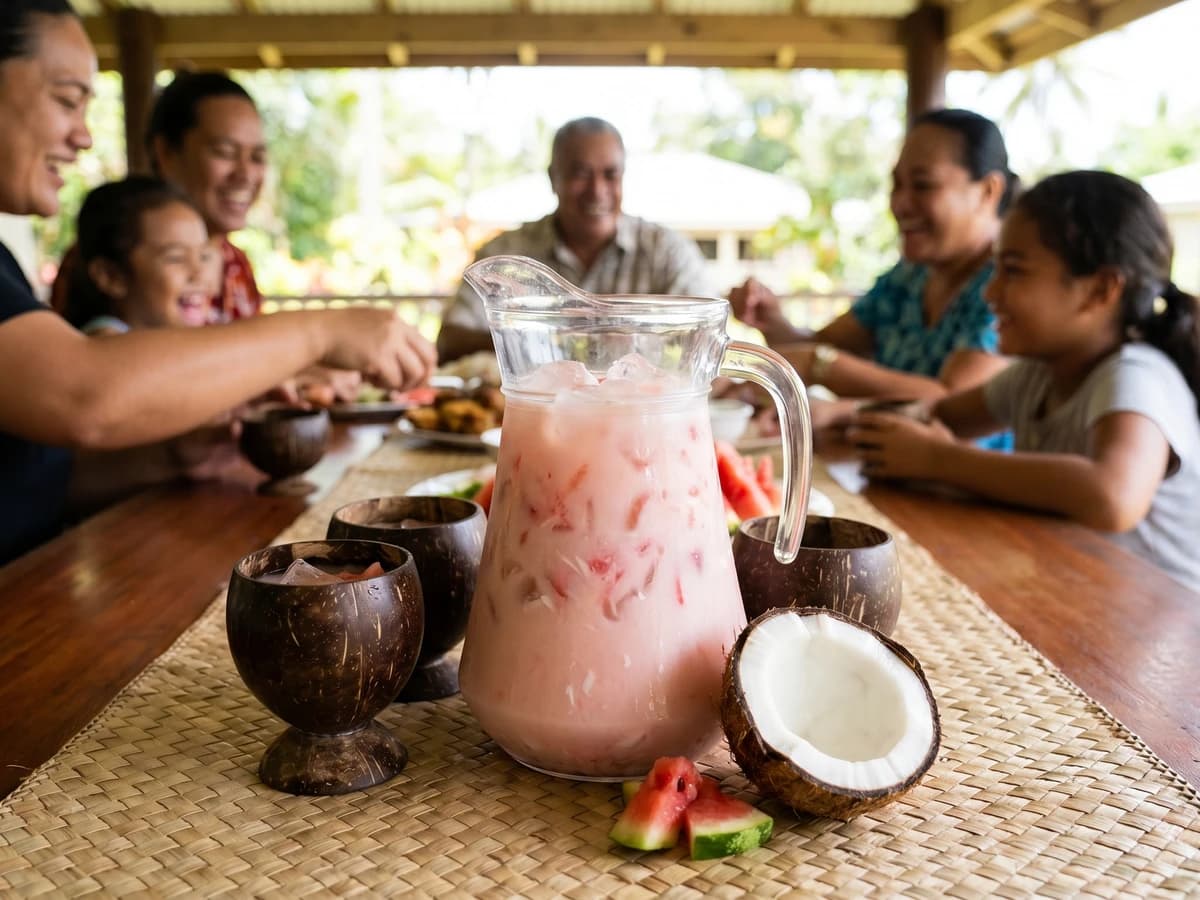
Tonga's ʻotai is watermelon shredded into fresh coconut milk and ice, sweet, cold, and generous, the drink that cools the kāinga when the ʻumu runs hot.
A cooking platform built around craft, culture, and the stories behind what we eat.
Created by
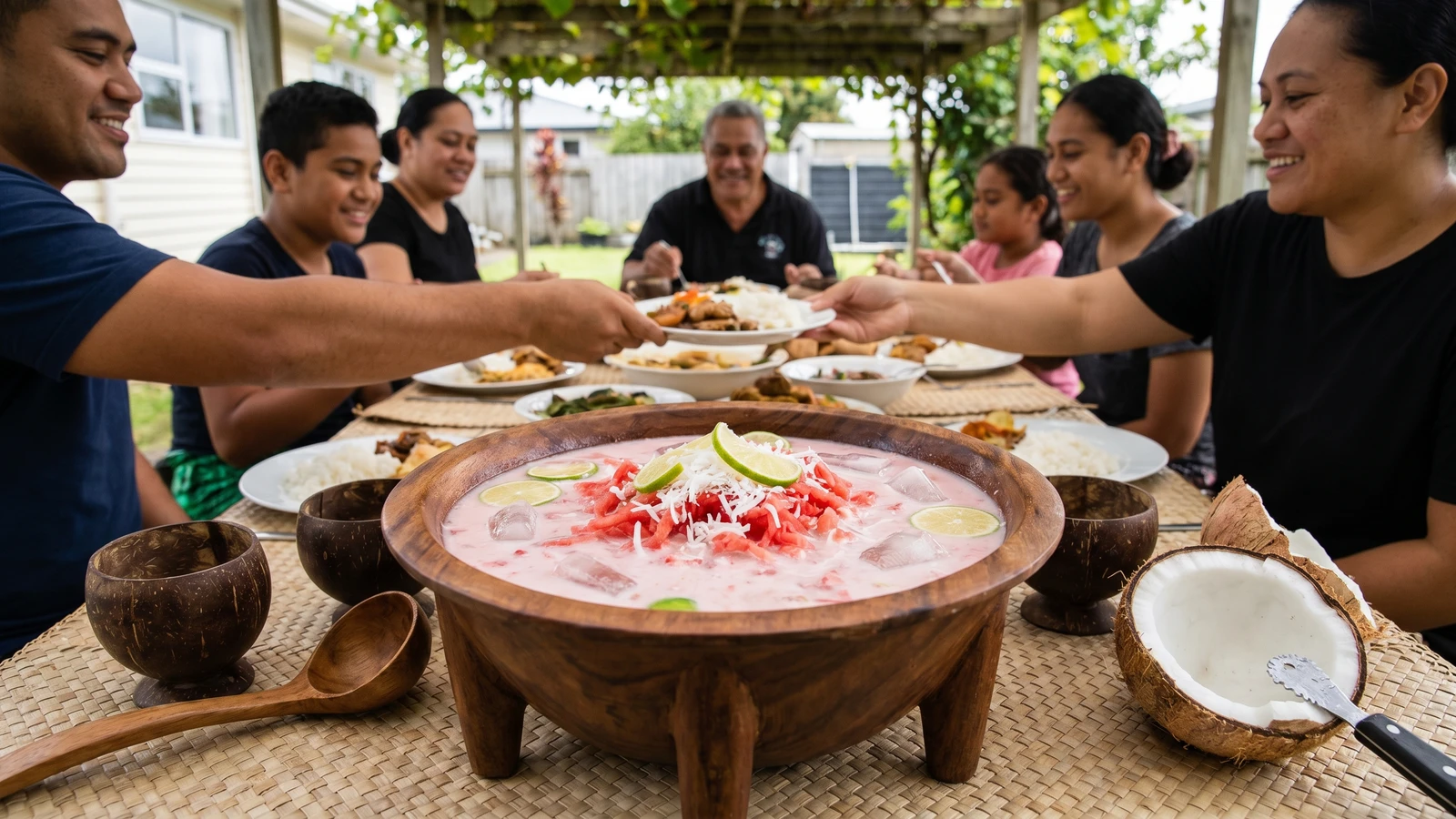
Tonga's ʻotai is grated meleni, watermelon, stirred with fresh lolo, coconut milk, and ice until the whole bowl turns cold, creamy, and ready for one more cousin.
At a Tongan table, kinship can sound like a ladle knocking the side of a cold bowl. This is ʻotai, Tonga's fruit cooler, made for the kāinga, the extended family, when the day is hot and the spread is wide. The fonua, land and belonging, gives the meleni, the watermelon. The niu, the coconut, gives the lolo, the milk that softens the whole drink until it feeds more like food than a sip.
This one is my Tongan cousins' hand, not mine, and I say that clear. I know the gesture, though. Grate the fruit instead of blending it smooth. Squeeze the coconut if you can. Stir, taste, loosen, and serve it close to drinking. Sāmoa keeps a cousin in vaifala, usually pineapple in a sweet milky cooler, but this bowl here is Tonga's, same family of refreshers, different hand.
The texture matters because the fruit stays present. You should feel the watermelon shreds and little coconut threads on the spoon, cold and milky and a little sweet, never thin like juice from a carton. Eat what you have, yeah? If the watermelon is strong, hold back the sugar. If all you have is canned coconut milk on a weeknight, use it without shame. Just don't erase the bowl's character by making it too smooth.
Set ʻotai beside lū sipi, Tongan taro leaves with mutton, beside ʻota ʻika, Tonga's raw fish, beside sapasui and corned beef and whatever the aunties brought. Kava is the chiefly drink and its protocol belongs to Tongan elders. ʻOtai is the everyday welcome: cold, abundant, stirred again and again because the good bits settle to the bottom.
ʻOtai is Tongan, a chilled fruit drink most associated today with grated meleni, watermelon, coconut milk, and the big Christmas and church feasts of Tonga, where December falls in the hot season. Watermelon and pineapple are post-contact fruits in the Pacific, but the method keeps an older western Polynesian food grammar: niu, coconut, squeezed into lolo and used to carry, soften, and stretch food for the whole kāinga. Sāmoa's vaifala, usually pineapple in a sweet milky drink, is a named cousin, while Tonga's bowl stays its own hand beside lū sipi, ʻota ʻika, and food from the umu.
Quantity
1 medium, about 5 to 6 pounds
chilled
Quantity
2 cups
squeezed from grated mature coconut, or well-stirred unsweetened canned coconut milk
Quantity
1 1/2 cups
only if squeezing fresh lolo
Quantity
1 cup
finely grated, for texture
Quantity
1 to 1 1/2 cups
as needed
Quantity
2 to 4 tablespoons
to taste
Quantity
2 tablespoons
Quantity
1 small pinch
Quantity
4 cups
for serving
| Ingredient | Quantity |
|---|---|
| seedless watermelon (meleni)chilled | 1 medium, about 5 to 6 pounds |
| fresh coconut milk (lolo)squeezed from grated mature coconut, or well-stirred unsweetened canned coconut milk | 2 cups |
| warm water (optional)only if squeezing fresh lolo | 1 1/2 cups |
| fresh young coconut meat or thawed grated coconutfinely grated, for texture | 1 cup |
| cold water or coconut wateras needed | 1 to 1 1/2 cups |
| sugarto taste | 2 to 4 tablespoons |
| fresh lime juice (optional) | 2 tablespoons |
| sea salt | 1 small pinch |
| icefor serving | 4 cups |
If you're making fresh lolo, knead grated mature coconut with the warm water until the coconut gives up its milk, then wring it hard through a clean cloth. You want a rich, clean-smelling coconut milk, white and silky, not sour or oily. Chill it while you grate the fruit. If you're using canned coconut milk, stir it until smooth and cold.
Cut the chilled watermelon into big wedges, scrape out any seeds you see, and grate the flesh on the large holes of a box grater straight into a wide bowl. Keep every drop of juice. The bowl should look like ruby slush, with soft shreds and juice together. Don't blend it smooth. The grate is the whole mouthfeel.
Pour the cold lolo over the grated watermelon, then fold in the finely grated coconut meat. Add the pinch of sea salt, two tablespoons of sugar, and the lime juice if you're using it. Stir slow from the bottom so the coconut threads and watermelon shreds run through the whole bowl.
Add cold water or coconut water a little at a time until the ʻotai is pourable but still full of fruit. Taste it. If the meleni is sweet, leave it alone. If it needs help, add the rest of the sugar one tablespoon at a time. No blame the fruit. Some days it comes sweeter, some days you help it along.
Add ice just before serving, or ladle the ʻotai over ice in cups or small bowls. Stir every few minutes because the good pieces settle, and that bottom scoop is always somebody's favorite. Serve it cold and close to drinking, with the bowl set out for the whole table.
1 serving (about 355g)
Culinary guides, cultural storytelling, and the editorial depth that makes cooking meaningful.
Discover Culinary ExplorerChef Makoa
Tonga's ʻotai is watermelon shredded into fresh coconut milk and ice, sweet, cold, and generous, the drink that cools the kāinga when the ʻumu runs hot.
Chef Makoa
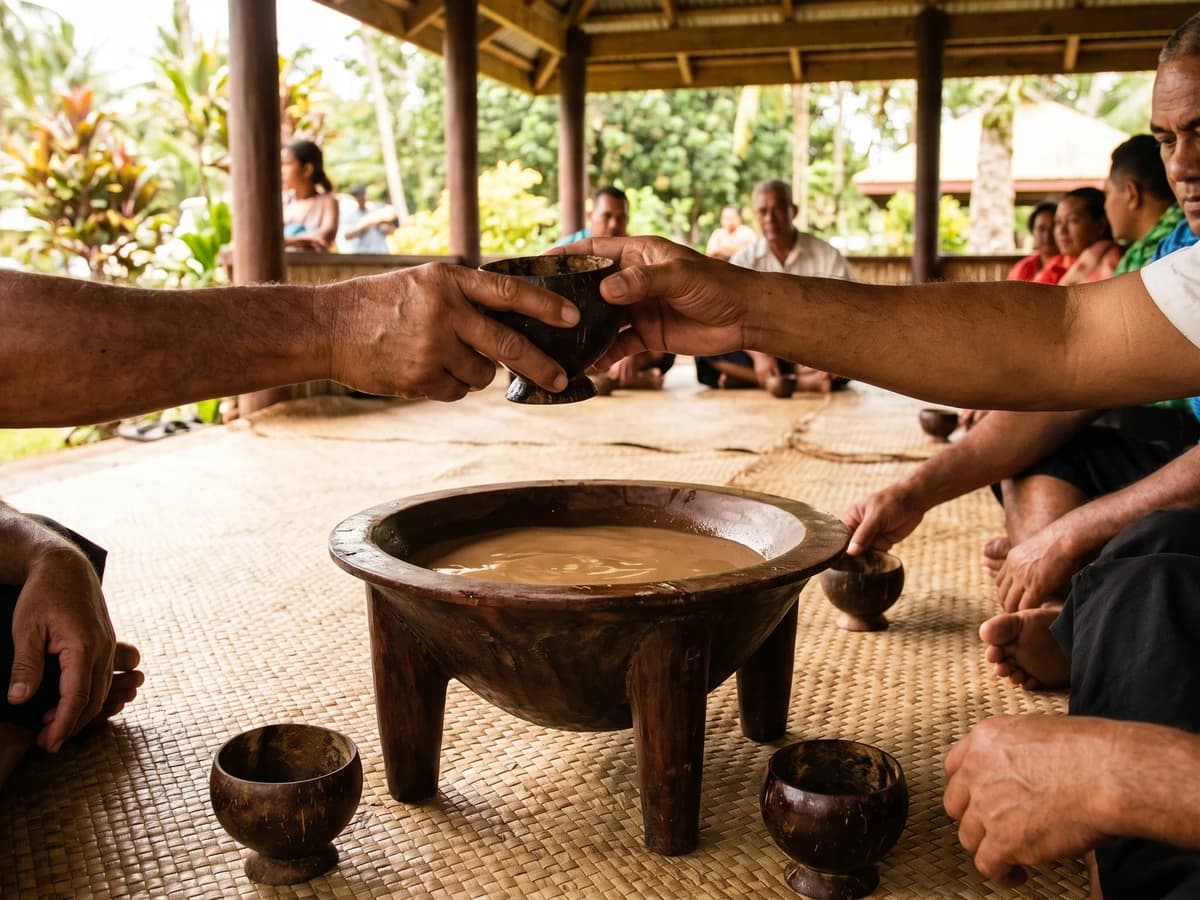
Tonga's Taumafa Kava is the chiefly bowl: cool water kneaded through pounded root, served plain from the carved tānoʻa bowl with rank and care, while faikava, the evening circle, keeps talking.
Chef Makoa
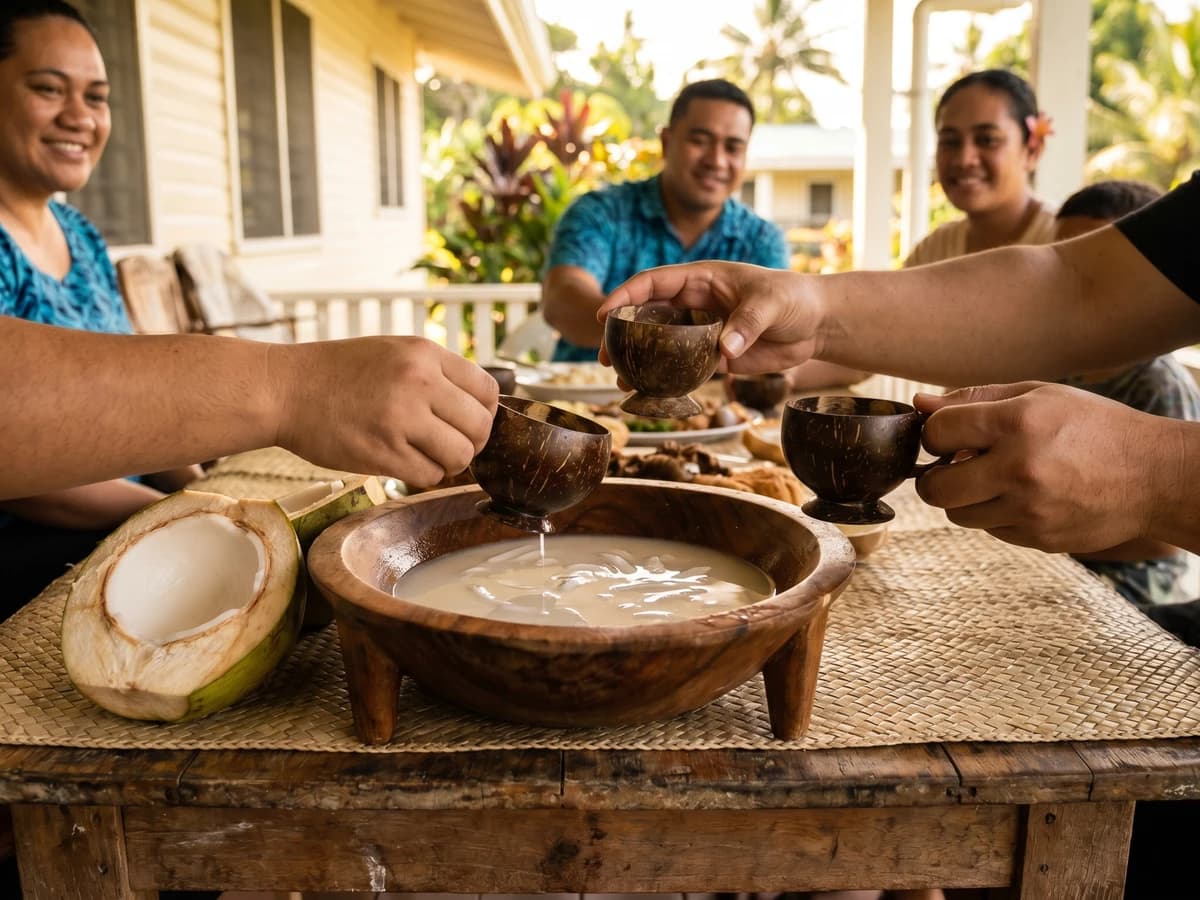
A soft Tongan cup from young coconut, simmered low in its own sweet water until mild and creamy, the kind of drink an auntie sets down when somebody needs care.

Chef Juliette
Bavaroise turns the ribbon stage into a drink: yolks and sugar, boiling tea and milk, and Kirsch whisked into a light crown of foam. Keep the whisk moving, and the café comes home.