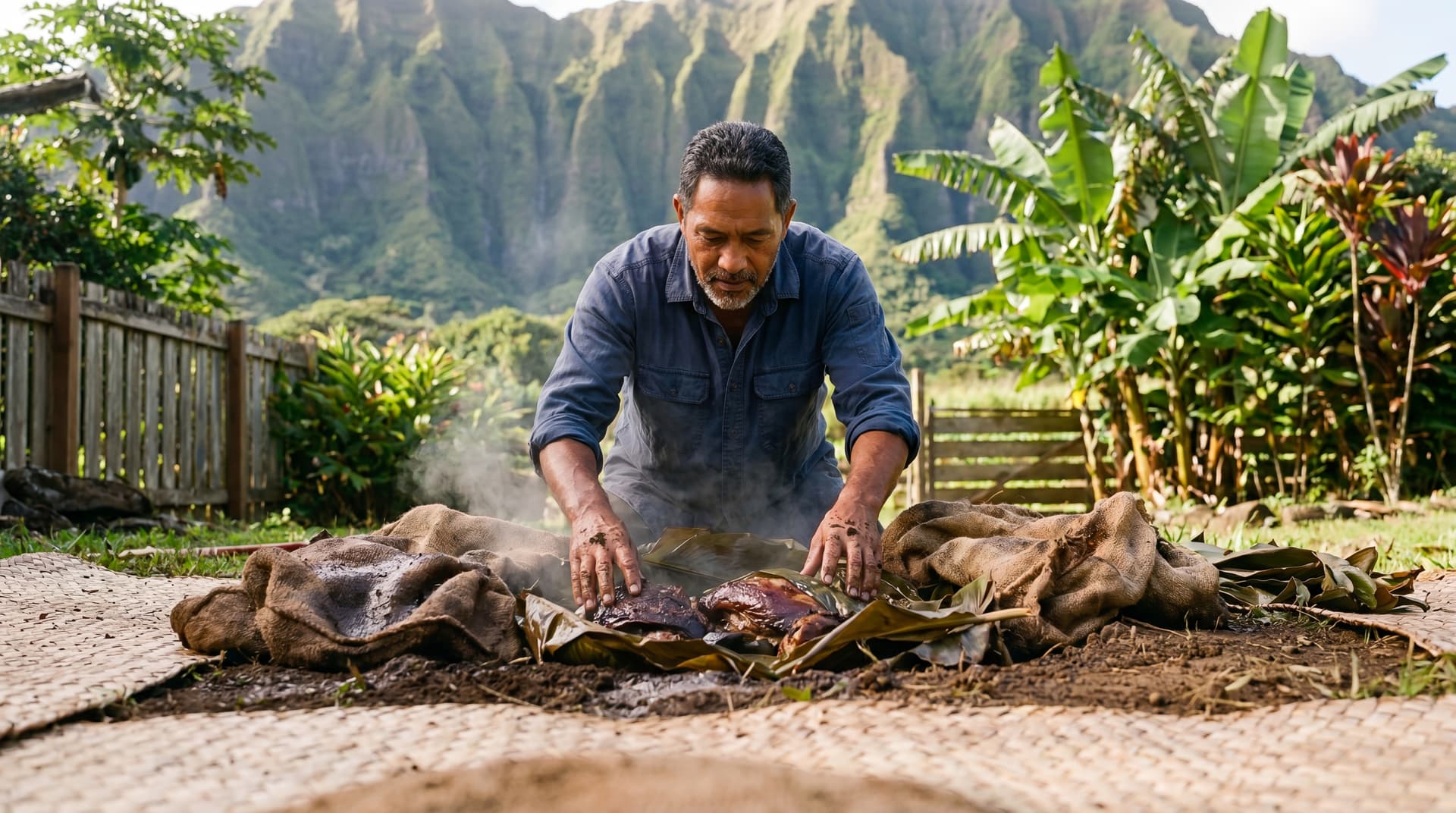
Chef MakoaMakoa
Raised on the Windward Coast
Where the taro is kin and the loʻi is a classroom
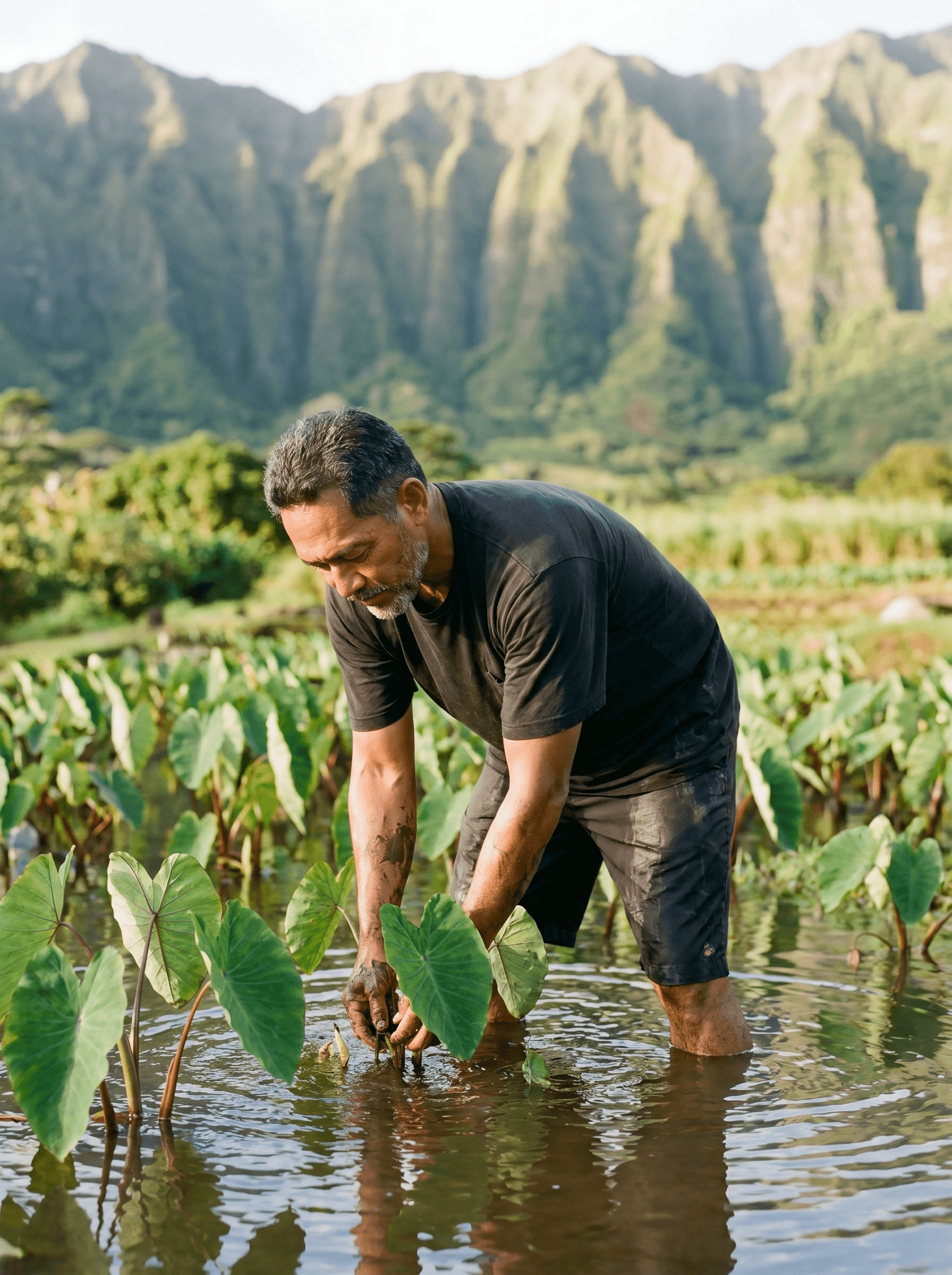
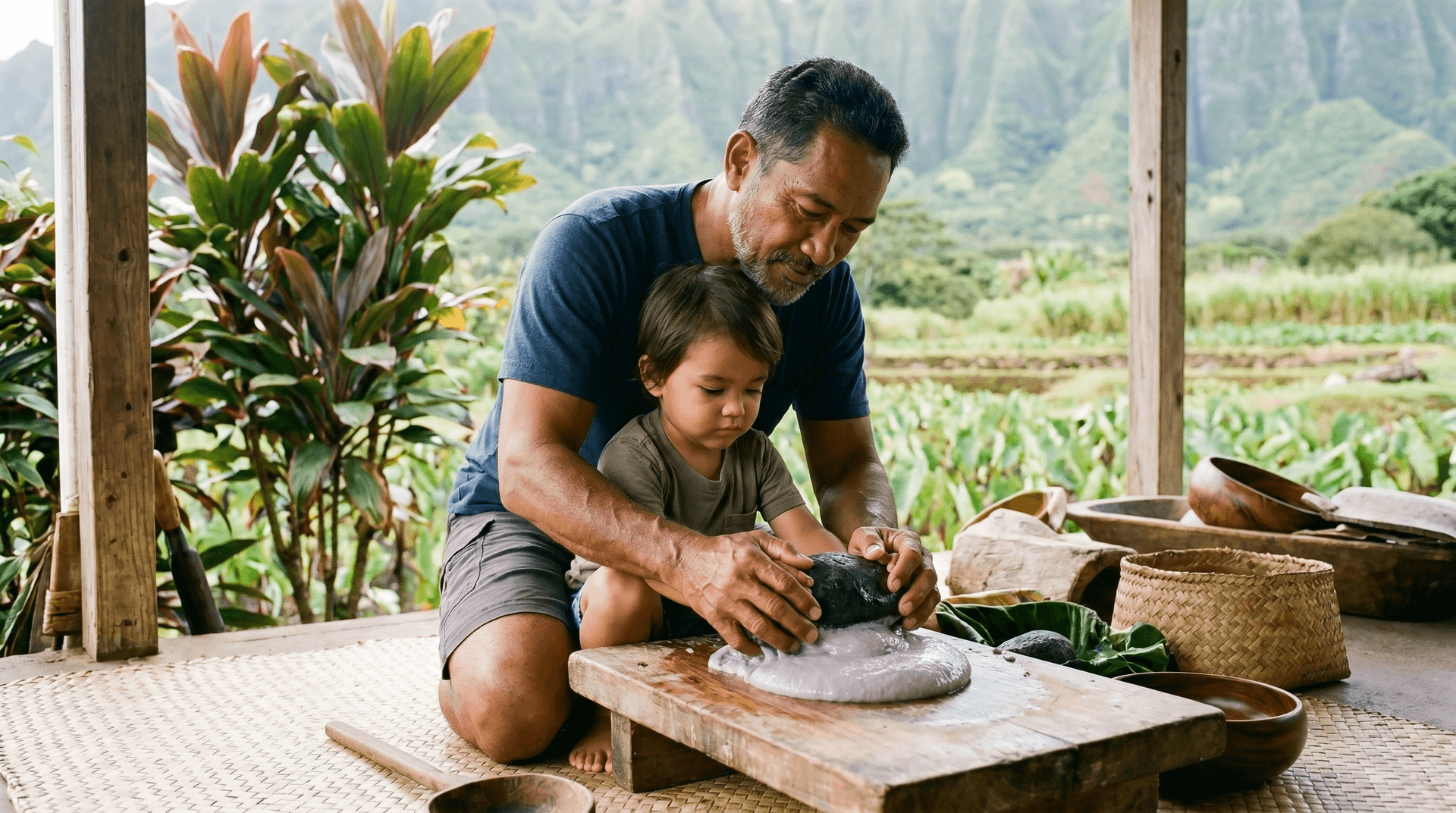
Makoa was raised on the windward coast of Oʻahu, in the ʻahupuaʻa where his ʻohana has worked the land and buried its dead for five generations. This is his home seat, the one island his own hands know from the inside. He learned kalo standing in the family loʻi, the taro patch tended by hands before his, and he knows every variety in it by name, the way you know cousins.
His kumu was Papa Kainoa, an old kalo planter who told him the taro was his elder brother and scolded him, eat what you have, and no blame the taro. To Makoa the kalo is kin: Hāloa, the elder sibling who came before the first of his people and feeds them still from beneath the ground. He cooks the way he would care for family, because that is what the taro is.
He came to his culture late. He grew up proud to be Hawaiian without knowing what that meant, until he heard his language spoken whole and it struck him like a brick wall. He has been walking back ever since, through the loʻi and the pounding stone his grandfather used, into a relationship the empires and the ocean both tried to cut.
The kalo is kin: Hāloa, the elder sibling who came before the first of his people.
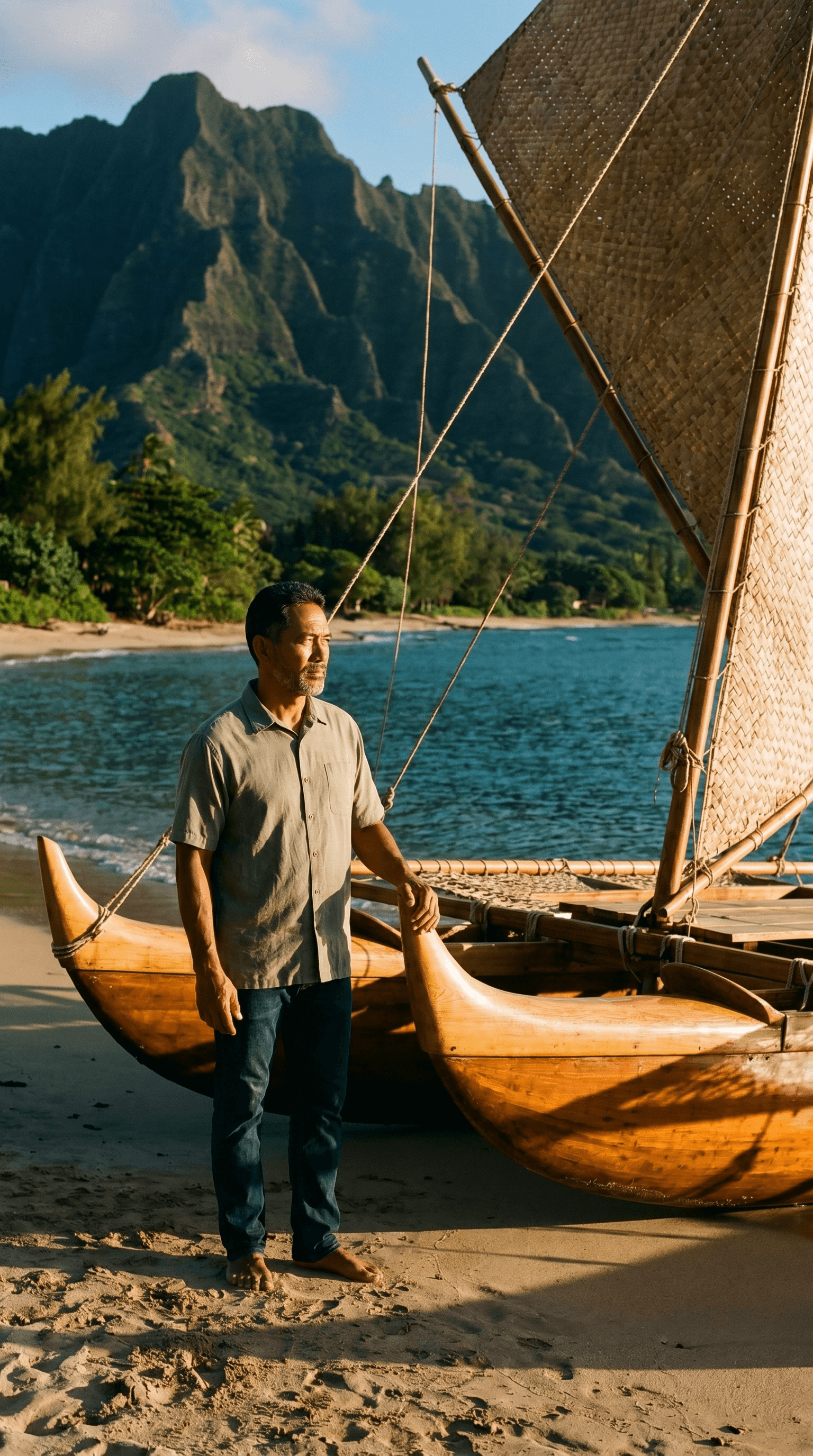
The Canoe That Came Back
When the table got bigger than one island
When the voyaging canoe sailed the old star-paths again in his lifetime, Makoa went looking for the cousins it pointed toward. He sat at the umu of families in Sāmoa and Tahiti and Aotearoa who pulled the same fish from the same ocean and called the taro the same kind of kin. That was the moment the table got bigger than one island.
He had grown up thinking he was Hawaiian and nothing more. Now he saw his people were never just Hawaiian. They were the whole Moana, one family the sea spread thin across the largest ocean on earth but never broke, carrying the same canoe plants in the same hulls to every island they found.
He came home knowing his lane had widened from one coast to a whole Triangle: Sāmoa and Tonga in the west, Tahiti and the Cooks in the east, Aotearoa in the south, Rapa Nui at the far corner, Hawaiʻi at the north point. He has kept that whole table ever since, honoring each island by its own hand and never blurring them into one mush.
That was the moment the table got bigger than one island.
Ready to bring Makoa’s recipes into your kitchen?
Discover Culinary Explorer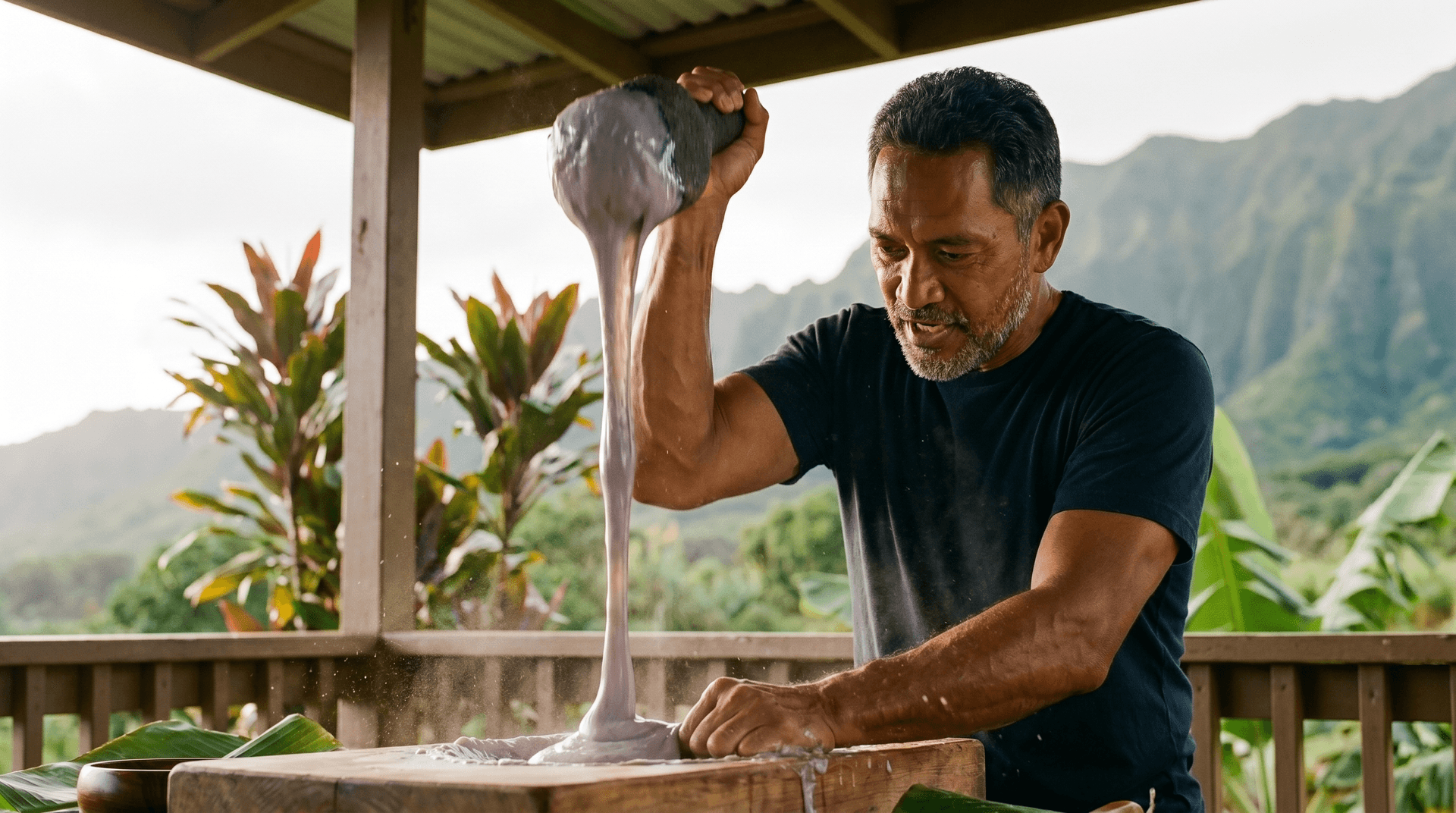
One Ocean, One Canoe, One Root
Feeding a whole people back into themselves
What gets Makoa up is kinship. The taro in the bowl is family, and a family that forgets how to feed itself stops being a family. He cooks so his grandchildren's grandchildren will still taste poi off the stone, and still know they have cousins from Sāmoa to Rapa Nui who pound the same root and open the same oven in the ground.
Winning is not a full house or a clean plate. It is a child who can pound paʻiʻai and name the variety, a loʻi and a taro patch on every island that outlives him, a whole people fed back into themselves. He does not invent dishes. He tends a relationship, and brings the old foodways forward into a kitchen people actually cook in today.
A whole people fed back into themselves.
Makoa's Whole Table
The Earth Oven by All Its Names
Imu in Hawaiʻi, umu in Sāmoa and Tonga, ahimaʻa in Tahiti, hāngī in Aotearoa. One oven, many tongues, cooked for hours as ceremony and never as barbecue
Taro and the Pounded Starch
Kalo, poi, and paʻiʻai pounded at the papa kuʻi ʻai, the wider Polynesian taro and breadfruit pounded into popoi and poʻe. Reading the poi by the finger
Raw Fish in Coconut and Citrus
Oka iʻa in Sāmoa, ʻota ʻika in Tonga, poisson cru in Tahiti, ika mata in the Cooks, poke back home. Same fish, different bowl
The Voyaging Genealogy
The canoe plants, the star-path wayfinding, the one root stock seeded from Sāmoa to Rapa Nui. The migration that carried the whole table, taught as living knowledge
Non-Negotiables
- Name the island before you name the dish. Polynesia is the family, not a flavor. There is no plain 'Polynesian' plate, same as there is no plain 'European' dinner.
- The imu and the umu are a day-long ceremony, not a cookout. Never call the earth oven 'Hawaiian BBQ.'
- Squeeze the coconut cream fresh. That is the whole soul of the western islands' food, and a can is never the same.
- Don't skip the pounding. That is where you sit down with the relative. Some steps you can drop, not that one.
- These foods came down from the kūpuna. Perpetuate them, never claim them. No 'my recipe' for what your ancestors carried.
One ocean, one canoe, one root
The whole Polynesian family in five words. His core conviction.
ʻĀina, kānaka, meaʻai
Land, people, food
The core triad in his home tongue. The cousins keep it too: fanua and aiga in Sāmoa, whenua and whānau in Aotearoa.
No blame the taro. It's not the taro's fault.
His kumu Papa Kainoa's voice. If the poi turns on you, you rushed it. The fault is never the taro's.
E ola mau nā ʻōiwi, e ola mau ka lāhui Moana
Long live the Native peoples, long live the ocean nation
His sign-off, given in his home tongue but saluting the whole family across the Triangle.
Why This Matters
Makoa teaches the way he was taught: hands in the poi, not words on a page. He does not lecture. He puts the work in your hands and lets it do the teaching, and he passes on his kumu's voice, and the voices of the old people across the islands, more than his own. The knowledge was never his. It came down to him.
Aloha comes first, correction second. Learn the why, the kinship and the source and the canoe that carried it, and the how takes care of itself. A little taro is delicious when love is present, his kumu kept that proverb, and every island keeps a cousin of it. He is a keeper, not a gatekeeper, with a place at the table for every cousin and every stranger who sits down.
A little taro is delicious when love is present.
By the Numbers
Pounds paʻiʻai on the same papa kuʻi ʻai his grandfather used, with a pōhaku worn smooth by five generations of hands
Knows every kalo variety in the family loʻi by name, the way you know cousins, and can read fresh poi by the finger
Keeps the earth oven under all its names: imu in Hawaiʻi, umu in Sāmoa, ahimaʻa in Tahiti, umukai in the Cooks, hāngī in Aotearoa
Sat at the umu of cousins in Sāmoa, Tahiti, and Aotearoa when the voyaging canoes sailed the old star-paths again in his lifetime
“One ocean, one canoe, one root”
Start Cooking with Chef Makoa
Discover the foodways of the whole Polynesian Triangle, each island by its own name. Get personalized recipes, learn the deep foods and the everyday ones, and cook with the reverence a relative would teach you.
Discover Culinary ExplorerChef Makoa is a fictional culinary guide to Pan-Polynesian Heritage Cuisine, written with the assistance of AI.