Chef Makoa
ʻOtai (Tongan Watermelon and Coconut Cooler)
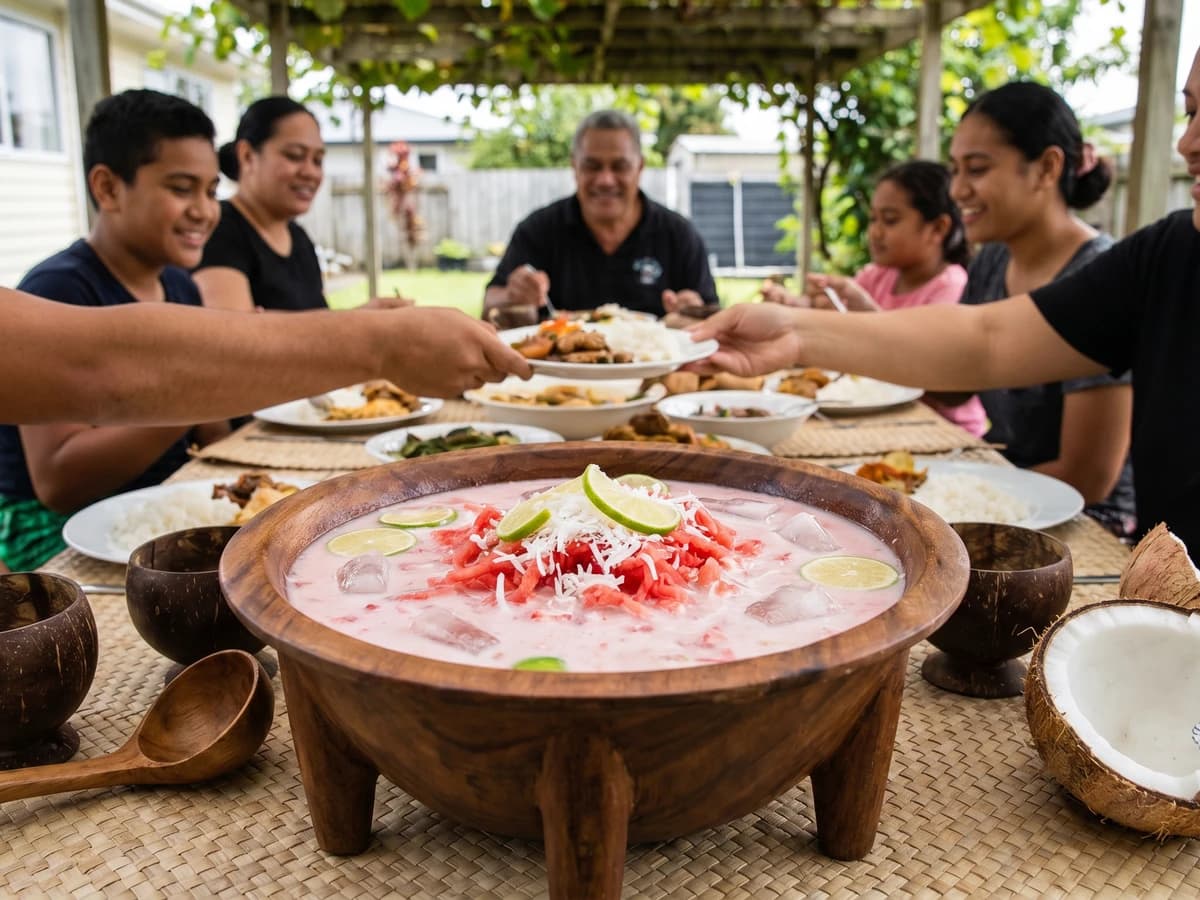
Tonga's ʻotai is grated meleni, watermelon, stirred with fresh lolo, coconut milk, and ice until the whole bowl turns cold, creamy, and ready for one more cousin.
A cooking platform built around craft, culture, and the stories behind what we eat.
Created by
Tonga's ʻotai is watermelon shredded into fresh coconut milk and ice, sweet, cold, and generous, the drink that cools the kāinga when the ʻumu runs hot.
The first time a Tongan auntie handed me ʻotai, she didn't explain it. She just pushed the cup across the table and said, drink, you look hot. That was enough teaching right there. This is Tonga's hand: watermelon grated into coconut milk, sweetened lightly, poured over ice, and set out for the kāinga, the family, when the feast is loud and the day is hotter than your good manners.
I know the deep foods first by the taro, by Hāloa back home, by kalo and talo and the old roots our people carried in the canoe. But the table also needs mercy. When the ʻumu, the Tongan earth oven, runs hot and the lū and the pig and the root crops come out rich, ʻotai cools everybody down without making a big speech about it.
This one is Tongan, and I cook it open-handed, with Tongan grandmothers above me. Across the Triangle the cousins have their own cooling bowls and coconut drinks, the Cook Islands with ika mata on a hot table, Tahiti with fresh coconut by the lagoon, Hawaiʻi with chilled fruit and wai niu, coconut water, after work. Same ocean. Different cup.
Use good watermelon, squeeze the coconut fresh if you can, and don't make it precious. A can of coconut milk will carry you on a weeknight. A little sugar, plenty ice, enough for one more. That's the law of the table.
ʻOtai belongs strongly to Tonga today, especially at feasts, church gatherings, and hot outdoor meals, though older forms across the region used whatever fruit was ready, including mango, vi, pineapple, and grated coconut. The drink shows the living side of Polynesian foodways: canoe crops and coconut at the center, later sugar and ice folded in without shame. It sits beside the ʻumu feast the way raw-fish cousins sit beside each other across the ocean, island by island, named by their own hands.
Quantity
8 cups
grated or finely shredded, juices kept
Quantity
2 cups
or thick canned coconut milk
Quantity
1/2 cup
plus more as needed
Quantity
3 to 5 tablespoons
to taste
Quantity
1 tablespoon
Quantity
3 cups
plus more for serving
| Ingredient | Quantity |
|---|---|
| seedless watermelongrated or finely shredded, juices kept | 8 cups |
| fresh coconut milkor thick canned coconut milk | 2 cups |
| cold waterplus more as needed | 1/2 cup |
| sugarto taste | 3 to 5 tablespoons |
| fresh lime juice (optional) | 1 tablespoon |
| iceplus more for serving | 3 cups |
Set a box grater over a wide bowl and grate the watermelon on the large holes, catching every bit of juice. Don't blend it smooth. ʻOtai wants little soft threads of fruit, the kind you feel on the spoon and drink at the same time.
Pour in the fresh coconut milk and stir until the watermelon turns cloudy pink and creamy. In Tonga, lolo, coconut milk or cream, carries plenty of sweet table foods, from this cold drink to faikakai with its dark coconut caramel. Same coconut, different job.
Add 3 tablespoons sugar, the cold water, and lime juice if you want that small bright edge. Taste before you add more sugar. The watermelon already brought its own sweetness, and the drink should stay light enough to cool you down, not sit heavy.
Stir in the ice just before serving. The texture should be spoonable and drinkable, pale pink with a milky coconut sheen, fruit floating through it, cold enough to settle the table after the ʻumu, the Tongan earth oven, has done its work.
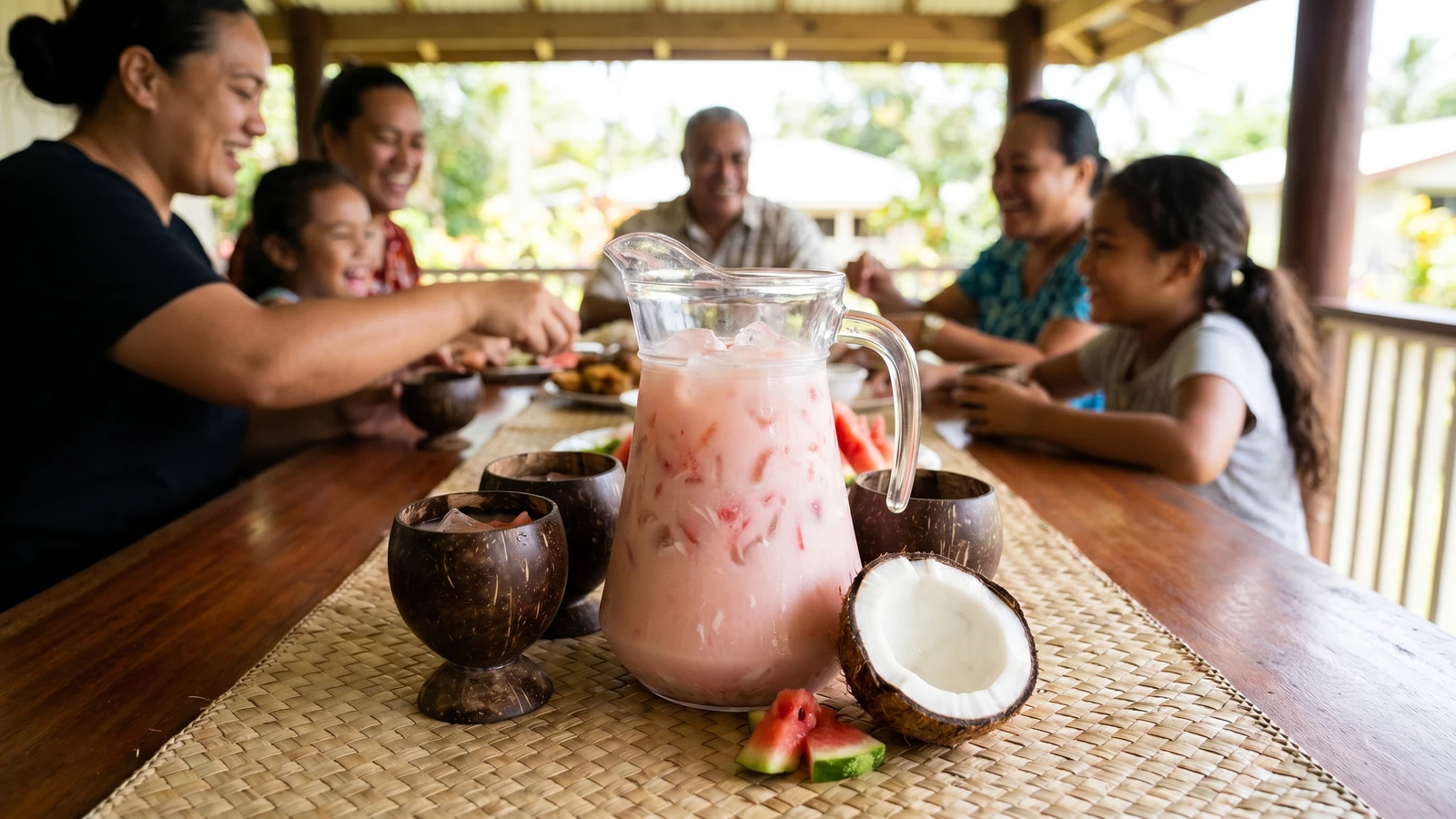
Ladle into cups with a spoon, because the fruit is part of the drink. Keep the pitcher or bowl on the table and let people come back. ʻOtai is not one careful little glass. It belongs to a spread, to cousins and aunties and children running back for more.
1 serving (about 255g)
Culinary guides, cultural storytelling, and the editorial depth that makes cooking meaningful.
Discover Culinary ExplorerChef Makoa
Tonga's ʻotai is grated meleni, watermelon, stirred with fresh lolo, coconut milk, and ice until the whole bowl turns cold, creamy, and ready for one more cousin.
Chef Makoa
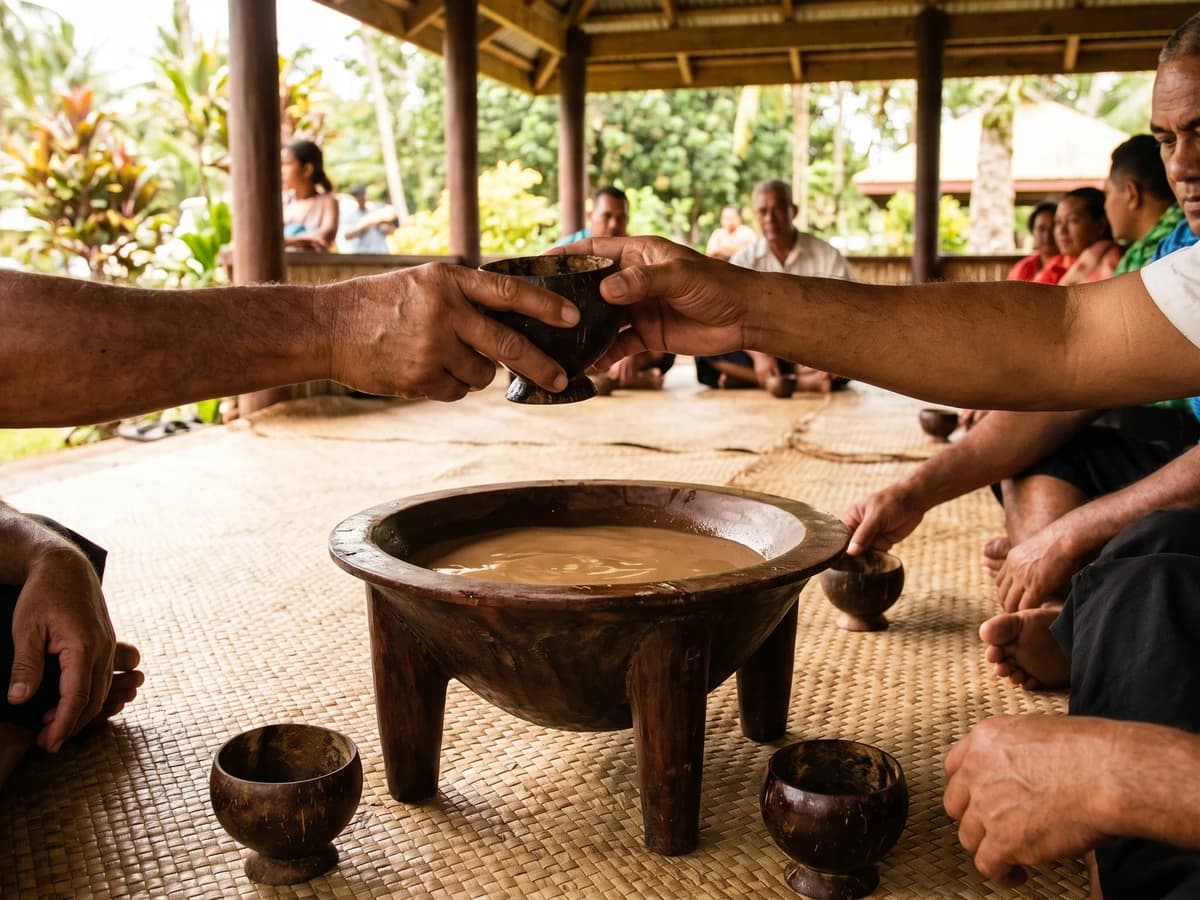
Tonga's Taumafa Kava is the chiefly bowl: cool water kneaded through pounded root, served plain from the carved tānoʻa bowl with rank and care, while faikava, the evening circle, keeps talking.
Chef Makoa
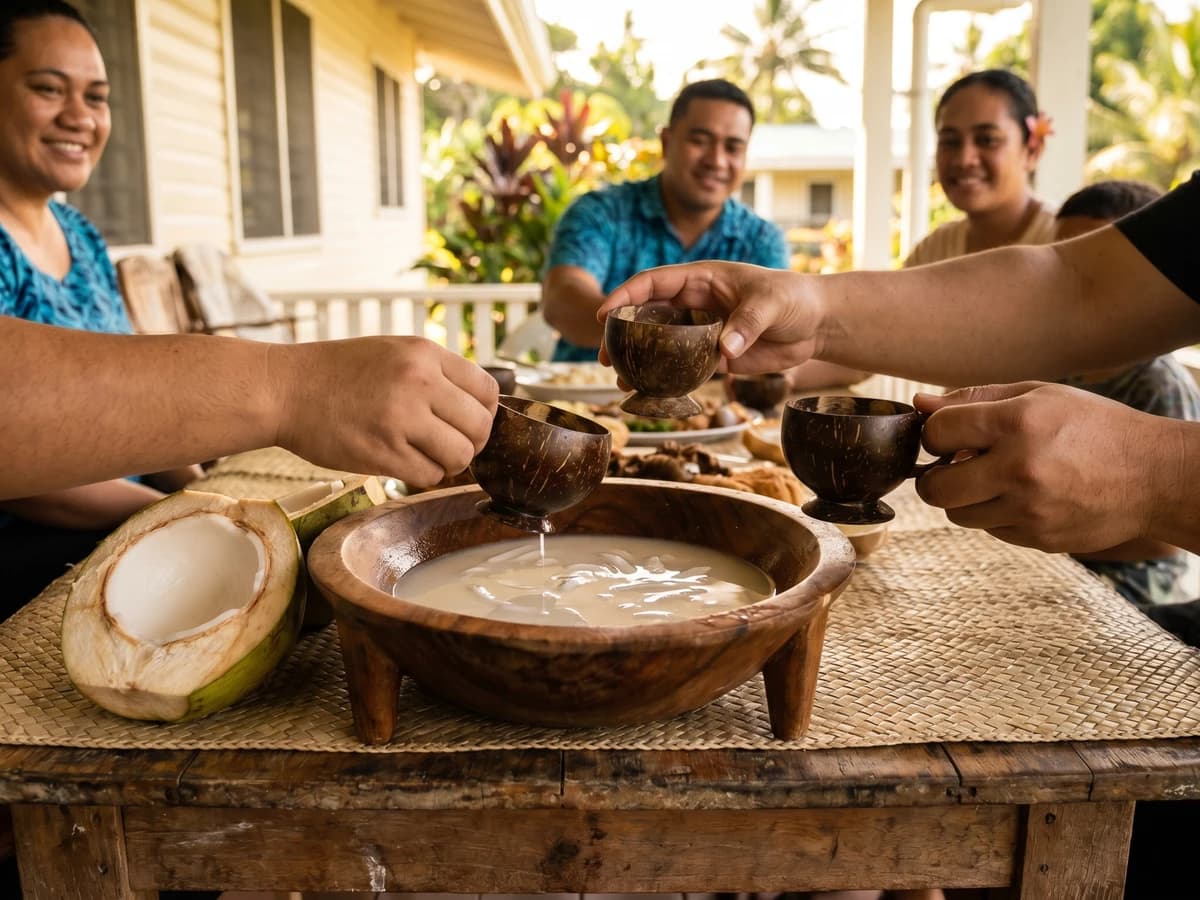
A soft Tongan cup from young coconut, simmered low in its own sweet water until mild and creamy, the kind of drink an auntie sets down when somebody needs care.

Chef Juliette
Bavaroise turns the ribbon stage into a drink: yolks and sugar, boiling tea and milk, and Kirsch whisked into a light crown of foam. Keep the whisk moving, and the café comes home.