
Chef Takumi
Ago Dashi (あごだし, grilled flying fish stock)
Ago dashi is quiet luxury: roasted flying fish, konbu, and patient water. Steep it slowly and you get a clear stock that tastes sweet, clean, and full without heaviness.
A cooking platform built around craft, culture, and the stories behind what we eat.
Created by
Nukazuke looks like kitchen witchcraft until you touch it. It is only rice bran, salt, water, a little patience, and the daily habit that keeps the bed alive.
Acrock of rice bran sitting in the refrigerator can make people nervous. Good. A little respect is useful. But nukazuke is not difficult, only unfamiliar: you make a salted rice-bran bed, teach it to ferment, then bury vegetables in it until they come out crisp, sour, and quietly savory.
The one detail that decides it is touch. Stir the bed once a day, all the way to the bottom, because the friendly lactic bacteria like salt and steady care, while stale pockets invite harsh smells. Your hand tells you what the recipe cannot: it should feel like damp miso, cool and loose, never watery and never dry as sand. If it smells fruity, nutty, and pleasantly sour, you're on the right road.
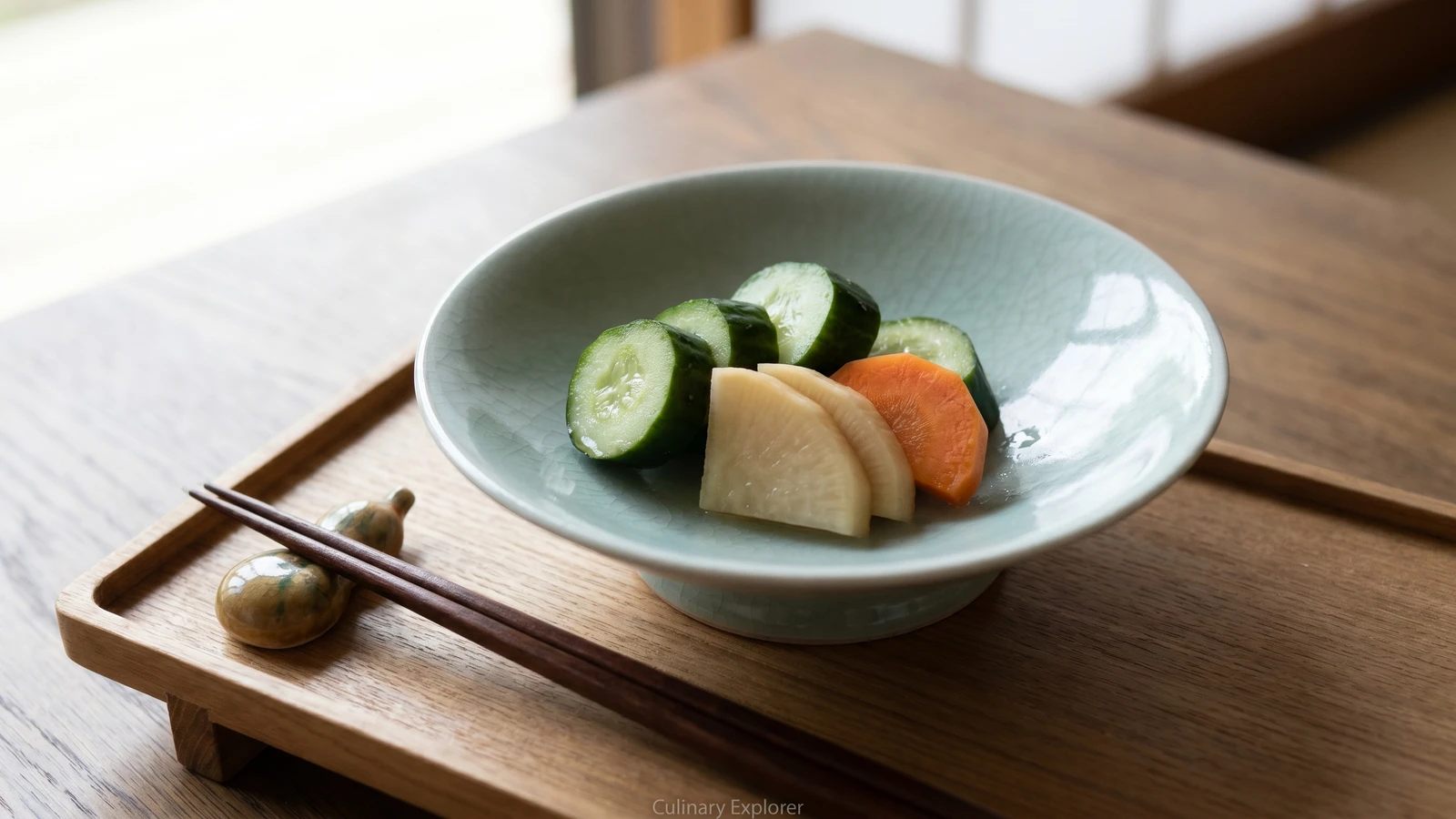
Use vegetables at their shun, at their prime. Small cucumbers pickle in half a day, daikon in a day, carrot a little longer. This is tsukemono, the pickle that sits beside rice and soup, not as decoration but as a small sharp note that wakes the meal. Serve only a few pieces in a small dish and leave it room. A pickle piled like laundry has already lost the argument.
Nukazuke became widespread in the Edo period, when rice polishing produced large amounts of nuka, the bran left after milling, and cooks found that salt, water, and daily handling could turn it into a durable pickling bed. The nukadoko, or rice-bran bed, traditionally lived in an earthenware crock and was often kept for years, with each vegetable feeding the microbial life that flavored the next one. Regional and household differences are large: some beds lean heavily on dried chile and konbu, others on mustard, citrus peel, or the quiet sweetness of well-used bran.
Quantity
500g
Quantity
65g
Quantity
550ml
plus more as needed
Quantity
1 piece, about 8cm square
Quantity
2
seeds removed
Quantity
2 tablespoons
Quantity
1 small piece
sliced
Quantity
1 handful
for seasoning the bed
Quantity
4 small
scrubbed
Quantity
250g
peeled and cut into sticks
Quantity
1
peeled and cut into thick sticks
Quantity
as needed
for rubbing vegetables
| Ingredient | Quantity |
|---|---|
| fresh rice bran (nuka) | 500g |
| sea salt | 65g |
| waterplus more as needed | 550ml |
| konbu (dried kelp) | 1 piece, about 8cm square |
| dried red chilesseeds removed | 2 |
| dried mustard powder (optional) | 2 tablespoons |
| fresh ginger (optional)sliced | 1 small piece |
| cabbage outer leaves or vegetable scrapsfor seasoning the bed | 1 handful |
| Japanese cucumbersscrubbed | 4 small |
| daikonpeeled and cut into sticks | 250g |
| carrotpeeled and cut into thick sticks | 1 |
| extra sea saltfor rubbing vegetables | as needed |
Put the rice bran in a dry wide pan over low heat and stir for 8 to 10 minutes, just until it smells nutty and warm. Do not brown it. Heating drives off rawness and wakes the aroma, but too much color gives the bed a scorched bitterness that will follow every cucumber you bury in it.
Warm the water just enough to dissolve the salt, then let it cool to room temperature. Hot brine would damage the life you are trying to encourage. Salt is not only seasoning here; it keeps the bed hospitable to the right fermentation and discourages the wrong one.
Put the cooled bran in a clean crock, enamel container, or food-safe plastic box. Add the salted water a little at a time and knead with your hand until the mixture feels like damp miso: soft, packable, and loose enough to turn. Mix in the konbu, chiles, mustard powder, and ginger if using. The konbu gives depth, the chile and mustard help keep the bed clean-tasting, and the hand mixing leaves no dry pockets hiding at the bottom.
Bury cabbage leaves or clean vegetable scraps in the bran, press the surface flat, wipe the container rim, and cover loosely. Once a day, remove and discard the scraps, stir the bed from bottom to top, then bury fresh scraps. Do this for 5 to 7 days, until the bed smells pleasantly sour, nutty, and alive. These sacrificial vegetables feed the bed and pull away early harshness, so your first real pickles taste like nukazuke, not salted bran.
Rub cucumbers, daikon, and carrot lightly with salt, then leave them 10 minutes. Wipe away moisture before burying them. This small salting draws out surface water, firms the flesh, and helps the vegetables receive the flavor evenly instead of watering the bed down.
Open the nukadoko, stir it well, and bury the vegetables completely so no surface is exposed to air. Press the bed flat again and cover. In the refrigerator, small cucumbers usually need 8 to 12 hours, daikon 18 to 24 hours, and carrot 24 to 36 hours. At cool room temperature they move faster, but the refrigerator is steadier for a home kitchen.
Pull the vegetables from the bed, scrape off excess bran, and rinse quickly under cool water. Pat dry, trim the ends, and slice into bite-size pieces. Rinsing removes grit, not flavor; the seasoning has already entered the vegetable. Taste one piece before serving, because your bed will have its own pace.
Stir the nukadoko once a day if it lives at room temperature, or every 2 to 3 days in the refrigerator when you are not actively pickling. If it becomes wet, add a spoonful or two of bran and a pinch of salt. If it becomes dry, add a few drops of water. The bed should return to that damp miso feel each time, because texture is the first warning system.
1 serving (about 125g)
Culinary guides, cultural storytelling, and the editorial depth that makes cooking meaningful.
Discover Culinary ExplorerChef Takumi
Ago dashi is quiet luxury: roasted flying fish, konbu, and patient water. Steep it slowly and you get a clear stock that tastes sweet, clean, and full without heaviness.
Chef Takumi
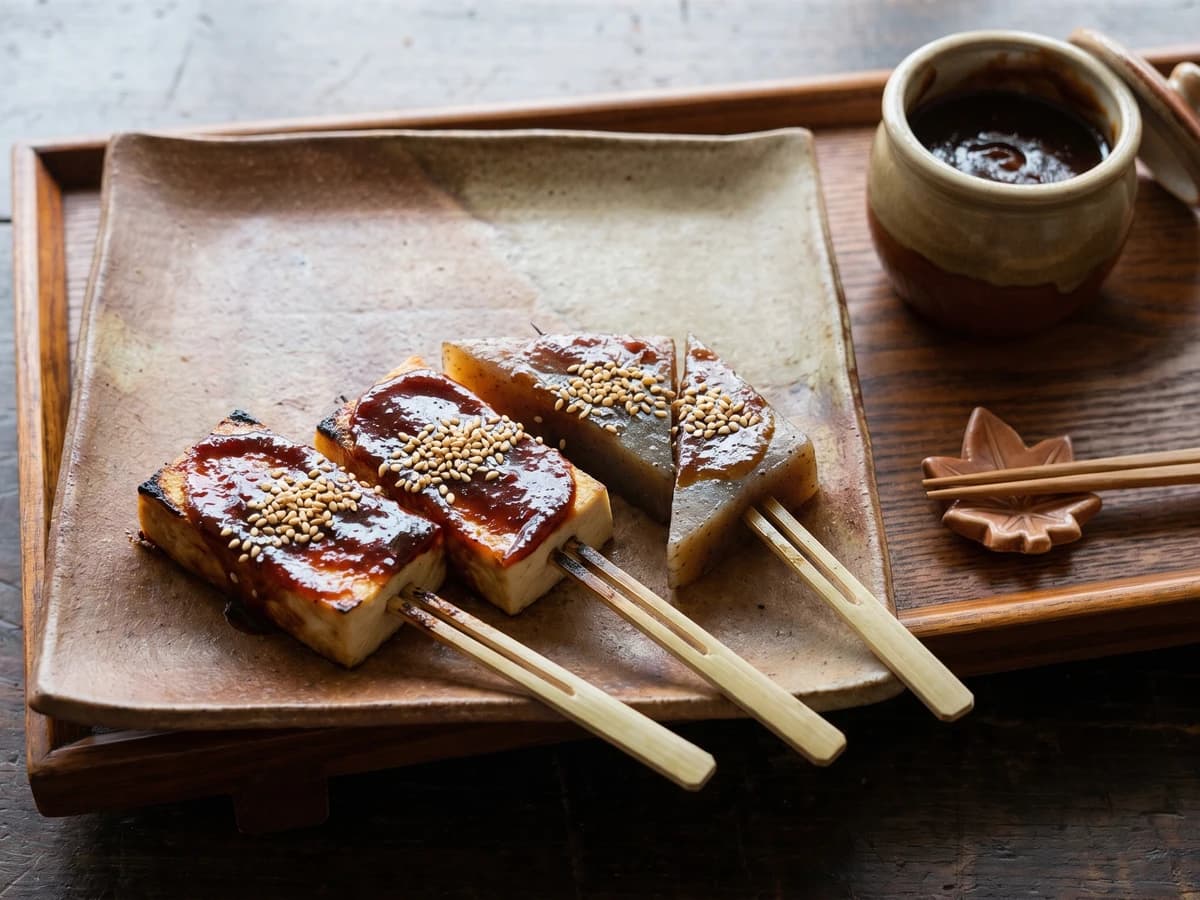
Akamiso dengaku-miso is plain work: bean miso, sweetness, sake, and patient stirring until the glaze turns dark, glossy, and thick enough to cling to the grill.
Chef Takumi
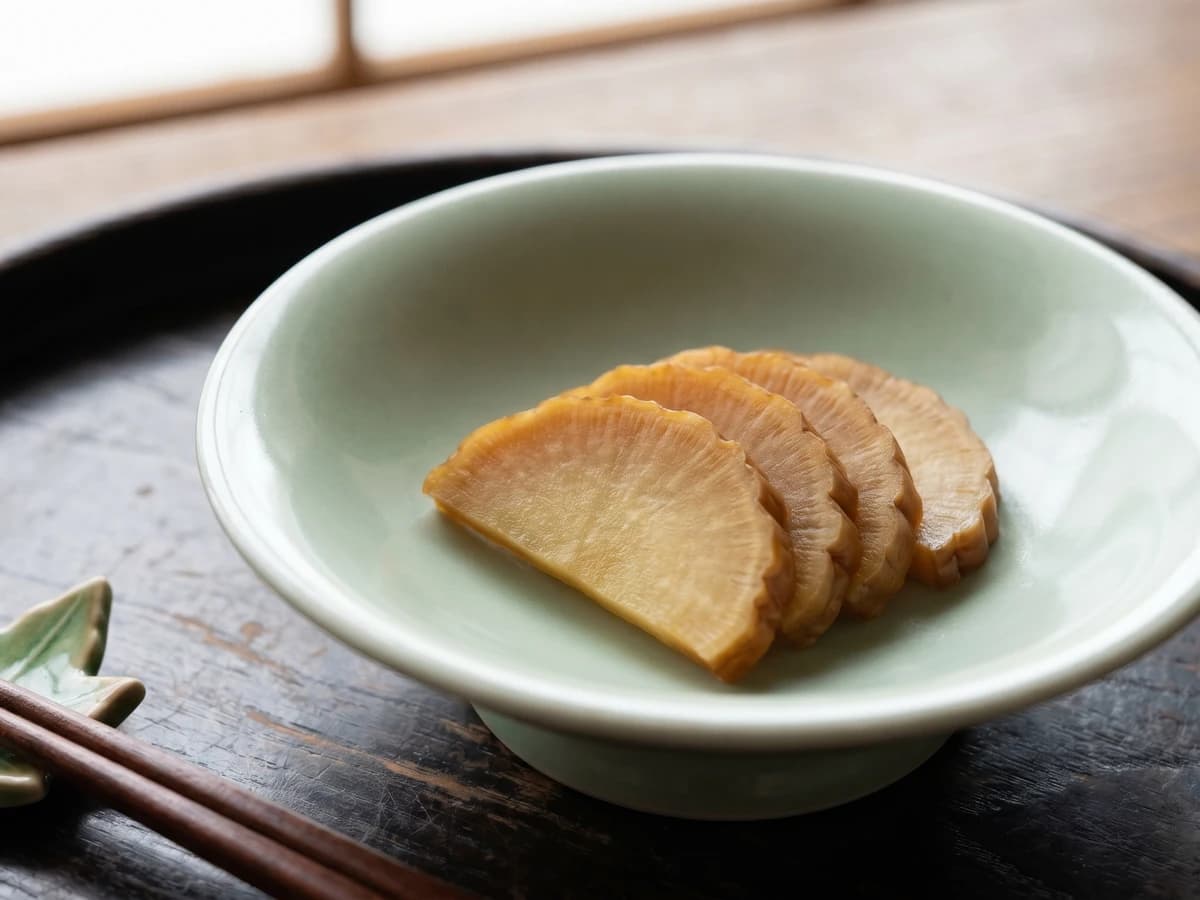
Snow-country takuan begins with smoke. Hang the daikon, dry it gently, then let rice bran, salt, and time turn it into Akita's amber pickle.

Chef Takumi
Aso takanazuke is spring caught in salt: sharp mustard greens pressed until they soften, fermented until their edge turns round, then fried briefly with sesame for rice.