Culinary Explorer

A cooking platform built around craft, culture, and the stories behind what we eat.
Discover Culinary Explorer
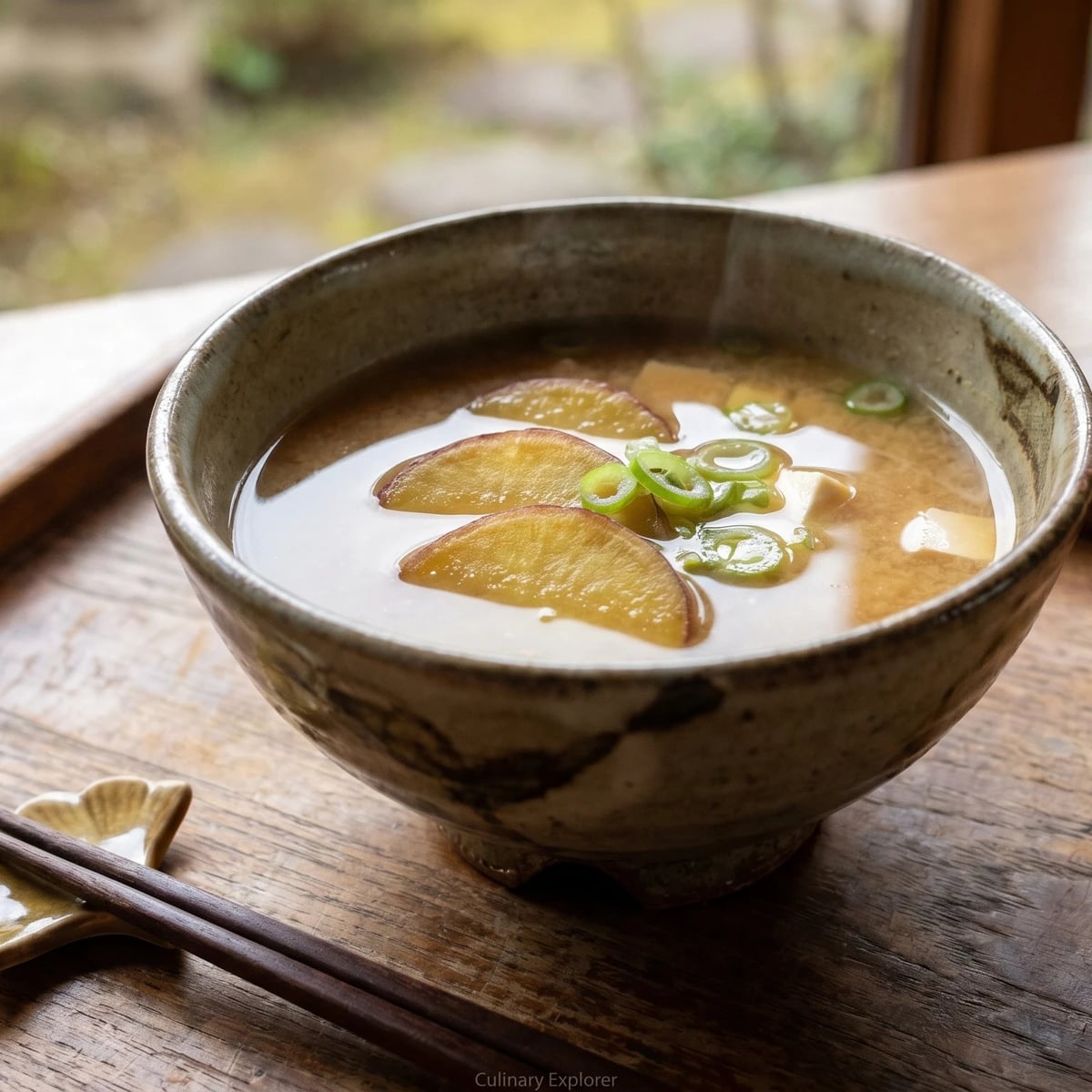
Mugi Miso Soup (麦味噌汁, Kyushu barley-miso soup)

Mugi Miso Soup (麦味噌汁, Kyushu barley-miso soup)

Created by

Barley miso makes a softer, rounder soup than rice miso, with a toasted grain sweetness that belongs especially well to sweet potato and a quiet bowl of rice.

Soups & Stews
Japanese
Weeknight
Comfort Food
Budget Friendly
15 min
Active Time
20 min cook35 min total
Yield4 servings

Mugi miso tells you where it comes from before the spoon reaches your mouth. It has the smell of grain and warm fields, sweeter and earthier than the rice miso many cooks meet first. In Kyushu, that roundness is not decoration. It is the character of the bowl.

This soup is not difficult. The one detail that decides it is heat. Make the dashi clearly, simmer the sweet potato until it gives up a little sweetness, then dissolve the miso off a hard boil. Boil miso and you flatten its aroma, dull its living grain, and turn a gentle soup into a salty one. We don't need drama here. We need attention.

Sweet potato is the clean weeknight path, especially in autumn and winter when it is at its shun, its prime. A little pork belly is also Kyushu-honest if you want a richer bowl, but it should support the mugi miso, not bury it. Nothing hidden, nothing shouted down. Rice, pickles, this soup, and the meal already has its spine.

Mugi miso, made with barley kōji rather than rice kōji, has long been associated with Kyushu, Shikoku, and parts of western Japan where barley was a common field crop. Kyushu versions are often relatively sweet, because a higher proportion of kōji encourages a rounder, grain-forward flavor. The old regional difference matters at the table: the same miso soup changes character from sharp and salty in some eastern styles to mellow and earthy in the south.

The technique, the tradition, and the story behind every dish.

Discover Culinary Explorer

Ingredients

konbu (dried kelp)

Quantity

1 piece (about 8g)

cold water

Quantity

4 1/2 cups

katsuobushi (bonito flakes)

Quantity

20g

Japanese sweet potato

Quantity

250g

scrubbed and cut into 1/2-inch half-moons

firm tofu

Quantity

150g

cut into small cubes

mugi miso (barley miso)

Quantity

3 to 4 tablespoons

scallions

Quantity

2

thinly sliced

thinly sliced pork belly (optional)

Quantity

120g

cut into bite-size pieces

Equipment Needed

  • Medium soup pot
  • Fine-mesh strainer lined with cloth or paper towel
  • Miso koshi (miso strainer), or a small ladle and chopsticks

Instructions

  1. 1

    Steep konbu

    Wipe the konbu with a damp cloth, but don't wash it. The pale powder on the surface is flavor, not dirt. Put it in the cold water and warm it slowly over low heat, about ten minutes, until the water trembles and small bubbles climb the sides of the pot. Lift the konbu out before the water boils, because boiling it can make the dashi bitter and slick.

  2. 2

    Add bonito

    Bring the water to a gentle boil, add the katsuobushi all at once, and take the pot off the heat. Let the flakes settle for two or three minutes without stirring. They give their best aroma quickly, and stirring only muddies the clean taste you have just built.

  3. 3

    Strain dashi

    Strain the dashi through a fine-mesh strainer lined with cloth or paper towel. Let it drip naturally. Don't squeeze the flakes, because squeezing presses out harsher, oily flavors and clouds the stock. You want a clear base so the barley miso can speak plainly.

  4. 4

    Simmer potato

    Return the dashi to the pot and add the sweet potato. If using pork belly, add it now and skim any foam that rises. Simmer gently for 8 to 10 minutes, until the sweet potato is tender when pierced but still holds its shape. A quiet simmer keeps the pieces intact and lets their sweetness enter the broth without breaking them apart.

  5. 5

    Warm tofu

    Add the tofu and warm it for 2 minutes. Keep the broth below a hard boil. Tofu needs only to heat through, and rough boiling chips its edges and makes the soup look careless.

  6. 6

    Dissolve miso

    Turn the heat to low. Put the mugi miso in a small ladle or bowl, loosen it with a little hot dashi, then stir the smooth paste back into the pot. Taste before adding the final spoonful. Miso varies by maker, and barley miso should taste rounded and grain-sweet, not simply salty.

    Never boil the soup after the miso goes in. Heat wakes the aroma, but boiling drives it away.
  7. 7

    Finish bowls

    Ladle the soup into warmed bowls and scatter the sliced scallion on top. Serve at once, with the sweet potato and tofu visible rather than buried. Leave the bowl a little room. Even a weekday soup deserves that much manners.

Chef Tips

  • Choose mugi miso that smells of grain, not only salt. If the shop carries Kyushu or barley kōji miso, start there. The right miso does most of the work.
  • For a meatless table, make the dashi with konbu and dried shiitake instead of katsuobushi: soak 1 piece konbu and 2 dried shiitake in the water overnight, warm gently, then strain. That is honmono in the temple-kitchen line, not a lesser bowl.
  • Add miso in stages. Three tablespoons may be enough for a sweeter Kyushu miso, while a lighter one may need the fourth. Taste decides, not pride.
  • If the sweet potato is old, fibrous, or tired, change the dish. Use daikon, taro, or kabocha in season. Nothing good comes from forcing a poor ingredient to pretend.

Advance Preparation

  • The dashi can be made up to two days ahead and kept refrigerated.
  • For a deeper vegetarian dashi, soak konbu and dried shiitake overnight in the refrigerator before warming and straining.
  • Cut the sweet potato up to four hours ahead and keep it covered in cold water so it does not darken. Drain before simmering.

Frequently Asked Questions

Nutrition Information

1 serving (about 400g)

Calories
305 calories
Total Fat
18 g
Saturated Fat
6 g
Trans Fat
0 g
Unsaturated Fat
11 g
Cholesterol
25 mg
Sodium
700 mg
Total Carbohydrates
25 g
Dietary Fiber
2 g
Sugars
4 g
Protein
9 g

Note: Chef personas and recipes are created with AI assistance. Cook with care: follow safe food-handling practices, check doneness with a thermometer when needed, and adapt for allergies and your kitchen.

Where cooking meets culture.

Culinary guides, cultural storytelling, and the editorial depth that makes cooking meaningful.

Discover Culinary Explorer

More from Miso & Clear Soups

Browse the full collection