
Chef Lesia
Hrechka z Hrybamy (гречка з грибами, mushroom buckwheat)
Buckwheat is the color people mistake for dull until the mushrooms give it their black forest juices, the onion turns sweet, and every grain starts shining with green sunflower oil.
A cooking platform built around craft, culture, and the stories behind what we eat.
Created by
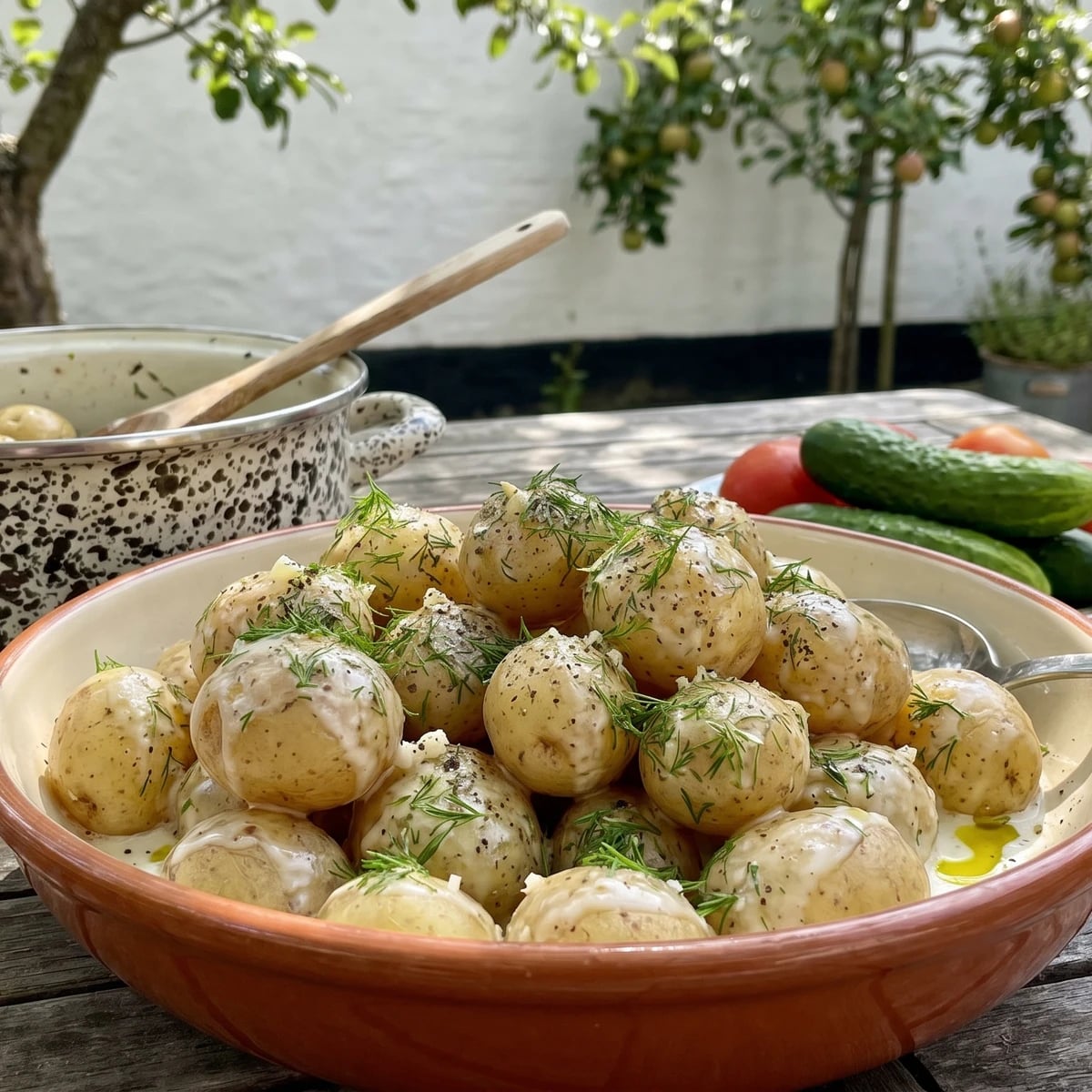
The first potatoes of summer need almost nothing: smetana warmed until glossy, garlic crushed with salt, and enough dill that the bowl looks like it wandered in from the garden.
The first young potatoes don't ask to be peeled; their skins are so thin you can rub them off with a thumb, which is exactly why you leave them alone. Under that papery skin is the taste of damp black soil, hot leaves, and the first proper dig of summer. Add smetana, garlic, and a fistful of dill, and the white sauce goes green at the edges like the garden has leaned over the bowl.
This is litnya kuhnia food, summer kitchen food, the thing that comes to the table with sliced cucumbers, tomatoes still warm from the vine, maybe a plate of salted fish, and somebody's hand already reaching for the serving spoon. Aunt Nadia never gave me quantities for it. She wrote, "young potatoes, don't undress them, dill like rain," which is both useless and perfectly clear once you've cooked them.
The dish has one rule. Warm the smetana with the potatoes, don't boil it as if you're punishing it. Full-fat smetana and the starch clinging to the potatoes make a glossy sauce if you fold gently; hard heat turns it grainy and sad. Listen for the soft knock of potatoes against the pot, smell the garlic lose its raw bite, and stop when the dill blooms. That's enough.
Potatoes reached Ukrainian lands in the eighteenth century and became common in village gardens by the nineteenth, so moloda kartoplia is a younger summer ritual than millet kasha or rye bread but now just as recognizable. In the southern steppe, the first dug potatoes belonged to the litnya kuhnia, boiled whole in skins and dressed with smetana, dill, garlic, cucumbers, and tomatoes before the storage crop ever saw the cellar. Soviet canteens flattened potatoes into anonymous boiled sides; the home dish kept its season, skins, and green smell.
Quantity
1.5kg
scrubbed, skins left on
Quantity
1 tablespoon, plus more to taste
for the cooking water and sauce
Quantity
300g
Quantity
3
crushed to a paste
Quantity
40g
Quantity
1 tablespoon, plus more to finish
Quantity
1 large bunch
tender stems and fronds finely chopped
Quantity
3 to 4 tablespoons
Quantity
to taste
| Ingredient | Quantity |
|---|---|
| small new potatoesscrubbed, skins left on | 1.5kg |
| sea saltfor the cooking water and sauce | 1 tablespoon, plus more to taste |
| full-fat smetana or sour cream | 300g |
| garlic clovescrushed to a paste | 3 |
| butter | 40g |
| unrefined sunflower oil (optional) | 1 tablespoon, plus more to finish |
| dilltender stems and fronds finely chopped | 1 large bunch |
| reserved potato cooking water | 3 to 4 tablespoons |
| freshly ground black pepper | to taste |
Choose potatoes no bigger than a walnut if you can. Rub them under running water with your fingers or a rough cloth; keep the skins, trim only green spots or bruises, and halve the few that are much larger than the rest. Equal size matters more than perfect shape, because they should finish together and stay whole when you fold them through the smetana.
Put the potatoes in a wide pot, cover with cold water by a finger, and salt the water so it tastes plainly seasoned. Bring it up gently, then keep it at a lively simmer, not a furious boil, until a knife slides through the center and the skins look a little wrinkled at the edges. For most small potatoes this is 15 to 20 minutes, but the knife tells the truth. Reserve half a mug of cooking water, then drain.
While the potatoes cook, crush the garlic with a pinch of salt until it goes juicy and sharp. Stir it into the smetana with black pepper and 2 tablespoons of the reserved cooking water, just enough to make it loose and spoonable. Chop the dill finely, including the tender stems; they carry more flavor than people give them credit for.
Return the drained potatoes to the warm pot and set it over the lowest heat. Shake once or twice until the excess water disappears and you hear a dull, dry knock from the potatoes. Add the butter and sunflower oil, then roll the potatoes gently until the skins shine.
Take the pot off the heat and pour in the garlic smetana. Fold with a wooden spoon, adding splashes of reserved cooking water until the sauce loosens and clings to the potatoes in a warm white gloss. Return the pot to the lowest heat only if it needs help warming through; if the smetana bubbles hard, pull it back at once.
Fold in most of the dill off the heat, put the lid on for a minute, and let the smell change from raw garlic to warm garden. Taste for salt and pepper. Serve in a deep bowl with the last dill over the top, a little more sunflower oil if you like, and enough spoons for people who said they only wanted a small helping.
1 serving (about 280g)
Culinary guides, cultural storytelling, and the editorial depth that makes cooking meaningful.
Discover Culinary Explorer
Chef Lesia
Buckwheat is the color people mistake for dull until the mushrooms give it their black forest juices, the onion turns sweet, and every grain starts shining with green sunflower oil.

Chef Lesia
Buckwheat is never grey if you treat it properly: toast it until it smells nutty, then fold it through onions gone sweet and glossy in green sunflower oil.

Chef Lesia
The trick is not the potato, it's the cracked edge: rough wedges roast until golden, then drink garlic, dill, and unrefined sunflower oil while still hot.

Chef Lesia
Flour and warm water sit overnight until the bowl smells like rye bread and orchard fruit, then the batter cooks into a glossy sweet-sour pudding. Almost nobody makes it now. We will.