Chef Lupita
Acúmara Tatemada al Comal
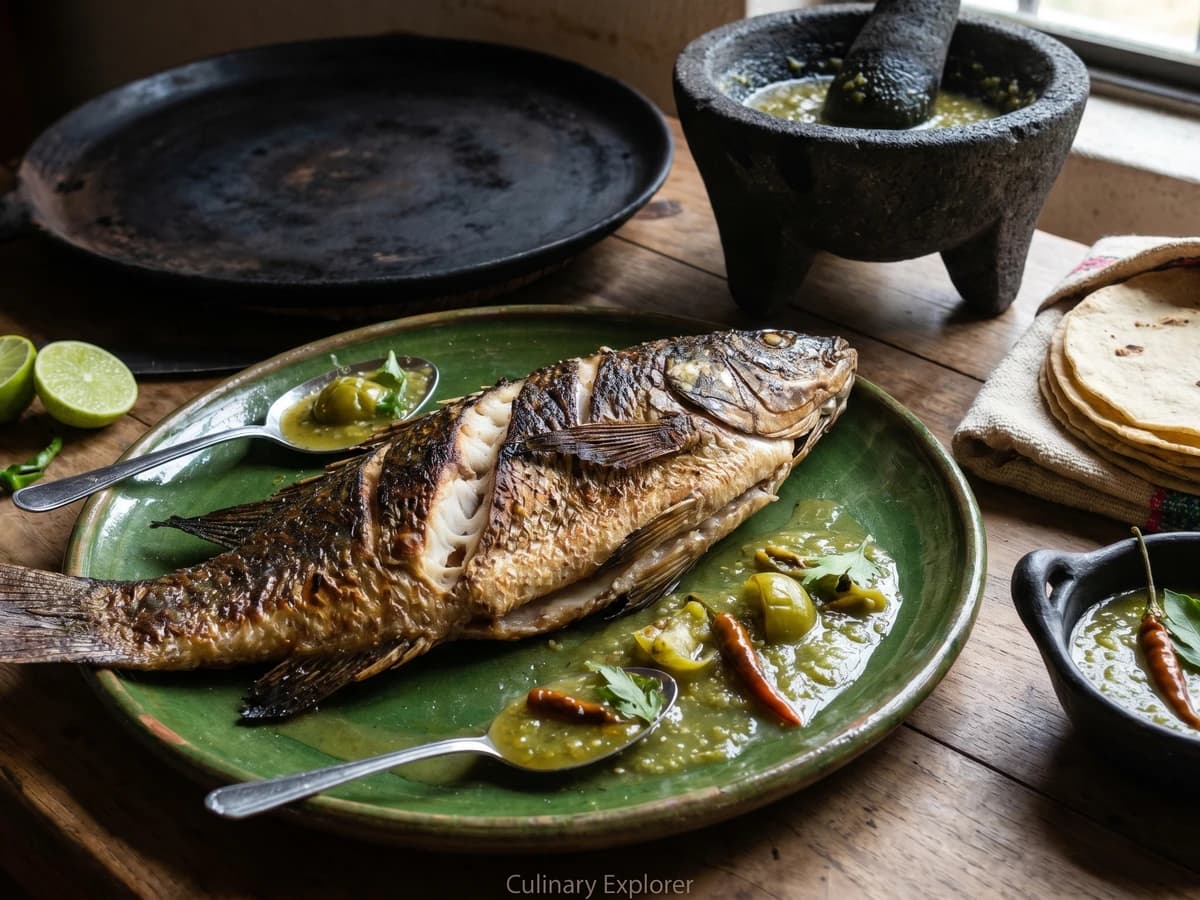
Michoacán's Lake Pátzcuaro acúmara, a whole kurucha from the lago tatemada on a comal de leña and served with chile perón atápakua, corn tortillas, and P'urhépecha discipline.
A cooking platform built around craft, culture, and the stories behind what we eat.
Created by
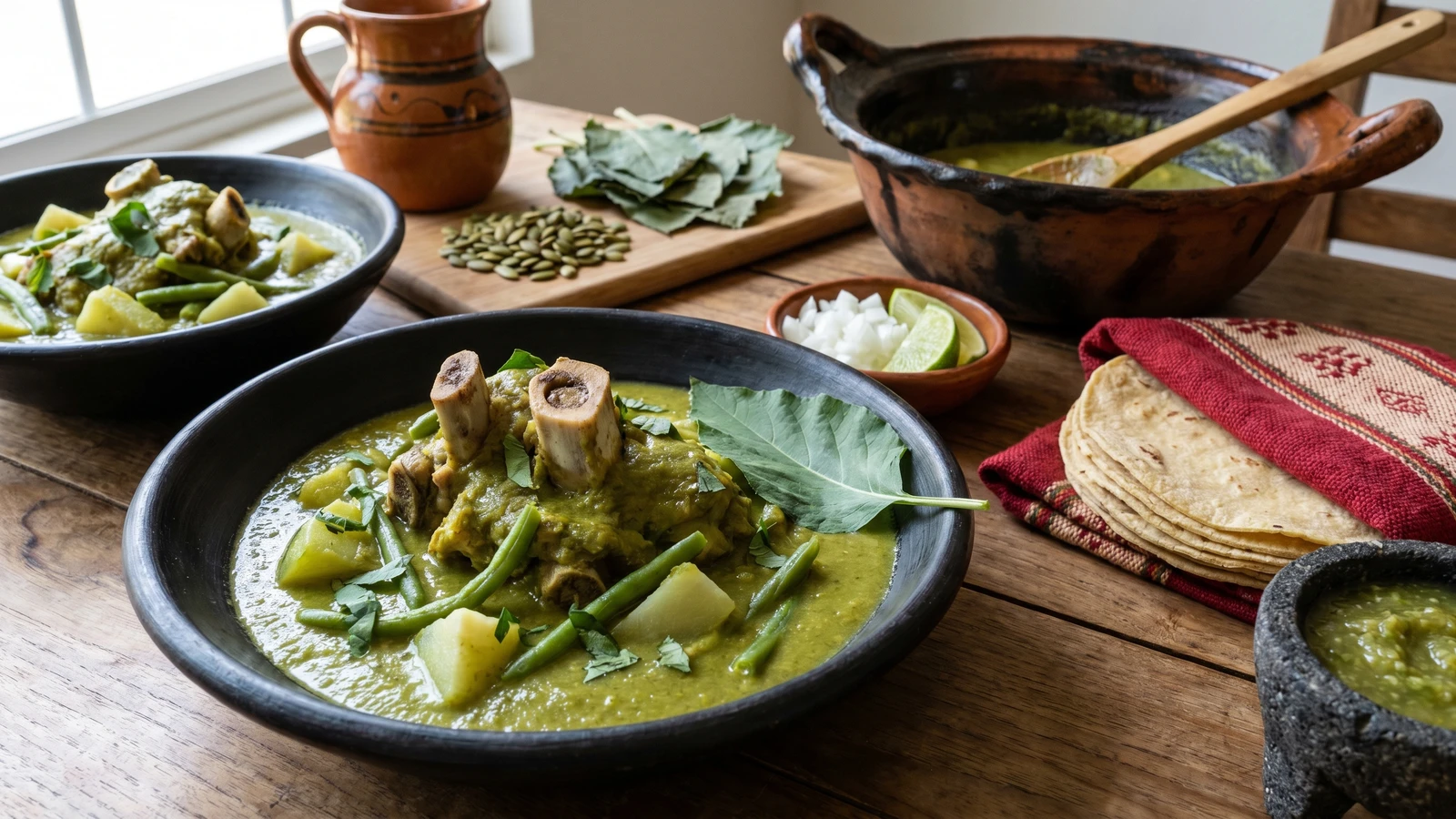
Oaxaca's herbal green mole, built on toasted pepitas, hoja santa, and epazote, simmered with pork spine until the bones release their weight into the bright, vegetal broth.
This is mole verde from Oaxaca. Not the Guerrero version with chicken and pipián, not the Veracruz version with herbs and capers. The Oaxacan one. One of the seven moles, the one that home cooks in the Valles Centrales make on a Tuesday because it is what their kitchen gardens grow.
The ingredient that makes this version Oaxacan is hoja santa. The big, heart-shaped leaf that smells like anise and root beer and grows wild in the Sierra Norte. Without it, you are making green stew. With it, you are making mole verde oaxaqueño. If your market does not carry hoja santa, find a Oaxacan mercado or a serious Mexican grocer. Do not substitute. The leaf is the dish.
The other essential is espinazo de puerco, pork spine. Cada estado, su propia cocina, and Oaxaca uses the cut other places throw away. The bones and the marrow give the broth weight that pork shoulder alone cannot. The shoulder is there for the meat. The spine is there for the soul. I learned this from a senora in Etla who served me mole verde at a baptism and told me that any cook who skips the espinazo is making a different dish and should call it that.
The technique is straightforward but demands attention. Toast the pepitas without browning them. Cook the tomatillos before blending. Fry the green puree in lard until the fat breaks. Thicken with masa, not flour. Each of these steps is the recipe. Recetas probadas y garantizadas, and only when you respect the chain.
Mole verde is one of the seven moles classically attributed to Oaxaca, codified in the 20th century alongside negro, rojo, coloradito, amarillo, chichilo, and manchamanteles. Unlike the long-cooked, chile-based moles, mole verde belongs to an older pre-Columbian lineage of pepián and pipián sauces thickened with toasted seeds and brightened with the herb gardens that surrounded Mesoamerican households; the seeds, the tomatillo, and the masa are entirely indigenous, and the dish would have been recognizable in form to a cook in the Zapotec valleys five hundred years before the conquest. Hoja santa, called acuyo in some regions and tlanepa in Nahuatl, has been documented in Oaxacan cookery since the earliest colonial-era recipe records and remains the herb most strongly associated with the state's green sauces.
Quantity
3 pounds
cut into 2-inch sections
Quantity
1 pound
cut into 2-inch chunks
Quantity
1 medium plus 1/2 cup chopped
halved for the broth, the rest roughly chopped for the salsa
Quantity
1 plus 4 cloves
head halved crosswise for the broth, 4 cloves reserved for the salsa
Quantity
2
Quantity
1 tablespoon, plus more to taste
Quantity
1 1/2 pounds
husked and rinsed
Quantity
4
stemmed
Quantity
2
stemmed
Quantity
1 cup
Quantity
2 large
central rib removed, torn into pieces
Quantity
1 large bunch
leaves and tender stems
Quantity
1 small bunch
leaves and tender stems
Quantity
1 small bunch
leaves and tender stems
Quantity
6 large
washed
Quantity
1/2 cup
mixed with 1 cup cold water until smooth
Quantity
3 tablespoons
Quantity
1 pound
trimmed and cut into 2-inch pieces
Quantity
1 pound
peeled and cut into 1-inch chunks
Quantity
for serving
Quantity
for serving
Quantity
for serving
| Ingredient | Quantity |
|---|---|
| pork spine (espinazo de puerco)cut into 2-inch sections | 3 pounds |
| pork shouldercut into 2-inch chunks | 1 pound |
| white onionhalved for the broth, the rest roughly chopped for the salsa | 1 medium plus 1/2 cup chopped |
| head of garlichead halved crosswise for the broth, 4 cloves reserved for the salsa | 1 plus 4 cloves |
| bay leaves | 2 |
| kosher salt | 1 tablespoon, plus more to taste |
| fresh tomatilloshusked and rinsed | 1 1/2 pounds |
| fresh chile jalapeñostemmed | 4 |
| fresh chile serranostemmed | 2 |
| raw hulled pepitas (pumpkin seeds) | 1 cup |
| hoja santa leavescentral rib removed, torn into pieces | 2 large |
| fresh epazoteleaves and tender stems | 1 large bunch |
| fresh cilantroleaves and tender stems | 1 small bunch |
| flat-leaf parsleyleaves and tender stems | 1 small bunch |
| radish leaveswashed | 6 large |
| masa harinamixed with 1 cup cold water until smooth | 1/2 cup |
| manteca de cerdo (pork lard) | 3 tablespoons |
| fresh ejotes (green beans)trimmed and cut into 2-inch pieces | 1 pound |
| chayotepeeled and cut into 1-inch chunks | 1 pound |
| hand-pressed corn tortillas (optional) | for serving |
| lime wedges (optional) | for serving |
| diced white onion (optional) | for serving |
Place the espinazo and pork shoulder in a heavy 8-quart pot. Cover with cold water by three inches. Add the halved onion, the halved head of garlic, the bay leaves, and the salt. Bring to a gentle simmer over medium heat and skim the gray foam that rises in the first twenty minutes. Cold water draws the flavor out of the bones slowly. The espinazo is the cut that gives this mole its weight, so do not rush it.
Lower the heat until the broth shows lazy bubbles every few seconds. Cover partially and cook for one hour and thirty minutes. The meat should pull from the spine easily but still hold together. Lift the pork out with a slotted spoon and set it aside. Strain the broth through a fine-mesh sieve and reserve every drop. You will need about 8 cups. If you have less, add water to make up the difference.
Heat a dry comal or heavy skillet over medium-low. Add the pepitas in a single layer. Stir constantly. They will start to puff and pop within three to four minutes and turn pale gold. Pull them off the heat the moment they smell nutty and before they brown. Burned pepitas turn the mole bitter and there is no recovering from it later. Spread them on a plate to cool.
In a saucepan, cover the tomatillos, jalapeños, serranos, the chopped onion, and the 4 garlic cloves with water. Bring to a simmer and cook for eight to ten minutes, until the tomatillos turn from bright green to a duller olive-green and feel soft when pressed. Drain, but reserve a cup of the cooking liquid. Cooked tomatillos give this mole its body and a clean acidity. Raw tomatillos would make it sharp in the wrong way.
Place the cooked tomatillos, chiles, onion, and garlic in a high-powered blender. Add the toasted pepitas, the hoja santa, half the epazote, all the cilantro, parsley, and the radish leaves. Pour in 2 cups of the reserved pork broth. Blend on high for at least two full minutes, until completely smooth and a vivid jade green. Work in batches if your blender is small. The texture should be like a thick smoothie. If it struggles, add more broth a quarter cup at a time.
In a wide cazuela or heavy 6-quart pot, melt the manteca over medium-high heat until it shimmers. Pour the green puree in all at once. It will sputter and hiss. Stir constantly with a wooden spoon for eight to ten minutes. The puree will darken slightly, deepen in flavor, and the fat will start to break at the edges. La manteca es el sabor. This is the step that takes a vegetable juice and turns it into a mole.
Whisk the masa harina slurry one more time to make sure it is smooth, then pour it slowly into the simmering mole, stirring as you go. Add 4 more cups of the reserved pork broth. The masa is what gives mole verde its silky body, the way it clings to the back of a spoon. Without it, you have a brothy soup. With it, you have mole. Cook at a gentle simmer for ten minutes, stirring often so the masa does not stick to the bottom.
Return the cooked espinazo and pork shoulder to the pot. Add the ejotes and chayote. Tear the remaining epazote leaves and stir them in. Simmer uncovered for twenty to twenty-five minutes, until the green beans are tender but still bright and the chayote yields easily to a knife. Taste and adjust salt now. The mole should taste herbal, faintly sour, and deeply pork. If it tastes flat, more salt. If it tastes thin, simmer five more minutes.
Pull the pot off the heat and let it rest, covered, for ten minutes. The mole settles, the masa finishes thickening, and the herbs marry the broth. Ladle into deep bowls, making sure each one gets a piece of espinazo, some shoulder, ejotes, and chayote. Serve with hand-pressed corn tortillas, lime wedges, and diced raw white onion at the table. Asi se hace y punto.
1 serving (about 500g)
Culinary guides, cultural storytelling, and the editorial depth that makes cooking meaningful.
Discover Culinary ExplorerChef Lupita
Michoacán's Lake Pátzcuaro acúmara, a whole kurucha from the lago tatemada on a comal de leña and served with chile perón atápakua, corn tortillas, and P'urhépecha discipline.

Chef Lupita
Puebla's weekday adobo of pork shoulder braised in a thick guajillo and ancho sauce sharpened with vinegar, cumin, and clove. The deep red of a market spice stall, the dish a poblana cooks without thinking.

Chef Lupita
Loreto's pit-roasted clams, planted hinge-up in beach sand and tatemadas under a fast fire of dried romerillo brush, the resinous Baja desert shrub that gives this dish its smoke.

Chef Lupita
Oaxaca's eighth mole, the silky, almond-and-cinnamon almendrado, served over poached chicken. Mild, sweet, restrained, and a quiet rebuttal to anyone who thinks Mexican food has to be hot to be Mexican.