Chef Lupita
Acúmara Tatemada al Comal
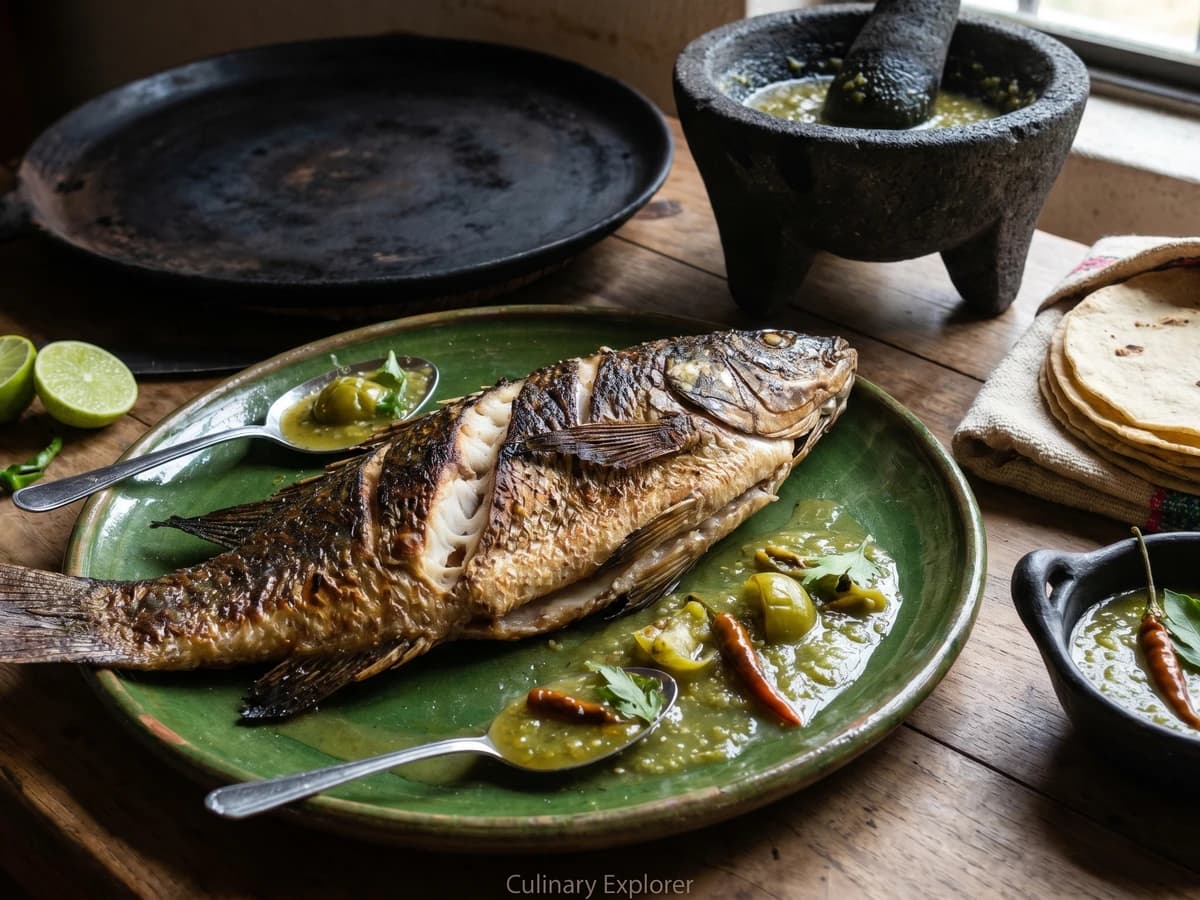
Michoacán's Lake Pátzcuaro acúmara, a whole kurucha from the lago tatemada on a comal de leña and served with chile perón atápakua, corn tortillas, and P'urhépecha discipline.
A cooking platform built around craft, culture, and the stories behind what we eat.

Created by
Puebla's weekday adobo of pork shoulder braised in a thick guajillo and ancho sauce sharpened with vinegar, cumin, and clove. The deep red of a market spice stall, the dish a poblana cooks without thinking.
This is from Puebla. Not the Puebla of chiles en nogada and mole poblano, the festival dishes, the photographs. The other Puebla. The weekday Puebla. The pot that a poblana cook puts on the stove on a Tuesday afternoon because there is pork shoulder in the refrigerator and a fistful of dried chiles in the basket above the comal.
Adobo means vinegar. That is the whole word, before anything else. The Spanish brought the technique of preserving meat in vinegar and spice, and Puebla's cooks took it and gave it chile guajillo and chile ancho, a little chile pasilla for depth, cumin and clove and canela from the spice trade that flowed through the city for three centuries. What came out is a thick, brick-red sauce that is not a mole, not a salsa, not a stew. It is an adobo, and it is its own thing. Cada estado, su propia cocina.
The technique is simple, the discipline is everything. Toast the chiles without burning them. Soak them in hot water, not boiling, or the skins turn bitter. Strain the sauce, no exceptions. Fry the paste in lard until it darkens and the fat breaks. These steps are not suggestions. They are the recipe. Skip one and you have a thin red sauce with pork in it. Do them right and you have adobo.
My mother had a page for adobo in her notebook, written in her hand, the margins crowded with arrows pointing to a single underlined word: vinagre. She was from Jalisco but she had a cousin from San Martin Texmelucan who taught her this version, and she made it on the days she did not have time for anything bigger. Saber cocinar es saber vivir, and adobo is one of the dishes that proves it.
The word adobo comes from the Spanish verb adobar, meaning to marinate or pickle, a preservation technique brought to Mexico by Iberian colonists in the 16th century and adapted in Puebla through the convergence of pre-Columbian chile cultivation with the spice trade that flowed through the city from the port of Veracruz. Puebla's geographic position as the inland staging ground for goods moving from the Pacific port of Acapulco (via the Nao de China) to the Atlantic at Veracruz made it one of the most spice-rich cities in colonial New Spain, which is why Poblano cuisine carries more clove, cinnamon, and black pepper than the cooking of states without that trade history. Adobo de puerco specifically emerged as a domestic, daily-cooking dish in contrast to the festival cuisine of mole poblano and chiles en nogada, and it remains one of the most common pots on weeknight stoves across the state.
Quantity
3 pounds
cut into 2-inch chunks
Quantity
1 tablespoon
Quantity
1 medium
halved; one half whole for broth, one half thinly sliced for sauce
Quantity
1
halved crosswise
Quantity
4
for the adobo paste
Quantity
2
Quantity
8
stemmed and seeded
Quantity
6
stemmed and seeded
Quantity
2
stemmed and seeded
Quantity
1 teaspoon
Quantity
1 teaspoon
Quantity
4
Quantity
1 stick (about 2 inches)
Quantity
1 teaspoon
Quantity
1/4 cup
Quantity
3 tablespoons
Quantity
2 medium
charred on a comal
Quantity
1 tablespoon
grated (or dark brown sugar)
Quantity
to taste
Quantity
for serving
warmed
Quantity
for serving
Quantity
for serving
Quantity
for serving
| Ingredient | Quantity |
|---|---|
| bone-in pork shouldercut into 2-inch chunks | 3 pounds |
| kosher salt | 1 tablespoon |
| white onionhalved; one half whole for broth, one half thinly sliced for sauce | 1 medium |
| head of garlichalved crosswise | 1 |
| garlic clovesfor the adobo paste | 4 |
| bay leaves | 2 |
| dried chile guajillostemmed and seeded | 8 |
| dried chile anchostemmed and seeded | 6 |
| dried chile pasillastemmed and seeded | 2 |
| whole cumin seed | 1 teaspoon |
| black peppercorns | 1 teaspoon |
| whole cloves | 4 |
| Mexican canela | 1 stick (about 2 inches) |
| dried Mexican oregano | 1 teaspoon |
| apple cider vinegar or vinagre de pina | 1/4 cup |
| manteca de cerdo (pork lard) | 3 tablespoons |
| Roma tomatoescharred on a comal | 2 medium |
| piloncillograted (or dark brown sugar) | 1 tablespoon |
| kosher salt | to taste |
| hand-pressed corn tortillas (optional)warmed | for serving |
| white rice (optional) | for serving |
| pickled red onion (optional) | for serving |
| lime wedges (optional) | for serving |
Place the pork shoulder in a heavy pot. Cover with cold water by one inch. Add the salt, the whole half onion, the halved head of garlic, and the bay leaves. Bring to a gentle simmer over medium heat and skim the gray foam that rises in the first ten minutes. Cook partially covered for 45 minutes, until the meat is tender but not yet falling apart. Reserve two cups of the cooking liquid. This broth is half the sauce.
Heat a dry comal or heavy skillet over medium. Toast the guajillo, ancho, and pasilla chiles one variety at a time, about 20 to 30 seconds per side. They should puff and turn fragrant. The pasilla is thin and burns the fastest, watch it. The kitchen should smell like the chile aisle of a Puebla mercado, deep and a little smoky. Burned chile is bitter chile and there is no recovering from it later.
Move the toasted chiles to a heatproof bowl and cover with hot tap water. Hot, not boiling. Press a plate on top to keep them submerged and let them soften for 20 minutes. While they soak, return the comal to medium-low heat. Toast the cumin, peppercorns, cloves, and canela for about 30 seconds, just until you smell them. Tip them onto a plate to stop the cooking. On the same comal, char the tomatoes whole until the skins blacken in patches and the flesh gives when pressed.
Drain the chiles and put them in the blender. Add the four raw garlic cloves, the charred tomatoes, the toasted spices, the oregano, the vinegar, the piloncillo, and one cup of the reserved pork broth. Blend on high until completely smooth, two full minutes. The paste should be the color of brick after rain, thick enough to coat a spoon. Pass it through a fine-mesh strainer into a bowl, pressing on the solids with a wooden spoon. Discard the skins. Strain it. No me vengas con atajos. Unstrained adobo is gritty adobo.
Melt the lard in a wide cazuela or heavy pot over medium heat. Add the sliced half onion and cook until softened and just translucent, about three minutes. Pour in the strained adobo. It will sputter and spit, stand back. Cook for eight to ten minutes, stirring almost constantly with a wooden spoon, until the paste darkens from bright red to deep brick red and the lard breaks out of the sauce in little pools around the edges. La manteca es el sabor. This step is what separates a serious adobo from a raw one.
Add the pre-simmered pork to the cazuela, along with the second cup of reserved broth. Stir to coat every piece. The sauce should be thick but still loose enough to bubble. Lower the heat to a gentle simmer, partially cover, and cook for 45 minutes to one hour, stirring every ten minutes so the bottom does not scorch. The adobo will thicken and cling to the meat. When it is ready, a wooden spoon dragged through the bottom of the pot leaves a clean trail for two seconds before the sauce closes back over it. Taste for salt now. The chile absorbs salt over time, so the sauce needs to be assertive.
Pull the cazuela off the heat and let it sit, covered, for ten minutes. The sauce settles, the pork drinks it back in, and the flavor evens out. Serve in shallow bowls over white rice with warm corn tortillas, pickled red onion, and lime on the side. The tortilla is the spoon. Use it. Recetas probadas y garantizadas.
1 serving (about 380g)
Culinary guides, cultural storytelling, and the editorial depth that makes cooking meaningful.
Discover Culinary ExplorerChef Lupita
Michoacán's Lake Pátzcuaro acúmara, a whole kurucha from the lago tatemada on a comal de leña and served with chile perón atápakua, corn tortillas, and P'urhépecha discipline.

Chef Lupita
Loreto's pit-roasted clams, planted hinge-up in beach sand and tatemadas under a fast fire of dried romerillo brush, the resinous Baja desert shrub that gives this dish its smoke.

Chef Lupita
Oaxaca's eighth mole, the silky, almond-and-cinnamon almendrado, served over poached chicken. Mild, sweet, restrained, and a quiet rebuttal to anyone who thinks Mexican food has to be hot to be Mexican.

Chef Lupita
Guanajuato's Apaseo el Grande carnitas, pork shoulder and skin cooked slowly in manteca de cerdo with orange, salt, and milk, then torn and crisped on the comal for celebration tacos.