Chef Lupita
Acúmara Tatemada al Comal
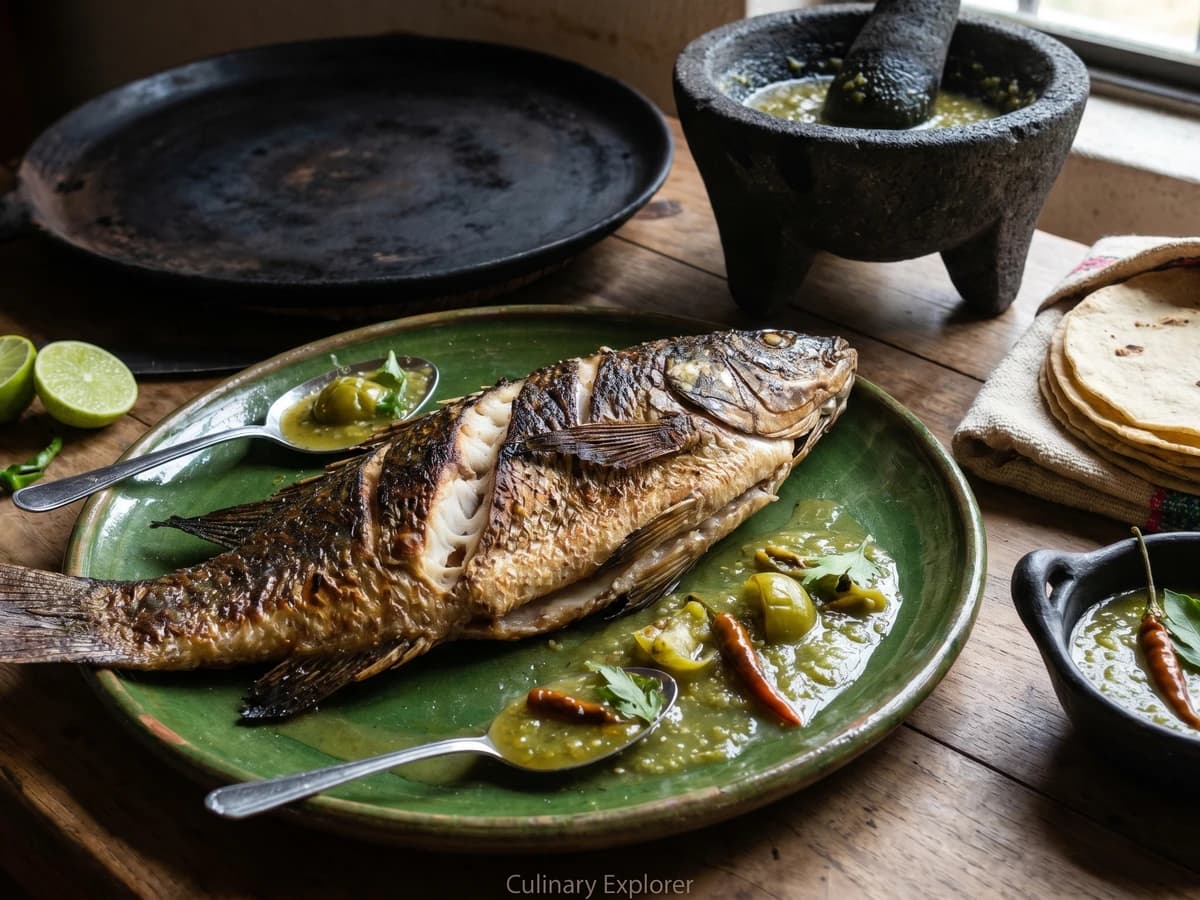
Michoacán's Lake Pátzcuaro acúmara, a whole kurucha from the lago tatemada on a comal de leña and served with chile perón atápakua, corn tortillas, and P'urhépecha discipline.
A cooking platform built around craft, culture, and the stories behind what we eat.
Created by
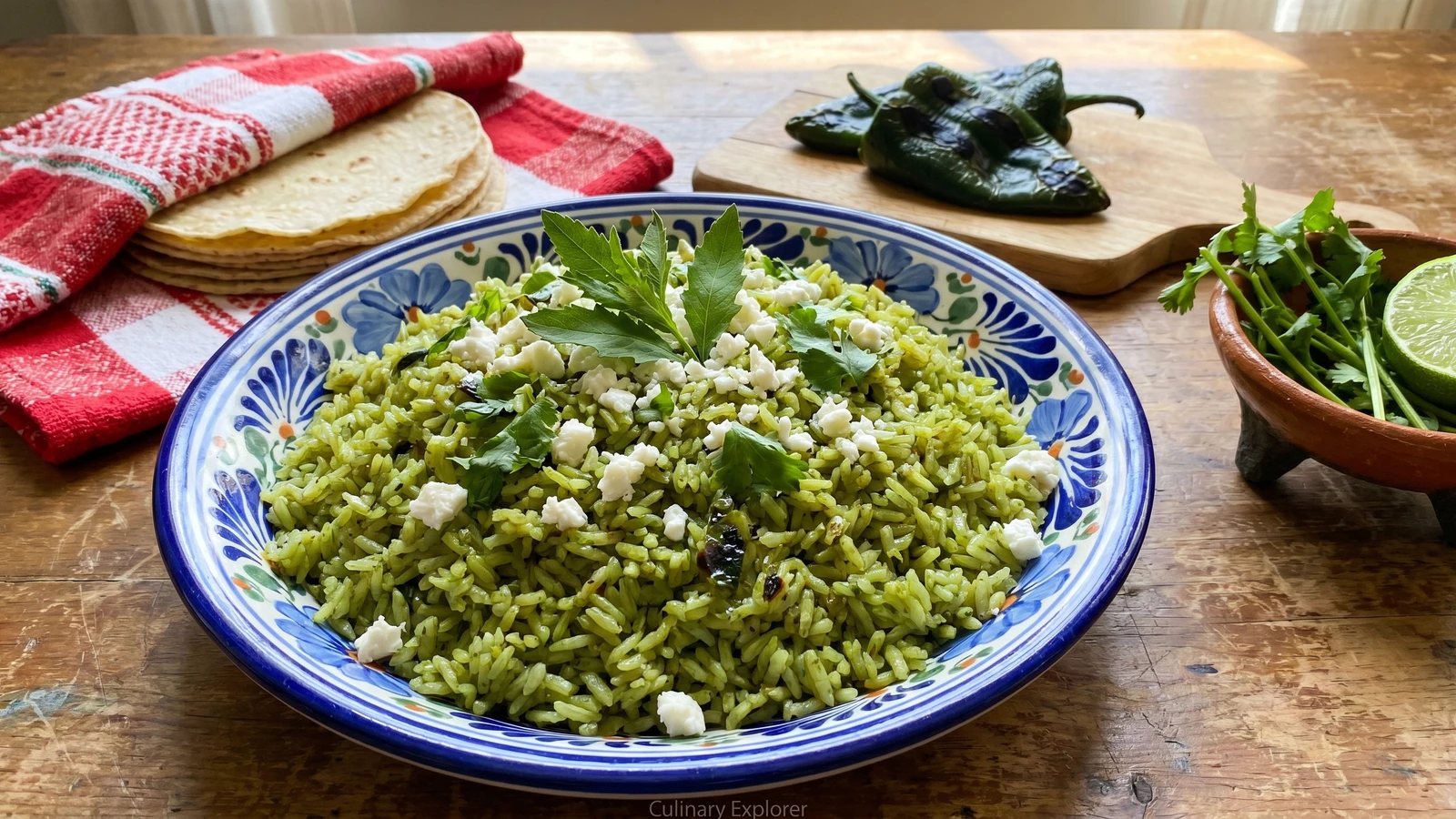
Puebla's green rice, long grains toasted in lard then cooked in a vivid puree of charred chile poblano, cilantro, and parsley. A side that eats like a main with a fried egg on top.
This is Puebla. Not Mexico in general, not arroz a la mexicana with its tomato and peas you find on every fonda counter from Tijuana to Mérida. This is the green rice of Puebla, built on the chile that the state itself is named for: the poblano, blistered on a flame until the skin chars black and the flesh underneath turns smoky and soft.
The technique is the same technique that governs every serious Mexican rice. You rinse. You dry. You toast in fat until the grains turn the color of pale bone. You add the liquid hot, never cold, so the boil never breaks. You cover and walk away. You do not stir. Stirring is for risotto. Mexican rice is grain by grain, and the only way to get there is to leave the pot alone.
What makes this version poblana is what goes into the cooking liquid. Roasted poblano, cilantro, parsley, garlic, onion, all blended into a puree so green it stains the rice the color of new growth. You fry the puree into the toasted grains before you add the broth. That step, the sofrito moment, is where the chile concentrates and the rice takes on its color. Skip it and you have pale rice with green flecks. Do it right and every grain carries the flavor of charred poblano from edge to center.
My mother's notebook has a page titled simply 'arroz verde, Puebla.' Below it, in pencil: 'tres chiles, no dos. y manteca, no aceite.' Three chiles, not two. And lard, not oil. She copied it from a señora at a wedding in Cholula in 1979 and she never made it any other way. Saber cocinar es saber vivir.
The chile poblano takes its name from the city of Puebla, where it has been cultivated since pre-Columbian times in the volcanic soils of the surrounding valleys. The technique of building a rice dish around a green chile and herb puree, rather than the more common tomato-based arroz rojo, is regional to Puebla and Tlaxcala and reflects the central importance of the poblano in those states' culinary identity. Rice itself arrived in Mexico through Spanish colonial trade routes in the 16th century, brought from Asia via the Manila galleons that docked at Acapulco, and was adopted into Mexican cooking through the same sofrito principle the Spanish had inherited from the Moors: fry the aromatics in fat first, then add the grain, then add the liquid.
Quantity
2 cups
Quantity
3
Quantity
1 cup, packed
Quantity
1/2 cup, packed
Quantity
1/2 medium, plus 1/4 onion left whole
half roughly chopped for the puree, quarter left whole for the pot
Quantity
3
peeled
Quantity
3 cups, warm
or water with 1 teaspoon salt
Quantity
2 tablespoons
Quantity
1 sprig
Quantity
1 1/2 teaspoons, plus more to taste
Quantity
1/2 cup
thawed
Quantity
for serving
Quantity
for serving
| Ingredient | Quantity |
|---|---|
| long-grain white rice | 2 cups |
| fresh chile poblano | 3 |
| fresh cilantro leaves and tender stems | 1 cup, packed |
| fresh flat-leaf parsley leaves | 1/2 cup, packed |
| white onionhalf roughly chopped for the puree, quarter left whole for the pot | 1/2 medium, plus 1/4 onion left whole |
| garlic clovespeeled | 3 |
| chicken brothor water with 1 teaspoon salt | 3 cups, warm |
| pork lard (manteca de cerdo) | 2 tablespoons |
| fresh epazote | 1 sprig |
| kosher salt | 1 1/2 teaspoons, plus more to taste |
| frozen peas (optional)thawed | 1/2 cup |
| crumbled queso fresco (optional) | for serving |
| lime wedges (optional) | for serving |
Place the rice in a bowl, cover with cool water, and swirl with your hand. The water will turn cloudy. Drain and repeat two or three times until the water runs nearly clear. Drain the rice in a fine-mesh sieve and let it sit for at least 10 minutes to dry. Wet rice will not toast properly and you will end up with a sticky pot. Mexican rice is grain by grain. Así se hace y punto.
Set the poblanos directly on the flame of a gas burner or under a hot broiler. Turn them with tongs as the skin blisters and chars on every side. This takes about eight minutes total. You want black skin, not gray, and the flesh underneath should be soft. Move them to a bowl and cover with a plate or a kitchen towel for 10 minutes. The trapped warmth loosens the skin.
Rub the blistered skin off with your fingers or the back of a knife. Do not rinse them under the tap. Water carries away the smoky oils you just worked to build. A few stubborn black flecks left on the flesh are fine, they belong there. Pull off the stems, slit each chile open, and scrape out the seeds and the white veins. Tear the flesh into rough pieces.
In a blender, combine the torn poblano, cilantro, parsley, the half onion (roughly chopped), garlic, and one cup of the warm broth. Blend on high until completely smooth and vivid green. You should have about two and a half cups of puree. If it is thicker than heavy cream, add a splash more broth. This is the cooking liquid for the rice, not a sauce, so it needs to pour.
Melt the lard in a heavy 3-quart pot or a wide cazuela over medium heat. La manteca es el sabor, even here. When the lard shimmers, add the dry rice and the whole onion quarter. Stir constantly with a wooden spoon for four to five minutes. The grains will turn from translucent to opaque white, then to a pale ivory with a few golden tips. You will smell something like toasted nuts. That is the signal. Skip this step and you have steamed rice, not arroz.
Pour the green puree directly into the hot pot. It will sputter and seize. Stir for one full minute, letting the puree fry and darken slightly against the toasted rice. The kitchen should smell like roasted chile and toasted grain. Now add the remaining two cups of warm broth, the epazote sprig, and the salt. Stir once to settle the rice in an even layer. Do not stir again.
Bring the pot to a gentle simmer, then lower the heat to the lowest setting your stove will hold. Cover tightly with a well-fitting lid. Cook for 18 to 20 minutes. Do not lift the lid. Do not stir. You are trusting the steam to do its work. If you want to add the peas, scatter them across the top during the last five minutes and re-cover immediately.
Pull the pot off the heat, still covered, and let it sit untouched for 10 minutes. This is not optional. The grains finish absorbing the moisture and firm up in the residual heat. Lift the lid only at the end. Fluff with a fork from the edges inward, lifting rather than stirring. Pull out the epazote sprig and the whole onion quarter, they have done their job. Taste for salt.
Mound the rice in a clay cazuela or a wide talavera dish. Scatter crumbled queso fresco across the top and set lime wedges at the side. It eats as a side to chiles en nogada, mole poblano, or tinga, but in a poblana kitchen it is often the center of the table with a fried egg laid on top and a spoonful of frijoles refritos beside it. Recetas probadas y garantizadas.
1 serving (about 250g)
Culinary guides, cultural storytelling, and the editorial depth that makes cooking meaningful.
Discover Culinary ExplorerChef Lupita
Michoacán's Lake Pátzcuaro acúmara, a whole kurucha from the lago tatemada on a comal de leña and served with chile perón atápakua, corn tortillas, and P'urhépecha discipline.

Chef Lupita
Puebla's weekday adobo of pork shoulder braised in a thick guajillo and ancho sauce sharpened with vinegar, cumin, and clove. The deep red of a market spice stall, the dish a poblana cooks without thinking.

Chef Lupita
Loreto's pit-roasted clams, planted hinge-up in beach sand and tatemadas under a fast fire of dried romerillo brush, the resinous Baja desert shrub that gives this dish its smoke.

Chef Lupita
Oaxaca's eighth mole, the silky, almond-and-cinnamon almendrado, served over poached chicken. Mild, sweet, restrained, and a quiet rebuttal to anyone who thinks Mexican food has to be hot to be Mexican.