Chef Lupita
Acúmara Tatemada al Comal
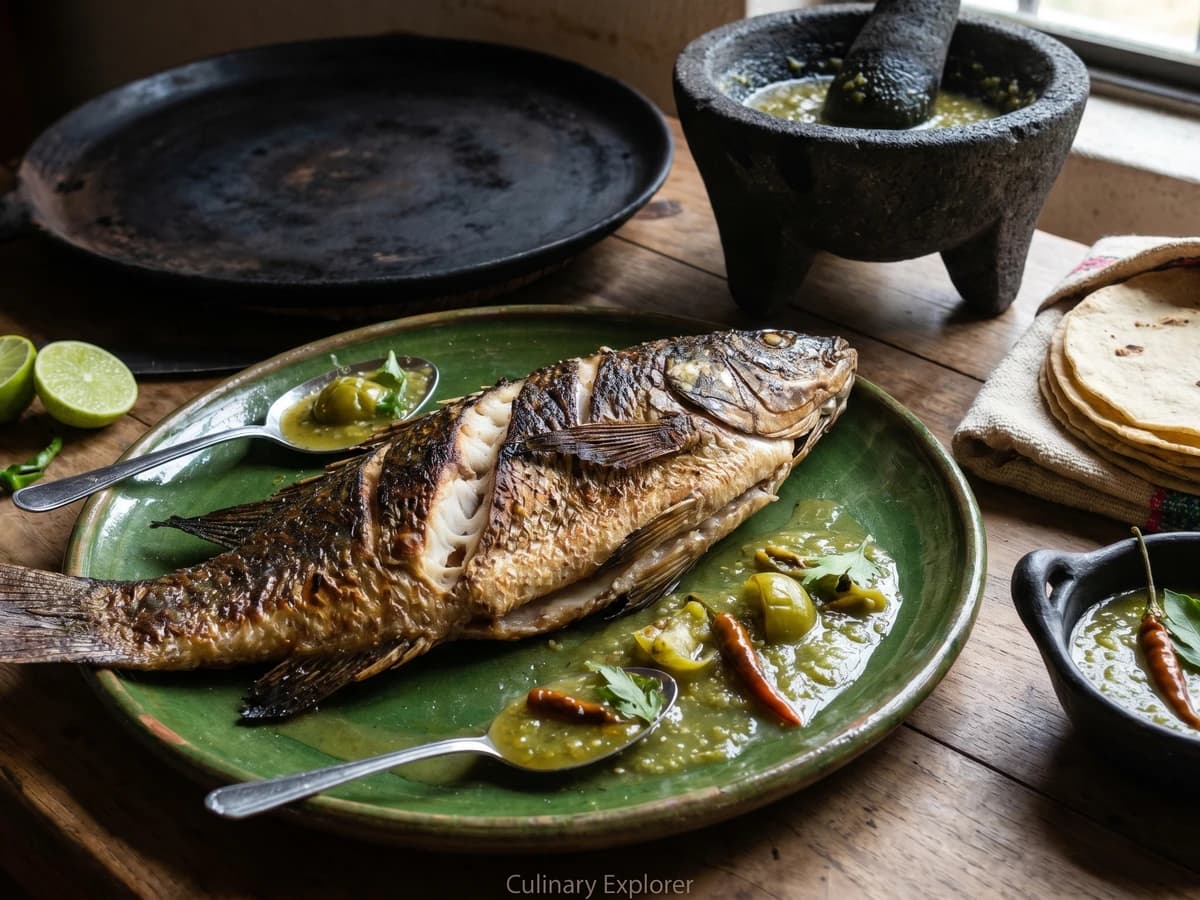
Michoacán's Lake Pátzcuaro acúmara, a whole kurucha from the lago tatemada on a comal de leña and served with chile perón atápakua, corn tortillas, and P'urhépecha discipline.
A cooking platform built around craft, culture, and the stories behind what we eat.
Created by
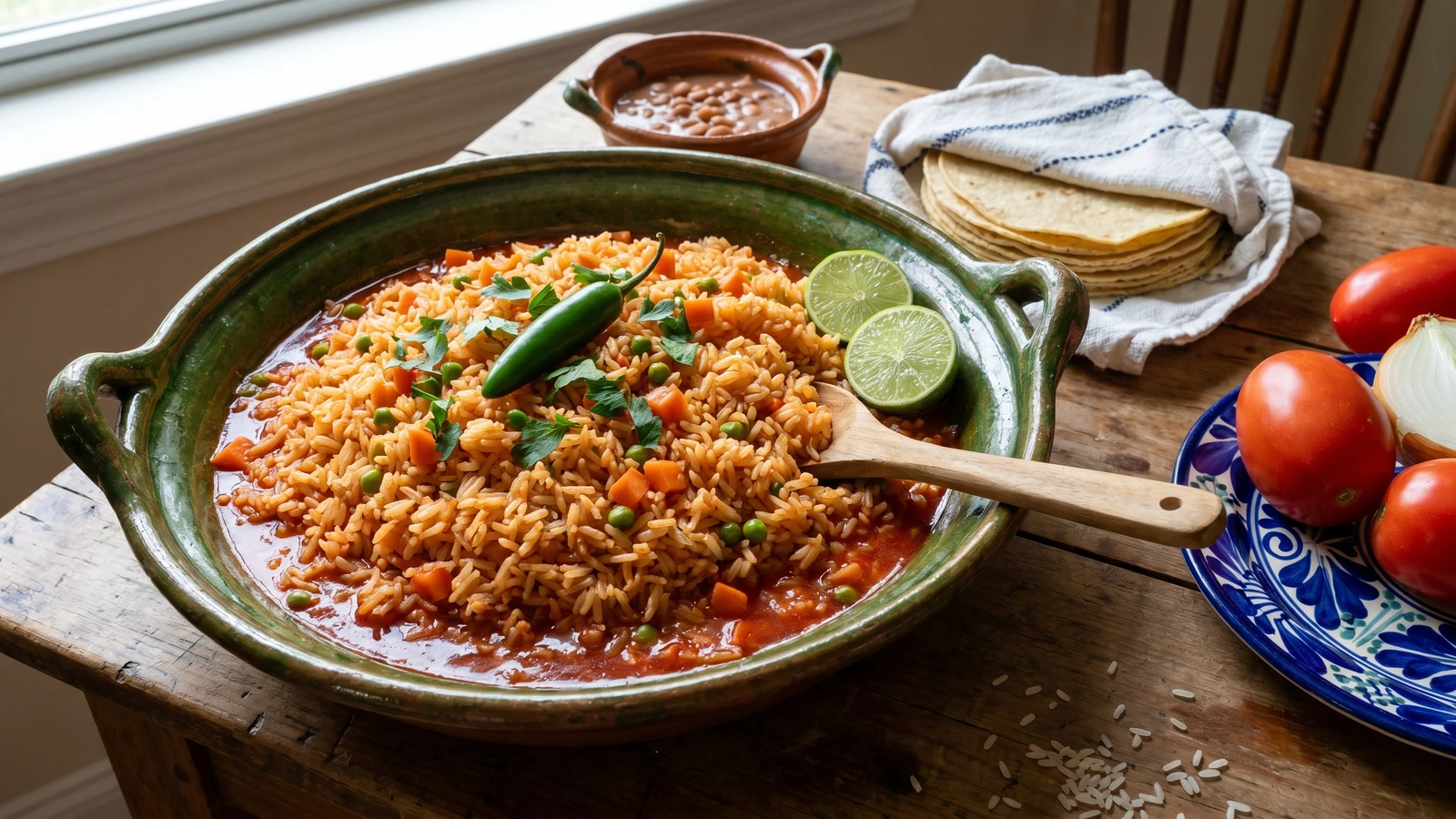
The red rice of central Mexican tables, long-grain rice fried in oil until pale gold, then simmered in blended tomato, onion, and garlic with carrot and peas. The side dish that anchors a comida.
Arroz a la mexicana lives in central Mexico. The Bajio, Ciudad de México, Jalisco, Guanajuato, Querétaro, Hidalgo, the kitchens of the altiplano where the comida corrida arrives in three courses and the second one is always rice. Every household has a pot. Every cook has an opinion about the ratio.
The red comes from tomato, not from chile. This is one of the most common things foreigners get wrong about Mexican rice. There is no paprika, no annatto, no food coloring. You blend ripe Roma tomatoes with onion and garlic, you measure it with chicken broth to exactly twice the volume of your rice, and that is the liquid. The color belongs to the fruit.
The technique is two moves and both matter. First you toast the rice in oil until the grains turn pale gold and start to sing. This is what keeps the grains separate. Skip it and you have wet rice. Second, you do not stir after the liquid goes in. Stirring breaks the grain and releases starch and you end up with paste. Cover the pot, lower the heat, leave it alone. Saber cocinar es saber vivir, and part of knowing how to live is knowing when to stop touching the food.
My mother made this rice three times a week for thirty years. The pot was a battered aluminum cazuela she brought from Jalisco when she moved to Colonia Roma. She measured the rice with a coffee cup and the liquid with the same cup, twice. No scale, no timer. She knew it was done when the kitchen smelled the way it was supposed to smell. The notebook has the recipe written in pencil on a page near the front, with a note in the margin: 'no se revuelve.' Do not stir. She underlined it twice.
Rice arrived in Mexico in the 16th century by way of the Manila Galleon trade, which connected Acapulco to the Philippines and brought Asian rice cultivars to the colonial Pacific coast. The technique of frying rice in fat before adding liquid, central to arroz a la mexicana, traces to the Moorish-Andalusian pilaf tradition that Spanish colonizers carried to the Americas, where it merged with native tomato (xitomatl in Nahuatl) to produce the red rice now standard across central Mexico. The 'sopa seca' or dry soup course in which arroz a la mexicana appears within the traditional comida corrida menu structure was codified in the 19th century as part of Mexico's broader codification of mestizo home cooking, distinguishing it from the wet soup that precedes it.
Quantity
2 cups
Quantity
4 (about 1 pound)
Quantity
1/4 medium, plus 2 tablespoons finely chopped
Quantity
2
peeled
Quantity
3 cups
warm
Quantity
1/3 cup
Quantity
1 medium
peeled and cut into 1/4-inch dice
Quantity
1/2 cup
Quantity
1 sprig
Quantity
1
whole and unpunctured
Quantity
1 1/2 teaspoons, plus more to taste
| Ingredient | Quantity |
|---|---|
| long-grain white rice | 2 cups |
| ripe Roma tomatoes | 4 (about 1 pound) |
| white onion | 1/4 medium, plus 2 tablespoons finely chopped |
| garlic clovespeeled | 2 |
| chicken brothwarm | 3 cups |
| neutral oil or lard (manteca de cerdo) | 1/3 cup |
| carrotpeeled and cut into 1/4-inch dice | 1 medium |
| fresh or frozen peas | 1/2 cup |
| fresh flat-leaf parsley | 1 sprig |
| fresh chile serrano (optional)whole and unpunctured | 1 |
| kosher salt | 1 1/2 teaspoons, plus more to taste |
Place the rice in a fine-mesh strainer and rinse under cold running water until the water runs clear, about a minute. Shake the strainer hard to drain. This step removes the surface starch that would otherwise glue the grains together. Arroz a la mexicana should be loose and grainy, never sticky. The señoras in the Bajio rinse the rice without thinking about it because their mothers rinsed the rice. You should too.
Quarter the tomatoes and place them in a blender with the quarter onion and the garlic cloves. Blend on high until completely smooth, about 30 seconds. You should have between 2 1/2 and 3 cups of bright red puree. Pass it through a fine-mesh sieve if you want it silky. If you do not strain it, the rice will still be good. This is the caldillo, the base that gives the rice its color and its name.
Combine the tomato puree with enough warm chicken broth to total exactly 4 cups of liquid. This ratio, two cups of rice to four cups of liquid, is the central principle of arroz a la mexicana. Less liquid and the rice cooks dry. More liquid and you have soup. No me vengas con atajos.
Heat the oil or lard in a heavy 3-quart pot or wide cazuela over medium heat. Add the chopped white onion and cook for one minute, until translucent. Add the drained rice and stir constantly with a wooden spoon. Toast the rice for 6 to 8 minutes, until the grains turn from translucent to opaque white and then take on a pale gold color. You will hear them start to sing in the oil. The kitchen will smell like a panaderia. This frying step is the dish. La manteca es el sabor and the toasted grain is the structure. Skip it and you have made a different recipe.
Pour in the combined tomato puree and broth. It will sputter and steam. Stir once to settle the rice into an even layer. Add the diced carrot, the peas, the parsley sprig, the whole serrano if using, and the salt. Stir once more and do not stir again. Stirring rice after the liquid goes in breaks the grains and turns the dish gummy. Así se hace y punto.
Bring the pot to a strong simmer over medium-high heat, about two minutes. Reduce the heat to low, cover the pot tightly with a well-fitting lid, and cook for 18 to 20 minutes. Do not lift the lid. The steam trapped inside is what cooks the top layer of rice. If you peek, you let the steam out and the top grains stay raw.
After 20 minutes, pull the pot off the heat. Leave it covered for another 10 minutes. This is not optional. The rest is when the grains finish absorbing the last of the liquid and the texture sets. Lift the lid. Remove the parsley sprig and the whole serrano. Fluff the rice gently with a fork, never a spoon, lifting from the bottom. The grains should be separate, tender, and red-orange from the tomato. Taste for salt. Serve immediately, family-style in the pot it cooked in or mounded on a clay plate.
1 serving (about 250g)
Culinary guides, cultural storytelling, and the editorial depth that makes cooking meaningful.
Discover Culinary ExplorerChef Lupita
Michoacán's Lake Pátzcuaro acúmara, a whole kurucha from the lago tatemada on a comal de leña and served with chile perón atápakua, corn tortillas, and P'urhépecha discipline.

Chef Lupita
Puebla's weekday adobo of pork shoulder braised in a thick guajillo and ancho sauce sharpened with vinegar, cumin, and clove. The deep red of a market spice stall, the dish a poblana cooks without thinking.

Chef Lupita
Loreto's pit-roasted clams, planted hinge-up in beach sand and tatemadas under a fast fire of dried romerillo brush, the resinous Baja desert shrub that gives this dish its smoke.

Chef Lupita
Oaxaca's eighth mole, the silky, almond-and-cinnamon almendrado, served over poached chicken. Mild, sweet, restrained, and a quiet rebuttal to anyone who thinks Mexican food has to be hot to be Mexican.