Chef Lupita
Acúmara Tatemada al Comal
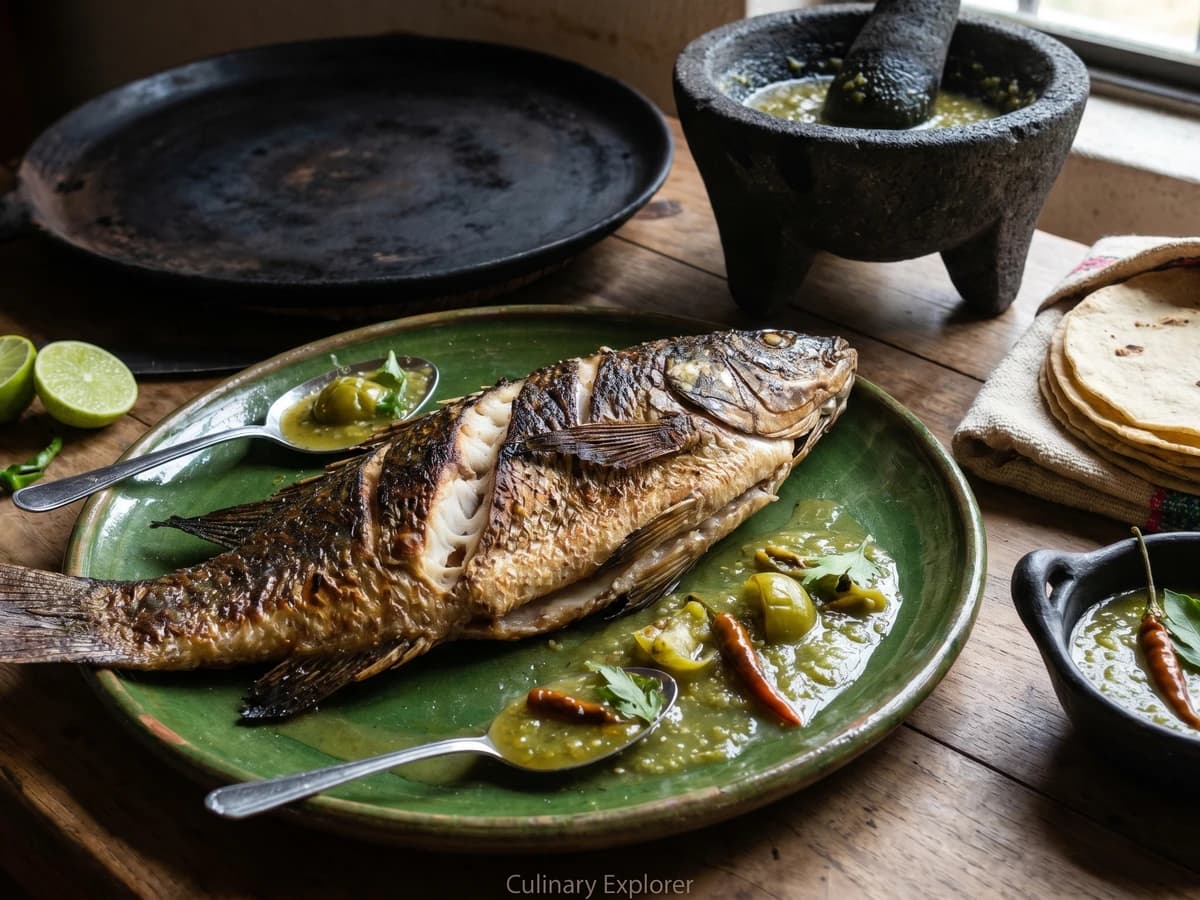
Michoacán's Lake Pátzcuaro acúmara, a whole kurucha from the lago tatemada on a comal de leña and served with chile perón atápakua, corn tortillas, and P'urhépecha discipline.
A cooking platform built around craft, culture, and the stories behind what we eat.
Created by
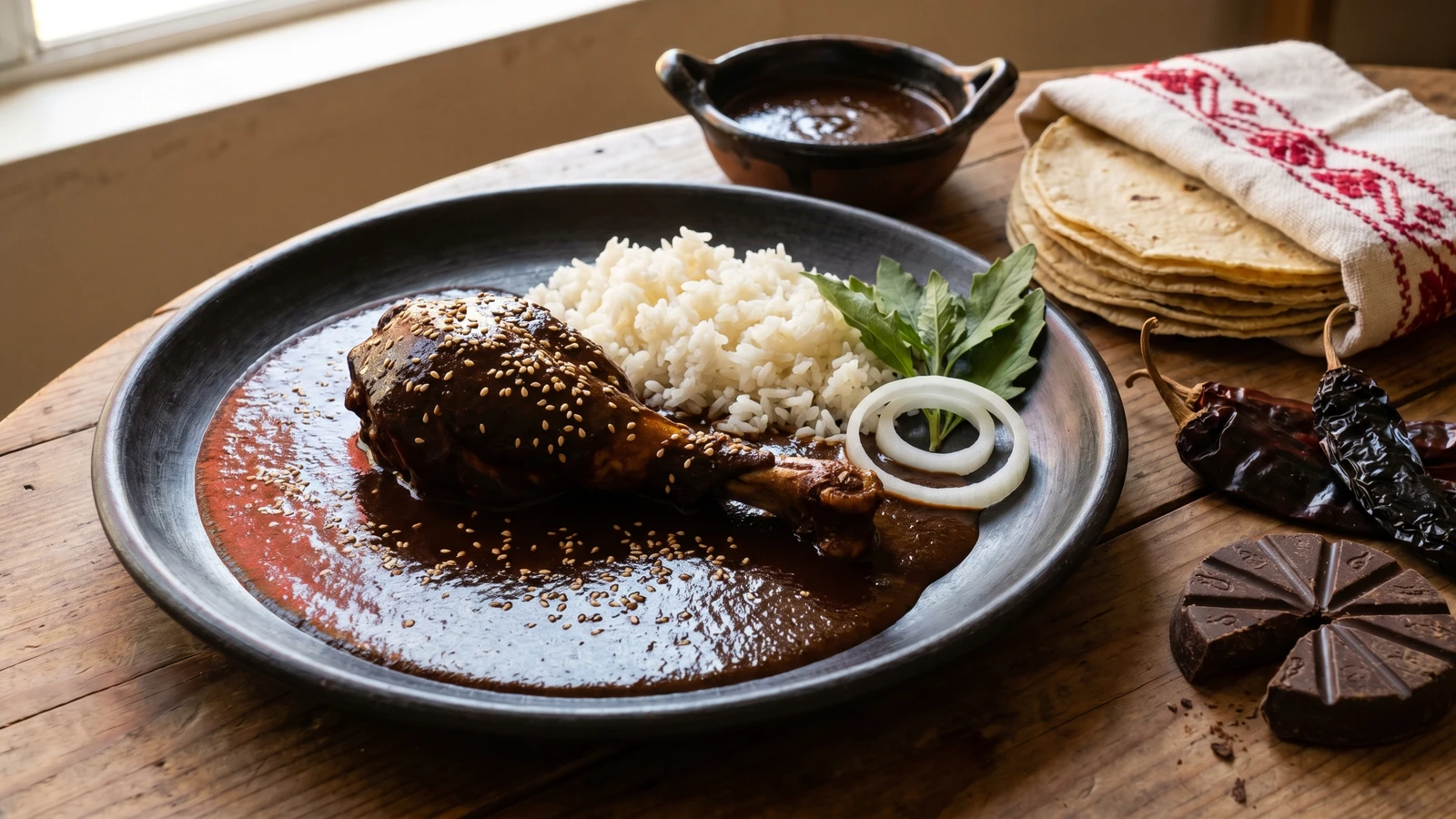
Oaxaca's king mole, built over two days from chilhuacle negro, mulato, and burnt seeds, finished with chocolate and avocado leaf, ladled generously over slow-poached guajolote for the table.
This is from Oaxaca. Specifically from the Valles Centrales, where the chilhuacle negro is grown almost nowhere else in the world and where every cook who calls herself a cook has an opinion about how the mole should look, taste, and behave on the plate. Oaxaca claims seven moles. Mole negro is the king. The darkest, the most complex, the most demanding of the cook's time and attention.
The color does not come from chocolate. It comes from chile seeds burned black on a comal and from a stale tortilla charred until it smokes. That bitter black char is what gives mole negro its near-obsidian color and the haunting note at the back of the palate that nothing else can replicate. The chocolate is there to round the chiles, not to dominate them. If you taste mole and what you taste is chocolate, the cook made a mistake. Mole is not chocolate sauce. No me vengas con atajos.
The turkey is not a substitution for chicken. It is the original protein. Guajolote is native to Mexico, and the bird was bred and raised here for centuries before the Spanish arrived. Mole negro on guajolote is what brides eat at Oaxacan weddings, what families serve on the Day of the Dead, what abuelas spend three days preparing for a baptism. Chicken works in a pinch. Turkey is the dish.
I have collected eleven versions of mole negro from cooks across the Valles Centrales, from señoras at the Mercado de Abastos in Oaxaca City, from a woman in Teotitlán del Valle who grinds her chiles on a metate the way her great-grandmother did. No two recipes are identical. The constants: chilhuacle negro, burnt seeds, charred vegetables, fried nuts and seeds, chocolate, avocado leaf, and time. Everything else is a negotiation between the cook and her tradition. Cada estado, su propia cocina, and this one belongs to Oaxaca.
The word mole derives from the Nahuatl molli, meaning sauce or concoction, and pre-Columbian Oaxaca already had a sophisticated tradition of complex chile and seed sauces ground on the metate long before Spanish contact. The chilhuacle negro chile, essential to mole negro's distinctive near-black color, is an heirloom variety cultivated in Oaxaca's Cañada region since pre-Columbian times and has resisted commercial cultivation outside the state, which is why a single kilo can cost more than imported beef. The seven-mole classification of Oaxacan cuisine, negro, rojo, coloradito, amarillo, verde, chichilo, and manchamanteles, was codified in the 20th century as a regional identity marker, and the UNESCO inscription of Traditional Mexican Cuisine as Intangible Cultural Heritage in 2010 cited Oaxaca's mole tradition as a central supporting case for the designation.
Quantity
1 (about 10 to 12 pounds)
cut into pieces, or 6 pounds bone-in turkey legs and thighs
Quantity
1 large
halved
Quantity
1
halved crosswise
Quantity
2
Quantity
1 tablespoon, plus more to taste
Quantity
8
stemmed and seeded, seeds reserved
Quantity
8
stemmed and seeded, seeds reserved
Quantity
6
stemmed and seeded, seeds reserved
Quantity
4
stemmed and seeded
Quantity
1/2 cup, divided
Quantity
1/2 cup
skin on
Quantity
1/2 cup
Quantity
1/2 cup
Quantity
1/3 cup, plus more for garnish
Quantity
1/2 cup
Quantity
1
peeled and sliced into 1-inch rounds
Quantity
4
charred whole on a comal
Quantity
6
husked and charred whole on a comal
Quantity
1 medium
charred in thick slices on a comal
Quantity
1
charred whole on a comal, then peeled
Quantity
1
Quantity
1 slice
Quantity
1 stick (about 3 inches)
Quantity
4
Quantity
6
Quantity
4
Quantity
1 teaspoon
Quantity
2
lightly toasted
Quantity
3 ounces
chopped
Quantity
2 tablespoons
grated
Quantity
8 to 10 cups
warm
Quantity
for garnish
Quantity
for serving
warmed
Quantity
for serving
| Ingredient | Quantity |
|---|---|
| whole turkeycut into pieces, or 6 pounds bone-in turkey legs and thighs | 1 (about 10 to 12 pounds) |
| white onion (for broth)halved | 1 large |
| head of garlic (for broth)halved crosswise | 1 |
| bay leaves | 2 |
| kosher salt | 1 tablespoon, plus more to taste |
| dried chile chilhuacle negrostemmed and seeded, seeds reserved | 8 |
| dried chile mulatostemmed and seeded, seeds reserved | 8 |
| dried chile pasilla mexicanostemmed and seeded, seeds reserved | 6 |
| dried chile chilhuacle rojostemmed and seeded | 4 |
| pork lard (manteca de cerdo) | 1/2 cup, divided |
| raw almondsskin on | 1/2 cup |
| raw skinless peanuts | 1/2 cup |
| pumpkin seeds (pepitas) | 1/2 cup |
| sesame seeds | 1/3 cup, plus more for garnish |
| raisins | 1/2 cup |
| ripe plantainpeeled and sliced into 1-inch rounds | 1 |
| medium tomatoescharred whole on a comal | 4 |
| tomatilloshusked and charred whole on a comal | 6 |
| white onion (for mole)charred in thick slices on a comal | 1 medium |
| head of garlic (for mole)charred whole on a comal, then peeled | 1 |
| stale corn tortilla | 1 |
| stale bolillo or country white bread | 1 slice |
| Mexican cinnamon (canela) | 1 stick (about 3 inches) |
| whole cloves | 4 |
| whole black peppercorns | 6 |
| whole allspice berries | 4 |
| dried Mexican oregano | 1 teaspoon |
| fresh avocado leaves (hoja de aguacate)lightly toasted | 2 |
| Oaxacan chocolate (chocolate de mesa)chopped | 3 ounces |
| piloncillo or dark brown sugargrated | 2 tablespoons |
| reserved turkey brothwarm | 8 to 10 cups |
| toasted sesame seeds (optional) | for garnish |
| hand-pressed corn tortillas (optional)warmed | for serving |
| white rice (optional) | for serving |
Place the turkey pieces in a large stockpot. Cover with cold water by two inches. Add the halved onion, halved garlic head, bay leaves, and salt. Bring to a gentle simmer over medium heat and skim the gray foam that rises in the first fifteen minutes. Lower the heat until you see lazy bubbles every few seconds. Cover partially and cook for one and a half to two hours, until the meat is tender but not falling apart. Lift the turkey out and reserve. Strain the broth and keep it warm. You will need every drop. Cold water draws the flavor out slowly. A rolling boil clouds the broth and toughens the meat.
Heat a dry comal or heavy cast iron skillet over medium. Toast the chilhuacle negro, mulato, pasilla, and chilhuacle rojo separately, about 30 seconds per side. They should puff and turn fragrant, never blacken. The chilhuacle negro is the most expensive chile in Mexico and it grows almost nowhere outside Oaxaca's Cañada region. Treat each one like the inheritance it is. Transfer the toasted chiles to a heatproof bowl. Reserve the chiles. The seeds are about to do their own work.
This is the step that makes mole negro black. In a dry skillet over medium-high heat, toast the reserved chile seeds until they are completely black and smoking. Open the windows. Your kitchen will smell like a fire because it is one. The bitter char is what gives mole negro its near-black color and the deep burnt note that nothing else can replicate. Transfer the burned seeds to a separate bowl. Char the stale corn tortilla directly on the comal until it is fully black on both sides. Add it to the seeds. La cocina no es decoración, es trabajo.
Cover the toasted chiles with hot tap water, not boiling. Hot water softens the flesh and lets the flavor come through clean. Boiling water cooks the skin and turns the mole bitter on top of the bitterness it is supposed to have. Let them soak for 30 minutes while you work on the rest.
On the same comal, char the tomatoes, tomatillos, onion slices, and the whole head of garlic. Turn them with tongs until the skins are blistered and blackened in patches and the flesh underneath is soft. The tomatoes take about 10 minutes, the garlic head about 15. Peel the garlic when it cools enough to handle. Charred vegetables give the mole its smoky base. Raw vegetables would make a sauce that tastes like soup.
In a heavy skillet, melt 2 tablespoons of the lard over medium heat. Add the almonds and fry, stirring, until golden, about 4 minutes. Lift them out with a slotted spoon. In the same fat, fry the peanuts until golden, then the pepitas until they puff and pop, then the sesame seeds until they turn the color of caramel. Each goes into the same bowl as the almonds. Finally, fry the raisins until they swell, then the plantain slices until they are dark brown on both sides, and last the stale bread until crisp. La manteca es el sabor. Every one of these elements brings something the others cannot.
On the dry comal, lightly toast the cinnamon stick, cloves, peppercorns, allspice, and oregano for about a minute, until fragrant. Toast the avocado leaves separately for 15 seconds per side. The hoja de aguacate is the secret note in Oaxacan mole. It tastes faintly of anise and it tells your tongue this is from Oaxaca and nowhere else.
Drain the soaked chiles, reserving the soaking liquid. Working in batches, blend the chiles in a high-powered blender with the charred tomatoes, tomatillos, onion, and garlic. Add just enough warm turkey broth to move the blades. Blend until completely smooth. Pass each batch through a fine-mesh sieve into a large bowl, pressing on the solids. Discard the skins. In a separate batch, blend the burned seeds and tortilla with the fried nuts, raisins, plantain, bread, spices, and avocado leaves. Add broth as needed. Strain this batch as well. You should have two bowls: one of chile puree, one of nut and seed paste.
In a wide heavy cazuela or Dutch oven, melt the remaining lard over medium heat. When it shimmers, pour in the chile puree. It will sputter aggressively. Stand back. Cook for 10 to 12 minutes, stirring constantly with a wooden spoon, until the puree darkens and the fat starts to separate at the edges. Now add the nut and seed paste. Stir to combine. Cook for another 10 minutes, stirring without stopping. The mole at the bottom of the pot will scorch in seconds if you walk away. Asi se hace y punto.
Add 6 cups of the warm turkey broth in a steady stream, stirring as you go. The mole should be the consistency of heavy cream. Add the chopped chocolate and the piloncillo. Stir until both melt completely. Lower the heat and simmer, partially covered, for one full hour, stirring every 5 to 10 minutes and scraping the bottom. The mole will darken further, deepen, and the flavors will marry. Add more broth as needed to keep it loose. Taste for salt. The chocolate is not there to make it sweet. It is there to round out the chiles. If you can taste chocolate as chocolate, you have used too much.
Slide the cooked turkey pieces into the simmering mole. Spoon the sauce over the top so every piece is coated. Cover and warm through for 15 to 20 minutes over low heat. Do not let it boil hard. The turkey is already cooked. You are letting it absorb the mole.
Plate one piece of turkey per person on a wide shallow plate. Ladle a generous pool of mole over and around the meat. Scatter toasted sesame seeds across the top. Serve with white rice and a stack of warm hand-pressed corn tortillas. The tortillas are not optional. They are the spoon. Saber cocinar es saber vivir.
1 serving (about 500g)
Culinary guides, cultural storytelling, and the editorial depth that makes cooking meaningful.
Discover Culinary ExplorerChef Lupita
Michoacán's Lake Pátzcuaro acúmara, a whole kurucha from the lago tatemada on a comal de leña and served with chile perón atápakua, corn tortillas, and P'urhépecha discipline.

Chef Lupita
Puebla's weekday adobo of pork shoulder braised in a thick guajillo and ancho sauce sharpened with vinegar, cumin, and clove. The deep red of a market spice stall, the dish a poblana cooks without thinking.

Chef Lupita
Loreto's pit-roasted clams, planted hinge-up in beach sand and tatemadas under a fast fire of dried romerillo brush, the resinous Baja desert shrub that gives this dish its smoke.

Chef Lupita
Oaxaca's eighth mole, the silky, almond-and-cinnamon almendrado, served over poached chicken. Mild, sweet, restrained, and a quiet rebuttal to anyone who thinks Mexican food has to be hot to be Mexican.