Chef Lupita
Acúmara Tatemada al Comal
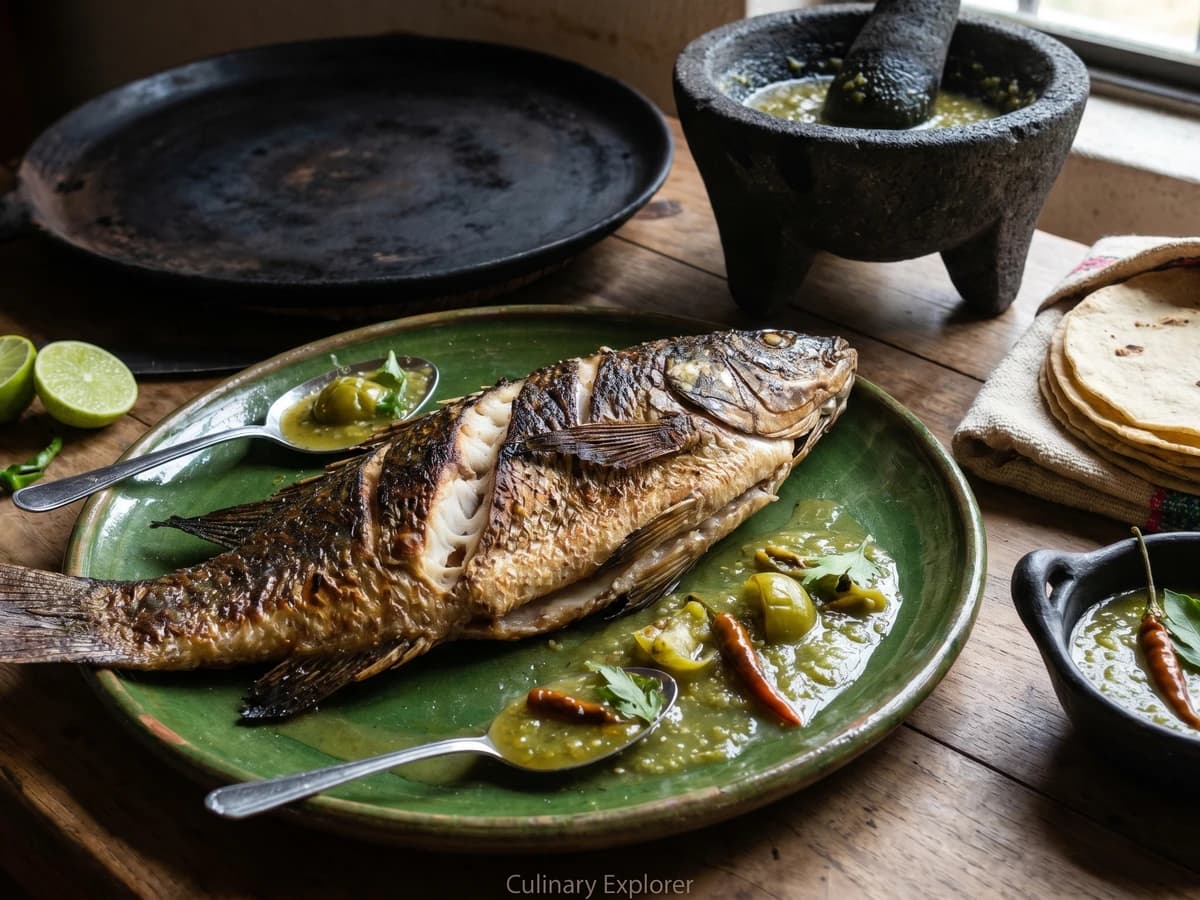
Michoacán's Lake Pátzcuaro acúmara, a whole kurucha from the lago tatemada on a comal de leña and served with chile perón atápakua, corn tortillas, and P'urhépecha discipline.
A cooking platform built around craft, culture, and the stories behind what we eat.
Created by
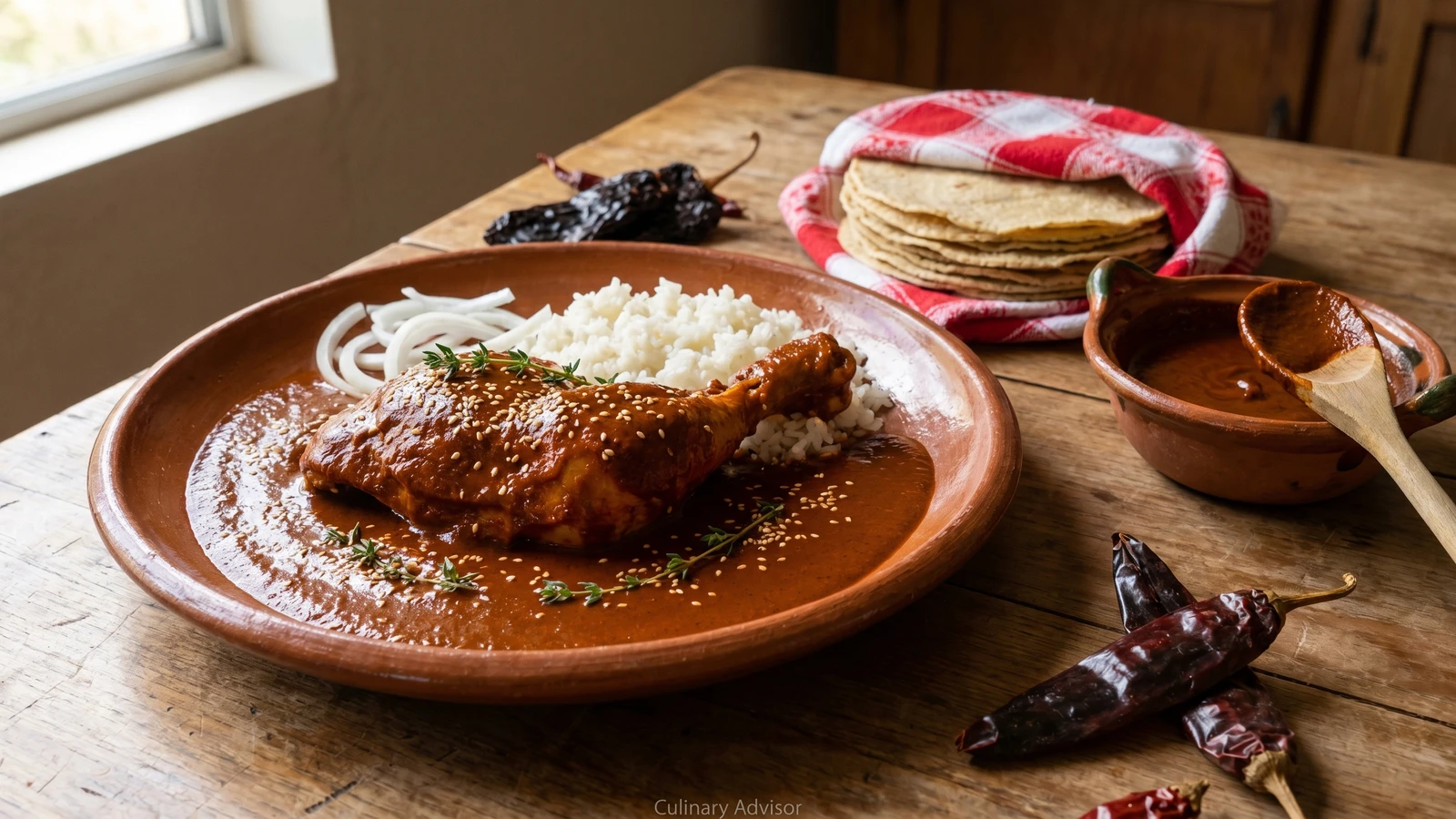
Oaxaca's red mole over poached chicken, built on toasted ancho and guajillo, sesame, almonds, ripe plantain, and a square of chocolate de mesa. The everyday cousin of mole negro and the one most Oaxacan families actually cook on a Sunday.
This is from Oaxaca. Specifically from the Valles Centrales, where coloradito is the mole that families actually make at home, not the one they reserve for weddings and Day of the Dead. Mole negro gets the postcards. Coloradito gets the Sunday lunch.
Of the seven moles of Oaxaca, coloradito sits in the middle. Smoother than amarillo, sweeter than negro, redder than rojo. The color is the work of chile ancho and chile guajillo, toasted on a comal until the oils release, then soaked in hot water and blended with charred tomatoes, sesame, almonds, raisins, ripe plantain, and a piece of chocolate de mesa from the molinos around the Mercado 20 de Noviembre. The chocolate is not the flavor. It is the binder. If your mole tastes like chocolate, you used too much. Asi se hace y punto.
The technique that makes this dish a mole and not a sauce is the frying step. You pour the strained chile puree into hot lard and you stir for fifteen minutes while it sputters and darkens and the fat works its way out at the edges. La manteca es el sabor. I have watched senoras in Teotitlan del Valle stand over a clay cazuela the size of a wagon wheel doing exactly this, with a wooden paddle, for an hour. They do not flinch when it splatters. Neither should you.
My mother did not make Oaxacan mole. She was from Jalisco. But the first time I ate coloradito at a comedor in Tlacolula, sitting at a wooden bench beside three women in trenzas, I understood why this dish takes a generation to teach. There is no shortcut. There is no blender setting that replaces the toasting, the soaking, the straining, the frying, the simmering. No me vengas con atajos. Cada estado, su propia cocina, and this one belongs to Oaxaca.
Oaxaca's seven-mole canon (negro, rojo, coloradito, amarillo, verde, chichilo, and manchamanteles) was codified in the 20th century as a regional identity marker, but coloradito itself is older and reflects the convergence of pre-Columbian chile and seed grinding traditions with Spanish-introduced almonds, sesame, raisins, and bread. The chocolate de mesa that defines the modern version comes from the molinos clustered around Oaxaca's Mercado 20 de Noviembre, where home cooks bring their own cacao, almonds, cinnamon, and sugar to be ground into custom blocks. Coloradito is sometimes called the everyday or weekday mole in the Valles Centrales, distinguishing it from the more elaborate negro reserved for funerals, weddings, and Day of the Dead, though the line between them blurs in many family kitchens.
Quantity
1 (about 4 pounds)
cut into 8 pieces
Quantity
1 medium
halved
Quantity
1
halved crosswise
Quantity
2
Quantity
1 tablespoon, plus more to taste
Quantity
10
stemmed and seeded
Quantity
6
stemmed and seeded
Quantity
2
stemmed and seeded
Quantity
4 medium
Quantity
2 small
husked and rinsed
Quantity
1 small
quartered
Quantity
5
unpeeled
Quantity
1/3 cup, plus more for garnish
Quantity
1/4 cup
skin on
Quantity
2 tablespoons
Quantity
1/4 cup
Quantity
1
peeled and sliced into 1-inch rounds
Quantity
1
day-old
Quantity
1 small slice (about 1 ounce)
Quantity
1 stick, about 2 inches
Quantity
3
Quantity
5
Quantity
1 teaspoon
Quantity
1 teaspoon
Quantity
2 ounces
chopped
Quantity
1/2 cup
Quantity
1 tablespoon, plus more to taste
Quantity
for garnish
toasted
Quantity
for serving
warmed
Quantity
for serving
| Ingredient | Quantity |
|---|---|
| whole chickencut into 8 pieces | 1 (about 4 pounds) |
| white onionhalved | 1 medium |
| head of garlichalved crosswise | 1 |
| bay leaves | 2 |
| kosher salt | 1 tablespoon, plus more to taste |
| dried chile anchostemmed and seeded | 10 |
| dried chile guajillostemmed and seeded | 6 |
| dried chile chilcostle or chile costeño (optional)stemmed and seeded | 2 |
| ripe tomatoes | 4 medium |
| tomatilloshusked and rinsed | 2 small |
| white onionquartered | 1 small |
| garlic clovesunpeeled | 5 |
| sesame seeds | 1/3 cup, plus more for garnish |
| raw almondsskin on | 1/4 cup |
| raw peanuts | 2 tablespoons |
| raisins | 1/4 cup |
| ripe plantainpeeled and sliced into 1-inch rounds | 1 |
| corn tortilladay-old | 1 |
| bolillo or French bread | 1 small slice (about 1 ounce) |
| Mexican cinnamon (canela) | 1 stick, about 2 inches |
| whole cloves | 3 |
| black peppercorns | 5 |
| dried Mexican oregano | 1 teaspoon |
| dried thyme | 1 teaspoon |
| Oaxacan chocolate (chocolate de mesa)chopped | 2 ounces |
| manteca de cerdo (pork lard) | 1/2 cup |
| sugar | 1 tablespoon, plus more to taste |
| sesame seeds (optional)toasted | for garnish |
| hand-pressed corn tortillas (optional)warmed | for serving |
| white rice (optional) | for serving |
Place the chicken pieces in a large pot. Cover with cold water by two inches. Add the halved onion, halved garlic head, bay leaves, and salt. Bring to a gentle simmer over medium heat. Skim the foam that rises in the first ten minutes. Cook at a lazy bubble for 35 to 40 minutes, until the meat is just tender. Remove the chicken with a slotted spoon and set aside. Strain the broth and reserve. You will need about six cups for the mole. The broth is the spine of the dish. Treat it with respect.
Heat a dry comal or heavy skillet over medium. Toast the ancho, guajillo, and chilcostle chiles separately, about 20 to 30 seconds per side. Press them flat with a spatula. They should puff and turn fragrant, never blacken. The kitchen will smell deep and slightly sweet. That smell is the oils releasing. Move the chiles to a heatproof bowl as they finish.
Cover the toasted chiles with hot tap water, not boiling. Boiling water cooks the skin and leaves a bitter edge in the puree. Place a small plate on top to keep them submerged. Soak for 25 minutes, until the flesh is fully soft. Drain and discard the soaking water. The bitterness lives in that water. Asi se hace y punto.
On the same comal, char the tomatoes, tomatillos, quartered onion, and unpeeled garlic cloves. Turn them as they blacken in spots. The tomatoes need 10 to 12 minutes until the skin splits and the flesh slumps. The garlic is done when it gives under finger pressure. Peel the garlic. Leave the charred bits on the tomatoes and onion. Those black spots are flavor, not damage.
Wipe the comal and lower the heat. Toast the sesame seeds, stirring constantly, until they turn the color of sand and start to pop. Set aside two tablespoons for garnish. Toast the almonds and peanuts until they smell roasted, about three minutes. Toast the cinnamon, cloves, and peppercorns for 30 seconds, just until fragrant. Each ingredient gets toasted alone because each one finishes at its own pace. Treat the comal like a clock with seven hands.
In a small skillet, heat two tablespoons of the lard over medium. Fry the plantain rounds until deeply golden on both sides, about four minutes total. The sugar in the plantain is what gives coloradito its rounded sweetness. Move the plantain aside. In the same fat, fry the day-old tortilla until crisp and the bread slice until golden. Both will thicken the mole and give it body.
Work in two or three batches. In a blender, combine the soaked chiles, charred tomatoes and tomatillos, charred onion, peeled garlic, toasted sesame, almonds, peanuts, raisins, fried plantain, fried tortilla, fried bread, cinnamon, cloves, peppercorns, oregano, and thyme. Add a cup of warm chicken broth to each batch and blend on high until completely smooth. Smooth means smooth. The texture of mole coloradito should run off the spoon in a slow ribbon, not in chunks. Strain each batch through a medium-mesh sieve into a large bowl, pressing on the solids. Discard the skins and grit. This step is not optional. The senoras in Teotitlan will tell you the same thing.
In a wide cazuela or heavy Dutch oven, heat the remaining six tablespoons of lard over medium-high until it shimmers. Pour the strained mole base into the hot fat all at once. It will sputter, splatter, and protest. Keep your apron on and a wooden spoon ready. Stir constantly for 15 to 20 minutes as the mole darkens, deepens, and the fat starts to separate at the edges. La manteca es el sabor. This frying step is what turns a chile puree into mole. Skip it and you have made a sauce, not a mole.
Add four cups of the reserved chicken broth to the cazuela, stirring as you pour. The mole should loosen to the consistency of heavy cream. Lower the heat. Add the chopped Oaxacan chocolate and the sugar. Stir until the chocolate melts in completely. Coloradito is not a chocolate mole. The chocolate rounds the chile and binds the spices. You should not taste cocoa. You should taste depth. Simmer uncovered for 30 to 40 minutes, stirring often so the bottom does not catch. Add more broth if it tightens too much.
Taste the mole. It should be rich, slightly sweet, faintly smoky, with a long warm chile finish. Adjust salt. Adjust sugar. A coloradito that is too sharp wants a pinch more sugar. One that is flat wants salt. Slip the cooked chicken pieces into the mole, spooning the sauce over each one. Simmer gently for 15 minutes more, just enough for the chicken to drink in the mole. Do not boil. Do not stir aggressively. The chicken is already cooked. You are marrying it to the sauce.
Spoon the chicken pieces into shallow clay plates with a generous ladle of mole over each. Scatter the reserved toasted sesame seeds on top. Serve with white rice and a tall stack of warm corn tortillas. In Oaxaca, you eat mole with tortillas, tearing pieces to scoop the sauce. The fork is for the chicken. The tortilla is for the mole. Recetas probadas y garantizadas.
1 serving (about 325g)
Culinary guides, cultural storytelling, and the editorial depth that makes cooking meaningful.
Discover Culinary ExplorerChef Lupita
Michoacán's Lake Pátzcuaro acúmara, a whole kurucha from the lago tatemada on a comal de leña and served with chile perón atápakua, corn tortillas, and P'urhépecha discipline.

Chef Lupita
Puebla's weekday adobo of pork shoulder braised in a thick guajillo and ancho sauce sharpened with vinegar, cumin, and clove. The deep red of a market spice stall, the dish a poblana cooks without thinking.

Chef Lupita
Loreto's pit-roasted clams, planted hinge-up in beach sand and tatemadas under a fast fire of dried romerillo brush, the resinous Baja desert shrub that gives this dish its smoke.

Chef Lupita
Oaxaca's eighth mole, the silky, almond-and-cinnamon almendrado, served over poached chicken. Mild, sweet, restrained, and a quiet rebuttal to anyone who thinks Mexican food has to be hot to be Mexican.