
Chef Margarida
Caracóis à Portuguesa
Há caracóis! The signs appear in May and all of Lisbon knows summer has arrived. Tiny snails in spiced broth, sucked from shells at plastic tables, washed down with imperial after imperial.
A cooking platform built around craft, culture, and the stories behind what we eat.

Created by
The braised gizzards of Lisbon's tascas, simmered low in tomato and wine until tender and proud. Working-class food that proves the humble parts are often the most delicious.
In every old tasca in Lisbon, there's a small clay dish of moelas sitting on the counter. Dark and glossy with sauce. A fork stuck in. Bread nearby. Nobody asks what it costs because it costs almost nothing. Nobody asks what it is because everyone already knows.
This is working-class cooking at its most honest. Gizzards were the parts nobody with money wanted. So the people without money learned to make them delicious. Slow-braised in tomato and wine until they surrender their toughness but keep their character. The sauce gets rich and dark, thick enough to demand bread.
Avó Leonor didn't make moelas often because we were in Alentejo, not Lisbon. But when I started Mesa da Avó, I knew I had to include them. I learned the dish from Dona Fernanda, who ran a tasca in Alfama for forty years before her knees gave out. She taught me that the secret is patience and a heavy hand with the refogado. "Quem não tem molho, não tem nada," she'd say. If you don't have sauce, you have nothing.
This is petisco food. It's meant to be shared, picked at, argued over while the wine flows. Put it in the middle of the table with a basket of bread and let people help themselves. That's the tradition. That's the joy of it.
Moelas guisadas emerged from Lisbon's working-class neighborhoods in the early 20th century, when tascas served inexpensive offal dishes to dockworkers and laborers. The dish represents the Portuguese principle of desperdício zero, wasting nothing, and transformed what butchers once discarded into a beloved petisco found in tascas throughout the country.
Quantity
500g
cleaned and trimmed
Quantity
1/4 cup
Quantity
1 large
diced
Quantity
4 cloves
sliced
Quantity
1
Quantity
1/2 cup
Quantity
400g
peeled and crushed, or canned whole
Quantity
1 tablespoon
Quantity
1 teaspoon
Quantity
1/2 teaspoon
Quantity
1 cup
Quantity
to taste
Quantity
to taste
freshly ground
Quantity
for serving
chopped
Quantity
for serving
| Ingredient | Quantity |
|---|---|
| chicken gizzardscleaned and trimmed | 500g |
| extra virgin olive oil (azeite) | 1/4 cup |
| oniondiced | 1 large |
| garlicsliced | 4 cloves |
| bay leaf (louro) | 1 |
| dry white wine | 1/2 cup |
| ripe tomatoespeeled and crushed, or canned whole | 400g |
| tomato paste | 1 tablespoon |
| sweet paprika (colorau) | 1 teaspoon |
| piri-piri or crushed red pepper (optional) | 1/2 teaspoon |
| water or chicken stock | 1 cup |
| salt | to taste |
| black pepperfreshly ground | to taste |
| fresh parsleychopped | for serving |
| crusty bread | for serving |
If your gizzards aren't already cleaned, trim away any yellow membrane and tough bits. Rinse well and pat completely dry. Cut larger gizzards in half so the pieces are roughly uniform. This matters for even cooking. Tough pieces in the same pot as tender ones means someone gets cheated.
In a heavy pot or deep skillet, warm the azeite over medium-low heat. Add the diced onion and cook slowly, stirring occasionally, until soft and golden, about 12 minutes. Não tenhas pressa. This is your flavor foundation. Add the sliced garlic and bay leaf in the last two minutes, letting the garlic turn fragrant but never brown.
Push the onions to the side and raise the heat to medium-high. Add the gizzards to the bare spot in the pan. Let them sear without moving for 2 minutes until they take on some color. Stir them into the onions and let them cook another minute. You want a bit of caramelization. This is flavor you can't get back later.
Pour in the white wine. Let it bubble and reduce by half, scraping up any bits stuck to the bottom. This is the soul of the sauce forming. The kitchen should smell like a proper tasca now.
Add the crushed tomatoes, tomato paste, paprika, and piri-piri if using. Stir to combine. Pour in the water or stock. Season with salt and pepper. Bring to a gentle simmer, then reduce heat to low. Cover and let it braise for 1 hour to 1 hour 15 minutes, stirring occasionally. The gizzards should become tender enough to cut easily with a fork but still have some chew. This isn't mush. It's honest food with texture.
Taste and adjust seasoning. Remove the bay leaf. Transfer to a warm terracotta dish or serve straight from the pot. Scatter fresh parsley over top. Set crusty bread on the table. This is the important part: the bread goes into the sauce. It drinks the molho. Anyone who doesn't drag bread through every bit of that sauce has missed the point entirely.
1 serving (about 270g)
Culinary guides, cultural storytelling, and the editorial depth that makes cooking meaningful.
Discover Culinary ExplorerChef Margarida
Há caracóis! The signs appear in May and all of Lisbon knows summer has arrived. Tiny snails in spiced broth, sucked from shells at plastic tables, washed down with imperial after imperial.

Chef Margarida
Crispy triangles of spiced meat wrapped in golden pastry, carrying the flavors of Goa across the ocean to every Portuguese tasca and family gathering. Colonial history you can eat.
Chef Margarida
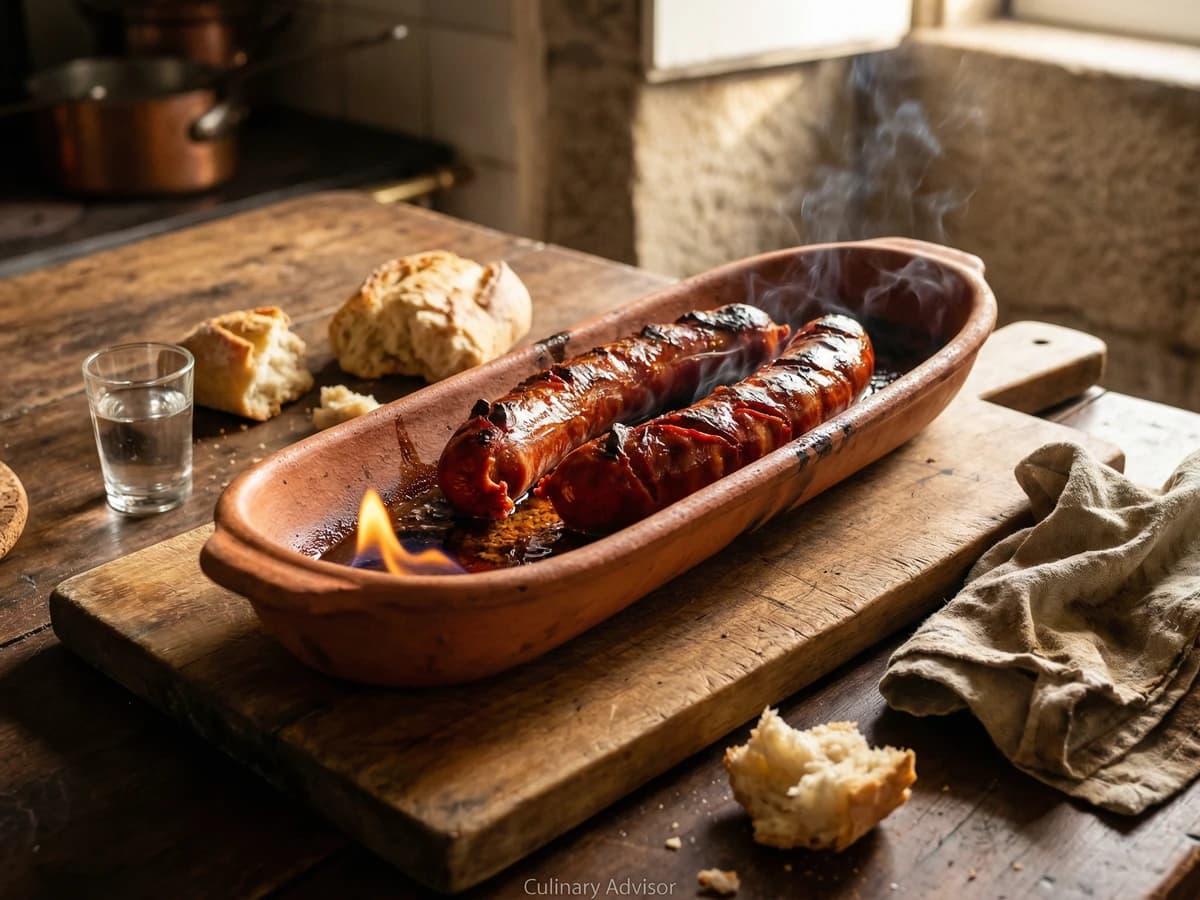
The theater of the tasca: chouriço set ablaze in its clay vessel, aguardente flames dancing blue and orange until the casing splits and the smoky fat runs. This is how we gather.

Chef Margarida
Mushrooms stuffed with chouriço and baked until the cheese bubbles and browns, the kind of petisco that disappears from the table before you've finished pouring the wine. Tasca food for your home.