Culinary Explorer

A cooking platform built around craft, culture, and the stories behind what we eat.
Discover Culinary Explorer
Mierikswortelsaus

Mierikswortelsaus

Created by

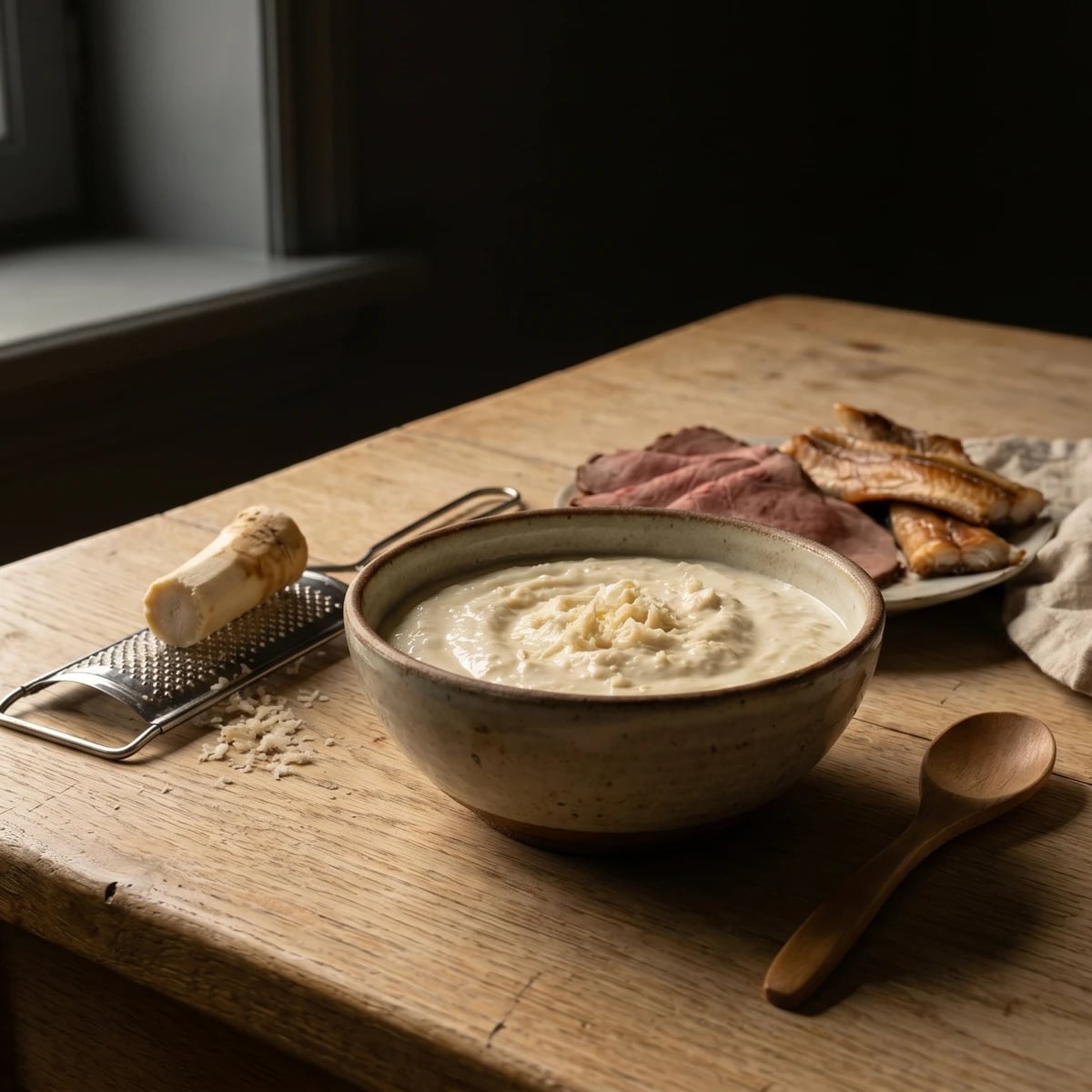
The sharp white sauce of the Dutch festive table, where a winter root wakes roast beef, smoked eel, and cold meats with one clean, nasal bite.

Sauces & Condiments
Dutch
Christmas
Special Occasion
15 min
Active Time
0 min cook45 min total
YieldAbout 250ml, enough for 6 to 8 servings

Every Christmas table needs one honest disturbance. In my grandmother's second notebook, between the roast beef and the smoked eel, there is a small line for mierikswortelsaus, horseradish sauce, written as if it were nothing. A spoon of this white sauce beside the meat, and suddenly the whole plate sits upright.

But let me tell you a secret: this sauce is not there to be polite. The Dutch table can look restrained from across the room, all linen, sliced beef, eel, bread, butter, and chilled salads. Then the mierikswortel arrives. The name gives you the part that matters safely enough: wortel means root. The rest is old and slippery, and a sensible philologist knows when not to invent a journey just to look clever.

Fresh horseradish is a winter root with a temper. Once grated, it releases its bite quickly, and vinegar or lemon steadies it before it runs away. That is the whole method. Hou het altijd simpel, always keep it simple: grate, sour, fold through cream and mayonnaise, then let it sit just long enough to become sauce without losing its sting. Serve it cold, in a small bowl, because a spoonful is enough. For obvious reasons.

Horseradish has been cultivated in northern and central Europe since the medieval period and became a practical winter condiment because the root stores well after autumn lifting. In the Netherlands, mierikswortelsaus settled especially beside cold roast beef, ham, smoked fish, and eel, the sort of festive or buffet dishes that need sharpness rather than another heavy sauce. Its place on Christmas tables reflects an older northern habit: preserved, smoked, or roasted foods brightened by pungent roots when gardens offered little else.

The technique, the tradition, and the story behind every dish.

Discover Culinary Explorer

Ingredients

fresh horseradish root

Quantity

40g

peeled and finely grated

lemon juice or white wine vinegar

Quantity

1 tablespoon

full-fat sour cream or crème fraîche

Quantity

150g

good mayonnaise

Quantity

60g

Dijon mustard

Quantity

1 teaspoon

fine sea salt

Quantity

1/2 teaspoon

caster sugar

Quantity

1/2 teaspoon

freshly ground white pepper

Quantity

to taste

Equipment Needed

  • Fine grater or microplane
  • Small mixing bowl
  • Rubber spatula

Instructions

  1. 1

    Grate the root

    Peel the horseradish root and grate it as finely as you can. Do this just before mixing; grated mierikswortel loses its clean bite as it sits in the air. Keep your face sensibly back from the grater. This root announces itself through the nose before the tongue gets a vote.

  2. 2

    Set the bite

    Stir the grated horseradish immediately with the lemon juice or vinegar. This small sourness steadies the sharp oils released by grating, so the sauce stays bright instead of turning flat and cabbagey.

    For a fiercer sauce, wait one minute after grating before adding the acid. For a gentler family-table version, add the acid at once.
  3. 3

    Fold the sauce

    In a bowl, stir together the sour cream, mayonnaise, mustard, salt, sugar, and white pepper. Fold in the soured horseradish until the sauce is smooth and speckled. Taste with the food it will serve, not from the spoon alone; roast beef and smoked eel both soften the root's bite.

  4. 4

    Rest and serve

    Cover and chill for thirty minutes before serving. The sauce should be cold, creamy, and sharp enough to clear the head without bullying the plate. Serve in a small bowl beside roast beef, smoked eel, ham, boiled beef, or cold poached fish.

Chef Tips

  • Use fresh horseradish root if you can find it. The jarred kind is useful, and I won't scold a Christmas cook for practicality, but fresh root has the clean, quick bite this sauce was built around.
  • If using prepared horseradish from a jar, start with 3 tablespoons and reduce the added lemon or vinegar to 1 teaspoon. Jarred horseradish already carries its own acid and salt.
  • Serve this with fat. Roast beef, smoked eel, ham, buttered rye, even boiled potatoes. The sauce is sharp because those foods need sharpness.

Advance Preparation

  • Best made 30 minutes to 4 hours before serving, so the sauce settles without losing its edge.
  • Keeps covered in the refrigerator for 2 days, though the horseradish bite softens with time. Stir before serving.

Frequently Asked Questions

Nutrition Information

1 serving (about 40g)

Calories
105 calories
Total Fat
11 g
Saturated Fat
3 g
Trans Fat
0 g
Unsaturated Fat
7 g
Cholesterol
15 mg
Sodium
260 mg
Total Carbohydrates
2 g
Dietary Fiber
0 g
Sugars
2 g
Protein
1 g

Note: Chef personas and recipes are created with AI assistance. Cook with care: follow safe food-handling practices, check doneness with a thermometer when needed, and adapt for allergies and your kitchen.

Where cooking meets culture.

Culinary guides, cultural storytelling, and the editorial depth that makes cooking meaningful.

Discover Culinary Explorer

More from Dutch Sauces & Tafelzuur

Browse the full collection