Culinary Explorer

A cooking platform built around craft, culture, and the stories behind what we eat.
Discover Culinary Explorer
Mayonaise (Dutch Mayonnaise)

Mayonaise (Dutch Mayonnaise)

Created by

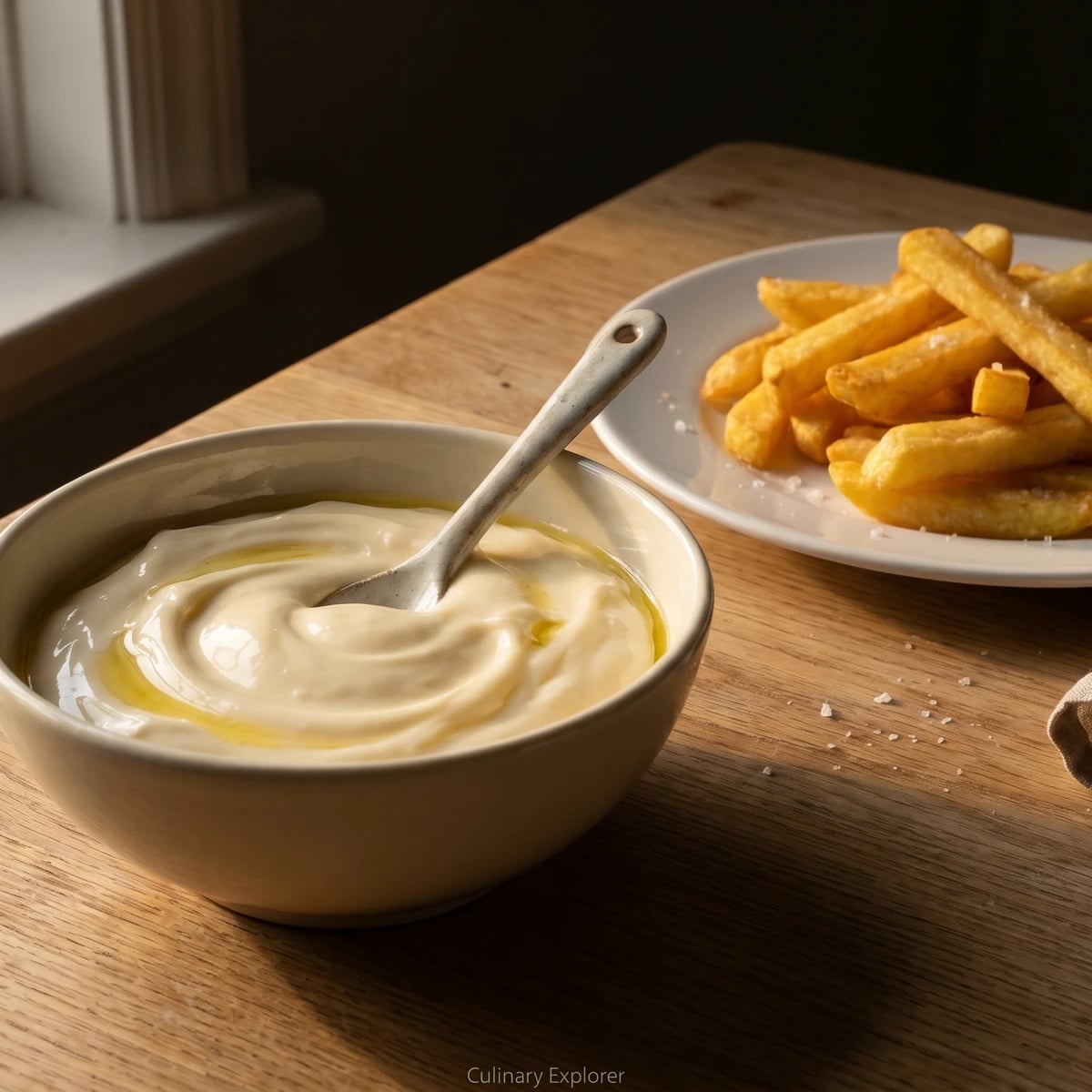
The little word met, with, at a Dutch snack counter usually means one thing: fries under a thick spoonful of mayonaise, richer by law than many neighbors dare.

Sauces & Condiments
Dutch
Weeknight
Make Ahead
10 min
Active Time
0 min cook10 min total
YieldAbout 300ml

The most revealing word at a Dutch snack counter is not patat or friet, that old north-south argument over what to call fried potatoes. It is met, with. You order patat met, fries with, and nobody asks with what. Mayonaise is understood. A whole condiment hidden inside one small preposition. For obvious reasons, linguists should be fed more often.

The name has a disputed passport. The old French story sends it to Mahon on Menorca in the eighteenth century, where sauce mahonnaise became mayonnaise after the Duke of Richelieu's victory in 1756. Other scholars have tried to pull it toward old French words for egg yolk or hand-stirred sauce. I won't pretend the argument is settled. A forced etymology is worse than none. But let me tell you a secret: the Dutch importance of mayonaise is not in inventing the name, it is in taking the sauce seriously enough to protect it.

In the Netherlands, real mayonaise is not the pale sweet bottle of childhood picnics. By regulation it carries at least 70 percent fat and enough egg yolk to behave like a proper sauce, thick, glossy, and able to cling to a hot fry without sliding off in defeat. The method is humble and exacting at once: yolk first, mustard to steady the hand, acid to brighten the fat, then oil slowly enough that the sauce accepts it. Hou het altijd simpel, always keep it simple. One bowl, one whisk, patience in a thin stream.

Mayonnaise entered Dutch everyday cooking through French culinary fashion in the nineteenth century, then became fully domestic through cold salads, fish dishes, and the snack-bar culture of fries served met, with mayonnaise. Dutch food law reserves the name mayonaise for a sauce with at least 70 percent fat and at least 5 percent egg yolk, which separates it from lighter fritessaus, a lower-fat fry sauce often sold beside it. The condiment also marks a regional language dispute: much of the north says patat met, while the south often says friet met, but the spoonful on top remains the same argument-settler.

The technique, the tradition, and the story behind every dish.

Discover Culinary Explorer

Ingredients

egg yolk

Quantity

1 large

very fresh or pasteurized

Dijon mustard or mild Dutch mustard

Quantity

1 teaspoon

white wine vinegar

Quantity

1 tablespoon

lemon juice

Quantity

1 teaspoon

fine sea salt

Quantity

1/4 teaspoon

neutral oil, preferably sunflower oil

Quantity

250ml

cold water (optional)

Quantity

1 to 2 teaspoons

white pepper (optional)

Quantity

to taste

Equipment Needed

  • Medium mixing bowl
  • Balloon whisk
  • Clean 350ml jar with lid

Instructions

  1. 1

    Set the bowl

    Put a damp cloth under a medium mixing bowl so it doesn't wander while you whisk. Add the egg yolk, mustard, vinegar, lemon juice, and salt. Whisk until the yolk loosens and turns smooth and slightly lighter. This first minute matters: the mustard and acid help the yolk hold the oil that is coming.

  2. 2

    Begin slowly

    Add the oil drop by drop at first, whisking constantly. The sauce will look thin, then suddenly satin-thick around the whisk. That is the moment the emulsion has taken. Don't rush to prove anything. Mayonaise rewards the cook who has nowhere more important to be for ten minutes.

    If the sauce splits, start a new bowl with one teaspoon of mustard or a fresh yolk, then whisk the broken sauce into it slowly. Most kitchen disasters are only impatience asking for a second bowl.
  3. 3

    Stream the oil

    Once the sauce has thickened, pour the remaining oil in a very thin steady stream while whisking. Pause now and then to let the sauce catch up. It should become glossy, pale cream in colour, and thick enough to mound softly on the whisk.

  4. 4

    Adjust the finish

    Taste the mayonaise. Add a little more vinegar or lemon if it tastes flat, white pepper if you want a quiet bite, and a teaspoon or two of cold water if it is thicker than you like. The water does not weaken it; it relaxes the texture so it sits properly on fries, fish, or a cold potato salad.

  5. 5

    Chill and use

    Spoon the mayonaise into a clean jar, cover, and refrigerate at once. Because it contains raw yolk, keep it cold and use it within three days. For pregnant guests, elderly guests, or anyone with a vulnerable immune system, use pasteurized egg yolk. Accommodation is the tradition.

Chef Tips

  • Use sunflower oil or another quiet neutral oil. Olive oil can turn bitter under whisking and makes the sauce speak with a Mediterranean accent, lovely in its place, but not the snack-counter mayonaise we're making here.
  • Keep the yolk, mustard, vinegar, and oil at room temperature before starting. Cold ingredients are not impossible, but they are less willing to become friends.
  • For patat met, keep the sauce thick and plain. For cold fish or haringsalade, sharpen it with a little extra vinegar. History and cookery, they cannot be separated, but neither can sauce and purpose.
  • Do not confuse mayonaise with fritessaus. Fritessaus has its own place and a lighter body, but real Dutch mayonaise is the richer sauce protected by the name.

Advance Preparation

  • Mayonaise can be made up to three days ahead and kept covered in the refrigerator.
  • If it thickens too much after chilling, whisk in 1 teaspoon cold water before serving.
  • Do not freeze; the sauce will split as it thaws.

Frequently Asked Questions

Nutrition Information

1 serving (about 14g)

Calories
105 calories
Total Fat
12 g
Saturated Fat
1 g
Trans Fat
0 g
Unsaturated Fat
11 g
Cholesterol
9 mg
Sodium
35 mg
Total Carbohydrates
0 g
Dietary Fiber
0 g
Sugars
0 g
Protein
0 g

Note: Chef personas and recipes are created with AI assistance. Cook with care: follow safe food-handling practices, check doneness with a thermometer when needed, and adapt for allergies and your kitchen.

Where cooking meets culture.

Culinary guides, cultural storytelling, and the editorial depth that makes cooking meaningful.

Discover Culinary Explorer

More from Dutch Sauces & Tafelzuur

Browse the full collection