Chef Lupita
Acúmara Tatemada al Comal
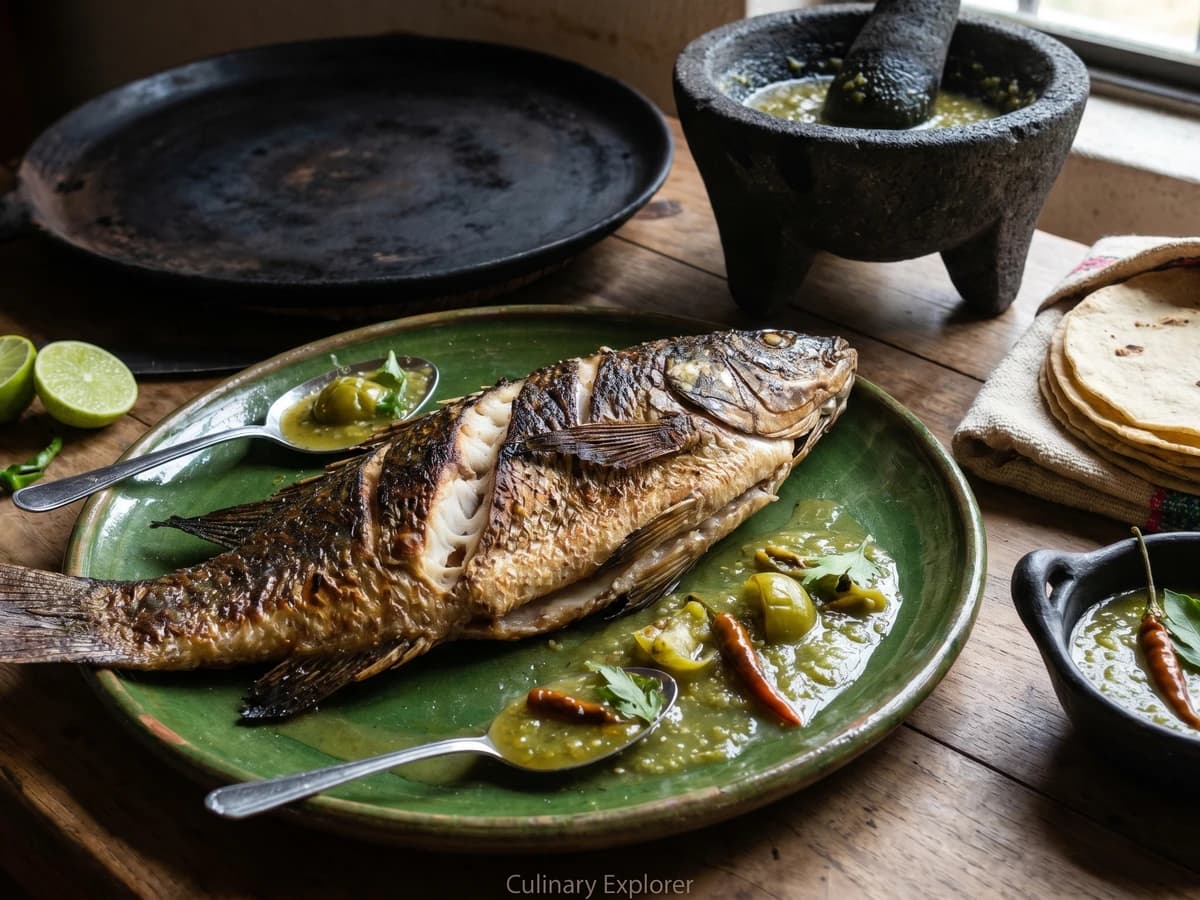
Michoacán's Lake Pátzcuaro acúmara, a whole kurucha from the lago tatemada on a comal de leña and served with chile perón atápakua, corn tortillas, and P'urhépecha discipline.
A cooking platform built around craft, culture, and the stories behind what we eat.

Created by
Oaxaca's mole verde of tomatillo, hoja santa, epazote, and toasted pepitas, ladled over seared wild mushrooms. The meatless weeknight pot home cooks across the Sierra Norte rely on.
This is from Oaxaca. Mole verde, one of the seven moles, the brightest and the youngest of them, the one that does not keep. Unlike mole negro, which deepens for days, mole verde is meant to be eaten the day it is made. The fresh herbs are the recipe, and fresh herbs do not wait.
In the Sierra Norte and the Valles Centrales, this is the everyday version of the mole, made without meat when there is no meat to spare, or during the rainy season when wild mushrooms come up under the pines. The senoras in Tlacolula market sell trompetas and yemitas and hongos de pino by the kilo from June through September, and the home cook brings them straight to the cazuela. The mushrooms stand in for the chicken or the pork the dish more often carries. They do the same job, holding the mole, giving it something to cling to.
The ingredients that make this mole oaxaqueño and not the green salsa from somewhere else are the hoja santa and the pepitas. Hoja santa, sacred leaf, tastes of anise and root beer and pepper at the same time, and there is no substitute for it. Pepitas, toasted on the comal until they pop, give the mole its body. Without them you have salsa verde with herbs in it. With them you have mole. Cada estado, su propia cocina.
My mother did not make mole verde. She was from Jalisco. But the recipe in my notebook came from a senora named Doña Crescencia who runs a fonda in Teotitlan del Valle and who watched me make it three times before she said anything other than "otra vez." Again. Recetas probadas y garantizadas, but only after you make it three times.
Oaxaca's classification of seven moles (negro, rojo, coloradito, amarillo, verde, chichilo, and manchamanteles) was codified in the 20th century as a regional identity marker, but the green mole tradition predates that codification by centuries. Pepitas, hoja santa (Piper auritum), and epazote (Dysphania ambrosioides) were core ingredients in pre-Columbian Mesoamerican cooking, and a sauce thickened with ground pumpkin seeds, called pipián, is documented in 16th-century Nahuatl-Spanish texts including the Florentine Codex. Mole verde occupies a particular place in Oaxacan home cooking because it is the mole that cannot be jarred or kept: the chlorophyll dulls within hours and the herbs lose their volatile oils, which is why it has remained a kitchen dish rather than a market commodity, protected by daily practice rather than by recipe.
Quantity
1 1/2 pounds
torn into bite-sized pieces
Quantity
2 tablespoons
divided
Quantity
1 pound
husked and rinsed
Quantity
1/2 cup
Quantity
3
stemmed (use 2 for less heat)
Quantity
1
stemmed
Quantity
1/2 medium
roughly chopped
Quantity
3
peeled
Quantity
2 large
center stem removed, roughly torn
Quantity
1 large bunch
leaves only (about 1/2 cup, packed)
Quantity
1/2 cup, packed
Quantity
1/2 cup, packed
Quantity
3 to 4 cups
warmed
Quantity
1 1/2 teaspoons, plus more to taste
Quantity
for serving
warmed
Quantity
for serving
Quantity
for serving
| Ingredient | Quantity |
|---|---|
| mixed wild mushrooms (oyster, cremini, shiitake, or trompetas)torn into bite-sized pieces | 1 1/2 pounds |
| manteca de cerdo (pork lard)divided | 2 tablespoons |
| tomatilloshusked and rinsed | 1 pound |
| raw hulled pepitas (pumpkin seeds) | 1/2 cup |
| fresh chile serranostemmed (use 2 for less heat) | 3 |
| fresh chile jalapeñostemmed | 1 |
| white onionroughly chopped | 1/2 medium |
| garlic clovespeeled | 3 |
| fresh hoja santa leavescenter stem removed, roughly torn | 2 large |
| fresh epazoteleaves only (about 1/2 cup, packed) | 1 large bunch |
| fresh cilantro leaves and tender stems | 1/2 cup, packed |
| fresh flat-leaf parsley leaves | 1/2 cup, packed |
| vegetable broth or waterwarmed | 3 to 4 cups |
| kosher salt | 1 1/2 teaspoons, plus more to taste |
| hand-pressed corn tortillas (optional)warmed | for serving |
| cooked black beans (optional) | for serving |
| lime wedges (optional) | for serving |
Heat a dry comal or heavy skillet over medium. Add the pepitas in a single layer. Toast them, shaking the pan often, for three to four minutes. They will pop, swell, and turn pale gold. The kitchen will smell like roasted seed and warm oil. Pull them off the heat the moment they color. Burned pepitas turn the mole bitter and there is no recovering from it.
On the same comal, char the tomatillos, serranos, jalapeño, onion, and garlic over medium-high heat. Turn them as the skins blister. Tomatillos take about eight minutes and will go from bright green to olive, with dark spots and a softened, slumped shape. Garlic chars fast, pull it first. This dry-charring is what gives mole verde oaxaqueño its body. Boiling the tomatillos washes the flavor out. Asi se hace y punto.
Transfer the charred tomatillos, chiles, onion, and garlic to the blender along with the toasted pepitas. Add the hoja santa, epazote, cilantro, and parsley. Pour in one cup of warm vegetable broth. Blend on high until you have a smooth, deep green puree. The pepitas should be ground completely, no grit. If the blender labors, add another splash of broth. The puree should be thick but pourable, like a heavy cream.
Heat one tablespoon of manteca in a wide cazuela or heavy skillet over medium-high. When it shimmers, add the mushrooms in batches. Do not crowd them or they will steam and turn rubbery. Sear without stirring for two minutes, then toss and sear another two. They should be deeply browned at the edges and tender in the middle. Salt them as they cook. Set aside on a plate.
Add the second tablespoon of manteca to the same cazuela. Heat over medium until it shimmers. Pour in the green puree all at once. Stand back, it will sputter. Stir constantly for five to seven minutes. The puree will darken from bright spring green to a deeper, sage green and the fat will start to break around the edges. La manteca es el sabor. This is the step that turns a thin salsa into a mole. Skip it and you have soup, not mole.
Whisk in two more cups of warm vegetable broth. The mole should coat the back of a spoon but still flow. Lower the heat to a gentle simmer. Cook uncovered for fifteen minutes, stirring every couple of minutes so the bottom does not catch. Add salt to taste. The mole should be assertive, the herbs forward, the heat clean.
Slide the seared mushrooms and any juices on the plate back into the cazuela. Stir gently to coat. Simmer five minutes more, just enough for the mushrooms to drink in the mole and for the flavors to settle into one another. Tear in a few extra epazote leaves at the very end. Their flavor is volatile and a final hit at the table wakes the pot up.
Bring the cazuela to the table. Serve into shallow bowls with warm corn tortillas, a spoonful of black beans on the side, and lime wedges. The mole verde stains the plate and the bread of the tortillas the way it should. Eat with your hands. Saber cocinar es saber vivir.
1 serving (about 400g)
Culinary guides, cultural storytelling, and the editorial depth that makes cooking meaningful.
Discover Culinary ExplorerChef Lupita
Michoacán's Lake Pátzcuaro acúmara, a whole kurucha from the lago tatemada on a comal de leña and served with chile perón atápakua, corn tortillas, and P'urhépecha discipline.

Chef Lupita
Puebla's weekday adobo of pork shoulder braised in a thick guajillo and ancho sauce sharpened with vinegar, cumin, and clove. The deep red of a market spice stall, the dish a poblana cooks without thinking.

Chef Lupita
Loreto's pit-roasted clams, planted hinge-up in beach sand and tatemadas under a fast fire of dried romerillo brush, the resinous Baja desert shrub that gives this dish its smoke.

Chef Lupita
Oaxaca's eighth mole, the silky, almond-and-cinnamon almendrado, served over poached chicken. Mild, sweet, restrained, and a quiet rebuttal to anyone who thinks Mexican food has to be hot to be Mexican.