
Chef Takumi
Abura Soba (油そば, brothless ramen)
Abura soba is ramen without the hiding place of soup: hot noodles, strong shōyu tare, fragrant oil, and the discipline to mix while every strand is still hot.
A cooking platform built around craft, culture, and the stories behind what we eat.

Created by
For Hinamatsuri, the clam does the generous work: open it gently in konbu water and sake, season only at the end, and the broth turns clear, briny, and quietly festive.
Hamaguri sit in the bowl like a small promise: two shells, one pair, opened just enough to show the sweet meat inside. On March 3, Hinamatsuri, that pairing is why we serve them. The soup is often treated as formal, but honmono here is plain work. Good clams, clean water, a strip of konbu, and the courage to stop before you fuss it into dullness.
The first detail is sourcing. Buy clams that feel heavy and shut tight, with shells that smell clean and faintly of the sea. If they gape and won't close when tapped, they don't belong in this bowl. There is nothing hidden here, no soy-dark broth, no strong sauce. The clam is the dashi, so the clam must be good.
Cook them gently from cold water with konbu and a little sake. Pull the konbu before the water boils, because boiled kelp turns the broth bitter and slick. Lift each clam as it opens, because one extra minute changes sweet and tender into rubbery, and we are not making festival soup to practice jaw strength. Salt comes last, a pinch at a time, because every clam brings its own sea with it. That is the whole dish: restraint, timing, and a clear bowl with room to breathe.
Hinamatsuri, the girls' festival held on the third day of the third month, grew from Jōshi no Sekku, one of the five seasonal observances formalized under the Tokugawa shogunate in the seventeenth century. Hamaguri were attached to the day because the two halves of one clam shell fit only each other, a symbolism also seen in kai-awase, the shell-matching game known from the Heian court. By the Edo period, the March table commonly paired clam soup with festival foods such as hishi-mochi and later chirashi-zushi, turning a clear soup into a wish for a lasting match.
Quantity
8 large (about 500g)
scrubbed and sand-purged
Quantity
30g
for 1 liter purging water
Quantity
1 liter
for purging
Quantity
4 cups
for the soup
Quantity
1 piece (about 5g)
Quantity
2 tablespoons
Quantity
1/2 teaspoon, plus more as needed
Quantity
4 small sprigs
cut into 2-inch lengths
Quantity
4 thin strips
white pith removed
Quantity
4 small pieces
soaked and squeezed dry
| Ingredient | Quantity |
|---|---|
| hamaguri clamsscrubbed and sand-purged | 8 large (about 500g) |
| sea saltfor 1 liter purging water | 30g |
| cool waterfor purging | 1 liter |
| cold waterfor the soup | 4 cups |
| konbu (dried kelp) | 1 piece (about 5g) |
| sake | 2 tablespoons |
| sea salt | 1/2 teaspoon, plus more as needed |
| mitsubacut into 2-inch lengths | 4 small sprigs |
| yuzu peelwhite pith removed | 4 thin strips |
| hana-fu (flower-shaped wheat gluten) (optional)soaked and squeezed dry | 4 small pieces |
Dissolve 30g sea salt in 1 liter cool water to make a brine as salty as the sea. Set the clams in a single layer, cover them with the brine, and leave them in a cool dark place for 2 hours, or refrigerate overnight. Darkness helps them relax and spit out sand. Lift them from the bowl rather than pouring the sandy water over them, then scrub the shells. Discard any cracked clams, and any open ones that won't close when tapped.
Wipe the konbu with a damp cloth, but don't wash it. The pale bloom on the surface is flavor. Put the 4 cups cold water, konbu, sake, and cleaned clams in a wide pot. Starting cold lets the clams give their liquor to the water gradually, while the sake softens the raw edge without making itself loud.
Set the pot over medium-low heat. When the water trembles and small bubbles gather at the sides, lift out the konbu before the pot boils. Let the broth come to a quiet simmer. As each clam opens, lift it out to a plate. Skim any pale foam from the surface, and discard any clam that stays shut after the others have opened.
If you see grit in the pot, strain the broth through a cloth-lined fine strainer into a clean pot. Taste before you season. Add the 1/2 teaspoon salt a little at a time, stopping when the broth tastes clean, briny, and gentle. If it tastes flat, it needs salt. If it tastes sharp or too salty, add a spoonful or two of hot water.
Place two opened clams in each lidded soup bowl, keeping the shells with their original partners if you can. Add one piece of hana-fu if using. The bowl should look underfilled, not meager. Osuimono needs ma, the empty space that lets the clear broth read as part of the dish.
Warm the seasoned broth just until small bubbles gather at the edge, then ladle it over the clams. Lay one sprig of mitsuba and one strip of yuzu peel in each bowl. Put the lids on for a minute so the fragrance stays in the bowl, then serve at once.
1 serving (about 260g)
Culinary guides, cultural storytelling, and the editorial depth that makes cooking meaningful.
Discover Culinary ExplorerChef Takumi
Abura soba is ramen without the hiding place of soup: hot noodles, strong shōyu tare, fragrant oil, and the discipline to mix while every strand is still hot.
Chef Takumi
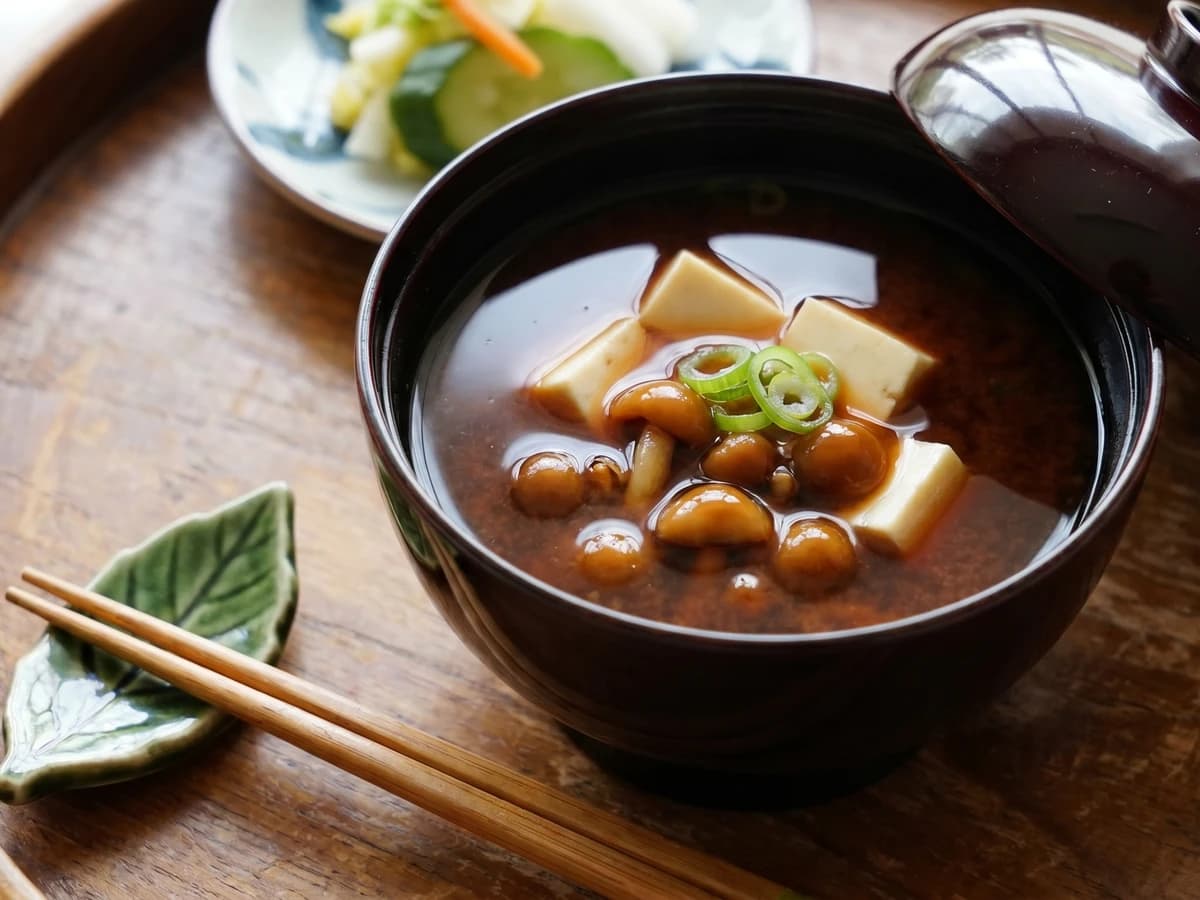
Akadashi asks you to trust the dark miso. Build a clear dashi, loosen the Hatchō mame-miso gently, and the soup turns coffee-dark, savory, and clean.

Chef Takumi
Toast the rice until its skin is firm, then let it meet chicken broth, burdock, maitake, and seri. The pot looks grand, but the work is rice, broth, and patience.
Chef Takumi
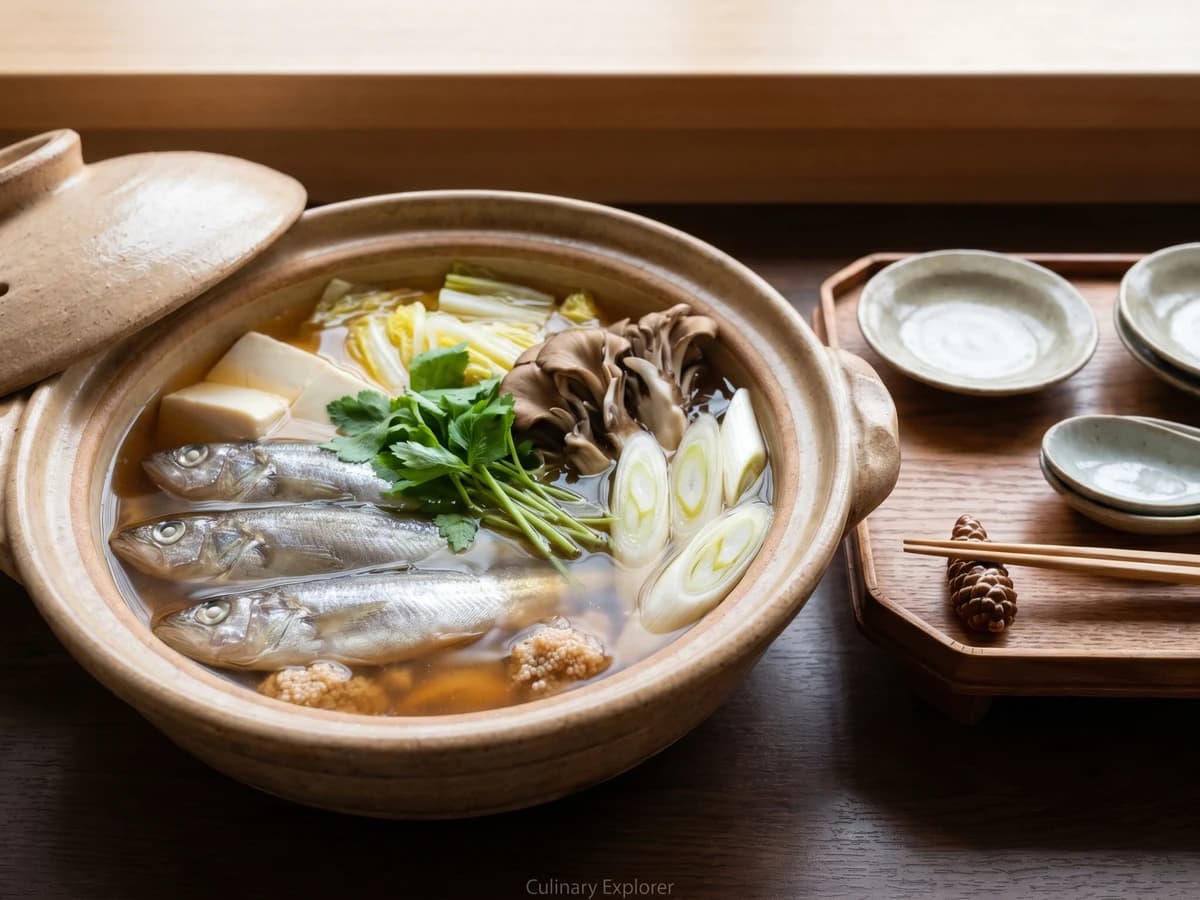
Shottsuru nabe is Akita winter in one pot: clean dashi, hatahata at shun, tofu and napa cabbage carrying a salt-deep broth without anything heavy enough to hide the fish.