
Chef Margarida
Caracóis à Portuguesa
Há caracóis! The signs appear in May and all of Lisbon knows summer has arrived. Tiny snails in spiced broth, sucked from shells at plastic tables, washed down with imperial after imperial.
A cooking platform built around craft, culture, and the stories behind what we eat.

Created by
The sausage rolls that fill every bakery case in Portugal, golden puff pastry wrapped around seasoned pork, the kind of snack you grab without thinking and remember all day
Walk into any pastelaria in Portugal and there they are. Rows of golden folhados behind the glass, puff pastry shining from the egg wash, the ends of the sausages peeking out. You point, they wrap it in a paper napkin, you eat it standing at the counter with your bica. This is Portugal.
Avó Leonor didn't make these often because she made everything from scratch and puff pastry is work. But when she did, usually before a romaria or a family gathering, she'd make dozens. The house would fill with that smell of butter and pork and something browning in a hot oven. We'd hover near the kitchen, waiting to steal one the moment they came out.
This is the kind of recipe that doesn't need improving. Sausage. Pastry. Egg wash. Maybe sesame seeds if you're feeling fancy. That's it. The genius is in the simplicity. The flaky layers of pastry, the savory meat, the way it all comes together in your hand. Peasant food. Street food. The food of pastelarias and festas and train station cafés.
I've seen people try to complicate this. Add cheese. Add mustard. Make it "elevated." Não mexas nisso. Don't mess with it. Some things are perfect as they are.
Folhados belong to Portugal's rich tradition of savory pastries, influenced by centuries of contact with French and Arabic baking techniques. The mass production of puff pastry in Portuguese bakeries began in earnest in the 20th century, transforming folhados from special occasion food into everyday snacks. Today they sit alongside rissóis and pastéis de bacalhau in every pastelaria, a testament to how industrial convenience can preserve rather than erase tradition.
Quantity
6 (about 450g total)
Quantity
500g
thawed if frozen
Quantity
1 large
beaten with 1 tablespoon water
Quantity
1 teaspoon
Quantity
for dusting
| Ingredient | Quantity |
|---|---|
| Portuguese fresh pork sausages (salsichas frescas) | 6 (about 450g total) |
| puff pastry (massa folhada)thawed if frozen | 500g |
| eggbeaten with 1 tablespoon water | 1 large |
| sesame seeds (optional) | 1 teaspoon |
| flour | for dusting |
Remove the sausages from their casings if they have them. If using skin-on sausages, you can leave them whole. Prick each sausage a few times with a fork to prevent bursting. Some grandmothers skip this step and say the pastry holds everything in. Both work.
On a lightly floured surface, roll the puff pastry into a rectangle about 3mm thick, roughly 30cm by 40cm. Cut into 12 strips, each about 10cm wide and long enough to wrap around your sausages with some overlap. The pastry doesn't need to be perfect. This is pastelaria food, not architecture.
Place one sausage at the edge of a pastry strip and roll it up, leaving the ends of the sausage slightly exposed. Press the seam to seal. If using casings, the sausage ends should peek out from the pastry like they're peeking out of a blanket. If using loose sausage meat, you can tuck the pastry under at the ends. Repeat with remaining sausages and pastry.
Place the wrapped sausages seam-side down on a parchment-lined baking sheet. Refrigerate for at least 15 minutes. This firms up the pastry and helps it puff properly. Don't skip this. Cold pastry, hot oven. That's how you get layers.
Preheat your oven to 200°C (400°F). Brush each roll generously with the egg wash, making sure to coat all the pastry surfaces. Sprinkle with sesame seeds if using. Bake for 20 to 25 minutes until deeply golden and puffed, with the pastry crisp and the sausage cooked through. The kitchen will smell like every pastelaria you've ever walked into.
Let the folhados cool on the baking sheet for 5 minutes before transferring to a wire rack or serving platter. They're best warm, when the pastry shatters and the sausage is still juicy. But they're good at room temperature too. That's how you'll find them in every pastelaria case in Portugal, stacked in rows, waiting.
1 serving (about 80g)
Culinary guides, cultural storytelling, and the editorial depth that makes cooking meaningful.
Discover Culinary ExplorerChef Margarida
Há caracóis! The signs appear in May and all of Lisbon knows summer has arrived. Tiny snails in spiced broth, sucked from shells at plastic tables, washed down with imperial after imperial.

Chef Margarida
Crispy triangles of spiced meat wrapped in golden pastry, carrying the flavors of Goa across the ocean to every Portuguese tasca and family gathering. Colonial history you can eat.
Chef Margarida
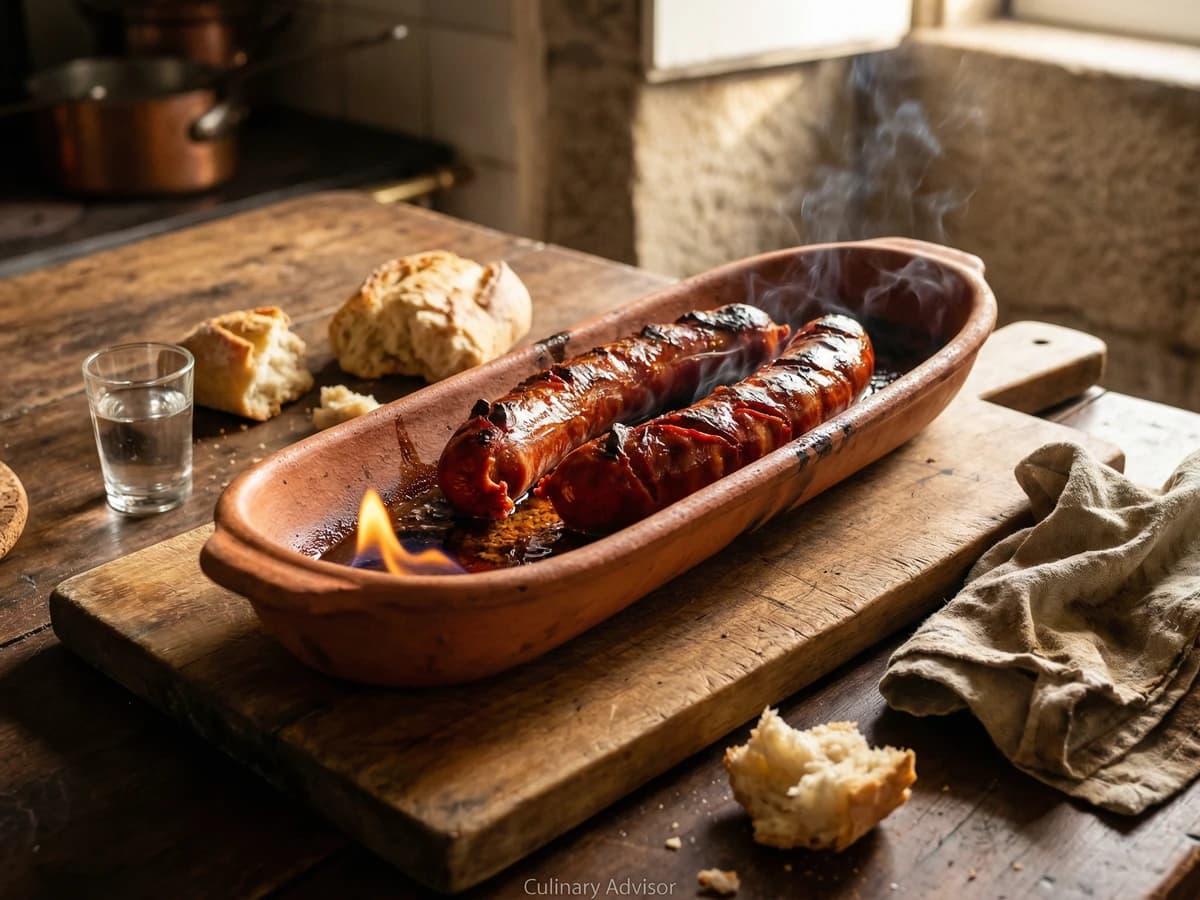
The theater of the tasca: chouriço set ablaze in its clay vessel, aguardente flames dancing blue and orange until the casing splits and the smoky fat runs. This is how we gather.

Chef Margarida
Mushrooms stuffed with chouriço and baked until the cheese bubbles and browns, the kind of petisco that disappears from the table before you've finished pouring the wine. Tasca food for your home.