
Chef Dimitra
Arkatena Omodous (Αρκατένα Ομόδους)
Omodos arkatena are Cypriot chickpea-leavened rusks, pale inside and sesame-studded, baked once as little rings and again until they crack clean under the tooth and keep beautifully.
A cooking platform built around craft, culture, and the stories behind what we eat.
Created by
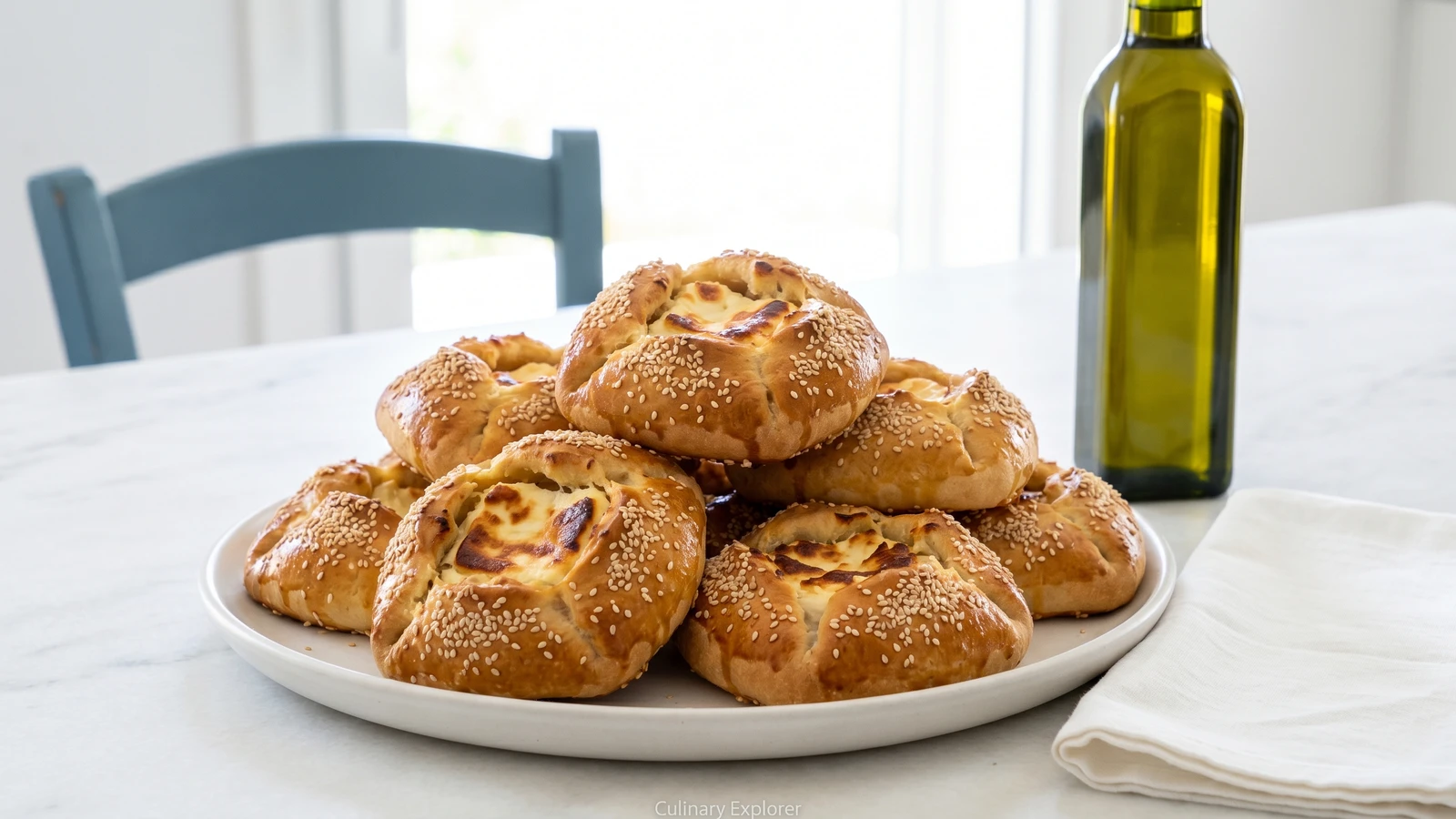
Cypriot flaounes are Easter cheese breads with a sesame crust, fragrant dough, and a firm halloumi-anari filling that must rest before it bakes.
Flaounes belong to Cyprus, especially to the Easter table, when the long fast breaks and the house smells of cheese, mint, mahlepi, and toasted sesame. They are not ordinary cheese pies. The dough is tender but sturdy, the outside is crusted with sesame, and the filling stands high inside, rich with halloumi, anari, eggs, and dried mint.
The whole bread depends on the filling resting before you shape it. Grated cheese, semolina, yeast, eggs, and mint need time to tighten into a scoopable mass, not a loose mixture that leaks into the dough. Give it at least four hours, overnight if you can, and the flaounes bake proud instead of slumping. That is the step I defend.
Make them generous, not delicate. Fold the dough around the filling, leave the center open, brush with egg, and bake until the sesame is nutty and the cheese top is deeply golden. Eat one warm, because after Lent, patience has already done its work.
Flaounes are recorded as a Cypriot Easter bread, traditionally prepared during Holy Week and eaten after the midnight Resurrection service or on Easter Sunday. Their name is often linked to older Greek and Latin bread words, and the cheese filling reflects Cyprus's long dairy tradition, especially halloumi and fresh anari. Regional households disagree over raisins, shape, and cheese blend, but the sesame crust and Easter timing are central to the dish.
Quantity
500g
plus extra for dusting
Quantity
7g
Quantity
8g
Quantity
30g
Quantity
1 teaspoon
Quantity
1/4 teaspoon
mixed with a pinch of sugar
Quantity
60ml
Quantity
40g
softened
Quantity
220ml
Quantity
1
beaten
Quantity
250g
Quantity
2 tablespoons
for rinsing the sesame seeds
Quantity
400g
coarsely grated
Quantity
300g
crumbled
Quantity
150g
coarsely grated
Quantity
60g
Quantity
7g
Quantity
1 teaspoon
Quantity
2 teaspoons
Quantity
1 teaspoon
Quantity
1/4 teaspoon
Quantity
4
beaten, plus 1 more if the filling is dry
Quantity
80g
Quantity
1 egg plus 1 tablespoon milk
beaten together
| Ingredient | Quantity |
|---|---|
| strong bread flourplus extra for dusting | 500g |
| instant yeast | 7g |
| fine sea salt | 8g |
| caster sugar | 30g |
| ground mahlepi | 1 teaspoon |
| ground masticmixed with a pinch of sugar | 1/4 teaspoon |
| extra virgin olive oil | 60ml |
| unsalted buttersoftened | 40g |
| lukewarm milk | 220ml |
| large eggbeaten | 1 |
| sesame seeds | 250g |
| white vinegarfor rinsing the sesame seeds | 2 tablespoons |
| halloumicoarsely grated | 400g |
| fresh anaricrumbled | 300g |
| kefalotyri or mature Cypriot flaouna cheesecoarsely grated | 150g |
| fine semolina | 60g |
| instant yeast, for the filling | 7g |
| baking powder | 1 teaspoon |
| dried mint | 2 teaspoons |
| ground mahlepi, for the filling | 1 teaspoon |
| ground mastic, for the filling | 1/4 teaspoon |
| large eggsbeaten, plus 1 more if the filling is dry | 4 |
| golden raisins (optional) | 80g |
| egg and milk glazebeaten together | 1 egg plus 1 tablespoon milk |
Mix the halloumi, anari, kefalotyri, semolina, yeast, baking powder, mint, mahlepi, and mastic in a wide bowl. Add the beaten eggs and mix until the filling holds together when pressed. It should be moist and firm, not wet. If it crumbles, add one more beaten egg a little at a time.
Cover the filling and let it rest in the refrigerator for at least 4 hours, preferably overnight. This is what decides the flaouna. The semolina absorbs the eggs and cheese moisture, so the filling bakes high and set instead of leaking into the bread.
Put the sesame seeds in a bowl, cover with water, and stir in the vinegar. Drain after 10 minutes, rinse once, and spread the damp seeds on a tray. Damp sesame clings to the dough and bakes into a proper crust.
In a large bowl, mix the flour, yeast, salt, sugar, mahlepi, and mastic. Rub in the olive oil and butter until the flour feels sandy. Add the lukewarm milk and beaten egg, then knead for 8 to 10 minutes, until the dough is smooth, elastic, and only lightly tacky.
Cover the dough and let it rise in a warm place for 1 to 1 1/2 hours, until puffed and almost doubled. Don't rush it. Enriched dough moves slowly, and good olive oil and patience do better work than heat.
Heat the oven to 190°C. Line two baking sheets with parchment. Divide the dough into 12 pieces, about 75g each, and roll each one into a round about 15cm wide. Press one side of each round into the damp sesame so the underside is fully coated.
Set each round sesame-side down. Place a generous mound of filling in the center, about 85g, then fold three or four sides of the dough up around it, leaving the middle open. Pinch the corners firmly. The flaounes should look sturdy and full, not tidy and thin.
Transfer the flaounes to the baking sheets with space between them. Brush the exposed dough and filling with the egg-milk glaze. Bake for 25 to 30 minutes, rotating the trays halfway, until the sesame is toasted, the dough is deep gold, and the cheese filling is set and burnished on top.
Let the flaounes rest on the tray for 10 minutes before serving. Eat them warm or at room temperature. The first one, warm from the tray after the Easter fast, is the cook's tax.
1 serving (about 180g)
Culinary guides, cultural storytelling, and the editorial depth that makes cooking meaningful.
Discover Culinary ExplorerChef Dimitra
Omodos arkatena are Cypriot chickpea-leavened rusks, pale inside and sesame-studded, baked once as little rings and again until they crack clean under the tooth and keep beautifully.

Chef Dimitra
Attica's Clean Monday lagana is lean, sesame-heavy, and deeply dimpled, made to be torn beside taramosalata before the bread goes stale by morning.

Chef Dimitra
Crete's eftazymo rises from a ground-chickpea ferment kept warm and still, then bakes into a fragrant sesame loaf with sweet-sour crumb and a faint whisper of mastic.
Chef Dimitra
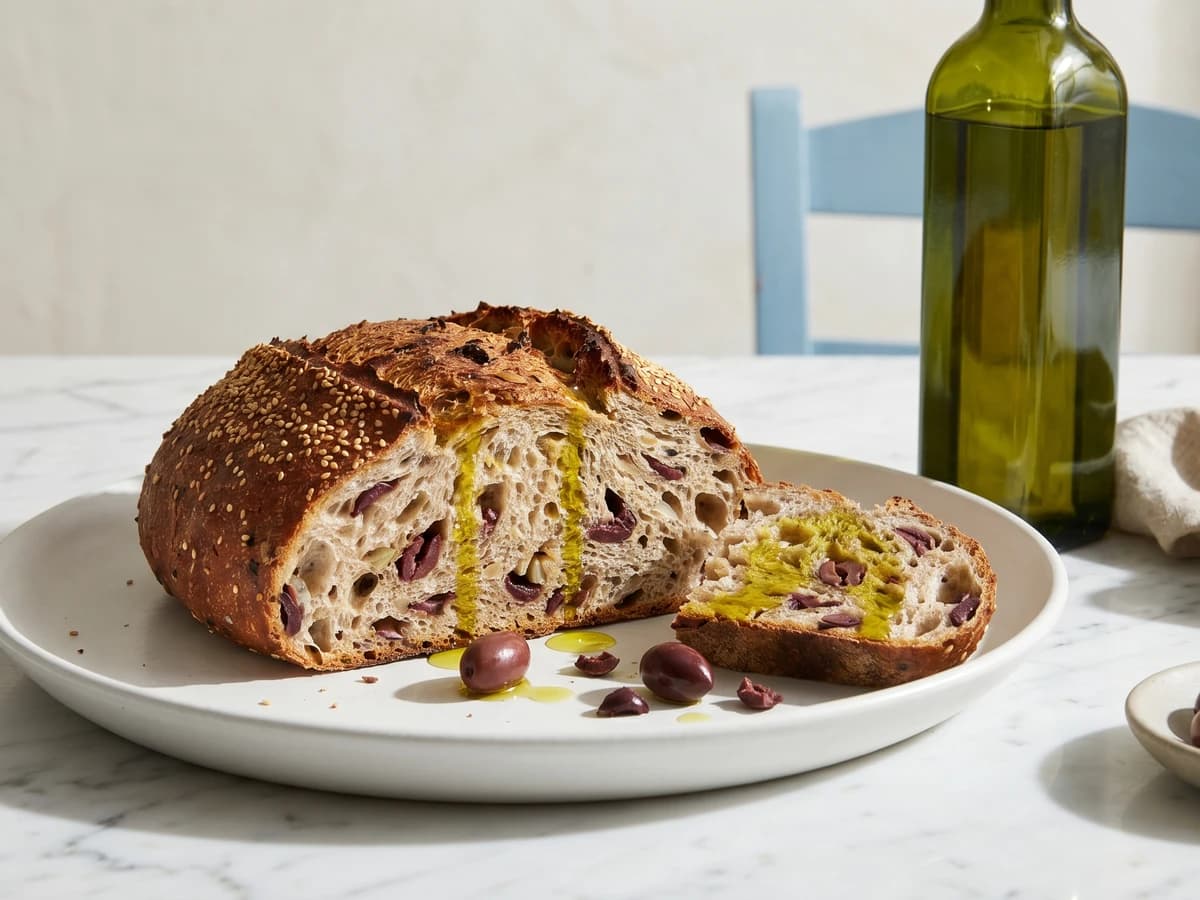
Messenian olive bread studded with Kalamata olives and onion, made for the meze table, the picnic cloth, and the fasting day when good oil carries the meal.