
Chef Dimitra
Arkatena Omodous (Αρκατένα Ομόδους)
Omodos arkatena are Cypriot chickpea-leavened rusks, pale inside and sesame-studded, baked once as little rings and again until they crack clean under the tooth and keep beautifully.
A cooking platform built around craft, culture, and the stories behind what we eat.

Created by
Crete's eftazymo rises from a ground-chickpea ferment kept warm and still, then bakes into a fragrant sesame loaf with sweet-sour crumb and a faint whisper of mastic.
Cretan eftazymo is bread raised from crushed chickpeas, warm water, and flour, with no yeast and no old sourdough tucked behind the curtain. Its crumb is close and tender, sweet first, then faintly sour, with anise, mastic, and sesame making the kitchen smell like a feast day.
Everything depends on the prozymi, the chickpea leaven. Keep it warm and still until the surface lifts into foam and smells nutty, sour, and clean. If it cools, it sulks. If you rush it, the dough sits like clay. Give it the warmth it asks for and the bread rises in its own old way.
This is a special bread in Crete, made when the house is paying attention. I give you the numbers because this ferment has moods; once you know its signs, you'll need them less. Good olive oil, and patience. A recipe written down is a recipe saved.
Eftazymo is recorded in Crete and in the southern Aegean islands as a bread made when the baker had no saved sourdough and wanted a festive loaf with its own perfume. The name is often linked in village explanation to efta, seven, but the older form aftozymo means self-leavened, which fits the chickpea ferment at the heart of the bread. Before packaged yeast became ordinary in Greek homes, crushed chickpeas, warmth, and flour gave island cooks a dependable way to raise special bread for feasts.
Quantity
120g
rinsed and coarsely cracked
Quantity
600ml
heated to 55C
Quantity
250g
Quantity
650g
plus extra for dusting
Quantity
150ml
about 35C
Quantity
60ml
plus 1 teaspoon for the bowl
Quantity
25g
Quantity
15g
Quantity
2 teaspoons
lightly crushed
Quantity
1g
pounded with 1 teaspoon of the sugar
Quantity
60g
| Ingredient | Quantity |
|---|---|
| dried chickpeas (revithia)rinsed and coarsely cracked | 120g |
| water for the chickpea fermentheated to 55C | 600ml |
| strong bread flour for the leaven | 250g |
| strong bread flour for the doughplus extra for dusting | 650g |
| warm water for the doughabout 35C | 150ml |
| extra virgin Koroneiki olive oilplus 1 teaspoon for the bowl | 60ml |
| sugar | 25g |
| fine sea salt | 15g |
| anise seed (glykaniso)lightly crushed | 2 teaspoons |
| mastic tears (mastiha)pounded with 1 teaspoon of the sugar | 1g |
| sesame seeds | 60g |
Put the cracked chickpeas in a clean 1 litre jar. Pour over the 600ml hot water, cover with the lid set loosely, wrap the jar in a towel, and keep it at 32 to 35C for 10 to 12 hours. The liquid should foam on top and smell nutty, sour, and clean.
Strain the chickpea liquid into a bowl and discard the chickpeas. Measure 450ml of the liquid, topping up with warm water if you are short. Whisk in 250g bread flour until you have a thick batter, cover it, and keep it warm until it rises, bubbles, and looks alive, 2 to 4 hours.
In a large bowl, mix the remaining 650g flour with the salt, crushed anise, sugar, and pounded mastic. Add the chickpea leaven, olive oil, and 120ml of the warm water. Mix by hand until no dry flour remains, adding the last 30ml water only if the dough feels stiff.
Knead for 10 to 12 minutes, until the dough turns smooth, elastic, and slightly tacky. It won't feel like a yeast dough racing ahead. It is slower, more stubborn, and that is normal.
Oil the bowl lightly, set the dough inside, cover it well, and keep it warm at 28 to 32C until it rises by about half and feels aerated under your fingers, 2 to 3 hours. Don't wait for a dramatic doubling. Eftazymo has a quieter lift.
Turn the dough onto a lightly floured surface and divide it in two. Shape each piece into a tight round or oval loaf. Brush the tops lightly with water, press them into the sesame seeds, and set them sesame-side up on a lined baking tray.
Cover the loaves and let them proof in a warm, still place for 1 1/2 to 2 hours, until they look puffy and a fingertip pressed into the side leaves a slow dent. If the kitchen is cold, give them time. The bread knows the calendar, not your impatience.
Heat the oven to 220C with a heavy tray or baking stone inside. Slide in the loaves and bake for 15 minutes, then lower to 190C and bake 30 to 35 minutes more, until the crust is deep brown and the base sounds hollow when tapped. Cool completely before slicing, or the crumb will turn gummy under the knife.
1 serving (about 80g)
Culinary guides, cultural storytelling, and the editorial depth that makes cooking meaningful.
Discover Culinary ExplorerChef Dimitra
Omodos arkatena are Cypriot chickpea-leavened rusks, pale inside and sesame-studded, baked once as little rings and again until they crack clean under the tooth and keep beautifully.

Chef Dimitra
Attica's Clean Monday lagana is lean, sesame-heavy, and deeply dimpled, made to be torn beside taramosalata before the bread goes stale by morning.

Chef Dimitra
Cypriot flaounes are Easter cheese breads with a sesame crust, fragrant dough, and a firm halloumi-anari filling that must rest before it bakes.
Chef Dimitra
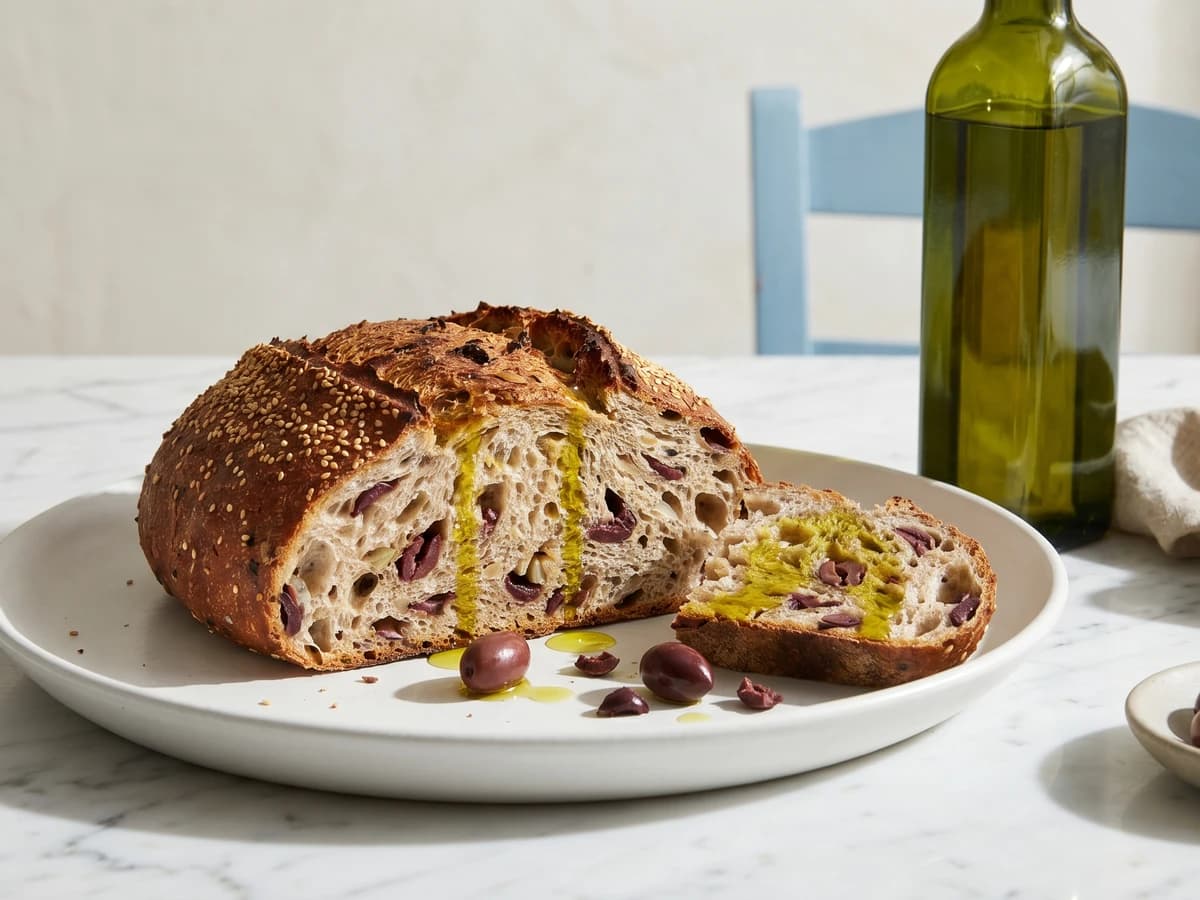
Messenian olive bread studded with Kalamata olives and onion, made for the meze table, the picnic cloth, and the fasting day when good oil carries the meal.