
Chef Dimitra
Attica Clean Monday Lagana (Λαγάνα Αττικής)
Attica's Clean Monday lagana is lean, sesame-heavy, and deeply dimpled, made to be torn beside taramosalata before the bread goes stale by morning.
A cooking platform built around craft, culture, and the stories behind what we eat.
Created by
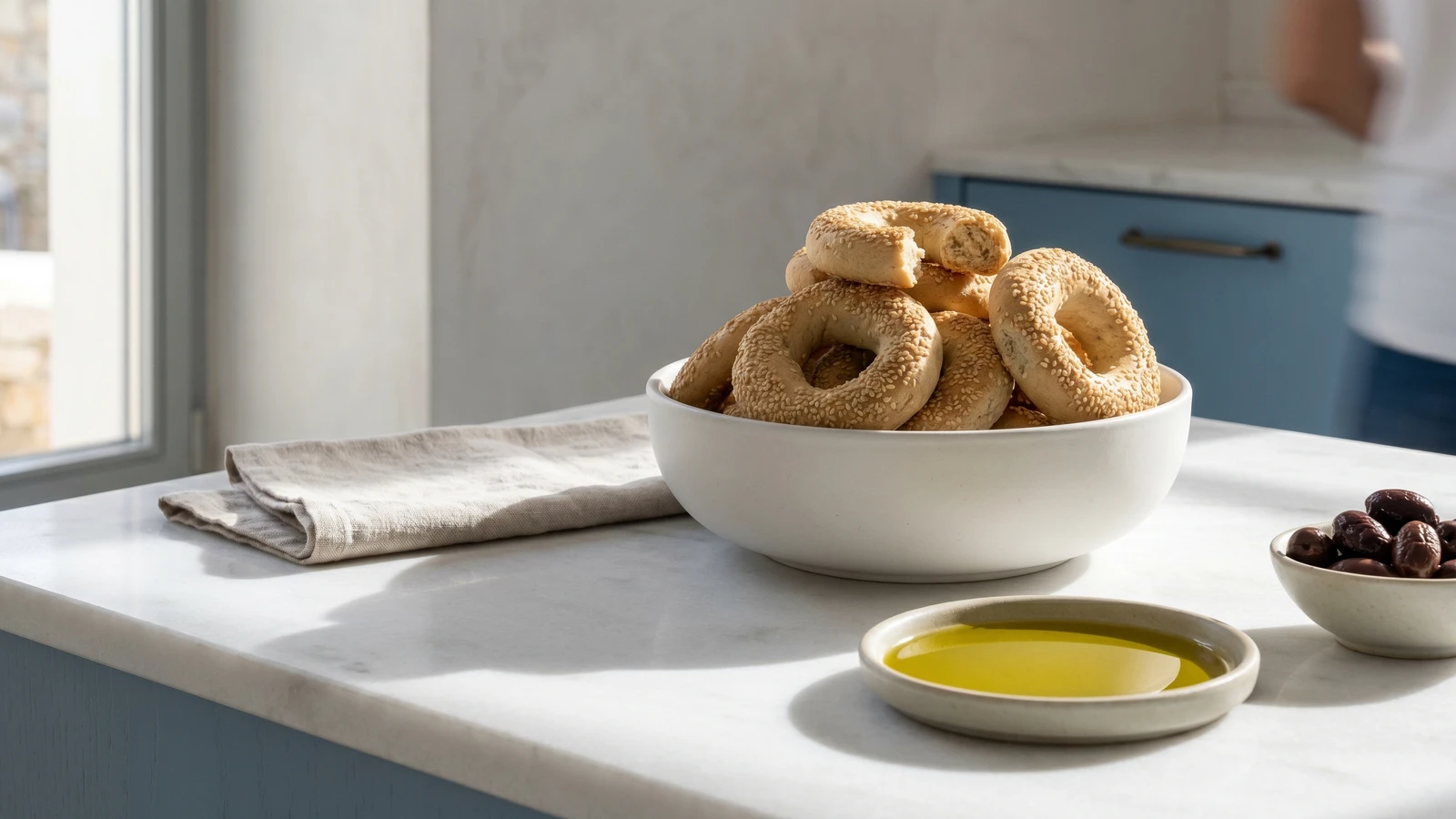
Omodos arkatena are Cypriot chickpea-leavened rusks, pale inside and sesame-studded, baked once as little rings and again until they crack clean under the tooth and keep beautifully.
Arkatena Omodous are the chickpea-leavened rusks of Omodos in Cyprus, small sesame rings that rise on arkatis, a warm ferment made from crushed chickpeas. They are not ordinary paximadia cut from yesterday's bread. They begin with the leaven itself, then go through one bake to set and another to dry until they keep in the cupboard and answer back under your teeth.
The method that decides them is the arkatis. Keep the chickpea water warm through the night, until a beige cap of foam gathers and the smell is clean, beany, and a little sweet. If that foam doesn't come, don't make dough. Start again with fresh chickpeas and better warmth, because no amount of kneading will rescue a sleeping leaven.
I like arkatena because Cyprus teaches economy without meanness. Flour, chickpeas, sesame, a little oil, good olive oil and patience. When Cypriot notes come into my mailbag, the women argue about anise or no anise, rings or small rolls, but nobody argues about the chickpea ferment. The region is the dish's surname, and Omodos signs this one clearly.
Arkatena are tied most closely to Omodos, a vine village in Cyprus's Limassol district, where the leaven, arkatis, was made from crushed chickpeas long before packaged baker's yeast became common in village ovens. The method sits beside the wider Greek family of eptazymo breads, but Omodos keeps its own form: small sesame rusks baked once to set and again to dry, useful for workers in the vineyards and for a pantry that had to last.
Quantity
150g
rinsed and coarsely cracked
Quantity
650ml
heated to 45-50°C
Quantity
1 small
for the arkatis
Quantity
900g
divided, plus 30g for dusting
Quantity
25g
Quantity
16g
Quantity
8g
lightly crushed
Quantity
60ml plus 10ml
10ml for the bowl
Quantity
170ml plus 20ml if needed
Quantity
90g
Quantity
30ml
| Ingredient | Quantity |
|---|---|
| dried chickpeas (revithia)rinsed and coarsely cracked | 150g |
| water for arkatisheated to 45-50°C | 650ml |
| bay leaffor the arkatis | 1 small |
| strong white bread flourdivided, plus 30g for dusting | 900g |
| sugar | 25g |
| fine sea salt | 16g |
| aniseed or fennel seedlightly crushed | 8g |
| extra virgin olive oil10ml for the bowl | 60ml plus 10ml |
| warm water or remaining strained arkatis | 170ml plus 20ml if needed |
| sesame seeds | 90g |
| water for brushing | 30ml |
Put the cracked chickpeas and bay leaf into a very clean 1 litre thermos or warmed glass jar. Pour over the 650ml warm water, close the thermos or cover the jar loosely, and keep it at 35-40°C for 10-14 hours. By morning the surface should have a beige foam and the smell should be clean, beany, and a little sweet. This warmth is the whole argument of arkatena. Too cool and the chickpeas sleep.
Strain the foamy chickpea liquid through a fine sieve and discard the solids and bay leaf. Measure 300ml of the strained arkatis into a bowl and stir in 300g of the flour until you have a thick batter. Cover and keep warm for 2-4 hours, until domed, bubbly, and clearly alive.
In a large bowl, combine the remaining 600g flour, sugar, salt, and crushed aniseed or fennel seed. Add the bubbly sponge, 60ml olive oil, and 170ml warm water or remaining arkatis. Mix to a firm dough, adding the extra 20ml water only if dry flour remains at the bottom of the bowl.
Knead for 10-12 minutes, until the dough turns smooth and elastic but still firmer than ordinary bread dough. Rub a bowl with the remaining 10ml olive oil, set the dough inside, cover, and keep warm for 3-5 hours, until it has grown by at least half and feels airy. Chickpea leaven takes its own time. Don't bully it with packaged yeast, or you've made another rusk.
Line two 30 x 40cm baking trays. Divide the dough into 18 pieces, about 85g each. Roll each piece into a 22-25cm rope, join the ends into a small ring, and pinch the join well. Brush lightly with water, press the top into sesame seeds, and set the rings on the trays with space between them.
Cover the shaped rings and leave them warm for 1.5-3 hours, until puffy and lighter in the hand. They won't balloon like yeast rolls. What you want is life in the dough and a slight spring when you touch the side.
Heat the oven to 190°C, or 170°C fan. Bake the rings for 22-28 minutes, until set, pale wheat-gold, and toasted at the sesame. Cool on a rack for 20 minutes. The first bake sets the bread; it doesn't make the rusk yet.
Lower the oven to 110°C, or 90°C fan. Return the rings to the trays and dry them for 1.5-2 hours, turning once, until hard, light, and dry all the way through. If you shaped thicker rolls instead of rings, split them before this second bake. Leave them in the switched-off oven with the door ajar for 30 minutes.
Cool completely before storing, because even a little trapped warmth softens a rusk in the tin. Keep the arkatena in an airtight container for 3-4 weeks. If they lose their snap in damp weather, put them back in a 120°C oven for 10-15 minutes.
1 serving (about 65g)
Culinary guides, cultural storytelling, and the editorial depth that makes cooking meaningful.
Discover Culinary ExplorerChef Dimitra
Attica's Clean Monday lagana is lean, sesame-heavy, and deeply dimpled, made to be torn beside taramosalata before the bread goes stale by morning.

Chef Dimitra
Crete's eftazymo rises from a ground-chickpea ferment kept warm and still, then bakes into a fragrant sesame loaf with sweet-sour crumb and a faint whisper of mastic.

Chef Dimitra
Cypriot flaounes are Easter cheese breads with a sesame crust, fragrant dough, and a firm halloumi-anari filling that must rest before it bakes.
Chef Dimitra
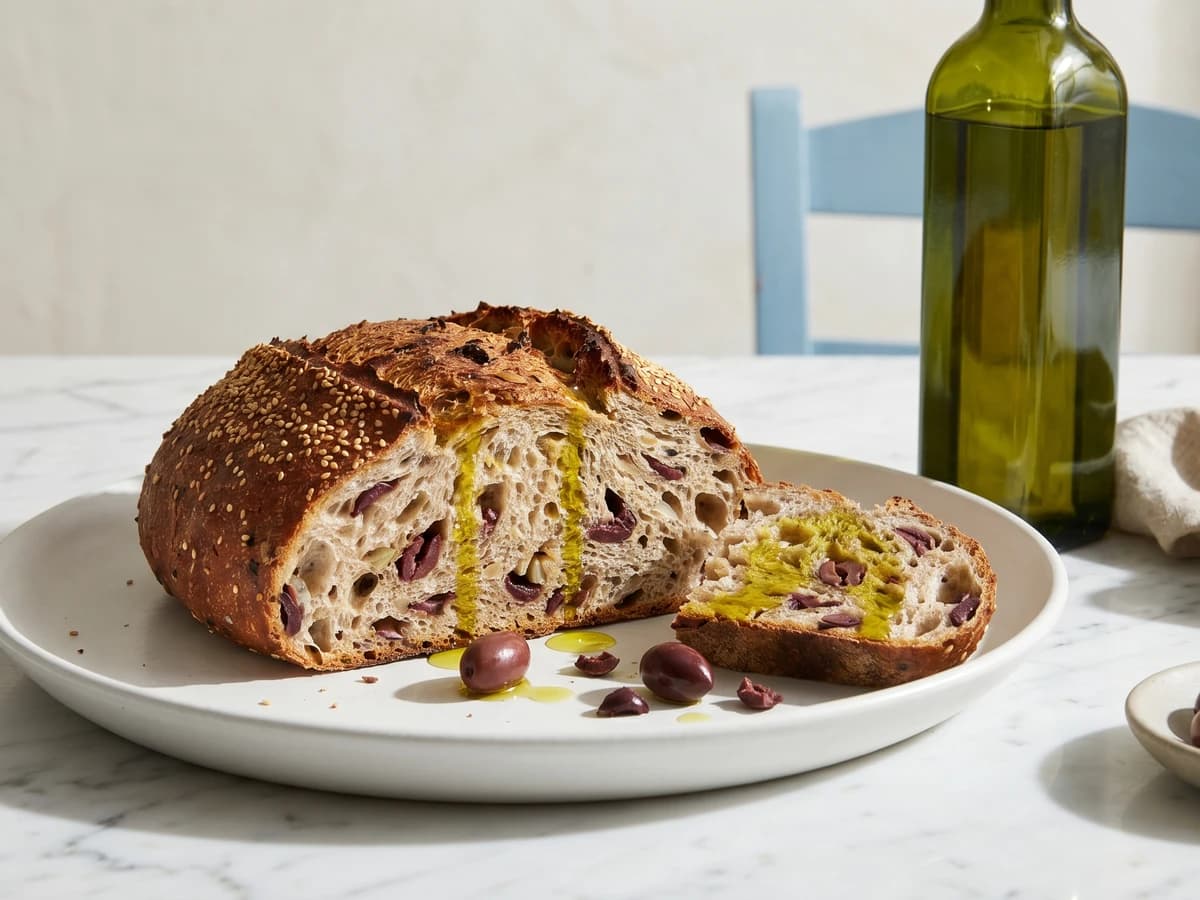
Messenian olive bread studded with Kalamata olives and onion, made for the meze table, the picnic cloth, and the fasting day when good oil carries the meal.