
Chef Dimitra
Arkatena Omodous (Αρκατένα Ομόδους)
Omodos arkatena are Cypriot chickpea-leavened rusks, pale inside and sesame-studded, baked once as little rings and again until they crack clean under the tooth and keep beautifully.
A cooking platform built around craft, culture, and the stories behind what we eat.
Created by
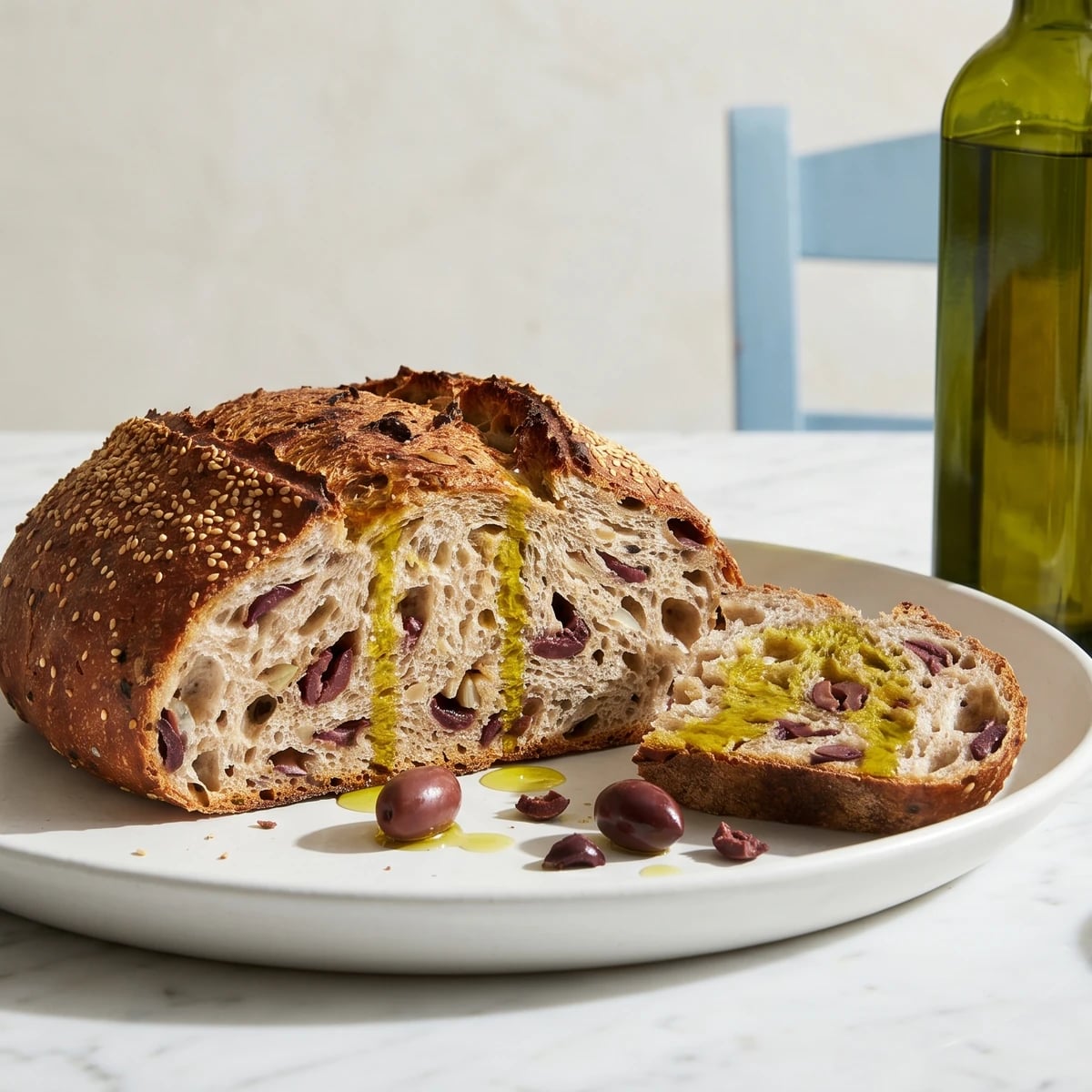
Messenian olive bread studded with Kalamata olives and onion, made for the meze table, the picnic cloth, and the fasting day when good oil carries the meal.
Eliopsomo Messinias is olive bread from Messenia in the southern Peloponnese, where the olive isn't a garnish but the spine of the table. This loaf is soft and chewy inside, crisp at the edge, dark with Kalamata olives, and sweetened just enough by onion to make each slice taste like it already belongs beside a plate of beans, horta, or a glass of wine.
The method that matters is not dramatic. Press the olives dry before they touch the dough. Their brine is good in the olive jar and bad in the loaf, because it slackens the dough and leaves salty wet pockets where the crumb should rise clean. Do that one thing, then let the yeast and the oil work quietly.
This is nistisimo bread, welcome on fasting tables when oil is permitted, but nobody eats it only from duty. It travels well, keeps honestly for two days, and makes a fine lunch with tomato and a little feta outside the fast. I don't invent it. I find it, I test it, I write it down, and this one asks for very little: good olives, good olive oil, and patience.
Olive breads appear across Greek regional cooking, especially in olive-growing areas and in the fasting kitchens shaped by the Orthodox calendar. In Messenia, Kalamata olives and Koroneiki oil made eliopsomo a practical bread for field work, picnics, and meatless days, rich enough to stand as food rather than only as something beside the food. The same idea travels under different names in Cyprus and the islands, but the Messenian loaf is plain, olive-heavy, and built around the fruit of the local groves.
Quantity
500g
plus extra for shaping
Quantity
7g
Quantity
10g
Quantity
320ml
Quantity
60ml
plus 1 tablespoon for the bowl
Quantity
180g
pitted, rinsed, pressed dry, and roughly chopped
Quantity
120g
finely chopped
Quantity
1 teaspoon
Quantity
1/2 teaspoon
Quantity
1 tablespoon
| Ingredient | Quantity |
|---|---|
| strong bread flourplus extra for shaping | 500g |
| instant yeast | 7g |
| fine sea salt | 10g |
| lukewarm water | 320ml |
| extra virgin Koroneiki olive oilplus 1 tablespoon for the bowl | 60ml |
| Kalamata olivespitted, rinsed, pressed dry, and roughly chopped | 180g |
| yellow onionfinely chopped | 120g |
| dried Greek oregano | 1 teaspoon |
| freshly ground black pepper | 1/2 teaspoon |
| sesame seeds (optional) | 1 tablespoon |
Rinse the pitted Kalamata olives if they are very briny, then spread them on a clean towel and press hard until the towel comes away stained but not wet. This is the step that decides the loaf. Wet olives slacken the dough and streak it with harsh brine; dry olives give you a tender crumb with clean pockets of salt and fruit.
In a large bowl, stir together the flour, yeast, salt, oregano, and pepper. Add the lukewarm water and 60ml olive oil, then mix until no dry flour remains. The dough should feel soft and a little tacky, not pourable and not stiff.
Knead by hand for 8 to 10 minutes, or in a stand mixer on low for 5 to 6 minutes, until the dough turns smooth and elastic. If it sticks badly, dust the bench lightly, but don't bury it in flour. Olive bread wants a moist dough, or it bakes heavy.
Pat the dough into a rough rectangle. Scatter over the dried chopped olives and the finely chopped onion, then fold the dough over itself several times until the filling is spread through it. Some olives will push out. Press them back in and keep going.
Oil the bowl with 1 tablespoon olive oil, set the dough inside, and turn it once so the surface is lightly coated. Cover and let it rise in a warm place for 1 hour 30 minutes to 2 hours, until doubled and soft under your finger.
Turn the dough onto a lightly floured surface and shape it into a round or oval loaf, tucking the edges underneath to make a tight skin. Set it on a parchment-lined baking tray. Cover loosely and let it rise for 35 to 45 minutes, until puffy.
Heat the oven to 220C. Brush the loaf lightly with water, sprinkle with sesame seeds if using, and slash the top once with a sharp knife. Bake for 15 minutes, then lower the oven to 190C and bake for 25 minutes more, until the crust is deep brown and the loaf sounds hollow when tapped underneath.
Move the bread to a rack and let it cool for at least 45 minutes before slicing. Cut too early and the crumb smears around the olives. Warm is good. Hot from the knife is impatience, and bread punishes that.
1 serving (about 130g)
Culinary guides, cultural storytelling, and the editorial depth that makes cooking meaningful.
Discover Culinary Explorer
Chef Dimitra
Omodos arkatena are Cypriot chickpea-leavened rusks, pale inside and sesame-studded, baked once as little rings and again until they crack clean under the tooth and keep beautifully.

Chef Dimitra
Attica's Clean Monday lagana is lean, sesame-heavy, and deeply dimpled, made to be torn beside taramosalata before the bread goes stale by morning.

Chef Dimitra
Crete's eftazymo rises from a ground-chickpea ferment kept warm and still, then bakes into a fragrant sesame loaf with sweet-sour crumb and a faint whisper of mastic.

Chef Dimitra
Cypriot flaounes are Easter cheese breads with a sesame crust, fragrant dough, and a firm halloumi-anari filling that must rest before it bakes.