
Chef Joost
Acar Ketimun (Indo-Dutch Cucumber Pickle)
Acar means pickle, ketimun means cucumber, and this little bowl of sweet vinegar, chilli, and crunch is the cool note that lets an Indo-Dutch rijsttafel keep its balance.
A cooking platform built around craft, culture, and the stories behind what we eat.
Created by
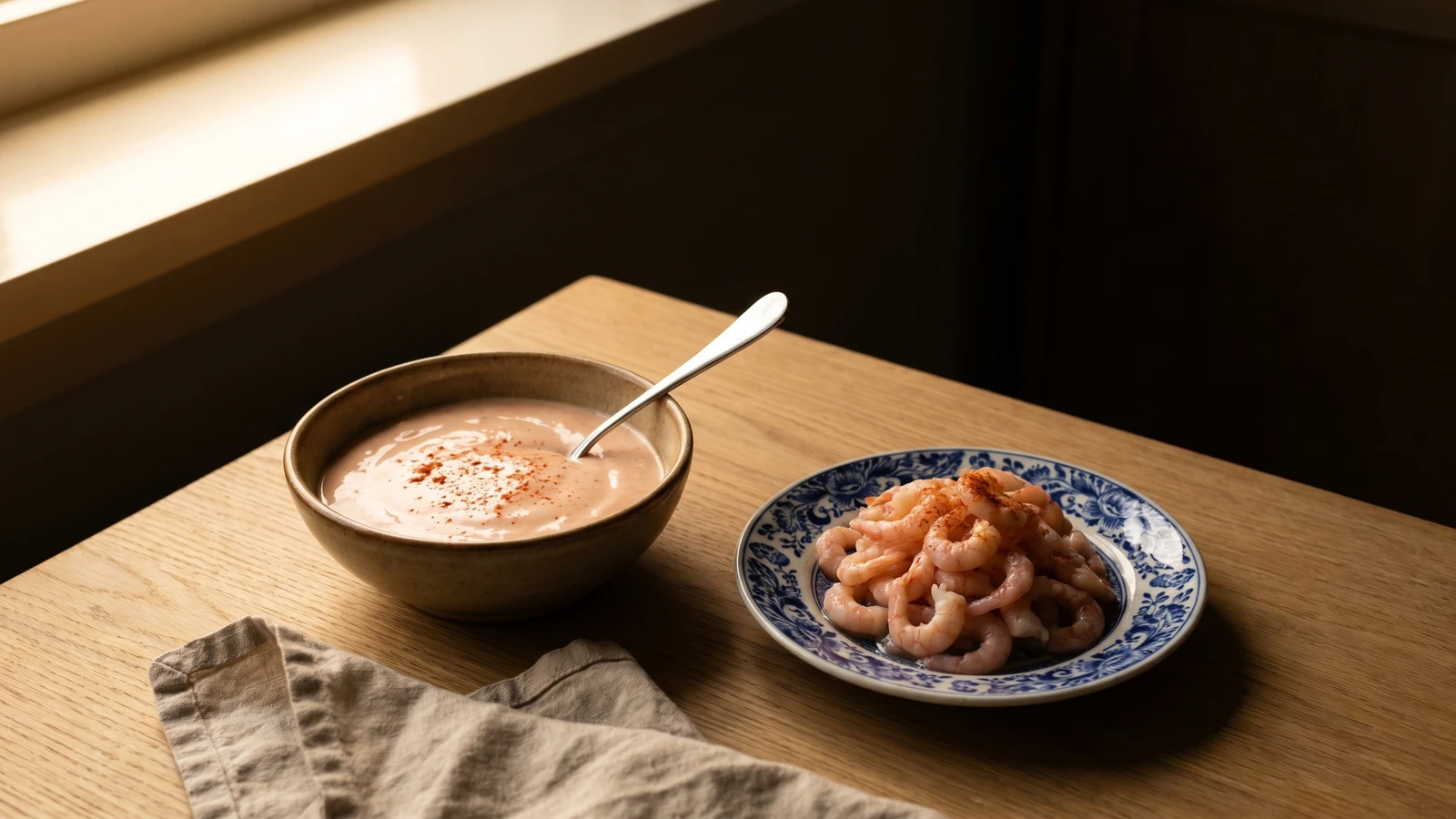
The pink party sauce beside every Dutch shrimp cocktail, where mayonnaise blushes with tomato and brandy, and the North Sea gets dressed for company.
At the quay in Zeeland, a Hollandse garnaal, the small brown North Sea shrimp, does not look like a party creature. It is grey-brown, modest, almost apologetic, until you taste it. Sweet, briny, and so delicate that a heavy hand can bully it in one spoonful. That is where cocktailsaus enters, pink as a borrowed idea and Dutch as the table it landed on.
But let me tell you a secret: the sauce is not the story of ketchup conquering mayonnaise. It is the story of the Dutch borrel, that civilized hour of drinks and small bites, learning how to look a little festive without forgetting itself. The name is borrowed from the English cocktail, of course, and it came to us through the shrimp cocktail, served in glasses in hotel dining rooms and later at home when people discovered that a coupe glass made dinner feel expensive (even if the cook still washed it afterward).
The method is almost nothing, which means balance is everything. Mayonnaise gives body, tomato gives colour and sweetness, lemon keeps it awake, Worcestershire gives the small dark note nobody should identify too loudly, and brandy or whisky makes it a party sauce rather than a sandwich spread. Hou het altijd simpel. Stir, taste, rest it cold, and let the shrimp remain the brightest thing on the spoon.
Cocktailsaus entered Dutch home cooking in the twentieth century through the shrimp cocktail, a hotel and dinner-party dish that spread across Europe after the Anglo-American cocktail fashion of the late nineteenth and early twentieth centuries. The Dutch version became softer and creamier than the sharper tomato-based American sauce, built on mayonnaise and commonly served with Hollandse garnalen, the small brown shrimp from the North Sea. Its place at the borrel, the convivial Dutch drinks table, shows how international dining fashions were quietly absorbed into domestic Dutch habits.
Quantity
150g
Quantity
3 tablespoons
Quantity
1 tablespoon
Quantity
1 teaspoon
Quantity
1 teaspoon
Quantity
1/2 teaspoon
Quantity
1 small pinch
Quantity
1 teaspoon
to loosen, if needed
Quantity
to taste
| Ingredient | Quantity |
|---|---|
| good mayonnaise | 150g |
| tomato ketchup | 3 tablespoons |
| brandy, whisky, or jonge jenever | 1 tablespoon |
| Worcestershire sauce | 1 teaspoon |
| fresh lemon juice | 1 teaspoon |
| mild paprika | 1/2 teaspoon |
| cayenne pepper | 1 small pinch |
| cream or cold water (optional)to loosen, if needed | 1 teaspoon |
| fine sea salt and white pepper | to taste |
Put the mayonnaise and ketchup in a small bowl and stir until the colour is even, a soft salmon pink rather than a streaked argument. This is the body of the sauce, so use mayonnaise you actually like; the shrimp will not hide a dull one.
Stir in the brandy, Worcestershire sauce, lemon juice, paprika, and cayenne. Taste before adding salt. Worcestershire brings its own savoury depth, and a good Dutch shrimp brings the sea with it.
If the sauce feels too stiff for dipping, loosen it with a teaspoon of cream or cold water. You want it to coat a shrimp lightly, not bury it. A cocktailsaus that sits heavily on the spoon has forgotten its manners.
Cover and refrigerate for at least thirty minutes, then taste once more before serving. The cold rest lets the tomato sweetness settle and the brandy stop shouting. Serve with Hollandse garnalen, boiled shrimp, crab, fried fish, or a plate of raw vegetables at the borrel, the Dutch drinks table where small food does large social work.
1 serving (about 35g)
Culinary guides, cultural storytelling, and the editorial depth that makes cooking meaningful.
Discover Culinary ExplorerChef Joost
Acar means pickle, ketimun means cucumber, and this little bowl of sweet vinegar, chilli, and crunch is the cool note that lets an Indo-Dutch rijsttafel keep its balance.

Chef Joost
Appelcompote is the apple left with its dignity: soft enough to spoon beside pork or potatoes, still chunky enough to remind you autumn did the real work.

Chef Joost
The little bowl beside the plate is never decoration: appelmoes is the Dutch treaty between sweet and savoury, spooned beside sausage, potatoes, pancakes, and childhood itself.

Chef Joost
Appelstroop is the orchard made patient: apples, pears, and beet syrup boiled down until morning bread, farmhouse cheese, and zuurvlees taste of Limburg in autumn.