Chef Lupita
Acúmara Tatemada al Comal
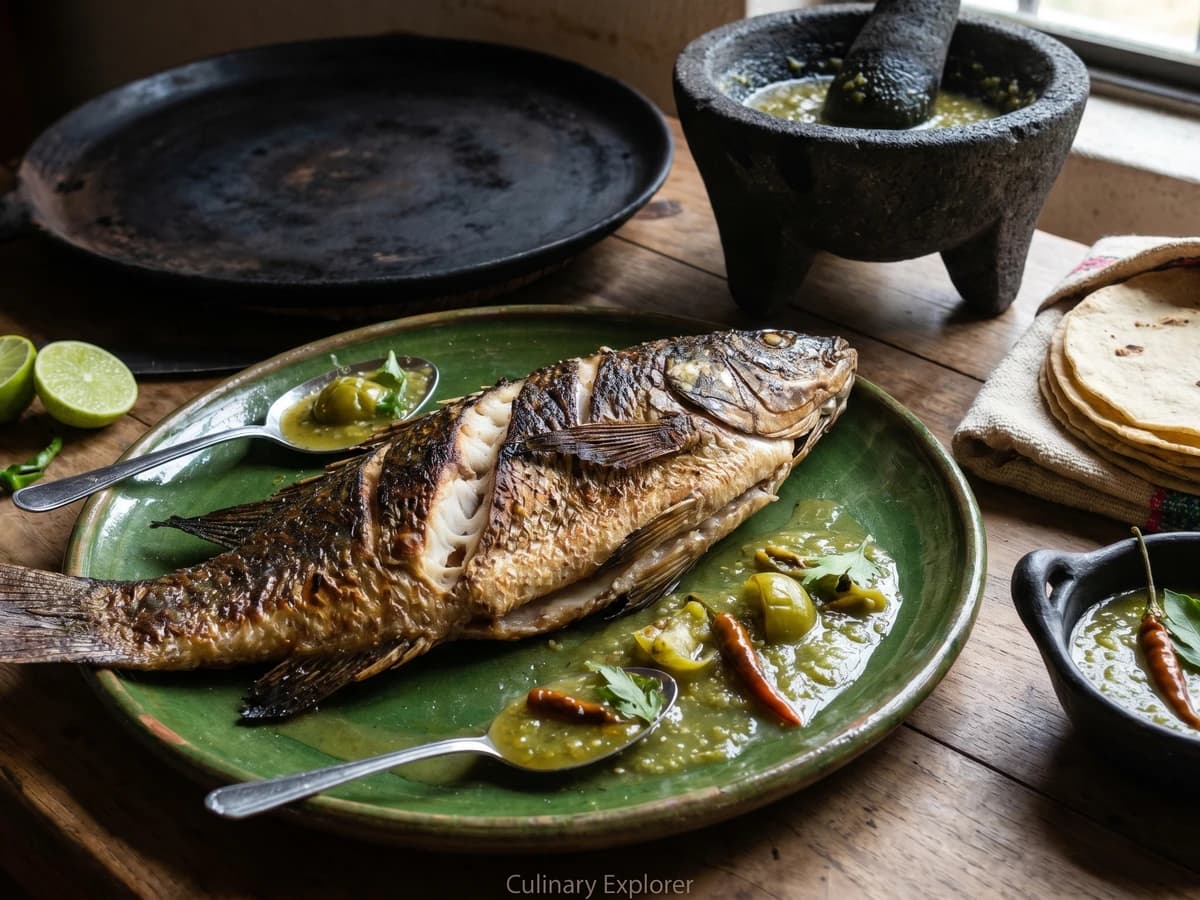
Michoacán's Lake Pátzcuaro acúmara, a whole kurucha from the lago tatemada on a comal de leña and served with chile perón atápakua, corn tortillas, and P'urhépecha discipline.
A cooking platform built around craft, culture, and the stories behind what we eat.

Created by
Oaxaca's masa dumplings, each one thumb-pressed for the ombligo, simmered in a brick-orange mole amarillo built on chilhuacle amarillo, chile guajillo, and hierba santa.
Mole amarillo is from Oaxaca. One of the seven, and the most underestimated of them all. People outside the state hear mole and think dark, sweet, chocolate. Mole amarillo has none of that. No chocolate, no fruit, no sugar. It is bright, herbaceous, brick-orange from the chilhuacle amarillo, and built on chiles, charred tomatillos, and the green muscle of hierba santa. The cooks of the Valles Centrales call it caldoso, soupy, because it is meant to be ladled, not spooned thick onto a plate.
The chochoyotes are the soul of the dish. Small masa dumplings, each one pressed with the thumb to make the ombligo, the belly button. That dimple is not decoration and it is not optional. It catches the broth, it cooks the masa from the inside out, and it is how an Oaxacan cook signs her work. The masa needs lard. La manteca es el sabor and a chochoyote made with oil tastes like nothing. The masa also needs to rest before you shape it, or it will crack in the broth and ruin the pot.
This is a vegetable mole. Chayote, green beans, potato, whatever the mercado is selling on the day you cook. In Oaxaca it is also made with pork or chicken, but the version with chochoyotes and verduras is the one I learned from a senora in Tlacolula who has been selling caldos at the Sunday market for forty years. She told me the ombligo had to be deep enough to hold a tear of hierba santa. Anything less and the dumpling would not drink the broth.
My mother never made this. She was from Jalisco. But I have a page in her notebook where she copied a mole amarillo recipe from a friend who had spent a summer in Oaxaca, with a margin note in pencil: "el chile chilhuacle no se sustituye." The chilhuacle does not get substituted. She was right, and forty years later I am still trying to track down enough of it to teach with. Cada estado, su propia cocina.
Mole amarillo is one of the seven moles codified in 20th-century Oaxacan cookbooks, alongside negro, rojo, coloradito, verde, chichilo, and manchamanteles, though its underlying technique of grinding chiles with charred tomatillos and aromatics in a metate predates the Spanish conquest by centuries. The chilhuacle amarillo, an heirloom chile cultivated in Oaxaca's Canada region, has been at risk of extinction for decades as fewer farmers grow it commercially; preservation efforts by Oaxacan cooperatives and chefs since the 2000s have stabilized but not reversed the decline. Chochoyotes themselves are a Zapotec contribution, a way of stretching masa and broth into a complete meal in the rural Valles Centrales, and the thumb-pressed ombligo is a cooking-mechanic feature, increased surface area for hydration, that became a regional signature.
Quantity
2 cups
preferably Masienda or Maseca for tamales
Quantity
1/2 cup, plus 2 tablespoons
softened
Quantity
1 1/2 teaspoons, divided
Quantity
1 1/4 cups, plus more as needed
Quantity
6
stemmed and seeded
Quantity
4
stemmed and seeded
Quantity
2
stemmed and seeded (or 2 more guajillo)
Quantity
4 medium
husked and rinsed
Quantity
1/2 medium
Quantity
3
unpeeled
Quantity
4
Quantity
2
Quantity
1/2 teaspoon
Quantity
1 (1-inch) piece
Quantity
6 cups
Quantity
3 sprigs, plus more for serving
Quantity
1 sprig
Quantity
2 medium
peeled and cut into 1-inch pieces
Quantity
1 cup
trimmed and cut into 2-inch lengths
Quantity
1 large
peeled and cut into 1-inch pieces
Quantity
2 tablespoons
dissolved in 1/4 cup cold water
Quantity
for serving
Quantity
for serving
warmed
| Ingredient | Quantity |
|---|---|
| masa harina (nixtamalized)preferably Masienda or Maseca for tamales | 2 cups |
| pork lard (manteca de cerdo)softened | 1/2 cup, plus 2 tablespoons |
| kosher salt | 1 1/2 teaspoons, divided |
| warm water | 1 1/4 cups, plus more as needed |
| dried chile chilhuacle amarillostemmed and seeded | 6 |
| dried chile guajillostemmed and seeded | 4 |
| dried chile costeno amarillostemmed and seeded (or 2 more guajillo) | 2 |
| tomatilloshusked and rinsed | 4 medium |
| white onion | 1/2 medium |
| garlic clovesunpeeled | 3 |
| whole black peppercorns | 4 |
| whole cloves | 2 |
| cumin seed | 1/2 teaspoon |
| Mexican cinnamon (canela) | 1 (1-inch) piece |
| vegetable broth or water | 6 cups |
| fresh hierba santa (hoja santa) | 3 sprigs, plus more for serving |
| fresh epazote | 1 sprig |
| chayotepeeled and cut into 1-inch pieces | 2 medium |
| green beans (ejotes)trimmed and cut into 2-inch lengths | 1 cup |
| yellow-fleshed potatopeeled and cut into 1-inch pieces | 1 large |
| masa harina (for thickening)dissolved in 1/4 cup cold water | 2 tablespoons |
| lime wedges (optional) | for serving |
| hand-pressed corn tortillas (optional)warmed | for serving |
In a wide bowl, combine the masa harina with 1/2 teaspoon of the salt. Add the softened lard and work it in with your fingers until the masa looks like wet sand. Pour in the warm water a little at a time, kneading until the masa is smooth, soft, and slightly tacky but not sticky. Cover with a damp cloth and let it rest for 20 minutes. The masa needs to hydrate fully or the chochoyotes will crack in the broth.
Heat a dry comal or heavy skillet over medium. Toast the chilhuacle amarillo, guajillo, and costeno separately, pressing them flat for about 20 seconds per side. They should turn fragrant and pliable, never blacken. The chilhuacle amarillo is delicate and burns fast. Watch it. Burned chile turns the mole bitter and there is no hiding it later.
Place the toasted chiles in a heatproof bowl and cover with hot tap water. Hot, not boiling. Let them soften for 20 minutes. Meanwhile, on the same comal, char the tomatillos, the half onion, and the unpeeled garlic. The tomatillos should blister and soften, the onion should turn dark on both cut sides, and the garlic skins should blacken in patches. Pull the garlic when it is soft, peel, and set aside with the rest.
In the same dry skillet, toast the peppercorns, cloves, cumin seed, and the piece of canela for about a minute, until fragrant. Move them to a spice grinder or molcajete and grind to a fine powder. Spices toasted whole and ground fresh have a depth that pre-ground spices simply do not. Asi se hace y punto.
Drain the chiles, reserving the soaking liquid. Transfer the chiles, charred tomatillos, onion, peeled garlic, ground spices, and 1 1/2 cups of the broth to a blender. Blend on high for two full minutes until completely smooth. The color should be a deep brick-orange, almost amber. Strain through a fine-mesh sieve, pressing on the solids. Discard the skins. You want a clean, glossy puree.
In a wide cazuela or heavy pot, melt 2 tablespoons of lard over medium heat. Add the strained chile puree. It will sputter aggressively. Stand back. Cook for eight to ten minutes, stirring almost constantly with a wooden spoon, until the puree darkens, thickens, and the fat starts to bead at the edges. La manteca es el sabor. This step transforms a thin chile water into mole.
Pour in the remaining broth and any chile soaking liquid you reserved (taste it first; if it is bitter, use more broth instead). Add the hierba santa and epazote, tied together with kitchen twine if you want to fish them out later. Bring to a low simmer. Add the potato and let it cook for 10 minutes, then add the chayote and green beans. Simmer 10 minutes more, until the vegetables are nearly tender. Season with the remaining 1 teaspoon salt. Taste. The broth should taste assertive. The chochoyotes will absorb flavor as they cook.
Uncover the rested masa. Roll it into balls the size of a large marble, about an inch across. Press your thumb into the center of each ball to make a deep indentation, the ombligo, the belly button. That dimple is not decoration. It catches the broth, it cooks the masa from the inside, and it is the visual signature of a chochoyote. A round ball without the thumbprint is just a dumpling. A chochoyote has the ombligo. You should have 24 to 30 dumplings.
Drop the chochoyotes one at a time into the simmering mole, ombligo facing up where you can. Do not stir aggressively or they will break apart. Give the pot a gentle swirl. Cover partially and simmer for 12 to 15 minutes. The chochoyotes are done when they have firmed up, swelled slightly, and float at the top. The masa cooks the broth as much as the broth cooks the masa. The mole will thicken on its own from the corn that releases.
If the mole still feels thin, stir in the masa-water slurry and let it cook for two more minutes until the broth coats the back of a spoon. Taste once more for salt. Ladle into shallow bowls, making sure each portion gets four or five chochoyotes, a piece of each vegetable, and plenty of broth. Tear a fresh leaf of hierba santa over the top. Serve with warm tortillas and lime. Recetas probadas y garantizadas.
1 serving (about 510g)
Culinary guides, cultural storytelling, and the editorial depth that makes cooking meaningful.
Discover Culinary ExplorerChef Lupita
Michoacán's Lake Pátzcuaro acúmara, a whole kurucha from the lago tatemada on a comal de leña and served with chile perón atápakua, corn tortillas, and P'urhépecha discipline.

Chef Lupita
Puebla's weekday adobo of pork shoulder braised in a thick guajillo and ancho sauce sharpened with vinegar, cumin, and clove. The deep red of a market spice stall, the dish a poblana cooks without thinking.

Chef Lupita
Loreto's pit-roasted clams, planted hinge-up in beach sand and tatemadas under a fast fire of dried romerillo brush, the resinous Baja desert shrub that gives this dish its smoke.

Chef Lupita
Oaxaca's eighth mole, the silky, almond-and-cinnamon almendrado, served over poached chicken. Mild, sweet, restrained, and a quiet rebuttal to anyone who thinks Mexican food has to be hot to be Mexican.