
Chef Joost
Acar Ketimun (Indo-Dutch Cucumber Pickle)
Acar means pickle, ketimun means cucumber, and this little bowl of sweet vinegar, chilli, and crunch is the cool note that lets an Indo-Dutch rijsttafel keep its balance.
A cooking platform built around craft, culture, and the stories behind what we eat.
Created by
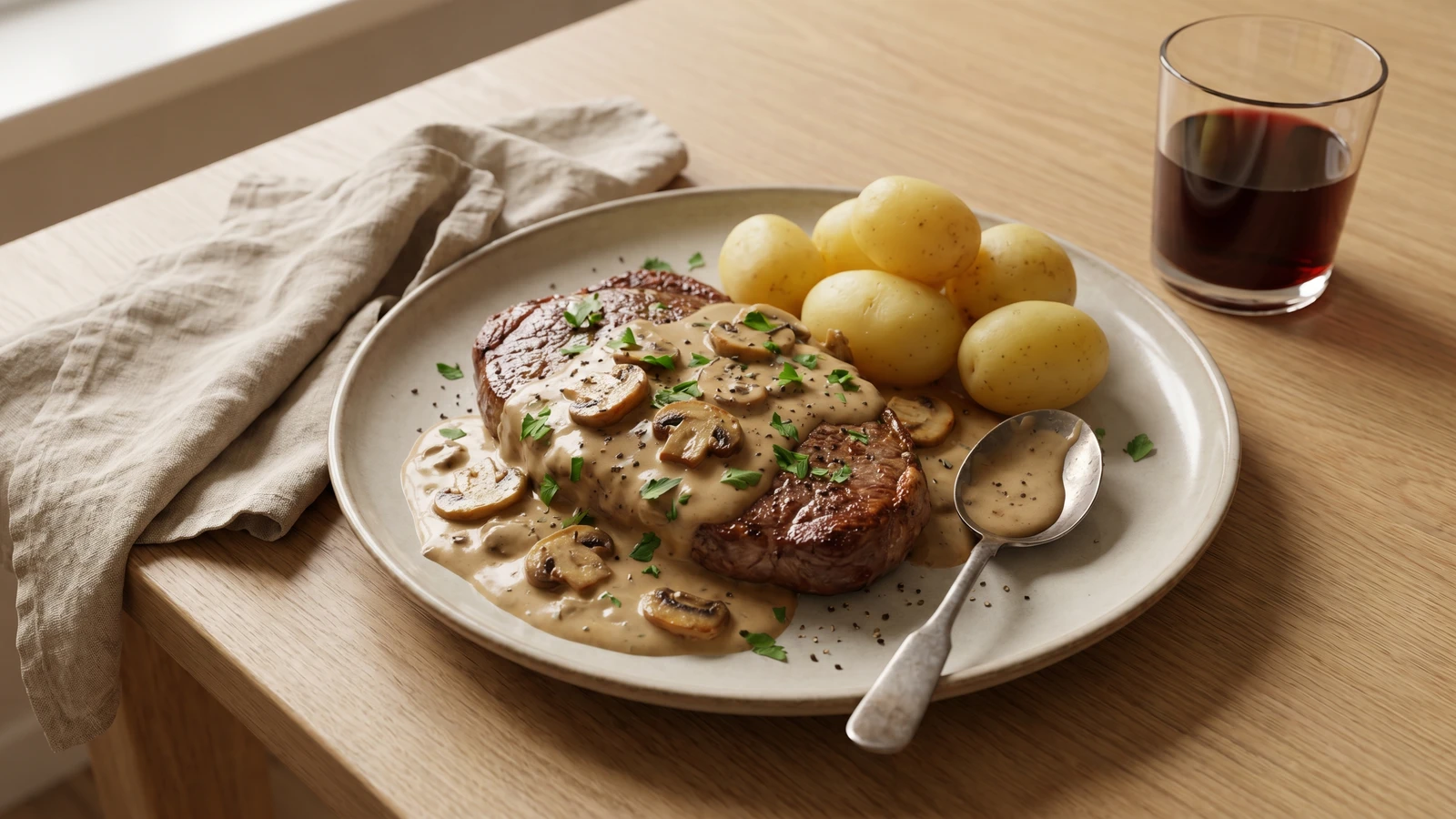
The everyday Dutch mushroom sauce with a French name and a Limburg story: browned champignons, butter, stock and cream, made plain enough to tell the truth.
Champignonsaus is the sauce of the family table after the butcher has done his modest work. A pork chop, a plain biefstuk, a plate of potatoes with a kuiltje, the little hollow made for sauce: this is where it belongs. Not grand. Necessary.
The name already tells you the first secret. Champignon is a French word, but in Dutch it means something very specific: the cultivated white button mushroom, not the fairy-ring paddenstoel from the forest. In the Netherlands the champignon became an everyday ingredient only when mushroom growing moved from luxury cellars into modern farms, especially in Limburg and Brabant. A small white mushroom, yes, but also a sign of postwar Dutch practicality: make the delicate thing reliable, then put it on Tuesday's table.
But let me tell you a secret. Most bad champignonsaus is not under-seasoned, it is under-browned. Mushrooms are mostly water, and if you crowd them they stew in their own apology. Give them a wide pan, butter, patience, and enough heat to turn their edges nut-brown before the stock and cream arrive. Hou het altijd simpel, always keep it simple: brown first, bind second, spoon generously.
The Dutch word champignon was borrowed from French, where it broadly means mushroom, but in the Netherlands it came to mean the cultivated button mushroom in particular. Commercial mushroom growing expanded rapidly in the Netherlands after the Second World War, with Limburg and North Brabant becoming important production regions by the 1950s and 1960s. Champignonsaus belongs to that modern home-kitchen moment: a once-refined mushroom cream sauce made reliable, affordable and ordinary enough to serve with weekday meat.
Quantity
400g
wiped clean and sliced
Quantity
40g
Quantity
1 tablespoon
Quantity
1 small
finely chopped
Quantity
1
finely minced
Quantity
1 tablespoon
Quantity
150ml
Quantity
150ml
Quantity
1 teaspoon
Quantity
1 teaspoon
Quantity
1 tablespoon
chopped
Quantity
to taste
| Ingredient | Quantity |
|---|---|
| white button mushrooms (champignons)wiped clean and sliced | 400g |
| unsalted butter | 40g |
| neutral oil | 1 tablespoon |
| shallotfinely chopped | 1 small |
| garlic clovefinely minced | 1 |
| all-purpose flour | 1 tablespoon |
| beef or chicken stock | 150ml |
| heavy cream | 150ml |
| Dijon mustard | 1 teaspoon |
| Worcestershire sauce (optional) | 1 teaspoon |
| flat-leaf parsleychopped | 1 tablespoon |
| salt and black pepper | to taste |
Wipe the champignons clean with a damp cloth or brush and slice them about half a centimetre thick. Don't soak them. They already carry enough water, and the whole success of the sauce depends on driving that water off before you ask them for flavour.
Set a wide frying pan over medium-high heat and add the oil and half the butter. Add the mushrooms in a single layer, with room between them if your pan allows it. Let them cook without fussing until their liquid has evaporated and the edges turn deep golden brown, about eight to ten minutes. If they squeak a little against the pan, good. That is the sound of water leaving and flavour staying.
Lower the heat to medium, add the remaining butter, then stir in the shallot and garlic. Cook for two minutes until the shallot softens and the garlic smells gentle, not sharp. Salt lightly now, because the stock will bring its own opinion.
Sprinkle the flour over the mushrooms and stir for one minute, coating everything in the buttery paste. Pour in the stock a little at a time, scraping the browned bits from the pan as you go. Those bits are not dirt, they are the sauce's memory.
Stir in the cream, mustard, and Worcestershire sauce if using. Let the sauce simmer gently for five to seven minutes until it coats the back of a spoon and the mushrooms sit in it rather than swim. Taste, then finish with black pepper, salt if needed, and the parsley.
Spoon the sauce over a pork chop, biefstuk, roasted chicken, or boiled potatoes with a kuiltje, the little hollow that exists for exactly this purpose. Serve it while glossy and loose; if it thickens too much, stir in a splash of stock or cream and it will forgive you.
1 serving (about 165g)
Culinary guides, cultural storytelling, and the editorial depth that makes cooking meaningful.
Discover Culinary ExplorerChef Joost
Acar means pickle, ketimun means cucumber, and this little bowl of sweet vinegar, chilli, and crunch is the cool note that lets an Indo-Dutch rijsttafel keep its balance.

Chef Joost
Appelcompote is the apple left with its dignity: soft enough to spoon beside pork or potatoes, still chunky enough to remind you autumn did the real work.

Chef Joost
The little bowl beside the plate is never decoration: appelmoes is the Dutch treaty between sweet and savoury, spooned beside sausage, potatoes, pancakes, and childhood itself.

Chef Joost
Appelstroop is the orchard made patient: apples, pears, and beet syrup boiled down until morning bread, farmhouse cheese, and zuurvlees taste of Limburg in autumn.