
Chef Juliette
John Dory (St. Pierre)
John Dory has the delicacy of sole and the firmness of turbot. A light flouring, a quick butter sauté, and nut-brown beurre noisette show exactly why looks never mattered.
A cooking platform built around craft, culture, and the stories behind what we eat.
Created by Chef Juliette
Based on No. 997, Laitances à la Meunière, from Le Guide Culinaire (1907) by Auguste Escoffier
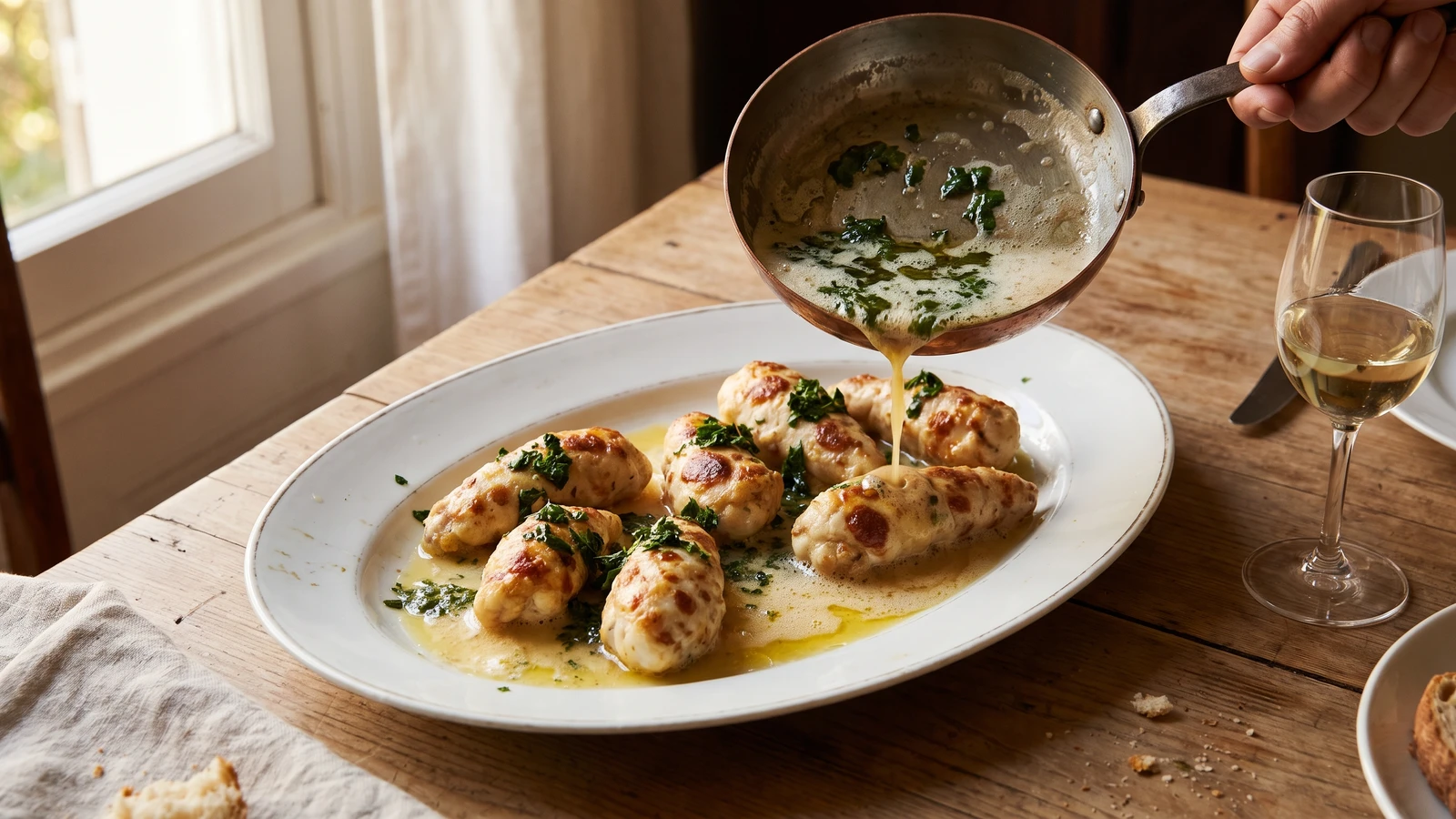
Tender fish milt under a thin golden flour crust, with lemon, parsley, and foaming butter poured at the final second: meunière at its most delicate, and timing made visible.
Laitances à la Meunière (soft roe, or fish milt, floured and cooked meunière) teaches the cleanest lesson in the fish kitchen: a fragile thing colors only when its surface is dry and the butter is properly hot. The laitances should remain creamy within, protected by a thin golden crust that holds just long enough to receive lemon, parsley, and the final foaming butter. Before you touch the pan, know this one truth: moisture ruins the color, and delay ruins the finish.
The original entry calls for none of the usual brigade scaffolding, no saucier on staff, no stockpot kept perpetually hot, and no salamander. What it does assume is a hot serving dish, an unobstructed frying pan, and another pair of hands ready to carry the laitances away the instant the butter lands. At home, warm the platter in a low oven, arrange every finishing ingredient within reach, and call your guests before you begin. One cook, one stove, one evening.
This four-serving version uses clarified butter for frying because one cook must manage two batches without scorching the milk solids, then whole butter for the final pour because its froth is part of the dish. Warming the platter and scalding the parsley ahead are useful scaffolding. Last-minute flouring, decisive frying, and butter poured just as it begins to brown are the dish itself, and they stay. The final butter is the step that matters most: pale hazelnut and lively, never black or bitter.
Laitances à la Meunière belongs to Parisian cuisine bourgeoise and the wider French classical fish table, where fishmongers sold carp, herring, and other whole fish with their delicate milt intact. Laitance is not fish eggs but the male soft roe, a distinction often lost once whole-fish cookery moved away from the household cutting board. The meunière method passed naturally from small fish and fillets to laitances because a veil of flour protects their fragile surface while the last foaming butter turns an inexpensive part of the catch into generous special-occasion food.
Quantity
1 application for 4 servings
Quantity
1½ pounds (680 g)
kept whole or cut into collops
Quantity
1½ teaspoons (7.5 ml / 9 g)
divided
Quantity
½ teaspoon (2.5 ml / 1 g)
divided
Quantity
½ cup (120 ml / 60 g)
Quantity
½ cup (120 ml / 110 g)
for frying
Quantity
⅓ cup loosely packed (80 ml / 20 g)
Quantity
2 teaspoons (10 ml / 10 g)
Quantity
6 tablespoons (90 ml / 85 g)
for finishing
Quantity
2 tablespoons (30 ml / 28 g)
held in reserve for rescue
| Ingredient | Quantity |
|---|---|
| The Cooking of Fish à la Meunière (No. 778) | 1 application for 4 servings |
| very fresh soft roe sacskept whole or cut into collops | 1½ pounds (680 g) |
| fine sea saltdivided | 1½ teaspoons (7.5 ml / 9 g) |
| freshly ground black pepperdivided | ½ teaspoon (2.5 ml / 1 g) |
| plain flour | ½ cup (120 ml / 60 g) |
| clarified unsalted butterfor frying | ½ cup (120 ml / 110 g) |
| flat-leaf parsley leaves | ⅓ cup loosely packed (80 ml / 20 g) |
| fresh lemon juice | 2 teaspoons (10 ml / 10 g) |
| unsalted butterfor finishing | 6 tablespoons (90 ml / 85 g) |
| additional unsalted butter (optional)held in reserve for rescue | 2 tablespoons (30 ml / 28 g) |
Keep the laitances cold until the pan is nearly ready. Trim away only loose threads and ragged membrane, leaving each enclosing sac intact. If the sacs are unusually large, cut them crosswise into collops, thick slices about 1½ inches (4 cm) wide; otherwise cook them whole. Blot every surface thoroughly with clean towels. Handle them lightly, since squeezing forces the creamy interior through the membrane before it has set.
Drop the parsley leaves into boiling water for 10 seconds, then lift them directly into cold water. Drain, squeeze them completely dry, and chop them concassée, coarsely rather than to a paste. Spread the parsley on a towel while you prepare the pan. It must be dry enough to scatter freely, but the little moisture it retains will wake the final butter into froth.
Warm an oven-safe serving platter in a 200°F (95°C) oven. Following The Cooking of Fish à la Meunière (No. 778), season the laitances lightly on both sides with about two-thirds of the salt and pepper. Pour the flour into a shallow dish, turn each piece through it, and shake off every loose patch. Flour only when the butter is ready; if the coating waits on the wet roe, it becomes paste instead of a fine crust.
Heat half the clarified butter in a 12-inch (30 cm) frying pan over medium-high heat until it shimmers without smoking. Lay in half the laitances with space between them and leave them undisturbed until the underside is golden, 2 to 4 minutes according to thickness. Turn once with a thin spatula and cook the second side until golden and the centers are opaque and just firm, reaching 145°F (63°C). Repeat with the remaining clarified butter and laitances. If a sac splits while turning, stop handling it and spoon hot butter over the exposed surface until it sets. Ça se rattrape: serve that piece split-side down, and no one at the table need know.
Arrange the laitances at once on the warmed platter without stacking them. Sprinkle over the lemon juice a few drops at a time, season with the remaining salt and pepper, and scatter the concassée parsley evenly across the surfaces. Keep the platter beside the stove. From this moment, there is no useful waiting.
Pour the used frying butter from the pan. If the flour crumbs on the pan floor are golden, leave them; if they are black, wipe the pan clean. Add the 6 tablespoons of whole butter and swirl over medium heat until the foam rises, the milk solids turn pale hazelnut, and the aroma becomes nutty. This is beurre noisette, butter just beginning to brown. Pour it immediately over the parsley-covered laitances so it froths on contact. If the butter turns black or smells sharp, don't pour it. Ça se rattrape: wipe the pan, use the reserved butter, and begin again over gentler heat.
Carry the platter directly to the table while the butter still wears its lively foam and the crust remains delicate. Divide the laitances onto warm plates and spoon every drop of lemony butter and parsley from the platter over them. Meunière waits for no one. À table!
1 serving (about 195g)
Culinary guides, cultural storytelling, and the editorial depth that makes cooking meaningful.
Discover Culinary ExplorerChef Juliette
John Dory has the delicacy of sole and the firmness of turbot. A light flouring, a quick butter sauté, and nut-brown beurre noisette show exactly why looks never mattered.

Chef Juliette
Fresh haddock proves its delicacy in the meunière pan: a fine flour crust, moist pearly flakes, and beurre noisette sharpened with lemon and parsley, ready from one skillet in half an hour.

Chef Juliette
Éperlans à l’Anglaise turns small fish into a lesson in disciplined coating: boned smelts under a close, crisp crumb, pan-fried in clarified butter and finished with bright, half-melted maître d’hôtel butter.

Chef Juliette
Tiny smelts, shallot, mushrooms, white wine, gratin sauce, and fine bread raspings meet a fierce oven, where the fish must turn tender in the same breath the buttered crust bronzes.