
Chef Juliette
John Dory (St. Pierre)
John Dory has the delicacy of sole and the firmness of turbot. A light flouring, a quick butter sauté, and nut-brown beurre noisette show exactly why looks never mattered.
A cooking platform built around craft, culture, and the stories behind what we eat.
Created by Chef Juliette
Based on No. 778, The Cooking of Fish à la Meunière, from Le Guide Culinaire (1907) by Auguste Escoffier
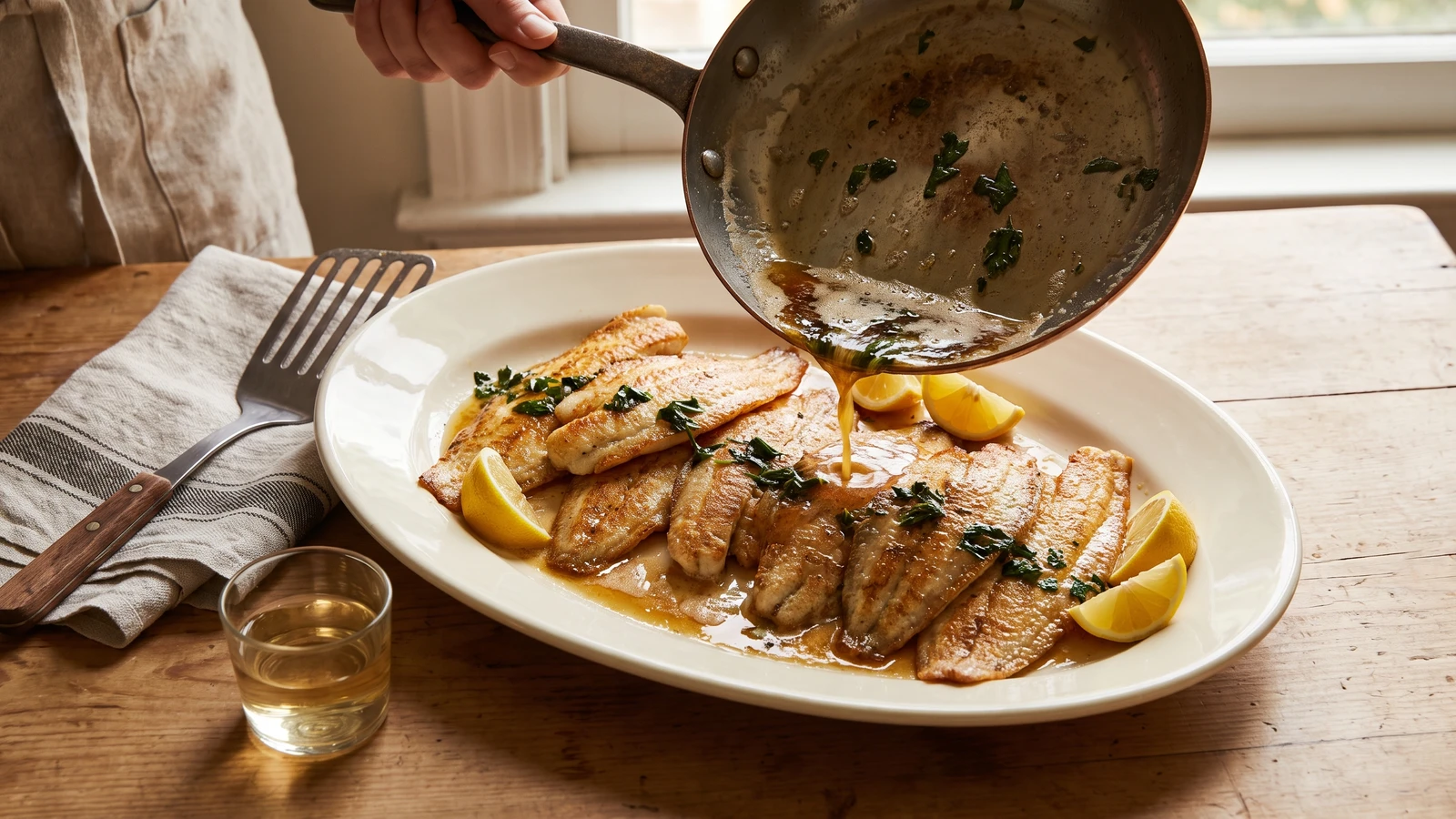
Poisson à la meunière teaches restraint: thin fillets lightly floured, gilded in hot butter, then finished at once with lemon, concassed parsley, and foaming beurre noisette.
Poisson à la meunière (fish in the miller's style) teaches restraint. Flour, hot butter, lemon, parsley, nothing can hide and nothing needs to. Before you touch a pan, know the one true thing: the dusting of flour must meet fish that is dry and butter that is properly hot, so it gilds before moisture can soften it.
The grand kitchen often surrounded fish cookery with a saucier on staff, stock never off the fire, and a salamander ready for finishing. This entry calls on none of them. Its hidden brigade luxury was several pans, several hands, and a hot dish leaving the pass the instant the butter foamed. Here, eight small fillets cook in one wide skillet over two quick batches, while a warmed platter in a switched-off oven stands in for immediate service. Clarified butter protects the first gilding during batch cooking; fresh whole butter remains for the final beurre noisette. The extra hands are scaffolding. The thin flouring, gilded crust, lemon, concassed scalded parsley, and last pour of butter are the dish and must stay. One cook, one stove, one evening.
The pan asks for nerve, not theatrics. Flour only when the clarified butter is shimmering, leave the first side alone until its crust releases, then turn once. The moment that matters is the first contact: dry fish, a whisper of flour, and butter hot enough to gild without smoking.
Poisson à la meunière belongs to France's national classical table, though Parisian dining rooms and the sole landed at Normandy's Channel ports fixed sole meunière in the public imagination. The name invokes the meunière, the miller's wife, because flour gives the fish its delicate gilded skin rather than a heavy crust. The source makes a distinction often lost in retelling: floured fish pan-fried in butter and sent plain is doré, or gilded, while drops of lemon, concassed scalded parsley, and lightly browned butter poured at the last instant make it meunière.
Quantity
8, each 3 to 4 ounces (85 to 115 g)
pin-boned and evenly trimmed
Quantity
1½ teaspoons (7.5 ml / 9 g)
divided
Quantity
¾ teaspoon (3.75 ml / 1.5 g)
divided
Quantity
½ cup (120 ml / 60 g)
Quantity
6 tablespoons (90 ml / 85 g)
divided
Quantity
8 tablespoons (120 ml / 113 g)
cut into pieces
Quantity
4 tablespoons (60 ml / 57 g)
kept cold as a rescue reserve
Quantity
2 medium; juice yield 2 tablespoons (30 ml / 30 g)
one juiced and one quartered
Quantity
½ cup (120 ml / 15 g)
concassed and scalded
| Ingredient | Quantity |
|---|---|
| skinless sole or flounder filletspin-boned and evenly trimmed | 8, each 3 to 4 ounces (85 to 115 g) |
| fine sea saltdivided | 1½ teaspoons (7.5 ml / 9 g) |
| freshly ground black pepperdivided | ¾ teaspoon (3.75 ml / 1.5 g) |
| all-purpose flour | ½ cup (120 ml / 60 g) |
| clarified butterdivided | 6 tablespoons (90 ml / 85 g) |
| unsalted buttercut into pieces | 8 tablespoons (120 ml / 113 g) |
| additional unsalted butter (optional)kept cold as a rescue reserve | 4 tablespoons (60 ml / 57 g) |
| lemonsone juiced and one quartered | 2 medium; juice yield 2 tablespoons (30 ml / 30 g) |
| flat-leaf parsley leavesconcassed and scalded | ½ cup (120 ml / 15 g) |
Set a large oven-safe platter in the oven at its lowest setting, about 170°F (75°C), until warm, then switch the oven off. Concass the parsley, meaning chop it roughly, place it in a fine-mesh sieve, and pour boiling water over it for five seconds. Rinse briefly with cold water, then squeeze it in a clean towel until thoroughly dry. Juice one lemon and trim the other into four neat quarters. Everything after the fish enters the pan moves quickly, so have the lemon, parsley, seasonings, and warm platter within reach.
Pat every fillet dry on both sides, paying attention to the thinner edges. Season lightly with about half the salt and pepper. Spread the flour in a shallow dish, then dredge only the first four fillets, turning once and shaking off every loose trace; the coating should look like dust, not batter. Do this immediately before cooking. If the flour turns gummy in damp patches, brush it off, dry the fish again, and apply a fresh light dusting. Ça se rattrape.
Heat 3 tablespoons (45 ml / 42 g) clarified butter in a 12-inch heavy skillet over medium-high heat until it shimmers but does not smoke. Lay in four fillets presentation-side down without overlap. Cook without disturbing them for 2 to 3 minutes, until the underside is evenly gilded and the opacity has climbed halfway up the sides. If a fillet resists the spatula, leave it another twenty seconds; a properly formed crust releases more willingly than a pale one. Turn once with a fish spatula supported by a second broad spatula, then cook the second side for 45 to 90 seconds, just until the flesh is opaque and separates in moist flakes. If the butter smokes, lift the pan off the heat at once, transfer the fish temporarily, wipe out the dark fat, lower the heat, and continue with fresh clarified butter. The fish need not be sacrificed to a hot pan.
Transfer the cooked fillets to the warm platter with the spatula and season them lightly while their surface is still hot. Keep them in the switched-off oven. Add the remaining 3 tablespoons (45 ml / 42 g) clarified butter to the skillet and flour the final four fillets only now. Gild and turn them exactly as before, then place them on the platter. The first batch should wait no longer than five minutes; this brief hold replaces the brigade's several pans without drying the fish.
Pour off the spent frying butter and wipe any dark flour crumbs from the skillet, keeping the same pan for the finish. Take the platter from the oven. Sprinkle the lemon juice over the fillets drop by drop rather than flooding them, season with the remaining salt and pepper, and scatter the concassed, scalded parsley evenly over the top. Set the lemon quarters along the platter's edge.
Add the 8 tablespoons (120 ml / 113 g) fresh unsalted butter to the skillet and set it over medium heat. Swirl the pan as the butter melts and foams; when the white foam begins to settle and the milk solids turn pale hazelnut with a clean, nutty aroma, remove the pan from the heat. It continues browning after it leaves the burner. If it darkens too quickly but still smells sweet, pour it immediately into a cool heatproof cup and whisk in a spoonful of the cold reserve butter to stop the cooking. If it has turned black or smells bitter, discard it, wipe the pan, and brown the reserve butter instead. Ça se rattrape, but burned butter cannot be argued back into goodness. Pour the beurre noisette over the lemoned fish at once; it should froth across the parsley exactly as the dish intends. Carry the platter directly to the table while that froth is still alive. À table!
1 serving (about 220g)
Culinary guides, cultural storytelling, and the editorial depth that makes cooking meaningful.
Discover Culinary ExplorerChef Juliette
John Dory has the delicacy of sole and the firmness of turbot. A light flouring, a quick butter sauté, and nut-brown beurre noisette show exactly why looks never mattered.

Chef Juliette
Fresh haddock proves its delicacy in the meunière pan: a fine flour crust, moist pearly flakes, and beurre noisette sharpened with lemon and parsley, ready from one skillet in half an hour.

Chef Juliette
Éperlans à l’Anglaise turns small fish into a lesson in disciplined coating: boned smelts under a close, crisp crumb, pan-fried in clarified butter and finished with bright, half-melted maître d’hôtel butter.

Chef Juliette
Tiny smelts, shallot, mushrooms, white wine, gratin sauce, and fine bread raspings meet a fierce oven, where the fish must turn tender in the same breath the buttered crust bronzes.