
Chef Juliette
John Dory (St. Pierre)
John Dory has the delicacy of sole and the firmness of turbot. A light flouring, a quick butter sauté, and nut-brown beurre noisette show exactly why looks never mattered.
A cooking platform built around craft, culture, and the stories behind what we eat.
Created by Chef Juliette
Based on No. 995, Cabillaud à la Portugaise, from Le Guide Culinaire (1907) by Auguste Escoffier
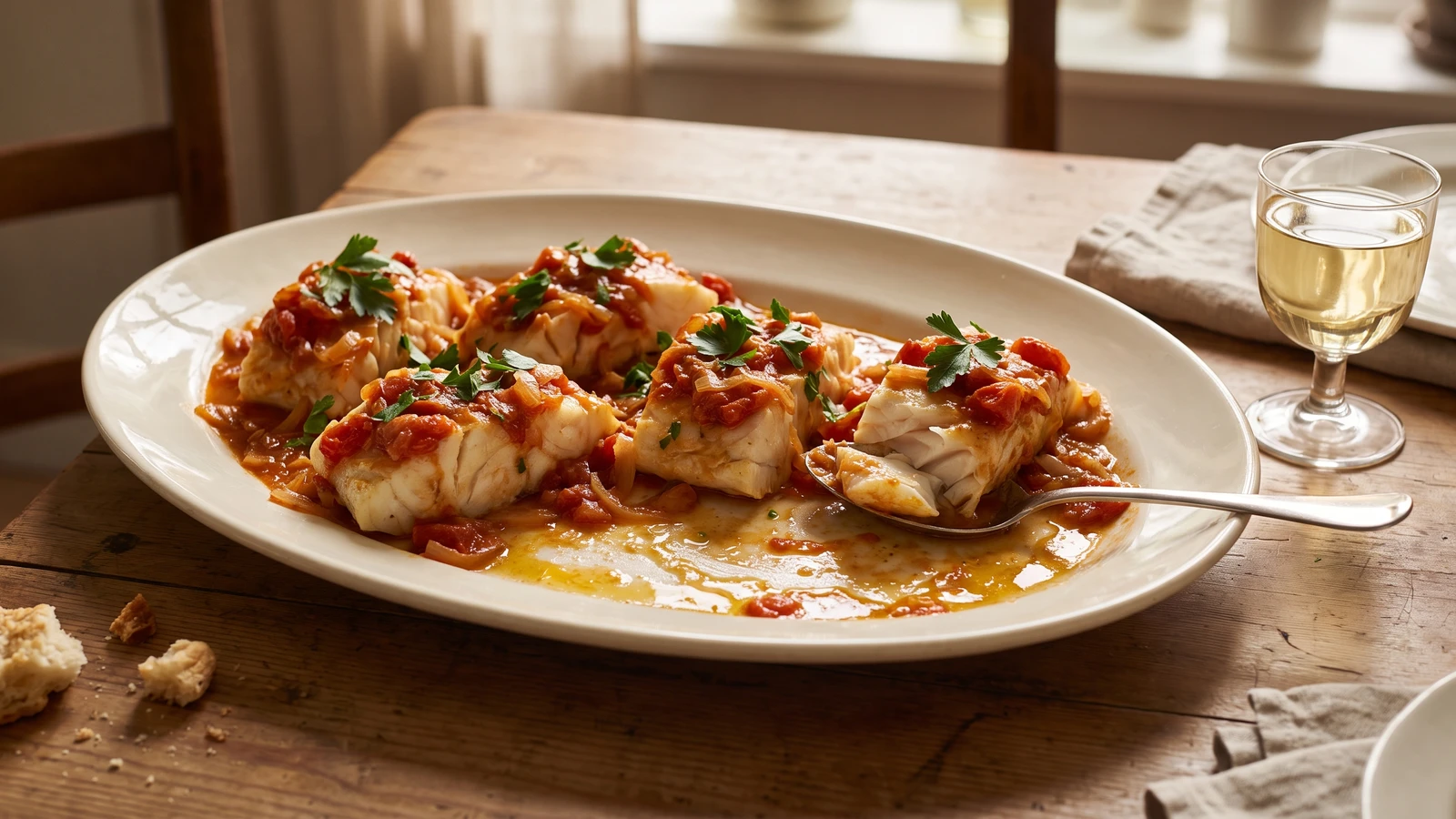
Cabillaud à la Portugaise turns one pan of cod, onion, garlic, tomato, and white wine into its own glossy sauce, with the fish and reduction reaching the table at precisely the same moment.
Cabillaud à la Portugaise (cod with tomato, onion, garlic, and white wine) teaches the timing of a cuisson, the cooking liquor: the sauce must reduce at precisely the rate the cod cooks. Before you touch the pan, know the one true thing about this dish. The sauce isn't made around the fish or corrected afterward. The cod is pressed into the garnish so its juices join the wine and tomato from the beginning.
The original formula assumed five thick half-pound slices for ten people, a broad sautépan, and a range with a hot open fire at its centre and gentler heat along the side. It needed neither a saucier nor a stockpot, because the garnish builds its own sauce. For four, two thick half-pound cod loins preserve the original proportion and cooking time; a wide lidded skillet and a turn of the burner replace the two fire zones. The brigade-sized pan is scaffolding and can go. The covered five minutes followed by the uncovered twelve-minute reduction is the dish and must stay. What the book calls a faggot of herbs becomes one small tied bouquet garni. One cook, one stove, one evening.
When it lands on the platter, the cod should separate into broad pearly leaves beneath a rust-red garnish, with enough glossy liquor to spoon over but no watery moat. The uncovered simmer decides everything. Watch the fish and the reduction together, and if one finishes first, lift the fish or loosen the sauce. Ça se rattrape.
Cabillaud à la Portugaise belongs to the French classical repertoire of garnitures named for places, rather than to the cookery of any single French region. In that vocabulary, à la Portugaise signals tomato, onion, garlic, oil, parsley, and white wine, ingredients French cooks associated with the Iberian Atlantic table. The name is French kitchen shorthand, not a claim that every Portuguese household prepared cod by this exact formula.
Quantity
2 pieces, 1 lb (454 g) total
pin bones removed
Quantity
¾ teaspoon (4 ml / 4 g)
Quantity
¼ teaspoon (1 ml / 0.5 g)
Quantity
2 tablespoons plus 1 teaspoon (35 ml / 34 g)
Quantity
2½ tablespoons (38 ml / 34 g)
Quantity
1, about ¾ cup (180 ml / 100 g)
finely chopped
Quantity
1 pea-sized piece, about ¼ teaspoon (1 ml / 1 g)
crushed
Quantity
1
parsley stem, thyme, and bay leaf tied together
Quantity
1 teaspoon (5 ml / 1 g)
prepared as Concass (roughly chopped)
Quantity
3, about 1¾ cups (420 ml / 400 g)
peeled, seeded, pressed, and finely chopped
Quantity
5 tablespoons (75 ml / 75 g)
| Ingredient | Quantity |
|---|---|
| thick center-cut cod loin piecespin bones removed | 2 pieces, 1 lb (454 g) total |
| fine sea salt | ¾ teaspoon (4 ml / 4 g) |
| freshly ground black pepper | ¼ teaspoon (1 ml / 0.5 g) |
| unsalted butter | 2 tablespoons plus 1 teaspoon (35 ml / 34 g) |
| mild olive oil | 2½ tablespoons (38 ml / 34 g) |
| small onionfinely chopped | 1, about ¾ cup (180 ml / 100 g) |
| garliccrushed | 1 pea-sized piece, about ¼ teaspoon (1 ml / 1 g) |
| small bouquet garniparsley stem, thyme, and bay leaf tied together | 1 |
| flat-leaf parsleyprepared as Concass (roughly chopped) | 1 teaspoon (5 ml / 1 g) |
| medium ripe tomatoespeeled, seeded, pressed, and finely chopped | 3, about 1¾ cups (420 ml / 400 g) |
| dry white wine | 5 tablespoons (75 ml / 75 g) |
Pat the cod dry and remove any pin bones, but leave the two thick pieces whole. Their thickness allows the source formula's cooking time to work; four thin fillets would finish before the liquor reduced. Season both sides with the salt and pepper. Score the tomatoes, cover them with boiling water for 30 seconds, then drain and slip off the skins. Halve them, squeeze out the seeds and watery pulp, press them gently in a clean towel, and chop them finely without turning them to purée.
Melt the butter in a wide, heavy 11-inch (28 cm) sauté pan over medium-low heat. Add the onion and cook for 6 to 8 minutes, stirring often, until soft and only lightly golden. This is coloration, not caramelization. If the edges darken too quickly, pull the pan from the heat and stir in a spoonful of the measured wine. Ça se rattrape. Add the garlic for 20 seconds, then stir in the olive oil, tomatoes, parsley prepared as Concass (roughly chopped), remaining wine, and bouquet garni. Spread the garnish evenly across the pan.
Press the cod firmly into the garnish, leaving the top surfaces exposed but bedding the undersides and edges in tomato and onion. Spoon a little liquor over each piece, cover the pan tightly, and raise the heat to medium-high. Once lively bubbles appear around the fish, cook covered for exactly 5 minutes. The bubbling should be active enough to start the cuisson, but never so violent that the cod knocks about and breaks.
Remove the lid, lower the heat, and cook uncovered for 12 minutes without turning the cod. Keep small, steady bubbles moving through the garnish and shake the pan gently once or twice rather than stirring around the fish. The cod is ready when it separates into broad opaque leaves and reaches 145°F (63°C) at its thickest point; the liquor should simultaneously reduce into a glossy, spoonable sauce. If the sauce tightens before the fish is ready, add 1 tablespoon (15 ml / 15 g) water and continue gently. If the fish finishes while the sauce remains thin, lift it to the warm platter and boil the garnish for 1 to 3 minutes. Ça se rattrape: protect the fish first, then correct the reduction.
Discard the bouquet garni. Transfer the cod to a warmed long platter and divide each thick loin along its natural seam to make four servings. Taste the garnish for seasoning, then pour the tomato, onion, and all the reduced cooking liquor over the fish. Bring it straight to the table while the cod remains moist and the butter still gleams through the sauce. À table!
1 serving (about 215g)
Culinary guides, cultural storytelling, and the editorial depth that makes cooking meaningful.
Discover Culinary ExplorerChef Juliette
John Dory has the delicacy of sole and the firmness of turbot. A light flouring, a quick butter sauté, and nut-brown beurre noisette show exactly why looks never mattered.

Chef Juliette
Fresh haddock proves its delicacy in the meunière pan: a fine flour crust, moist pearly flakes, and beurre noisette sharpened with lemon and parsley, ready from one skillet in half an hour.

Chef Juliette
Éperlans à l’Anglaise turns small fish into a lesson in disciplined coating: boned smelts under a close, crisp crumb, pan-fried in clarified butter and finished with bright, half-melted maître d’hôtel butter.

Chef Juliette
Tiny smelts, shallot, mushrooms, white wine, gratin sauce, and fine bread raspings meet a fierce oven, where the fish must turn tender in the same breath the buttered crust bronzes.