Chef Juliette
Ordinary or White Consommé
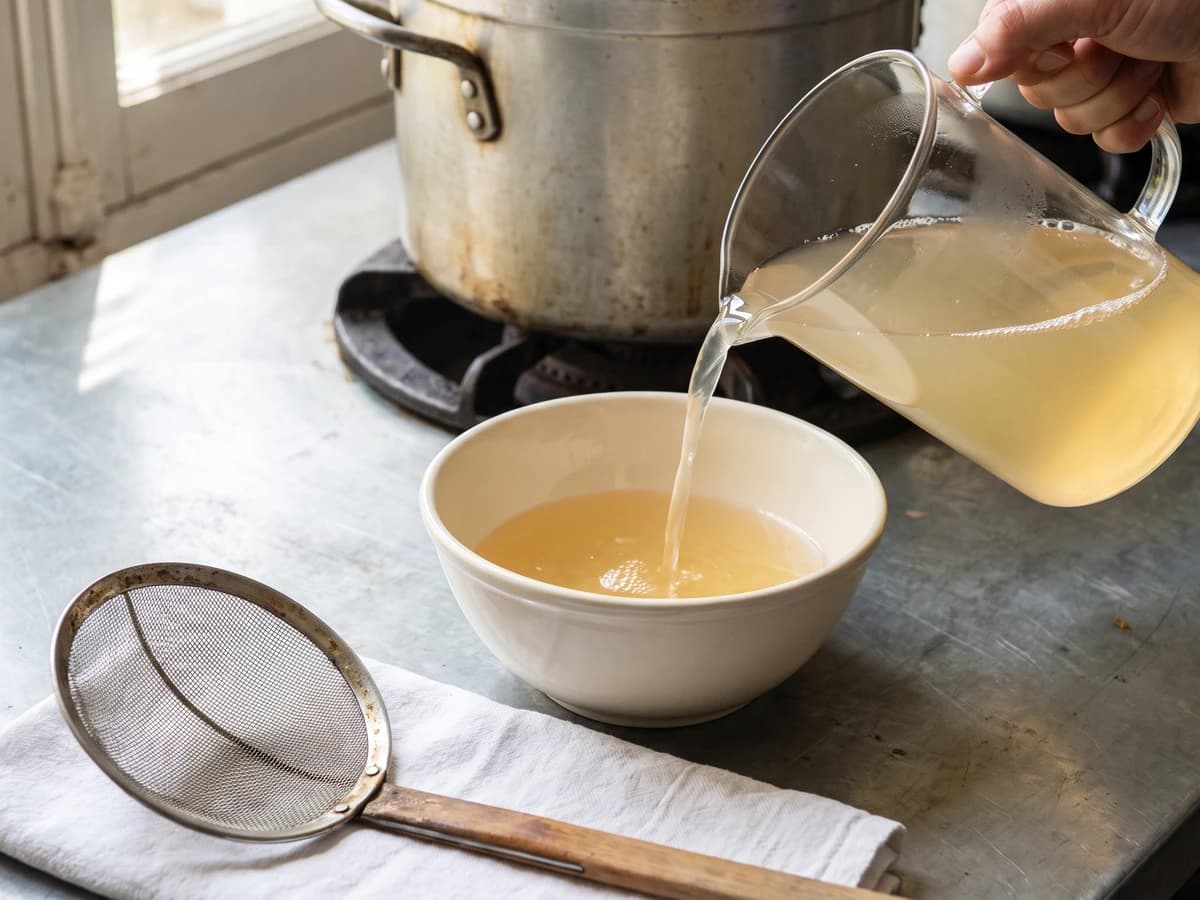
Beef shin, lean beef, and fowl begin in cold water and rise slowly toward a tremble. Skim before the boil, and you learn the quiet discipline that gives every clear French broth its backbone.
A cooking platform built around craft, culture, and the stories behind what we eat.
Created by Chef Juliette
Based on No. 98, Noisette Sauce, from Le Guide Culinaire (1907) by Auguste Escoffier
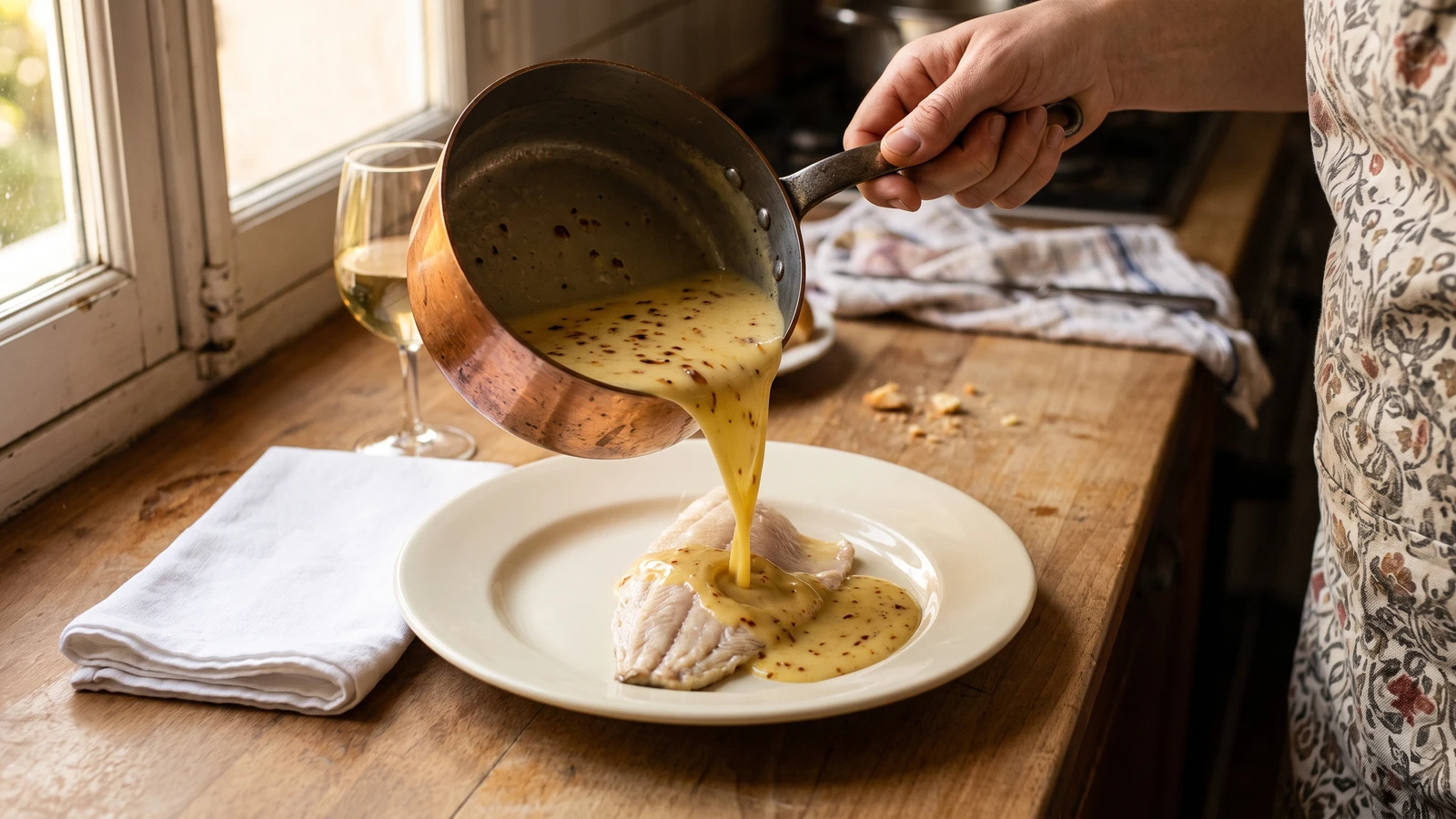
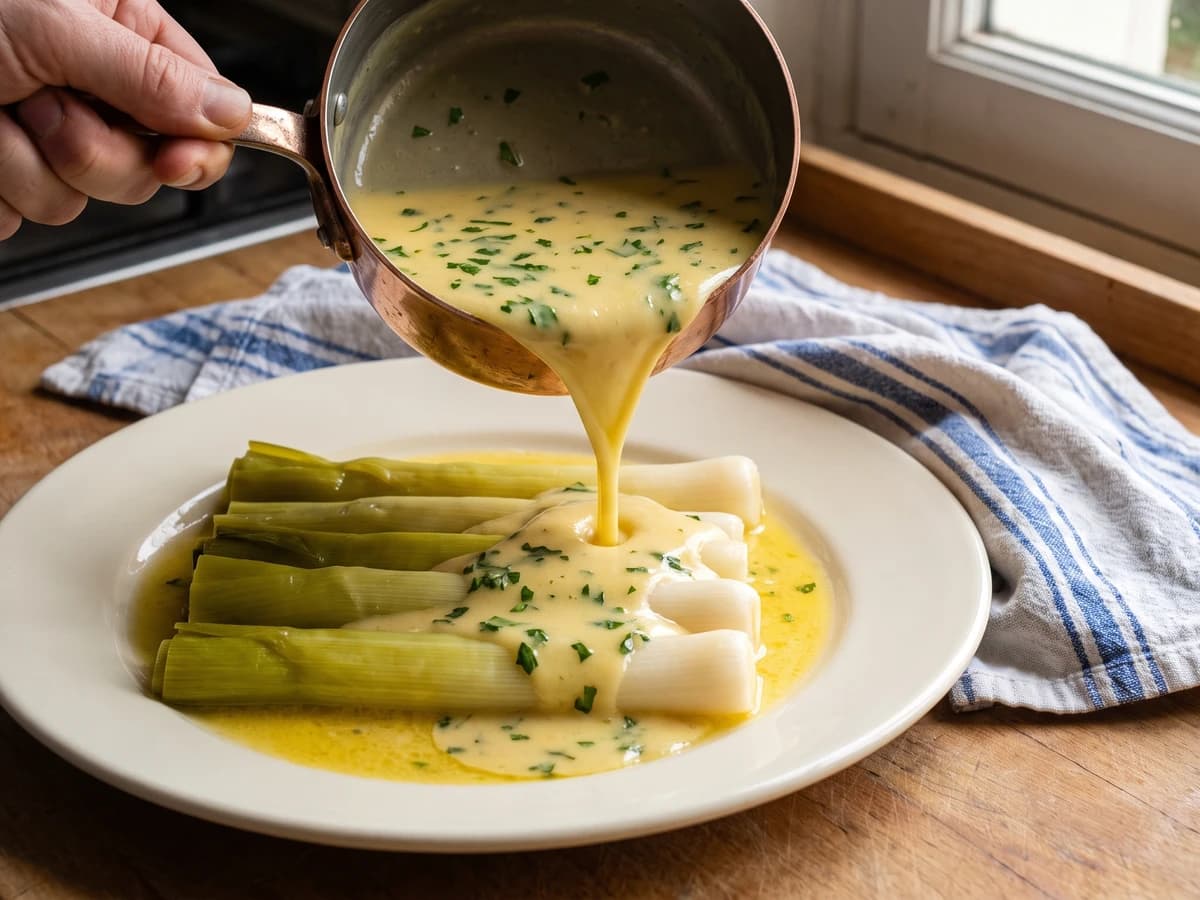
Sauce Noisette turns tepid Hollandaise with a last-minute ribbon of beurre noisette, giving salmon, trout, and poached fish a deep butter fragrance without disturbing the emulsion.
Sauce Noisette (Hollandaise finished with butter cooked to hazelnut color) teaches a delicate lesson in the sauce family: beurre noisette can join a yolk-and-butter emulsion only when their temperatures agree. The finished sauce should be glossy and spoonable, with the soft acidity of Hollandaise underneath and the toasted fragrance of butter arriving last. The one true thing before you touch a pan is this: pan-hot butter poured into the emulsion will break it. Let both become tepid.
The original entry assumed a saucier with Hollandaise ready by the quart in a tepid corner of the range, a tammy at hand, and service calling for the sauce at once. The brigade could multiply that quart formula pan after pan; this home version stops at one large bowl and preserves the exact proportion of two ounces of finished beurre noisette for each quart of Hollandaise Sauce (No. 30). A heatproof bowl over barely warm water replaces the guarded corner of the range. The finished base has already been strained, so a second pass through the tammy is scaffolding and can go; keeping the sauce tepid and adding the beurre noisette at the last moment are the dish itself. One cook, one stove, one evening.
Have the salmon, trout, or poached fish ready before you finish. Sauce Noisette does not wait over a flame, and reheating is where confidence turns to scrambled yolk. The decisive step is to cool the beurre noisette until warm rather than hot, then whisk it into the equally tepid Hollandaise in a fine thread.
Sauce Noisette belongs to the French classical fish table rather than to one regional larder, a Hollandaise derivative sent out with salmon, trout, and fish cooked gently in liquid. Its noisette is not ground hazelnut but beurre noisette, butter taken to the color and aroma of a hazelnut. The sauce traveled readily from grand dining rooms to bourgeois homes because its distinction lies in a last-minute finish, not a separate stock or a day of reduction.
Quantity
8 cups (1.9 L / approximately 1.7 kg) Hollandaise Sauce (No. 30)
freshly made and held tepid
Quantity
10 tablespoons (150 ml / 142 g)
to yield about 1/2 cup (120 ml / 113 g) finished beurre noisette
| Ingredient | Quantity |
|---|---|
| Hollandaise Saucefreshly made and held tepid | 8 cups (1.9 L / approximately 1.7 kg) Hollandaise Sauce (No. 30) |
| unsalted butterto yield about 1/2 cup (120 ml / 113 g) finished beurre noisette | 10 tablespoons (150 ml / 142 g) |
Heat 1 inch of water in a wide saucepan to about 45°C (113°F), then take it completely off the heat. Place 7 1/2 cups of freshly made Hollandaise Sauce (No. 30) in a large heatproof bowl and reserve the remaining 1/2 cup separately for the finish or a rescue. Set both over the warm water without letting their bowls touch it, stirring gently until the sauce registers 38 to 43°C (100 to 110°F). If it grows warmer, lift it away at once. Direct heat has no business here.
Melt the unsalted butter in a pale 20 cm skillet over medium heat. It will foam loudly as its water cooks away, then quieten; swirl the pan often and watch the milk solids beneath the foam. When those flecks turn the deep gold-brown of a hazelnut and the butter smells toasted, immediately pour it, browned flecks and all, into a heatproof jug. Measure or weigh 1/2 cup (120 ml / 113 g) for the sauce. If the pan races toward black, pull it off the heat and keep swirling; butter that smells sharp or burnt must be made again.
Let the measured beurre noisette cool to 40 to 43°C (104 to 110°F), swirling it once or twice so the temperature evens out. It should feel distinctly warm, never pan-hot. This is the step that decides the sauce: butter that is too hot cooks the yolks and collapses the emulsion, while butter allowed to set cannot be whisked in smoothly.
Whisk the tepid Hollandaise once until smooth. Add the measured beurre noisette a spoonful at a time at first, whisking each addition fully into the sauce, then continue in a fine steady thread. The Sauce Noisette should remain thick, glossy, and completely free of oily beads. If it separates, stop pouring. Ça se rattrape: place 2 tablespoons of the reserved Hollandaise Sauce (No. 30) in a clean bowl, whisk in the split sauce one teaspoon at a time until the emulsion returns, then incorporate the rest slowly. Whisk in any unused reserved Hollandaise at the end.
Transfer the Sauce Noisette to a warm, never hot, sauceboat. It should nap the back of a spoon and fall from it in a broad glossy ribbon; if it is too firm, whisk in tepid water one teaspoon at a time. Taste before adjusting anything, because the finished base already carries its salt, acidity, and pepper. Spoon the sauce immediately over salmon, trout, or other gently boiled or poached fish. Never return it to direct heat. À table!
1 serving (about 57g)
Culinary guides, cultural storytelling, and the editorial depth that makes cooking meaningful.
Discover Culinary ExplorerChef Juliette
Beef shin, lean beef, and fowl begin in cold water and rise slowly toward a tremble. Skim before the boil, and you learn the quiet discipline that gives every clear French broth its backbone.
Chef Juliette
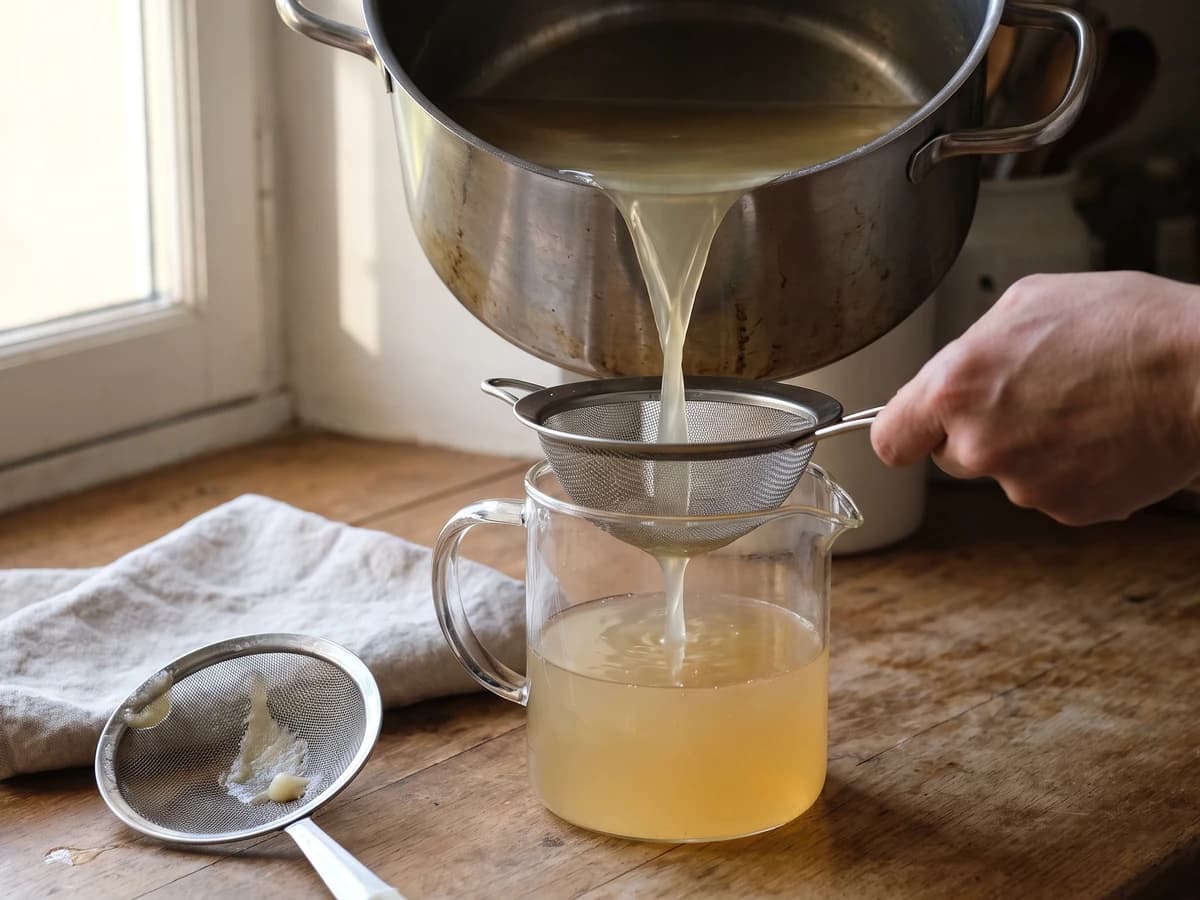
Break the veal bones small, then give them eight hours at a bare tremble. This pale, gelatinous fond becomes the quiet foundation beneath velouté, blanquette, and every sauce that must stay light.
Chef Juliette
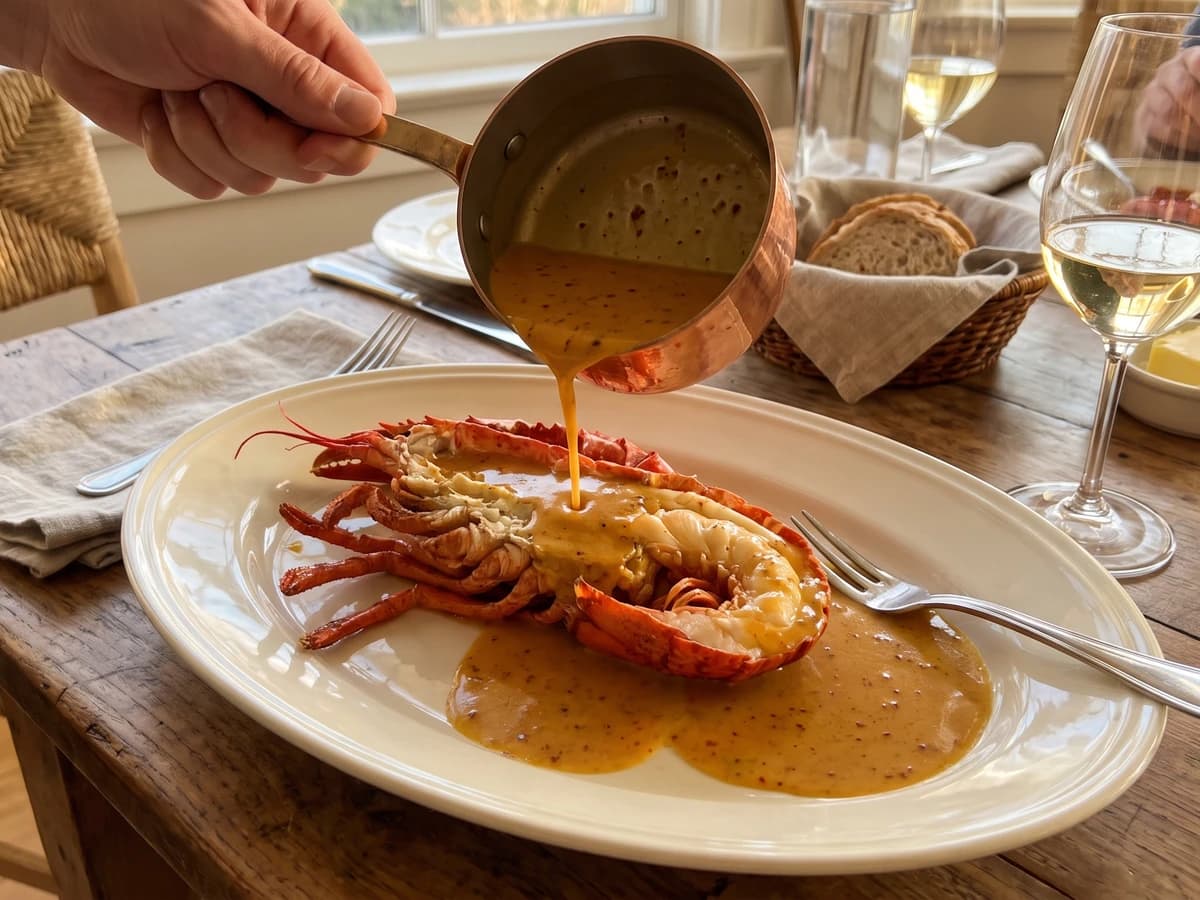
Sauce Orientale concentrates lobster-rich American Sauce with curry, then folds in cream away from the fire: a glossy, gently spiced derivative made for lobster, crayfish, and firm fish.
Chef Juliette
An old lesson in sauce families: Sauce Allemande takes mushroom liquor, then butter, lemon, and parsley, becoming a glossy Poulette for sheep's trotters, leeks, cauliflower, and anything needing gentle richness with a bright edge.