Chef Juliette
Mayonnaise de Volaille
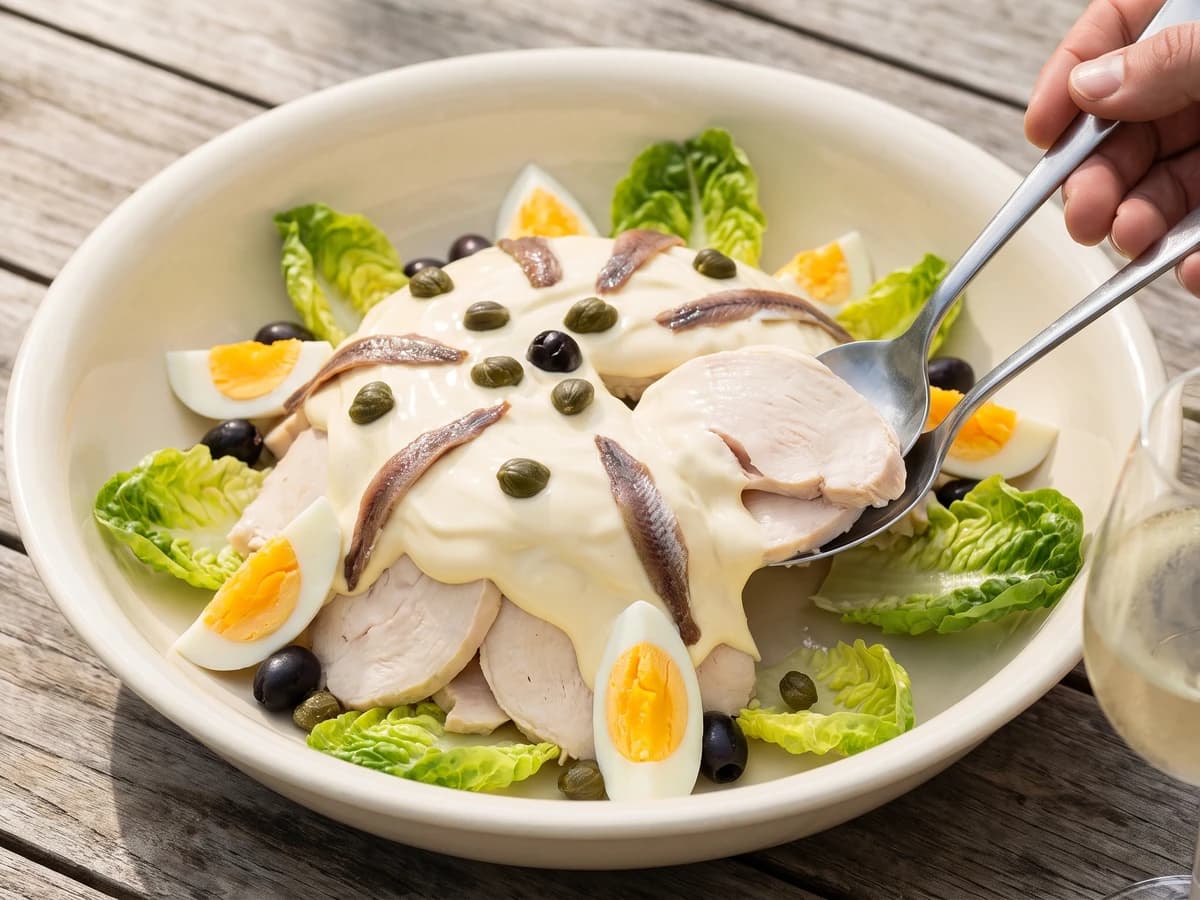
Cold roast chicken, ciseled lettuce, and a shining coat of homemade mayonnaise, arranged with capers, olives, anchovies, eggs, and lettuce hearts, then tossed at the table as the canon intends.
A cooking platform built around craft, culture, and the stories behind what we eat.
Created by Chef Juliette
Based on No. 962, Mayonnaise de Homard, from Le Guide Culinaire (1907) by Auguste Escoffier
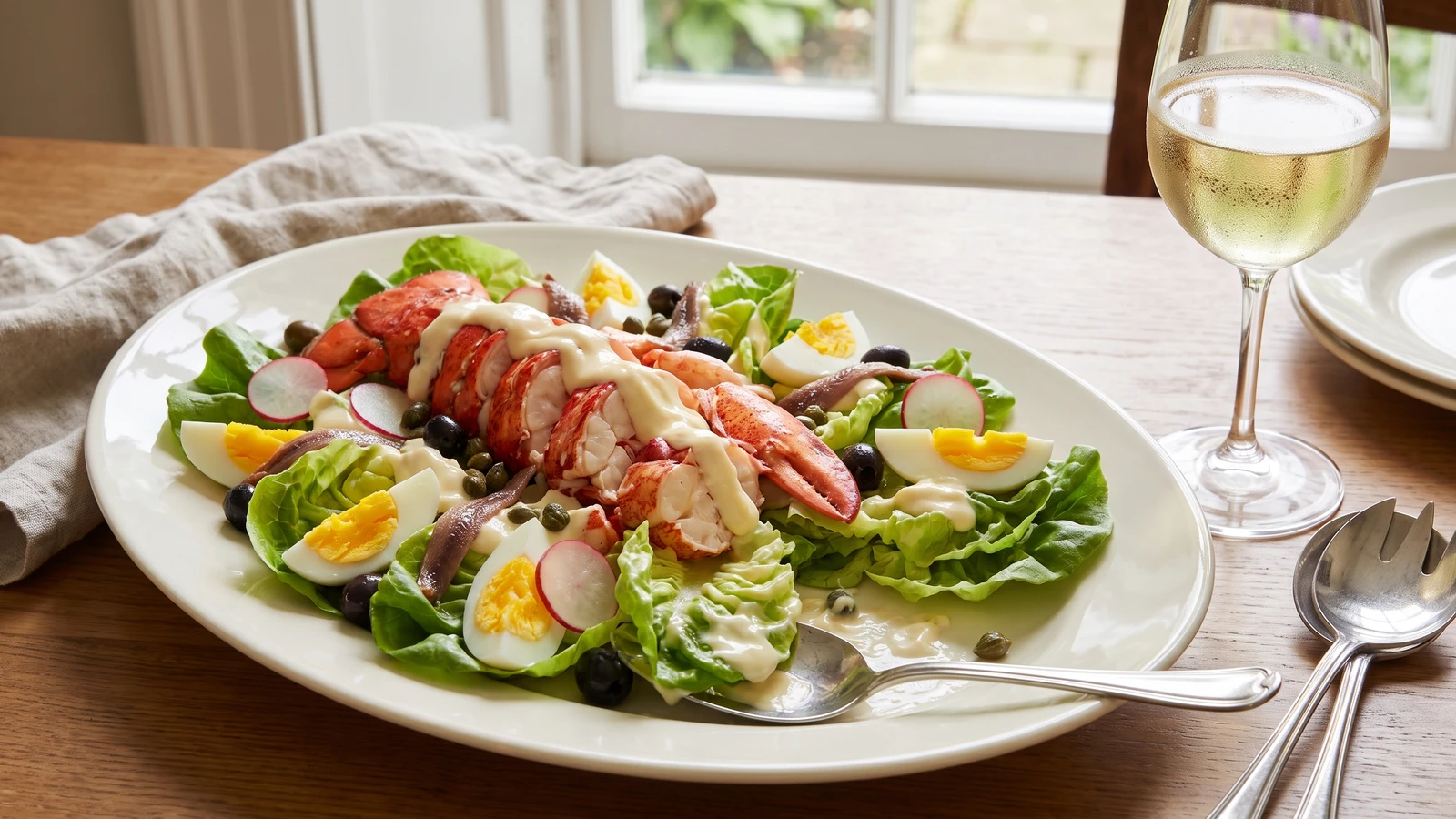
Sweet lobster on lightly seasoned ciselé lettuce, the tail fanned above the claw meat and cloaked in fresh mayonnaise, with anchovy, capers, olives, egg, and radish arranged as the cook pleases.
Mayonnaise de Homard (lobster salad with mayonnaise) teaches a rule that looks small and decides everything: season the lettuce before the mayonnaise arrives. The sauce is meant to cloak the lobster, not do every job at once. Put the leaves down plain and the salad tastes rich above, vacant below.
The old cold kitchen assumed cooked lobster remains at hand, a saucier's bowl of mayonnaise ready for service, and platters built for a crowd. Here, one whole cooked lobster gives you claw and knuckle meat for the middle, tail medallions for the crown, and one yolk makes precisely the quantity of mayonnaise four people need. The elaborate buffet pattern was brigade scaffolding and can go; the sequence of seasoned ciselé lettuce, lobster, sliced tail, and mayonnaise is the dish and must stay. One cook, one stove, one evening.
Anchovy, capers, olives, egg, radish, and lettuce hearts are a vocabulary, not a diagram. Choose the balance that pleases you and arrange it with a generous hand. Before you touch the lobster, dry the lettuce completely and remember the one step that matters: dress those leaves lightly, but dress them first.
Mayonnaise de Homard belongs to the Parisian classical cold table, where mayonnaise came to name not only the sauce but an entire family of composed fish and shellfish salads coated with it. From elaborate buffet service, the preparation passed naturally to the bourgeois dining room because the lobster, mayonnaise, eggs, and garnishes could be prepared ahead and assembled before guests sat down. The canonical instruction is unusually sensible about decoration: it lists anchovy, capers, olives, eggs, radish, and lettuce hearts, then leaves their arrangement to the cook rather than pretending one pattern is law.
Quantity
1 whole lobster (about 2 pounds / 900 g in the shell)
thoroughly chilled
Quantity
2 small heads (about 10 ounces / 280 g)
washed and dried, outer leaves ciselé into fine ribbons and hearts reserved
Quantity
1 large yolk
at room temperature
Quantity
2 teaspoons (10 ml / 10 g)
divided
Quantity
1 tablespoon (15 ml / 15 g)
Quantity
3/4 cup (180 ml / 165 g)
at room temperature
Quantity
2 teaspoons (10 ml / 10 g)
as needed
Quantity
1 teaspoon (5 ml / 5 g)
Quantity
1 tablespoon (15 ml / 14 g)
Quantity
1/2 teaspoon (2.5 ml / 3 g)
divided
Quantity
1/4 teaspoon (1 ml / 0.5 g)
divided
Quantity
4 fillets (about 3/4 ounce / 20 g)
drained and cut lengthwise into strips
Quantity
2 tablespoons (30 ml / 18 g)
drained
Quantity
12 olives (about 2 ounces / 55 g)
pitted
Quantity
2
Quantity
4 radishes (about 2 ounces / 60 g)
cut into thin roundels
| Ingredient | Quantity |
|---|---|
| whole cooked lobsterthoroughly chilled | 1 whole lobster (about 2 pounds / 900 g in the shell) |
| small butter lettuceswashed and dried, outer leaves ciselé into fine ribbons and hearts reserved | 2 small heads (about 10 ounces / 280 g) |
| pasteurized egg yolkat room temperature | 1 large yolk |
| Dijon mustarddivided | 2 teaspoons (10 ml / 10 g) |
| white wine vinegar for the mayonnaise | 1 tablespoon (15 ml / 15 g) |
| neutral oil for the mayonnaiseat room temperature | 3/4 cup (180 ml / 165 g) |
| cold wateras needed | 2 teaspoons (10 ml / 10 g) |
| white wine vinegar for the lettuce | 1 teaspoon (5 ml / 5 g) |
| neutral oil for the lettuce | 1 tablespoon (15 ml / 14 g) |
| fine sea saltdivided | 1/2 teaspoon (2.5 ml / 3 g) |
| ground white pepperdivided | 1/4 teaspoon (1 ml / 0.5 g) |
| anchovy fillets (optional)drained and cut lengthwise into strips | 4 fillets (about 3/4 ounce / 20 g) |
| capers (optional)drained | 2 tablespoons (30 ml / 18 g) |
| small black olives (optional)pitted | 12 olives (about 2 ounces / 55 g) |
| large eggs (optional) | 2 |
| pink radishes (optional)cut into thin roundels | 4 radishes (about 2 ounces / 60 g) |
If using the eggs, set them in a small saucepan and cover them with cold water by 1 inch. Bring the water just to a boil, cover the pan, remove it from the heat, and leave the eggs for 10 minutes. Transfer them immediately to cold water, then peel and quarter them once completely cool; a grey ring means an egg was cooked too fiercely, but the flavour is unharmed.
Set a damp towel beneath a medium bowl so it cannot wander. Whisk the yolk with 1 teaspoon of the Dijon mustard, the tablespoon of vinegar, 1/4 teaspoon of the salt, and half the white pepper until smooth. Add the oil drop by drop at first, whisking constantly; once the emulsion holds a thick trail, pour in a very thin, steady thread. If the sauce turns oily or separates, stop. Ça se rattrape: whisk the reserved teaspoon of mustard with 1 teaspoon of cold water in a clean bowl, then add the broken mayonnaise a teaspoon at a time until it becomes smooth before continuing. When all the oil is incorporated, whisk in enough remaining cold water to make a soft, glossy mayonnaise that falls heavily from the whisk rather than standing like paste. Taste and keep cold.
Twist the tail, claws, and knuckles from the body. Crack the claws gently, pull out their meat as whole as possible, and pick the knuckles clean; run your fingertips over every piece because one chip of shell can spoil an otherwise splendid mouthful. Split the tail shell underneath, lift out the meat, and remove the dark intestinal vein. Cut the claw and knuckle meat into generous bite-sized pieces, then slice the tail crosswise into thin, even medallions. Keep the two portions separate and cold.
Set aside the smallest, neatest lettuce hearts for the garnish. Stack the tender outer leaves, roll them loosely, and cut them crosswise into narrow ribbons. This is ciselé, cut after the manner of fine, even chaff rather than torn into irregular pieces. Dry the ribbons again if necessary. Water clinging to lettuce dilutes its seasoning and makes mayonnaise slide away.
Whisk the teaspoon of vinegar with the tablespoon of oil, the remaining salt, and the remaining white pepper. Toss the ciselé lettuce with just enough dressing to make every ribbon lightly glossy. This modest seasoning is the principle of the dish: mayonnaise will cloak the lobster, but it cannot reach down later and season the leaves. If dressing collects in the bottom of the bowl, lift the lettuce into a clean bowl and leave the excess behind.
Spread the seasoned lettuce across the bottom of a broad salad bowl or oval platter. Lay the claw and knuckle meat over it, keeping the pieces loose rather than packing them down, then arrange the sliced tail over the top so its red-edged medallions remain visible. Spoon the mayonnaise generously over the lobster in a broad cloak. Do not stir the layers together; seasoned lettuce below, lobster meat above, sliced tail on top, and mayonnaise over all is the structure the original dish asks you to preserve.
Arrange any or all of the anchovy strips, capers, olives, egg quarters, radish roundels, and lettuce hearts around and over the mayonnaise. Balance salt, colour, and shape, but do not chase a prescribed pattern; the classical instruction itself leaves the design to the cook. Bring the salad to the table while it is cool and freshly assembled. À table!
1 serving (about 250g)
Culinary guides, cultural storytelling, and the editorial depth that makes cooking meaningful.
Discover Culinary ExplorerChef Juliette
Cold roast chicken, ciseled lettuce, and a shining coat of homemade mayonnaise, arranged with capers, olives, anchovies, eggs, and lettuce hearts, then tossed at the table as the canon intends.

Chef Juliette
Cold roast or poached chicken with fine ribbons of lettuce, dressed at the final moment with oil and vinegar: a composed salad whose freshness depends entirely on timing.

Chef Juliette
Five leaves, one living rule: laitue, romaine, chicorée, mâche, or pissenlit must be washed, dried, and dressed only as they go to the table, while every leaf still carries its light vinaigrette.

Chef Juliette
Salade de Betteraves proves that baking, not boiling, is the whole argument: concentrated garnet sweetness, tender baked onion, sharp mustard, and herbs cut into a weeknight salad worth making ahead.