Chef Juliette
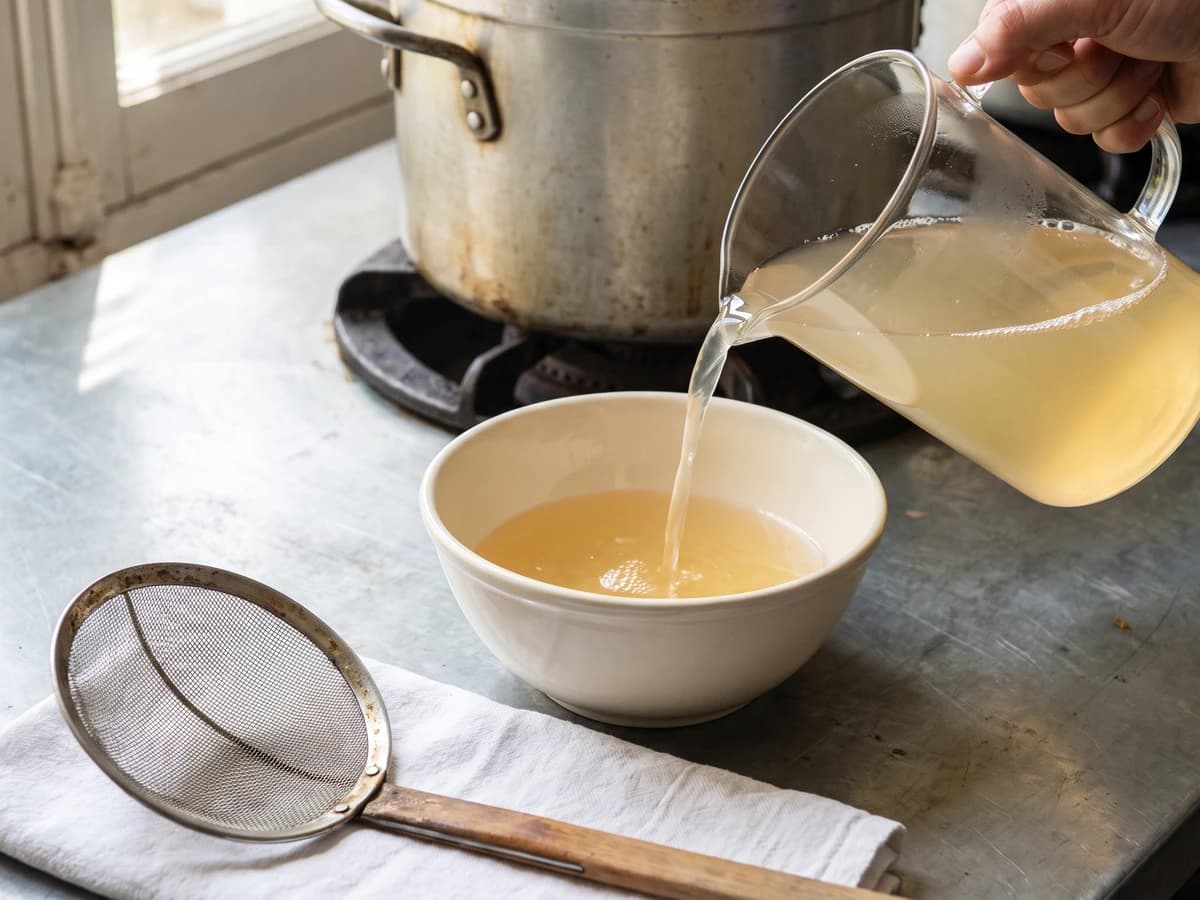
Ordinary or White Consommé
Beef shin, lean beef, and fowl begin in cold water and rise slowly toward a tremble. Skim before the boil, and you learn the quiet discipline that gives every clear French broth its backbone.
A cooking platform built around craft, culture, and the stories behind what we eat.
Created by Chef Juliette
Based on No. 92, Mousseline Sauce, from Le Guide Culinaire (1907) by Auguste Escoffier
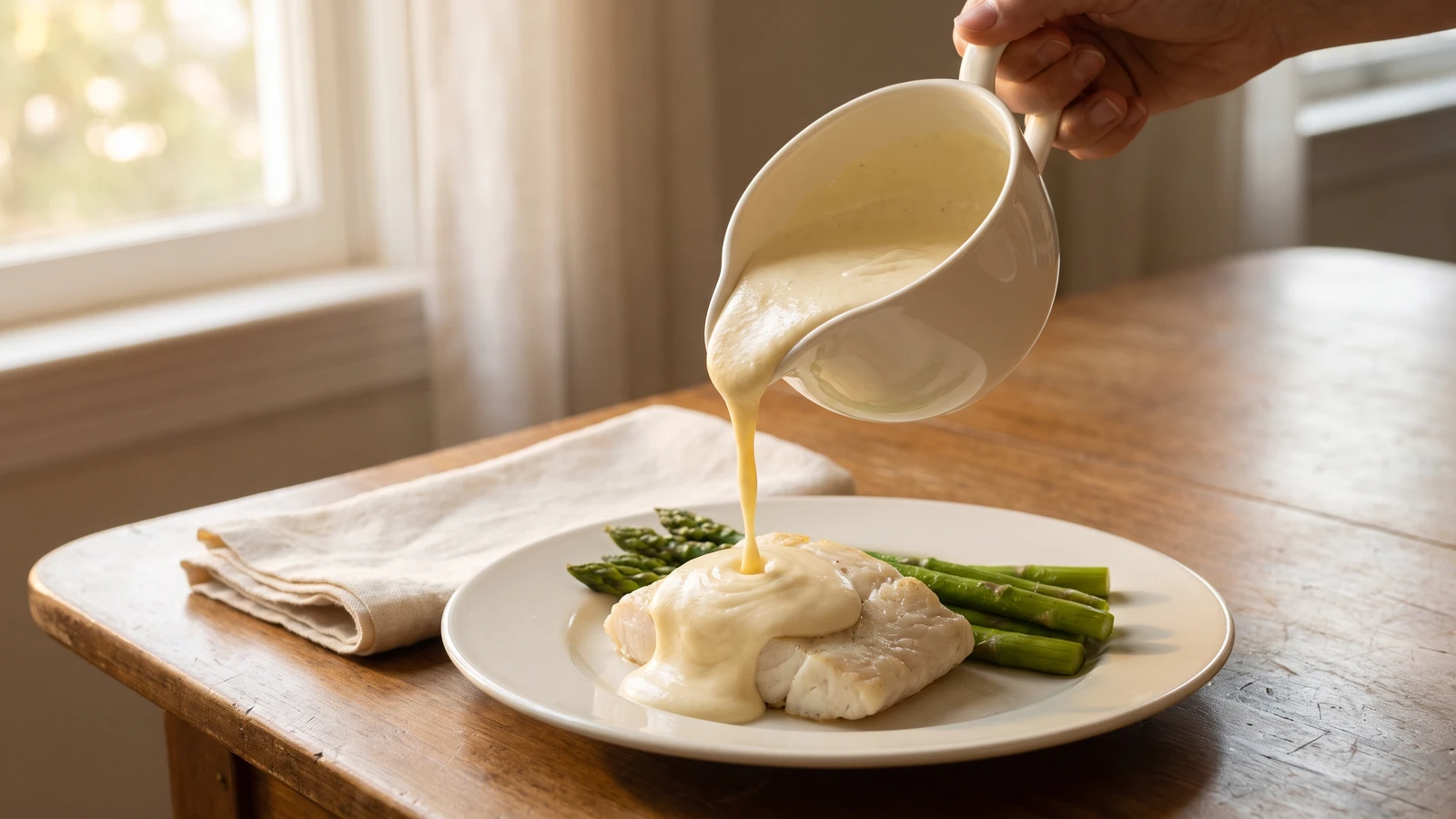
Sauce Mousseline turns a finished Hollandaise airy with stiffly whipped cream folded in at service. Keep the emulsion warm, the cream cold, and the spatula gentle, then serve before its lift settles.
Sauce Mousseline (a warm butter emulsion lightened with whipped cream) teaches one true thing: the air goes in last, and the heat does not come back. Stiffly whipped cream gives Mousseline its pale color and soft, billowing body, but only while the Hollandaise is warm rather than hot and the finished sauce goes directly to the table.
The original assumed a saucier with Hollandaise waiting at a tepid corner of the range, a tammy already used, and cream whipped for the instant of service. At home, the finished Hollandaise Sauce (No. 30), a cold bowl, a thermometer, and a flexible spatula do the same work. The holding station is brigade scaffolding and goes; the last-minute fold is the dish and stays. Its exact ratio remains untouched: two volumes Hollandaise to one volume stiffly whipped cream, converted here into one generous two-quart dinner-party batch. One cook, one stove, one evening.
Lighten the Hollandaise first with a smaller portion of cream, then fold in the rest with broad, patient strokes. This equalizes the two mixtures without beating out all the air. That first addition is the step that decides the sauce, so make it gently and keep the rescue water close. Ça se rattrape.
Sauce Mousseline belongs to the grand dining-room table of classical French cooking rather than to a single regional larder. It grew from the derivative-sauce system, in which a finished Hollandaise was altered at service to accompany poached fish, shellfish, and tender vegetables. Mousseline refers to the sauce's muslin-like lightness, not to mussels, and it should not be confused with crème mousseline, the butter-enriched pastry filling.
Quantity
5⅓ cups (1.28 L / approximately 1.1 kg) Hollandaise Sauce (No. 30)
finished and held warm
Quantity
1⅓ cups plus 1 tablespoon (335 ml / 335 g)
reserve 1 tablespoon; whip the remainder stiff and measure 2⅔ cups after whipping
Quantity
1 tablespoon (15 ml / 15 g)
for rescuing the emulsion only
| Ingredient | Quantity |
|---|---|
| Hollandaise Sauce (No. 30)finished and held warm | 5⅓ cups (1.28 L / approximately 1.1 kg) Hollandaise Sauce (No. 30) |
| cold heavy creamreserve 1 tablespoon; whip the remainder stiff and measure 2⅔ cups after whipping | 1⅓ cups plus 1 tablespoon (335 ml / 335 g) |
| tepid water (optional)for rescuing the emulsion only | 1 tablespoon (15 ml / 15 g) |
Place the 5⅓ cups of Hollandaise Sauce (No. 30) in a wide 4-quart heatproof bowl. It should be fluid and gently warm, about 100 to 110°F (38 to 43°C), never hot. If it is warmer, leave it off the heat until it cools; if it has tightened, rest the bowl briefly over barely warm water and whisk only until fluid. Warm the serving vessel with hot tap water, dry it, and have the plates ready. Once the cream enters, the sauce waits for no one.
Keep the extra tablespoon of cream aside. Whip the remaining cold cream in a chilled bowl, beginning slowly and then increasing to medium speed, until the peaks stand upright and the surface remains smooth. Measure 2⅔ cups after whipping, because the source ratio concerns finished whipped volume, not liquid cream. If the cream begins to look slightly grainy, stop and fold in the reserved tablespoon by hand until smooth. Ça se rattrape. Do not keep beating once yellow flecks appear; at that point the cream is becoming butter.
Stir ⅔ cup (160 ml / about 80 g) of the whipped cream into the warm Hollandaise with a whisk until evenly combined. This first portion is allowed to lose some air; its work is to bring the dense emulsion closer to the texture of the remaining cream. If oily streaks appear, stop. Put the tepid water in a clean bowl, whisk in one spoonful of the split sauce until smooth, then incorporate the rest gradually. The emulsion will return, ready for the final fold.
Add the remaining 2 cups (480 ml / about 240 g) of whipped cream in three additions. With a broad flexible spatula, cut through the center, sweep across the bottom, and lift the sauce over itself while turning the bowl a quarter turn. Stop as soon as the white streaks disappear. The finished Mousseline should be pale ivory with a satin gloss, holding soft ridges before falling from the spatula in a generous ribbon. If it begins to slacken from excess warmth, set the bowl against an ice bath for 20 seconds and give it two more folds. Do not whisk.
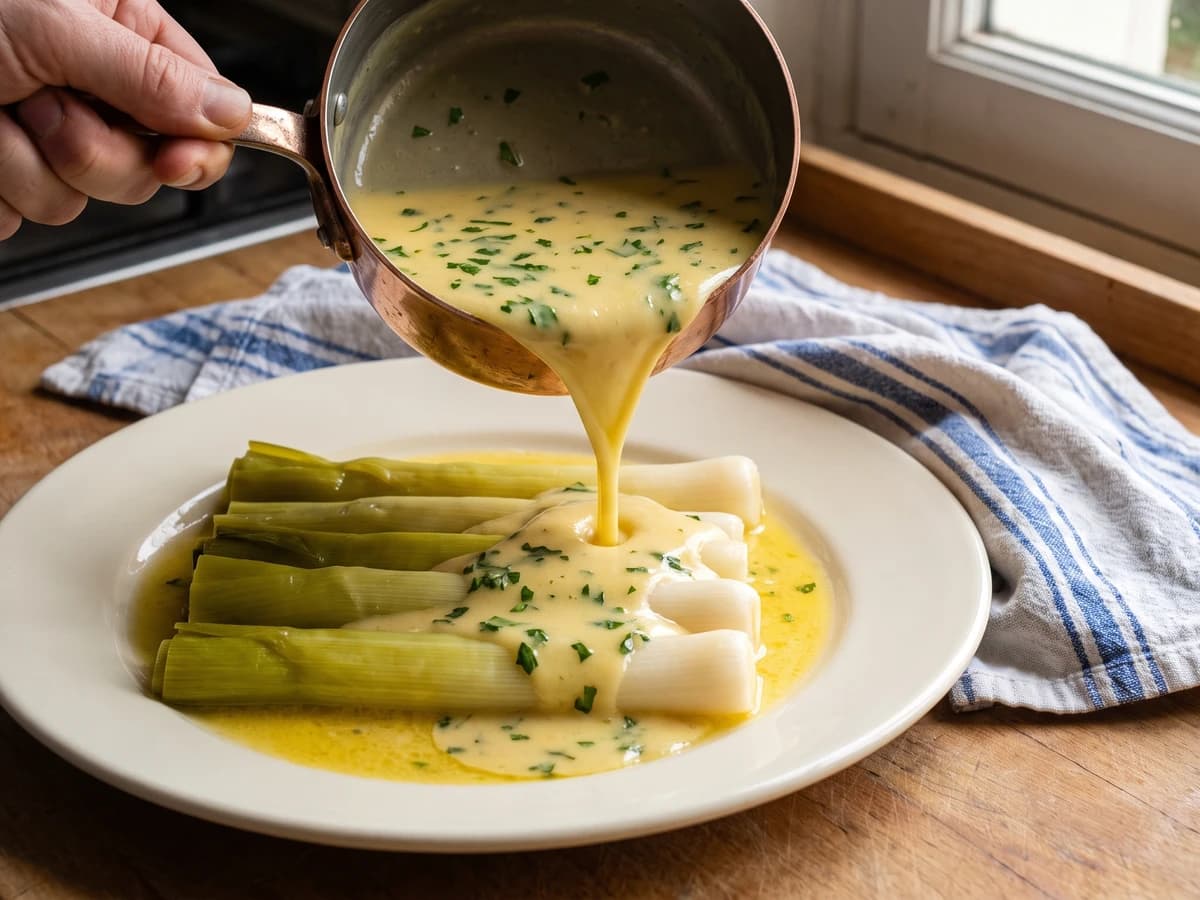
Pour the Mousseline into the warmed, dry serving vessel and take it straight to the table. Do not return it to the stove or hold it over a bain-marie; reheating melts the whipped structure and turns the sauce back toward ordinary Hollandaise. Spoon it over poached turbot, sole, salmon, shellfish, asparagus, or artichokes while it still falls lightly. À table!
1 serving (about 51g)
Culinary guides, cultural storytelling, and the editorial depth that makes cooking meaningful.
Discover Culinary ExplorerChef Juliette
Beef shin, lean beef, and fowl begin in cold water and rise slowly toward a tremble. Skim before the boil, and you learn the quiet discipline that gives every clear French broth its backbone.
Chef Juliette
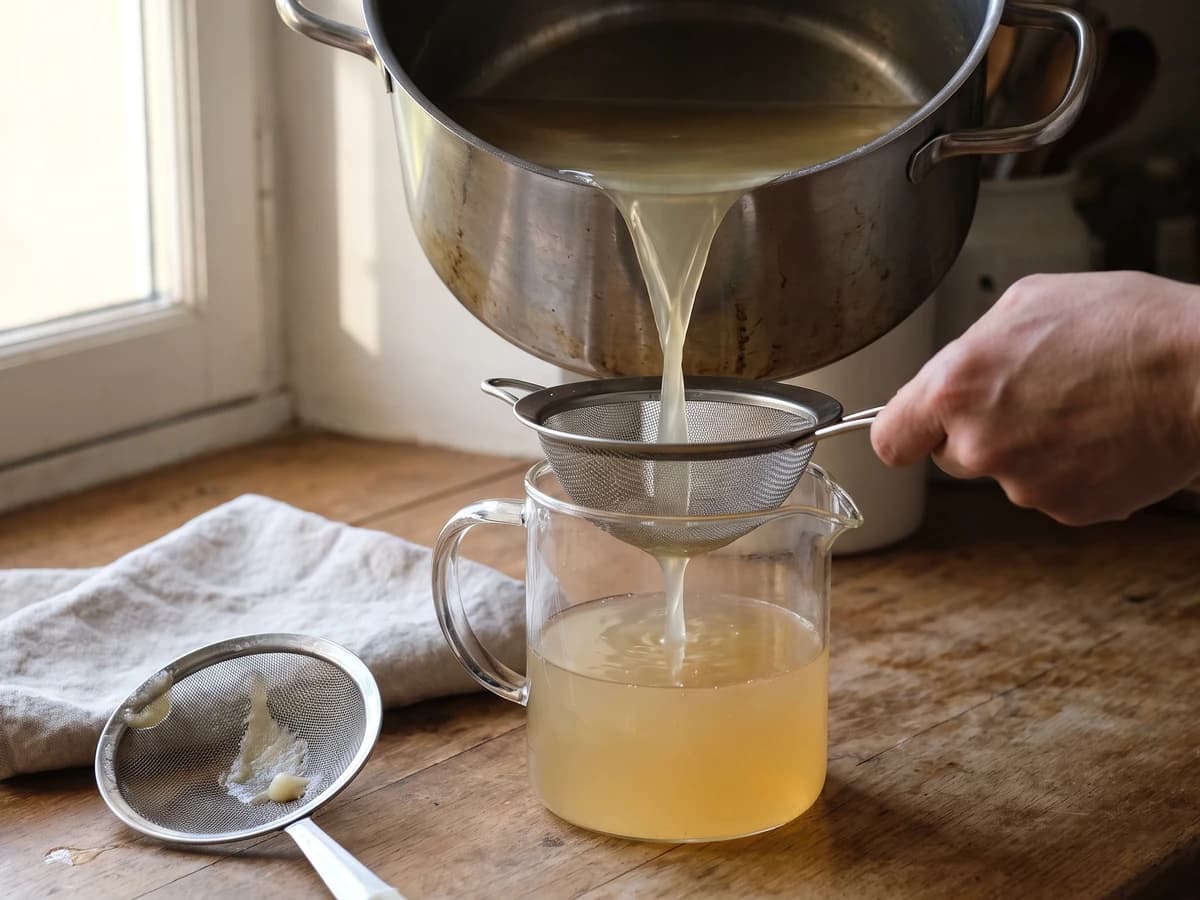
Break the veal bones small, then give them eight hours at a bare tremble. This pale, gelatinous fond becomes the quiet foundation beneath velouté, blanquette, and every sauce that must stay light.
Chef Juliette
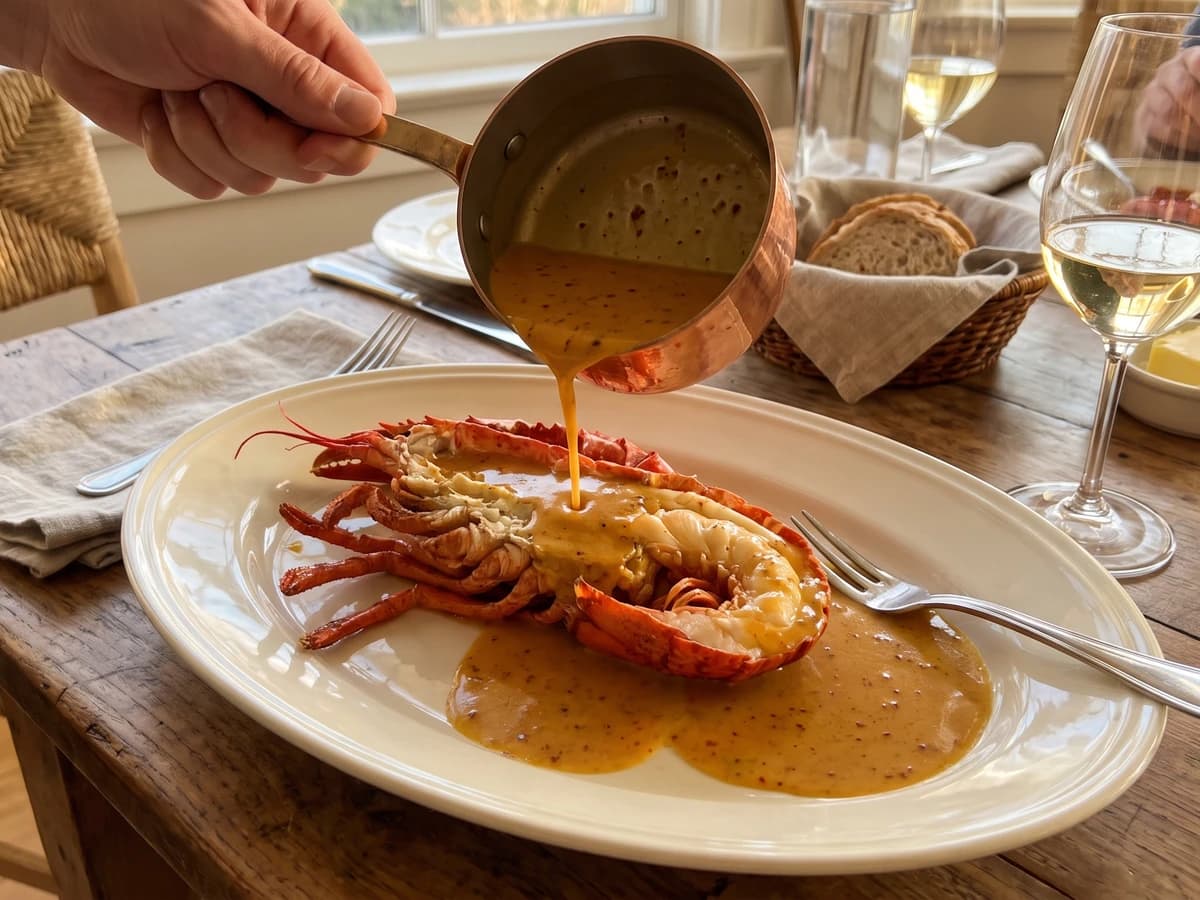
Sauce Orientale concentrates lobster-rich American Sauce with curry, then folds in cream away from the fire: a glossy, gently spiced derivative made for lobster, crayfish, and firm fish.
Chef Juliette
An old lesson in sauce families: Sauce Allemande takes mushroom liquor, then butter, lemon, and parsley, becoming a glossy Poulette for sheep's trotters, leeks, cauliflower, and anything needing gentle richness with a bright edge.