
Chef Juliette
John Dory (St. Pierre)
John Dory has the delicacy of sole and the firmness of turbot. A light flouring, a quick butter sauté, and nut-brown beurre noisette show exactly why looks never mattered.
A cooking platform built around craft, culture, and the stories behind what we eat.
Created by Chef Juliette
Based on No. 896, Filets de Soles Paysanne, from Le Guide Culinaire (1907) by Auguste Escoffier
Sole, small-cut vegetables, and butter prove that delicacy needs discipline, not fuss: cook the paysanne fully, poach the fillets gently, then reduce their liquor and mount it to a gloss.
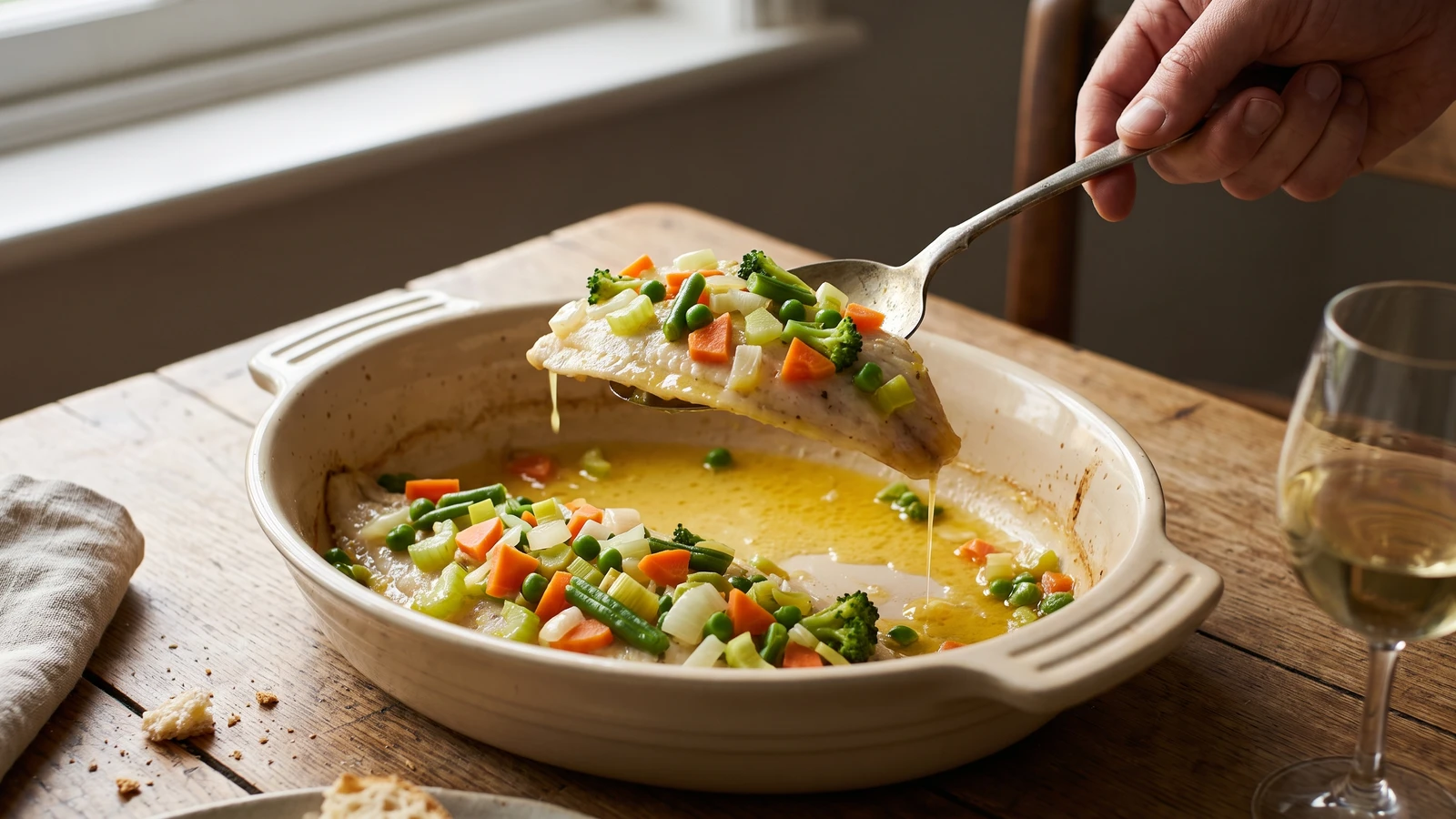
Filets de Soles Paysanne (sole fillets with country-cut vegetables) teaches one quiet discipline: the garnish must be fully tender before the fish begins to cook. Sole gives you minutes, not mercy. If the carrots are still firm when the fillets enter the dish, you can finish one only by spoiling the other.
The original kitchen assumed a vegetable pan, an earthenware service dish, and a saucier free to seize the liquor the moment the sole was done. Unlike many neighboring preparations, this one asks nothing of the stock never off the fire or the salamander, and adding either would blur its clean character. At home, one sauté pan handles the vegetables and the final reduction, while a covered shallow baking dish gives the same gentle poach. The brigade handoff goes; the small paysanne cut, concentrated liquor, and cold-butter finish stay. One cook, one stove, one evening.
The finished fish is pearly and tender, the vegetables remain distinct, and their butter-gold liquor pools around everything rather than smothering it. Before touching a pan, cut every carrot, onion, celery, and leek triangle to the same thinness. That geometry is the step that decides the dish.
Filets de Soles Paysanne belongs to the Parisian classical dining-room repertoire, where delicate sole was paired with precisely cut vegetable garnishes and finished in its own cooking liquor. Paysanne does not claim a particular farming region here; it identifies the thin triangular cut, a country-style geometry made exact for service. The dish passed naturally to bourgeois home tables because its sauce needs no separate stock or flour, only concentrated vegetable liquor and real butter.
Quantity
8 small fillets (about 1½ pounds / 680 g total)
pin bones removed
Quantity
2 (about 1 cup / 130 g)
peeled and cut paysanne into thin triangles
Quantity
2 (about ¾ cup / 100 g)
trimmed and cut paysanne into thin triangles
Quantity
1 medium (about ½ cup / 55 g)
trimmed and cut paysanne into thin triangles
Quantity
1 medium (about 1 cup / 90 g)
washed and cut paysanne into thin triangles
Quantity
½ cup (120 ml / 45 g)
Quantity
1 tablespoon (15 ml / 10 g)
Quantity
1 tablespoon (15 ml / 12 g)
cut into small lozenges
Quantity
8 tablespoons plus 1 teaspoon (125 ml / 118 g)
divided, with 6 tablespoons kept cold and cubed
Quantity
Up to 1¼ cups (300 ml / 300 g)
use only enough to cover the vegetables
Quantity
¾ teaspoon (3.75 ml / 4.5 g)
divided
Quantity
1 pinch, about 1/16 teaspoon (0.3 ml / 0.25 g)
Quantity
⅛ teaspoon (0.6 ml / 0.3 g)
| Ingredient | Quantity |
|---|---|
| skinless sole filletspin bones removed | 8 small fillets (about 1½ pounds / 680 g total) |
| small carrotspeeled and cut paysanne into thin triangles | 2 (about 1 cup / 130 g) |
| small young white onionstrimmed and cut paysanne into thin triangles | 2 (about ¾ cup / 100 g) |
| celery ribtrimmed and cut paysanne into thin triangles | 1 medium (about ½ cup / 55 g) |
| leek, white part onlywashed and cut paysanne into thin triangles | 1 medium (about 1 cup / 90 g) |
| small broccoli florets | ½ cup (120 ml / 45 g) |
| fresh or frozen peas | 1 tablespoon (15 ml / 10 g) |
| French beanscut into small lozenges | 1 tablespoon (15 ml / 12 g) |
| unsalted butterdivided, with 6 tablespoons kept cold and cubed | 8 tablespoons plus 1 teaspoon (125 ml / 118 g) |
| lukewarm wateruse only enough to cover the vegetables | Up to 1¼ cups (300 ml / 300 g) |
| fine saltdivided | ¾ teaspoon (3.75 ml / 4.5 g) |
| granulated sugar | 1 pinch, about 1/16 teaspoon (0.3 ml / 0.25 g) |
| ground white pepper | ⅛ teaspoon (0.6 ml / 0.3 g) |
Heat the oven to 325°F (160°C). Cut the carrots, onions, celery, and leek into small triangles about ½ inch (1.25 cm) wide and ⅛ inch (3 mm) thick. Keep the pieces even, because they must become tender together before the sole begins its brief poach. Cut the French beans diagonally into small lozenges, wash the leek particularly well, and keep the 6 tablespoons (90 ml / 85 g) of sauce butter cold.
Melt 2 tablespoons (30 ml / 28 g) of the butter in a 10-inch (25 cm) sauté pan over medium-low heat. Add the carrots, onions, celery, and leek with ¼ teaspoon (1.25 ml / 1.5 g) of the salt and the pinch of sugar. Cover and étuver, gently stewing them in butter without browning, for 5 minutes. Add just enough lukewarm water to cover them, then add the broccoli, peas, and French beans. Simmer uncovered until every vegetable is tender and about ¾ cup (180 ml) of liquor remains, 8 to 12 minutes. If the carrots are still firm when the pan is nearly dry, add water a tablespoon at a time; browned vegetables cannot give this pale, clean sauce, but a dry pan is easily rescued.
Butter a shallow 2-quart (2-liter) earthenware or enameled baking dish with the remaining 1 teaspoon (5 ml / 5 g) of soft butter. Season the sole with the remaining ½ teaspoon (2.5 ml / 3 g) of salt and the white pepper, then lay the fillets flat in a single layer, tucking thin tail ends underneath when necessary. Spoon the hot vegetables evenly over the fish and pour their liquor around and over them. Cover tightly with the dish lid or with baking parchment and foil.
Set the covered dish in the oven and poach gently for 7 to 10 minutes. Begin checking at 7 minutes: the fillets are ready when they have turned opaque, separate into moist flakes under light pressure, and reach 145°F (63°C) at the thickest point. If the thinnest pieces finish first, lift them to the warm edge of the dish and re-cover while the thicker fillets cook for another minute.
Set the sauté pan over medium-high heat. Holding the fish and vegetables securely in the baking dish with a broad fish spatula, tilt the dish and pour every drop of cooking liquor back into the pan. Re-cover the fish and keep it beside the stove, away from direct heat. Boil the liquor briskly until ½ cup (120 ml) remains, about 3 to 5 minutes. Taste before adding anything. If it reduces too far or tastes too salty, whisk in 1 tablespoon (15 ml / 15 g) of lukewarm water and bring it back to the proper volume.
Take the pan completely off the heat. Make a monté au beurre, a cold-butter emulsion, by whisking in the reserved 6 tablespoons (90 ml / 85 g) of butter a few cubes at a time. Add each portion only after the last has nearly disappeared. The sauce should become lightly thickened, glossy, and butter-gold, but it must never boil. If oily beads appear, stop adding butter. Ça se rattrape: whisk in 1 tablespoon (15 ml / 15 g) of cold water until the sauce comes together, then continue with the remaining butter away from the heat.
Pour the sauce directly into the earthenware dish, coating the sole and settling it among the paysanne vegetables. Rock the dish once so the sauce reaches every fillet, then serve immediately in the vessel it cooked in. The fish will not improve by waiting, and the butter emulsion is at its loveliest now. À table!
1 serving (about 310g)
Culinary guides, cultural storytelling, and the editorial depth that makes cooking meaningful.
Discover Culinary ExplorerChef Juliette
John Dory has the delicacy of sole and the firmness of turbot. A light flouring, a quick butter sauté, and nut-brown beurre noisette show exactly why looks never mattered.

Chef Juliette
Fresh haddock proves its delicacy in the meunière pan: a fine flour crust, moist pearly flakes, and beurre noisette sharpened with lemon and parsley, ready from one skillet in half an hour.

Chef Juliette
Éperlans à l’Anglaise turns small fish into a lesson in disciplined coating: boned smelts under a close, crisp crumb, pan-fried in clarified butter and finished with bright, half-melted maître d’hôtel butter.

Chef Juliette
Tiny smelts, shallot, mushrooms, white wine, gratin sauce, and fine bread raspings meet a fierce oven, where the fish must turn tender in the same breath the buttered crust bronzes.