Chef Juliette
Ordinary or White Consommé
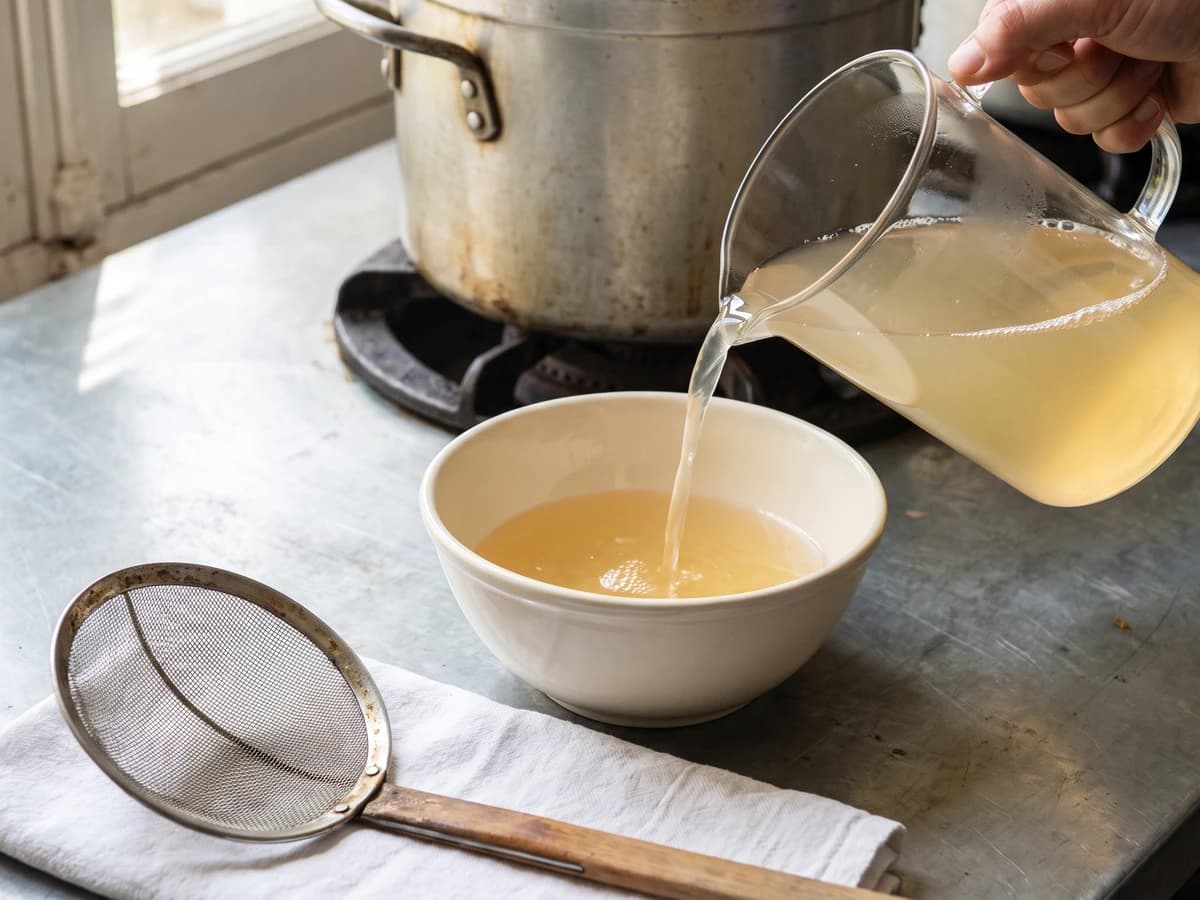
Beef shin, lean beef, and fowl begin in cold water and rise slowly toward a tremble. Skim before the boil, and you learn the quiet discipline that gives every clear French broth its backbone.
A cooking platform built around craft, culture, and the stories behind what we eat.
Created by Chef Juliette
Based on No. 89, Maltese Sauce, from Le Guide Culinaire (1907) by Auguste Escoffier
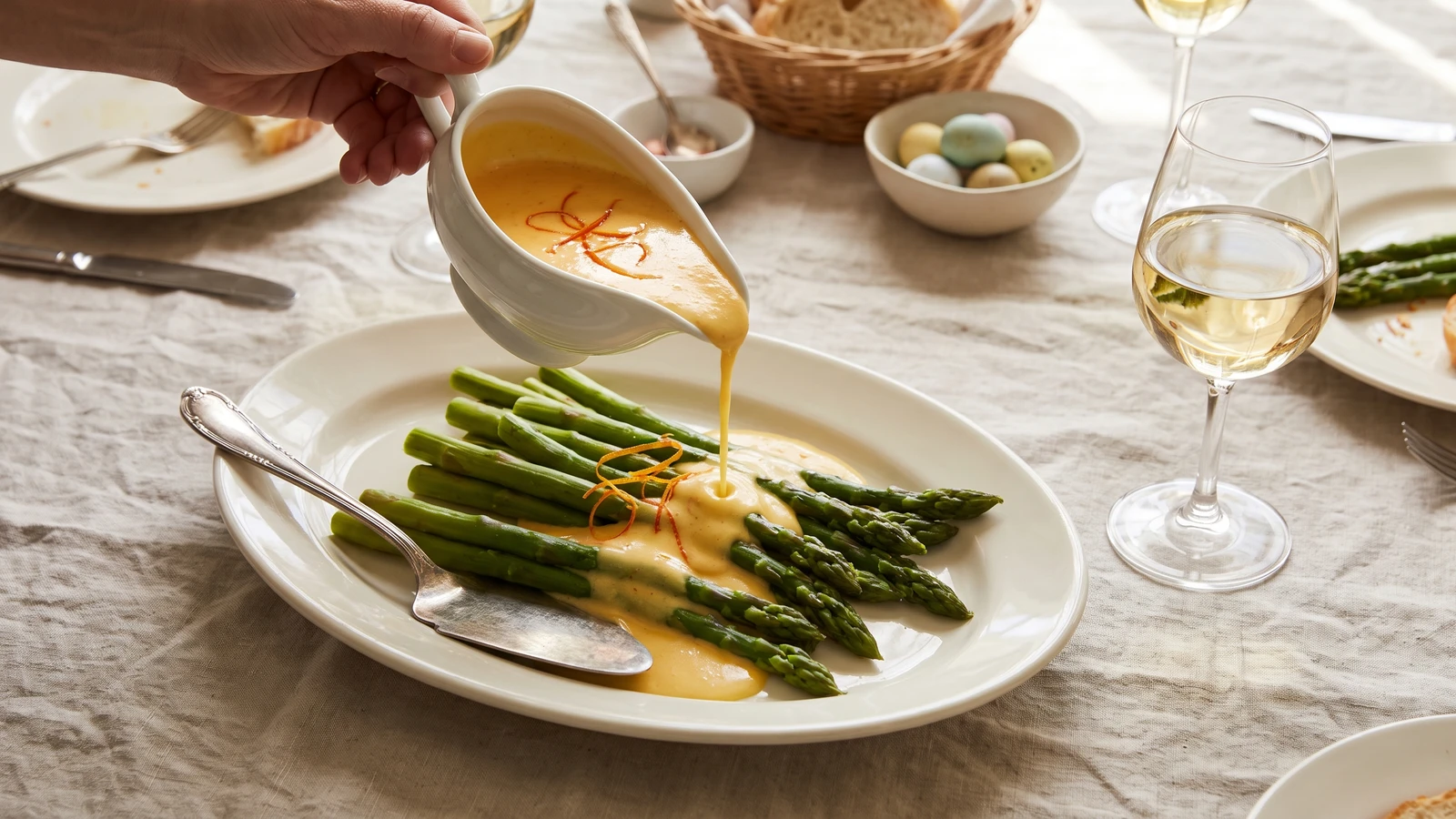
Blood orange turns tepid Hollandaise into Sauce Maltaise, fragrant at the rim, bright through the butter, and made for asparagus. The lesson is temperature: warm citrus and gentle whisking keep the emulsion whole.
Sauce Maltaise (Hollandaise brightened with blood orange) teaches the last and most delicate act of sauce-making: how to season an emulsion without breaking it. The one true thing is temperature. Blood orange juice and the sauce must both be tepid; cold juice shocks the butter, high heat cooks the yolks, and either can turn gloss to grease.
The source formula assumed a saucier beside a bain-marie, the warm-water bath, with finished Hollandaise Sauce (No. 30) ready and the oranges added at the instant of service. One cook needs a warm bowl over barely warm water and the citrus prepared before the asparagus is done. The tammy work belongs to the finished Hollandaise and isn't repeated here; that is brigade scaffolding. The orange juice and zest added at the last moment are the dish, so they stay exactly where the formula puts them.
Four blood oranges keep the book's proportion for this roughly two-quart batch, and the coffeespoon measure becomes a level half-teaspoon of zest so a home cook can repeat it. Whisk the juice in slowly, one addition at a time. That is the step that matters; if the emulsion falters, stop before adding another drop, because ça se rattrape.
Sauce maltaise belongs to the classical French sauce repertory rather than to one regional household table: it is a derivative built by finishing Hollandaise with blood orange at service. Its name follows the Maltaise orange of the classical pantry, not a claim that the sauce belongs to Malta's domestic cooking. Asparagus became its settled companion because the vegetable's green, faintly bitter edge answers the sauce's butter and sweet-tart citrus.
Quantity
8 cups (1.9 L / about 1.8 kg) Hollandaise Sauce (No. 30)
freshly made and held tepid
Quantity
Juice of 4 medium blood oranges, about 1 cup (240 ml / 240 g)
at room temperature and strained
Quantity
½ teaspoon (2.5 ml / 1 g)
finely grated
Quantity
Up to 1 tablespoon (15 ml / 15 g)
for loosening or rescue
| Ingredient | Quantity |
|---|---|
| Hollandaise Saucefreshly made and held tepid | 8 cups (1.9 L / about 1.8 kg) Hollandaise Sauce (No. 30) |
| blood orange juiceat room temperature and strained | Juice of 4 medium blood oranges, about 1 cup (240 ml / 240 g) |
| blood orange zestfinely grated | ½ teaspoon (2.5 ml / 1 g) |
| tepid water (optional)for loosening or rescue | Up to 1 tablespoon (15 ml / 15 g) |
Finely grate only the colored skin from one blood orange, stopping before the bitter white pith, and measure exactly ½ teaspoon. Juice all four oranges and strain out the seeds and pulp. Let the juice reach room temperature; if it still feels cool, nest its bowl briefly in warm water until it no longer chills your fingertip. Do not simmer or reduce it. The fresh perfume is the point.
Put about 1 inch (2.5 cm) of water in a saucepan and warm it gently, then take the pan off the heat. Set the freshly made Hollandaise Sauce (No. 30) in a heatproof bowl over the pan without letting the bowl touch the water. Whisk just until the sauce flows in a thick ribbon and feels pleasantly warm, about 45 to 50°C (113 to 122°F). If a slick of butter appears at the edge, lift the bowl away from the water and whisk until smooth before proceeding.
Add the room-temperature blood orange juice about 1 tablespoon at a time, whisking each addition completely into the sauce before adding the next. Use all the juice, as the source formula directs. If the sauce turns grainy or beads of butter appear, stop. Ça se rattrape: put 1 teaspoon of tepid water in a clean bowl, whisk in a teaspoon of the broken sauce until creamy, then whisk in the remainder very gradually. Continue with the juice only when the emulsion is smooth again.
Fold in the measured blood orange zest just before serving. The Sauce Maltaise should reach nappe, meaning it coats the back of a spoon while remaining lighter than its Hollandaise base. If it is too tight, whisk in tepid water 1 teaspoon at a time. If it seems loose, do not try to reduce it over direct heat; the citrus is meant to soften the consistency.
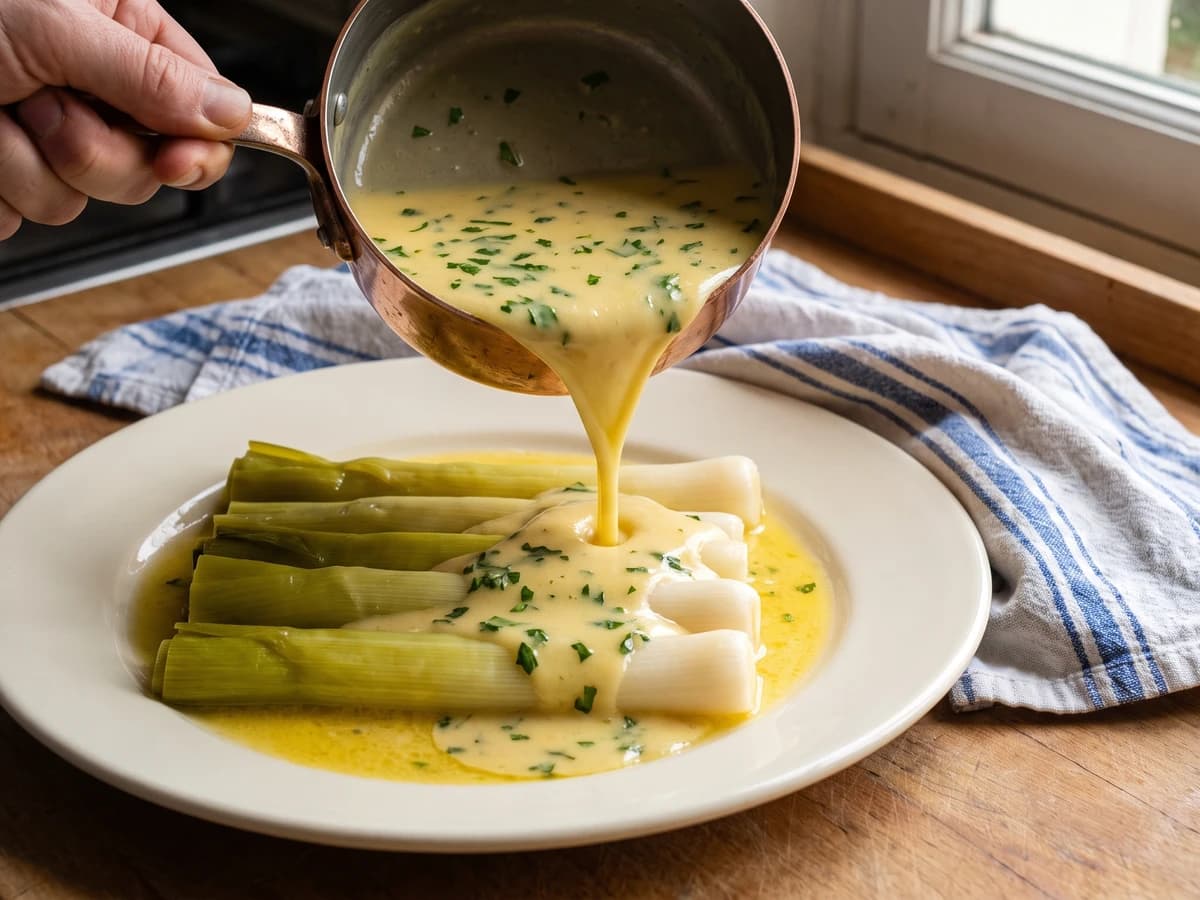
Transfer the sauce to a warmed sauceboat, or keep the bowl over the off-heat bain-marie for no more than 20 minutes, whisking once or twice. It must remain tepid, never hot. Pour it generously over just-cooked asparagus while both are ready, because waiting is harder on this sauce than making it. À table!
1 serving (about 32g)
Culinary guides, cultural storytelling, and the editorial depth that makes cooking meaningful.
Discover Culinary ExplorerChef Juliette
Beef shin, lean beef, and fowl begin in cold water and rise slowly toward a tremble. Skim before the boil, and you learn the quiet discipline that gives every clear French broth its backbone.
Chef Juliette
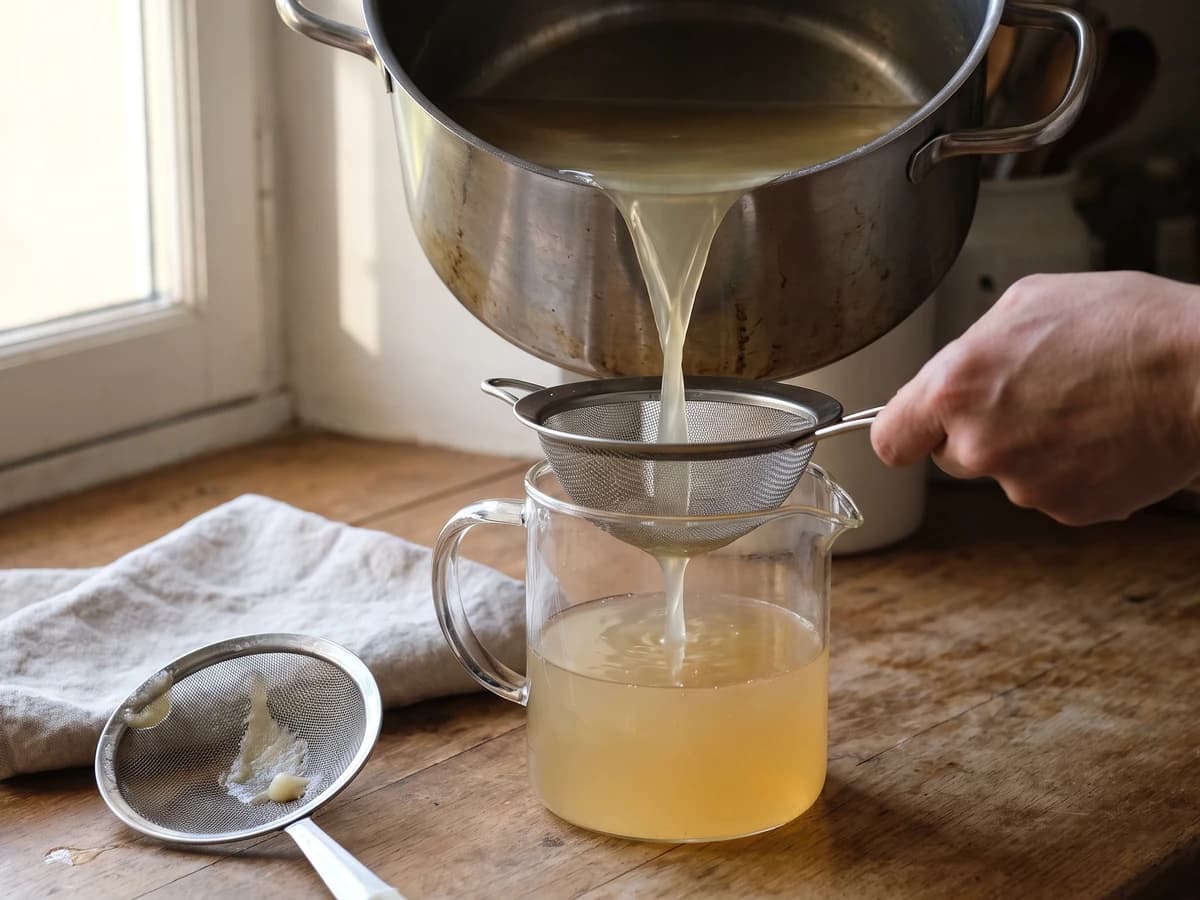
Break the veal bones small, then give them eight hours at a bare tremble. This pale, gelatinous fond becomes the quiet foundation beneath velouté, blanquette, and every sauce that must stay light.
Chef Juliette
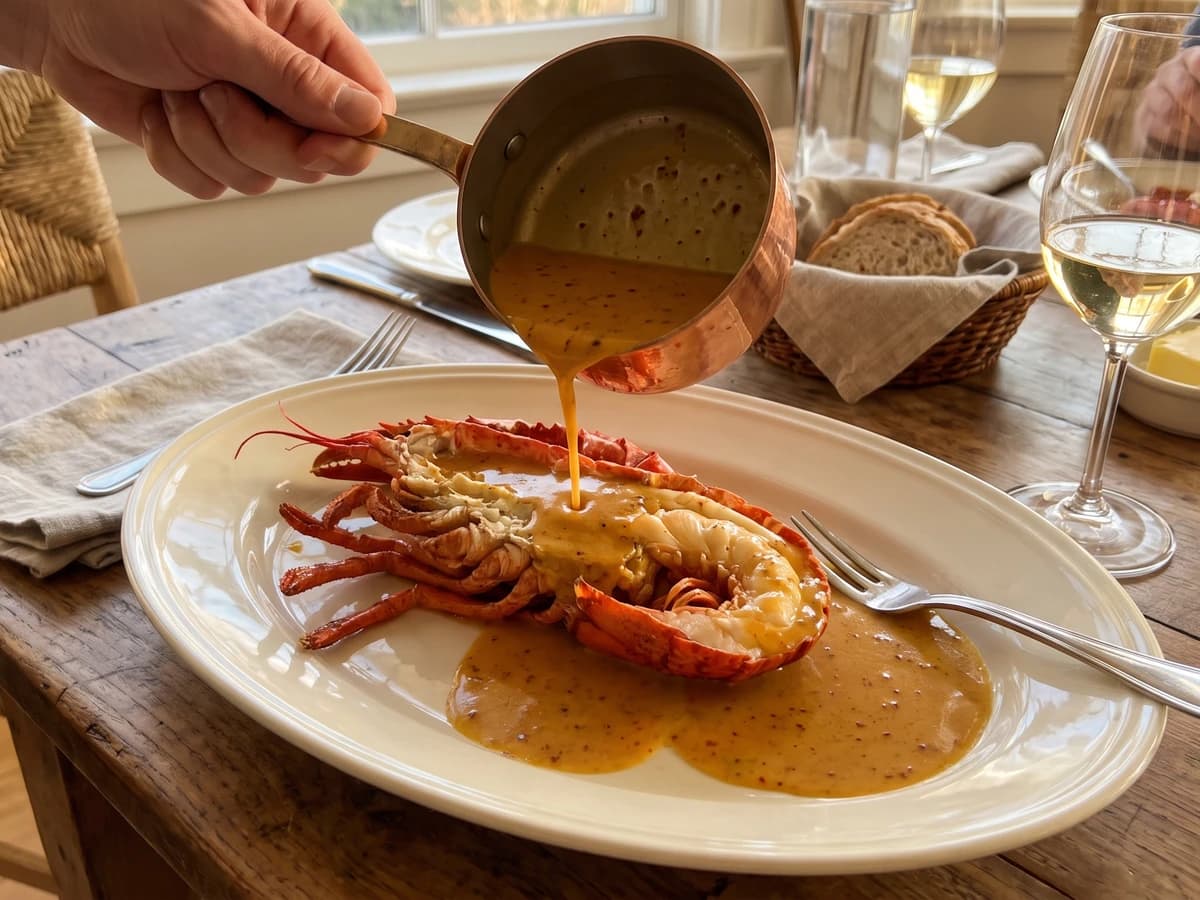
Sauce Orientale concentrates lobster-rich American Sauce with curry, then folds in cream away from the fire: a glossy, gently spiced derivative made for lobster, crayfish, and firm fish.
Chef Juliette
An old lesson in sauce families: Sauce Allemande takes mushroom liquor, then butter, lemon, and parsley, becoming a glossy Poulette for sheep's trotters, leeks, cauliflower, and anything needing gentle richness with a bright edge.